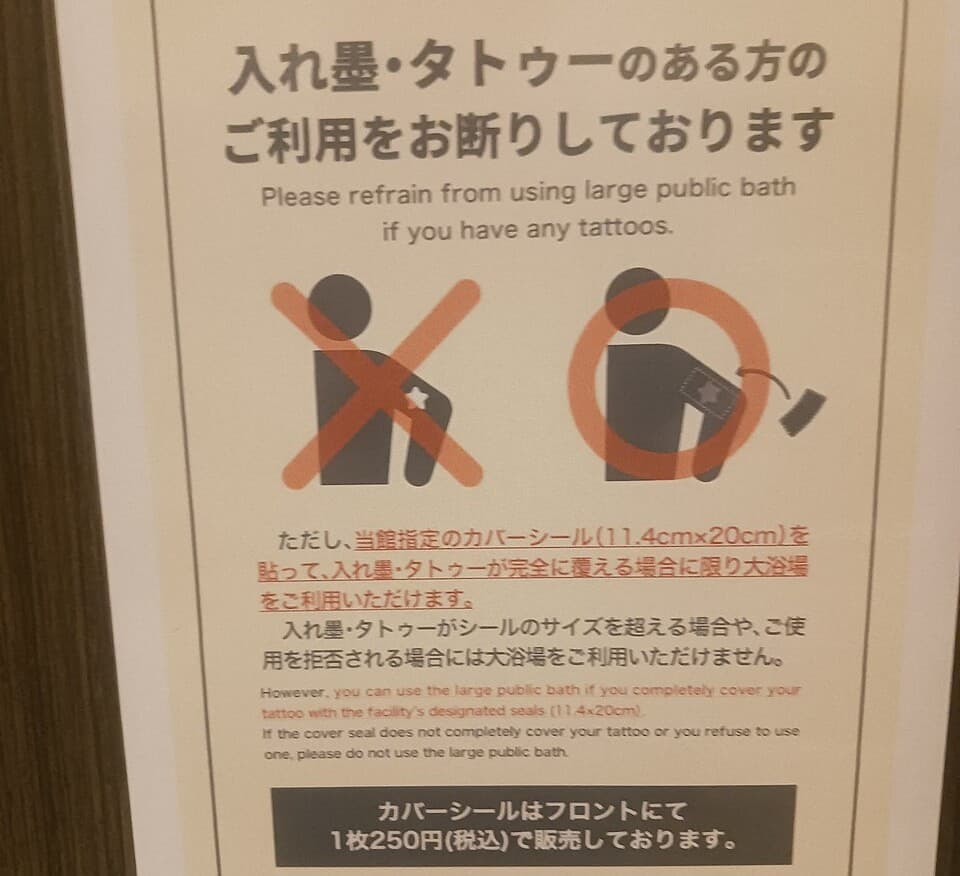
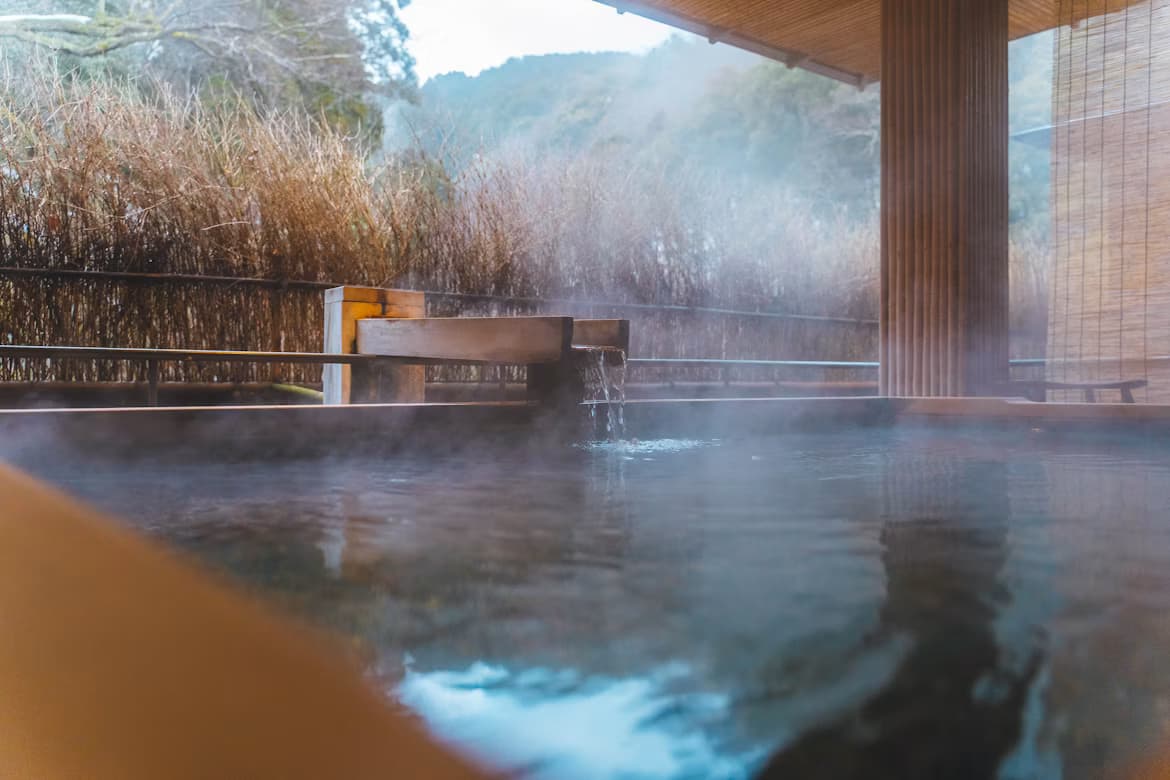
My husband Ryan speaks conversational Japanese. This is more useful than you might think in the context of hot springs, because Japanese onsen culture has a lot of fine print.
On our November 2025 trip, starting in Fukuoka and working through Kyushu, then across to Hiroshima and Osaka, then a week in Aomori, then south through Sendai and Hanamaki back to Tokyo, we soaked in enough different springs across enough different regions that the variation became impossible to ignore.
The water in Beppu feels nothing like the water in Kusatsu. The outdoor bath at a mountain onsen in Tohoku feels nothing like a seaside facility in Kyushu. At some point Ryan started translating the senshitsu boards outside each facility, the posted mineral analysis that every onsen is required to display, so we could actually understand what we were getting into.
What I found is that the range of Japan's hot springs is genuinely extreme. Here is where the limits are.
The hottest: 105 degrees Celsius
Beppu Onsen in Oita Prefecture and Obama Onsen in Nagasaki Prefecture both reach 105 degrees Celsius at the source. This is hotter than boiling water at sea level.
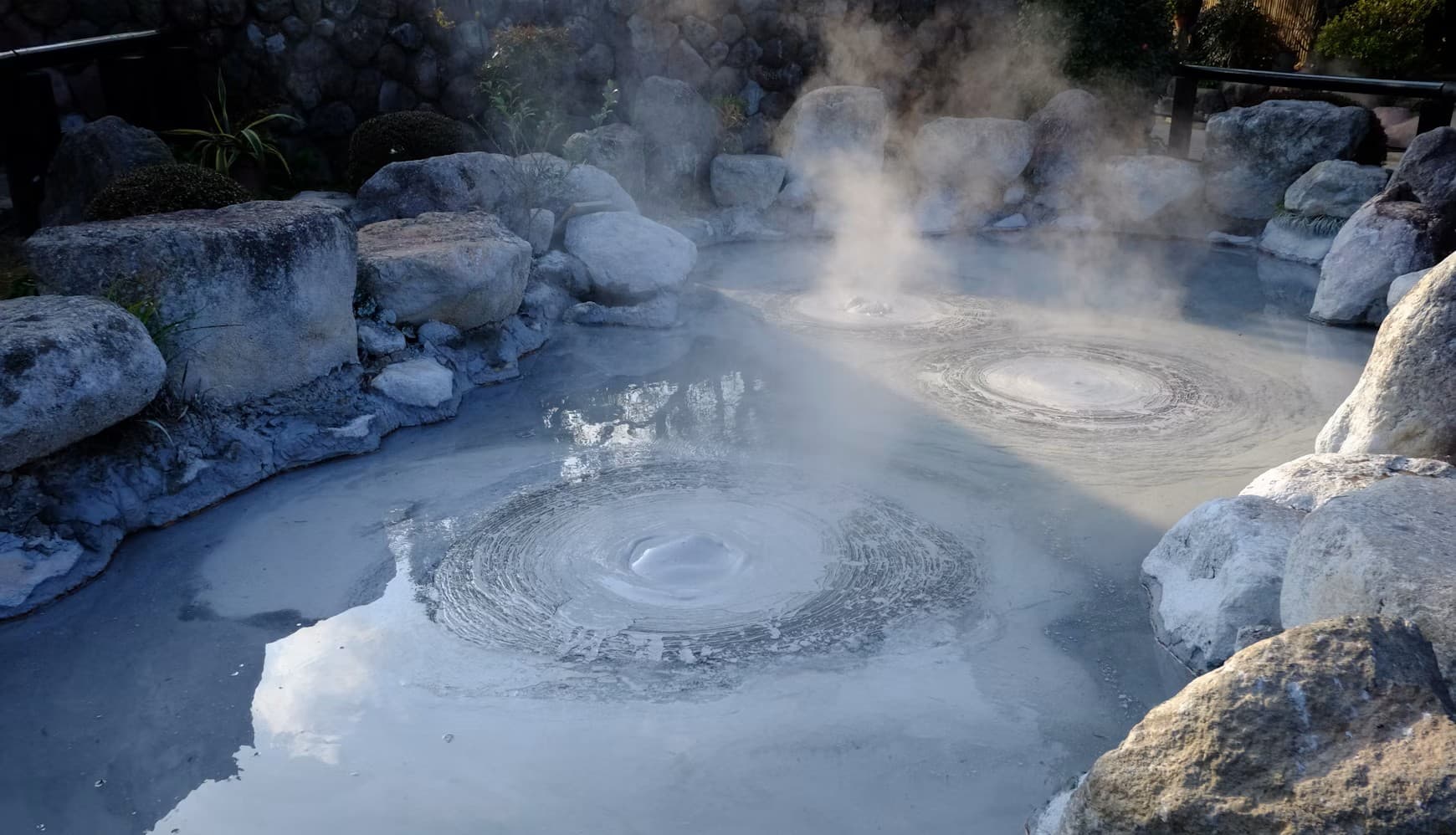
You cannot bathe in water at that temperature. At Beppu we visited the Jigoku, the famous Hells, a series of dramatically colored boiling pools that the city presents as a sightseeing attraction specifically because you cannot get in. Blood Pool Hell is a deep rust red from iron compounds. Sea Hell is a turquoise blue that looks deceptively calm. The steam above them is constant and visible from a distance.
What surprised me about Beppu was the scale. We came from Manila expecting something modest. What Beppu actually is is Japan's largest hot spring city, with over 2,900 spring vents within the city limits. Entire streets smell faintly of sulfur. Steam rises from cracks in the pavement. When you turn a corner and see a cloud of vapor lifting from a hillside at seven in the morning, you realize the city is built on top of something continuously active.
And then there are the crocodiles. Beppu has a genuine crocodile facility that uses geothermal heat to maintain enclosures for dozens of saltwater crocodiles. It sounds like a peculiar addition to a hot spring town, but it makes complete sense when you understand that the city has essentially unlimited thermal energy. We joined the tour which takes you down multiple levels, getting progressively closer to the enclosures, with the largest animals in pools that smell faintly of the same sulfur as the bathhouses. It is unlike anything I have experienced in another onsen town.
The actual bathing at Beppu happens in the eight distinct thermal zones around the city, at temperatures that have been cooled to something survivable. Hyotan Onsen in the Kannawa district was our base. Seven distinct spring waters, a famous hot sand bath where an attendant buries you in geothermally heated black sand, and a waterfall pool for hydrotherapy. They hold three Michelin Stars, the only onsen in Japan with that distinction.
At Obama Onsen in Nagasaki Prefecture, the signature feature is a 105-metre-long outdoor footbath on the seafront, fed by the same volcanic heat. Free of charge. We sat in it for twenty minutes looking out across the Shimabara Straits with our feet turning a gentle pink.
The hot and cold contrast
Here I need to mention something that shapes how we approach every onsen we visit. Ryan and I have been doing hot and cold contrast bathing for years. In Finland you do a sauna and then roll in the snow. In Iceland the geothermal pools have cold ocean plunges adjacent. When we travel anywhere with thermal bathing culture we look for facilities that offer both.
In Japan, it turns out this is common. Many onsen facilities include a cold bath or a cold shower alongside the hot pools as standard practice. The Japanese term is kouon to reion, hot water to cold water, and the health rationale involves circulation, nervous system stimulation, and the kind of deep warmth that stays with you for hours after the bath.
The contrast experience in Japan is different from anywhere else I have tried it. The hot water here often has actual mineral content that interacts with your skin, not just heat. When you move from a 44-degree sulfur spring into cold water and then back again, the sensation is more complex than temperature alone. Kusatsu's acidic waters at pH 2.1 produce a particular tingle in the cold-to-hot transition that I have not found anywhere else.
The most acidic: springs that approach vinegar
Japan's most acidic hot springs sit at pH levels that would be considered extreme by any measure.
Ofuka Onsen in Akita sits at pH 1.2, the most acidic spring in the SpringsAtlas database. Set at 1,100 metres in the Hachimantai highlands, accessible only from May to October. The water is a simple sulfur spring and the main draw is an ondol heated platform, geothermal steam rising beneath you from below, which is a therapeutic practice with roots in Korean tradition. Very few onsen in Japan offer this.
Higashi Onsen in Kagoshima registers pH 1.5. It sits on a remote volcanic island, with free outdoor baths and acidic green water. The ferry journey takes four hours from Kagoshima Port.
Kamuiwakka Falls in Hokkaido measures pH 1.6. A geothermal river where visitors wade up the streambed through natural waterfall pools. Access was expanded in 2023 with a timed reservation system.
Sukayu Onsen in Aomori sits at pH 1.7. We visited this on our Aomori week and it was one of the best experiences of the entire 2025 trip. The Sen-nin-buro, the Bath of a Thousand Bathers, is Japan's first designated National Health Hot Spring Resort. The strongly acidic water is milky white and the building itself is enormous, a high-ceilinged wooden hall with an atmosphere unlike any other bathhouse we visited.
Ryan translated the senshitsu board for me at Sukayu. The mineral breakdown was extraordinary. Levels of things I had never heard of in a bathing context. I took a photograph and looked them all up afterward. The body of knowledge behind Japanese hot spring chemistry is genuinely deep.
At this level of acidity you rinse thoroughly afterward. The water cleanses in a way that feels almost medicinal, which explains why Sukayu was the first spring to receive the national health designation.
The most alkaline: springs that feel like something was added
At the other end, Iiyama Onsen in Nagano Prefecture registers pH 11.3. This is among the most alkaline natural springs recorded anywhere in the world.
Alkaline water does something very different to skin. Where acidic water tightens and cleanses, alkaline water at this level has a characteristic slipperiness. The Japanese call it bijin-no-yu, beauty water, because it is actually dissolving the outer layer of dead skin cells. After twenty minutes in Iiyama's water, the difference is not subtle.
Tokigawa Onsen in Saitama and Shimobe Onsen in Yamanashi both reach pH 10. The pattern you notice at high-alkaline springs is that the water feels lighter than it should. You move through it differently.
The highest: Japan's highest natural onsen
Mikuriga-ike Onsen in Toyama Prefecture sits at 2,430 metres above sea level on the Murodo Plateau of the Tateyama Kurobe Alpine Route. It is Japan's highest natural hot spring inn.
The water is milky white, acidic and sulfurous, 100 percent free-flowing directly from the volcanic Jigokudani crater below. The inn is open only from mid-April to late November. Getting there requires a multi-stage journey involving train, ropeway, cable car, and bus.
We have not been to Mikuriga-ike yet. It is on a different kind of itinerary, one that requires planning around the Alpine Route's season and building in time for the altitude. But it exists in the database and the description makes me want to go.
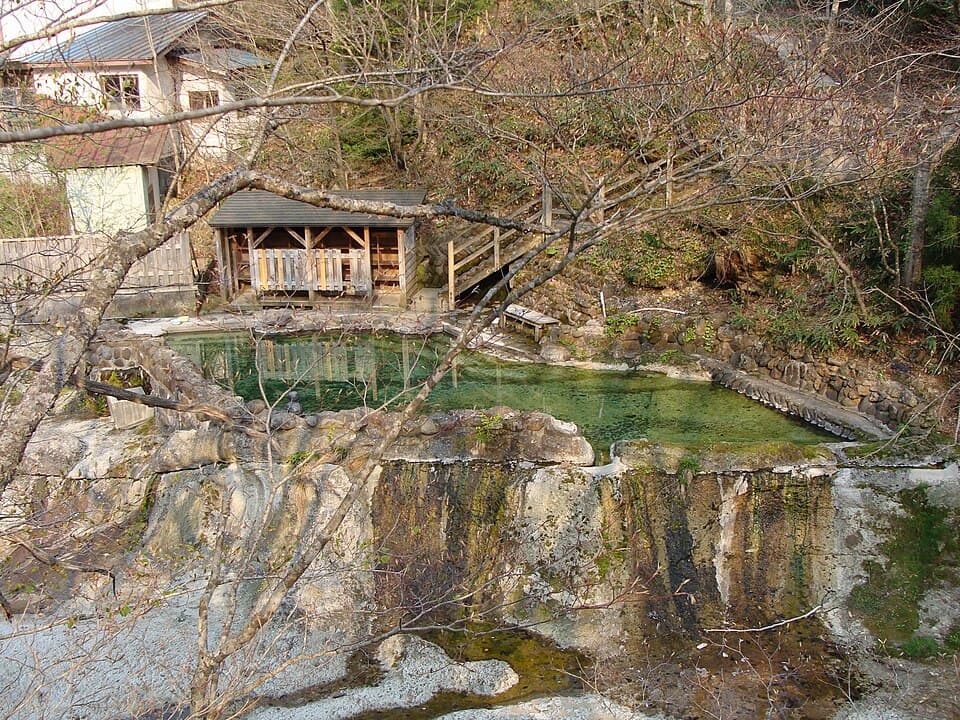
Nikko Yumoto Onsen sits at 1,500 metres within Nikko National Park and is considerably more accessible. We did visit this one on an earlier trip. The milky sulfurous waters at the edge of Lake Yunoko, with the forest above and the national park around you, gave something that lower-altitude baths cannot replicate.
What the range tells you
Japan's geological variety is not just a talking point. You feel it. A spring at pH 1.2 and a spring at pH 11.3 are chemically as different as two natural substances can be. A 105-degree volcanic vent and a lukewarm tidal pool in Izu are both categorized as onsen under Japanese law. They have almost nothing in common except the origin.
If you have only ever visited one part of Japan's hot spring landscape, you have only seen a small part of what the country actually offers. The extremes are worth finding deliberately.
Ryan helped me read the mineral boards. But you can also look at the SpringsAtlas listing and sort by pH or temperature. The data is there. The extremes are clearly labeled.