The first time I heard the word rotenburo, I did not know how to pronounce it. I was standing in a small ryokan in Hakone, and the woman at the front desk was pointing toward a wooden door at the end of a corridor. "Rotenburo," she said gently, and smiled.
I nodded like I understood. Then I opened the door, and I did.
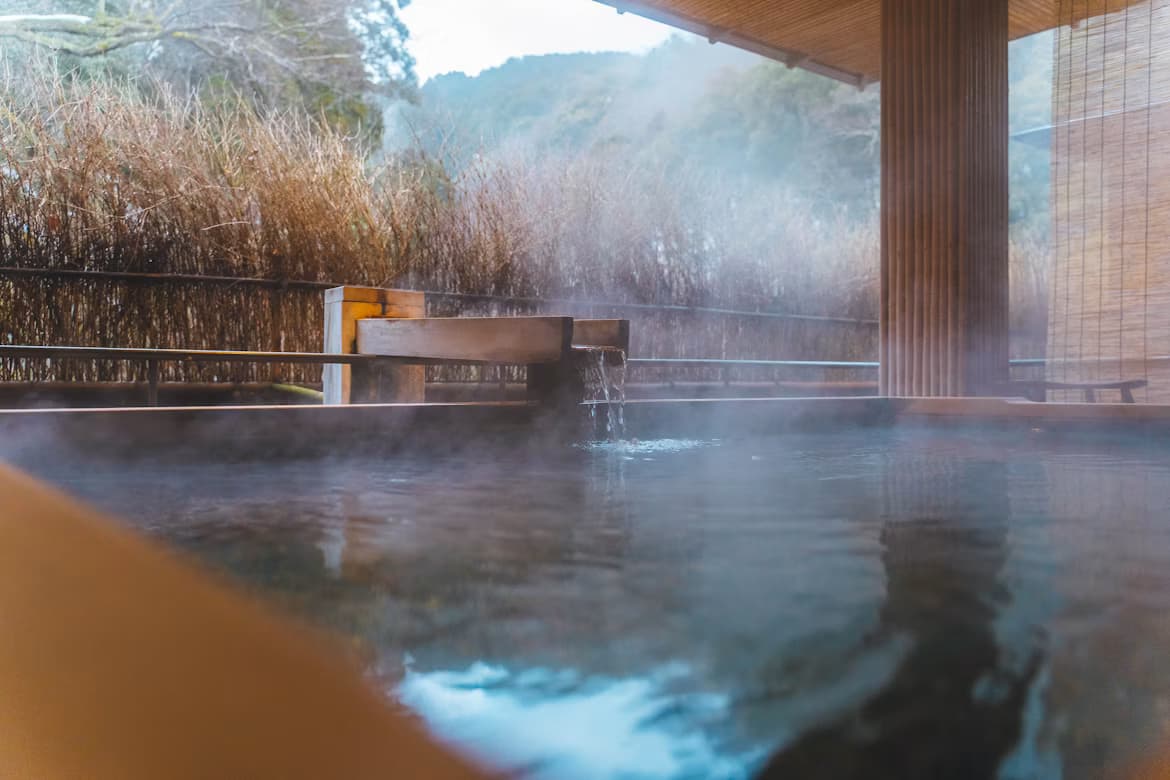
It was November. The leaves were turning on the hillside above the inn. The air had dropped below ten degrees. And there, fed by a sulfate spring with a faint mineral tang, was a stone pool sitting open to the sky. I lowered myself in. The heat reached up through my tired muscles, and the cold air stayed on my face and shoulders, and I just stayed there, motionless, for I do not know how long.
That combination is the whole point of rotenburo. And once you have felt it, nothing else quite compares.
What rotenburo actually means
The word rotenburo comes from two Japanese ideas joined together. Roten means open air, and furo means bath. So rotenburo simply means an outdoor bath, one that is exposed to the sky and the seasons and whatever landscape surrounds it.
In Japanese bathing culture, there is a word for the indoor equivalent: uchiyu. Indoor baths are warmer, more private, more consistent. They are lovely. But they cannot give you what an outdoor bath gives you, which is the direct and unfiltered experience of being somewhere.
That is the difference. In a rotenburo, you are not just bathing. You are in a place. You are present in the weather, in the season, in the particular light of wherever you are. I think that is why the experience stays with you long after the trip is over.
The contrast is real, not just poetic
I have heard people describe the hot-water-cold-air contrast as something almost spiritual, and I used to think that was a bit much. Now I think they were simply trying to describe something that is hard to put into words.
The physiology is straightforward. Your peripheral blood vessels dilate from the heat of the water. The cold air on your face and shoulders creates a counterbalancing sensation that indoor baths simply cannot replicate. The result is a kind of full-body alertness that is deeply relaxing at the same time. It sounds contradictory. It is not.
In winter, this contrast becomes extraordinary. The Japanese call it yukimi onsen, which means snow-viewing bath. You soak in steaming water while snowflakes land on your shoulders. I experienced this for the first time in Hokkaido, and I remember thinking that some things are so good that they almost make you cry for no reason.
How a rotenburo visit actually goes
If you have never been to a Japanese bath, here is what to expect.
You always start indoors. Japanese bath culture requires that you wash thoroughly at the shower stations before entering any communal pool. This is not a quick rinse. It is a proper wash, soap and all, and facilities expect it. Think of it less as a rule and more as a form of respect for everyone who shares the water with you.
From the washing area, you move to the indoor bath first at most ryokan. Then you pass through a sliding door or a covered walkway to reach the outdoor pool. The transition itself, stepping from heated interior air into the open cold, is part of what makes rotenburo feel like an arrival rather than just a swim.
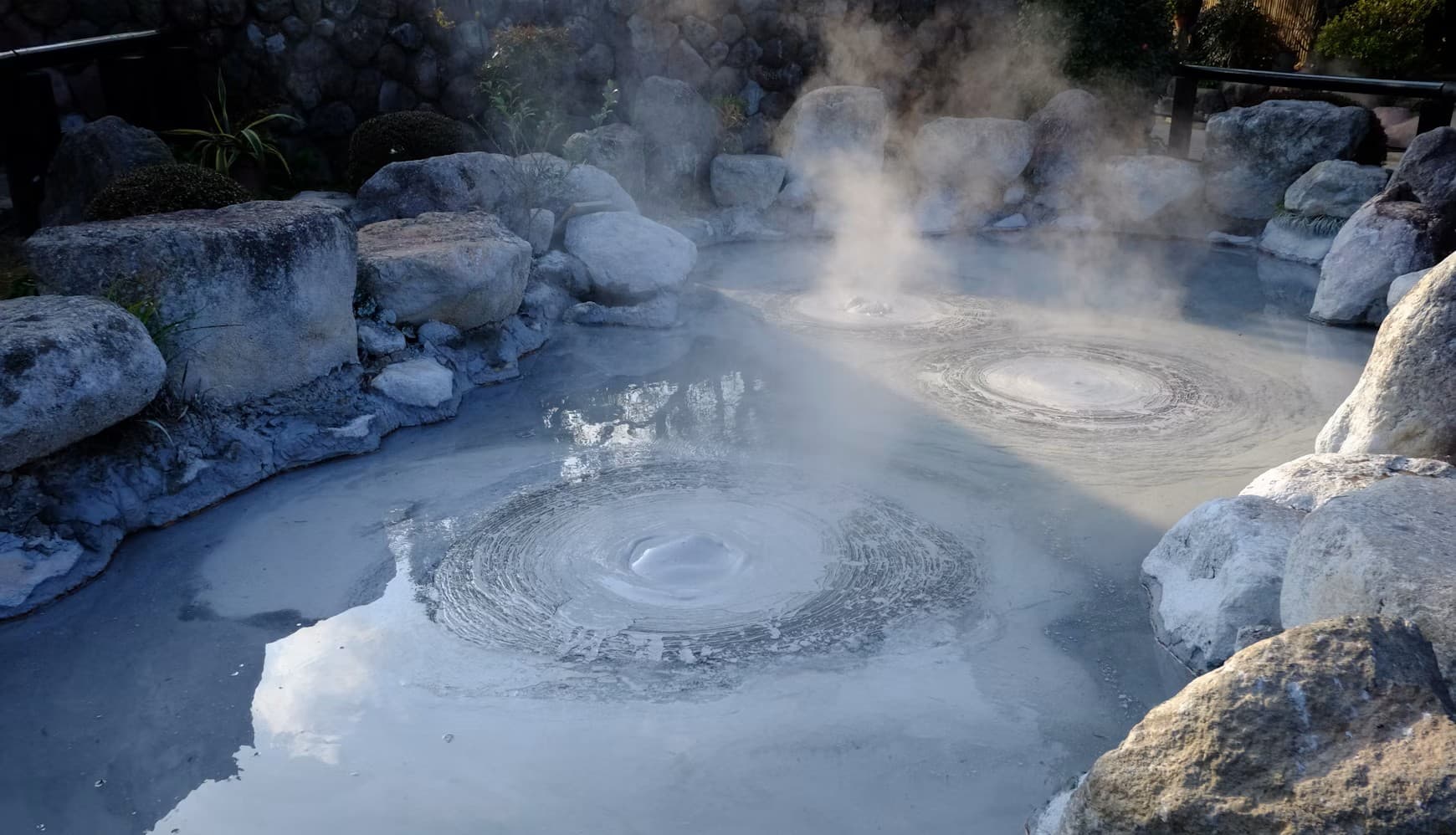
Water temperatures typically run between 38 and 44 degrees Celsius, though volcanic sources like Kusatsu in Gunma can exceed 50 degrees. Those hotter pools are usually cooled slightly before bathing, so do not worry.
The best outdoor baths are fed directly from natural springs rather than pumped and reheated. You can often tell the difference. Naturally flowing water has a livelier mineral quality, a kind of energy to it that processed water does not have. Many facilities display the spring analysis results near the entrance. The Japanese word for spring type is senshitsu. Common types you will encounter include sodium chloride, sodium bicarbonate, sulfur, and simple thermal waters. Each one feels and smells different.
Mixed bathing and the konyoku tradition
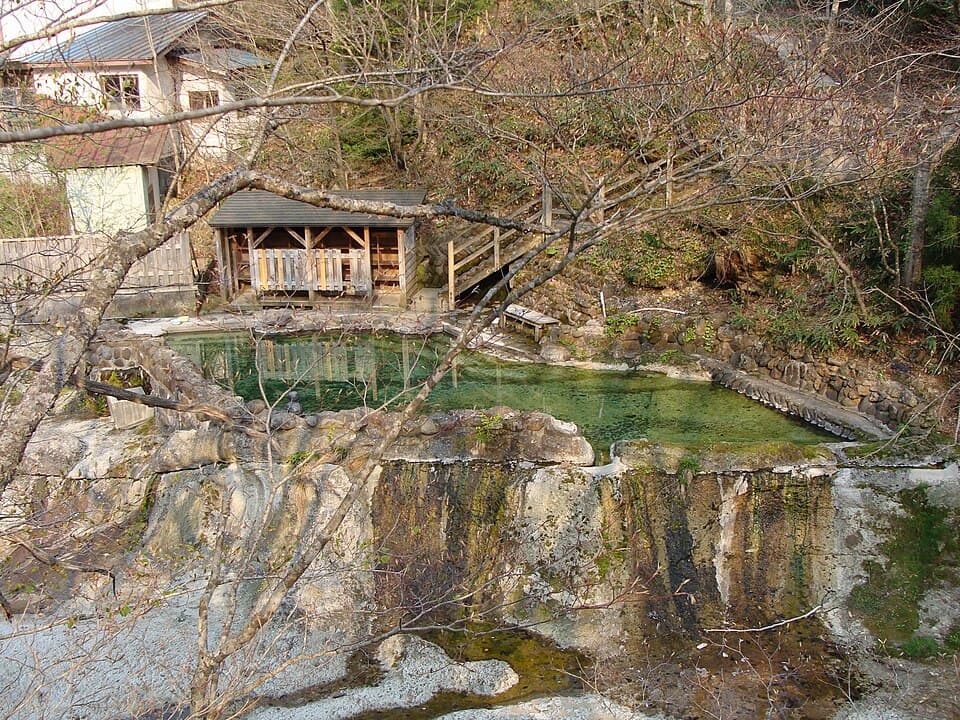
Many of Japan's oldest rotenburo are konyoku, which means gender-mixed. This is the traditional form of bathing, the one that existed before gender-separated facilities became the norm during the Meiji era. Today, konyoku baths are a minority, found mostly at remote mountain inns and the most historically rooted onsen towns.
One of the most celebrated is Tsuru-no-yu in Akita Prefecture, deep in the Nyuto Onsen area. It is a wide, milky-white pool fed by sulfurous springs, set in an old beech forest beneath thatched roofs that have stood for more than three centuries. The water is around 40 degrees, and the natural opacity of the mineral-rich water provides a modesty that no tile partition could replicate. The whole place feels like it belongs to another era, and in a good way.
I think konyoku baths work because they remind you that bathing, in its oldest and most human form, was never meant to be complicated. It was just people, water, and warmth.
Which season to go
Every season has something to offer at an outdoor bath, but they are genuinely different experiences.
Winter is widely considered the peak season for rotenburo, and I agree completely. The yukimi onsen experience, soaking in hot water while snow falls around you, is not something you forget. Midweek in January or February at some of Hokkaido's most famous outdoor baths, the crowds thin out significantly and you can have a long soak in near-silence.
Autumn, from late October through mid-November at most elevations, gives you the most visually dramatic rotenburo experience. Fall foliage and rising steam together look like something that should not be real. Every travel photograph of an outdoor bath in autumn is trying and mostly failing to capture it. You have to be there.
Spring, from late March through May, brings cherry blossoms and fresh green leaves. The air is still cool enough to appreciate the heat contrast properly. High-altitude rotenburo in the Japanese Alps stay comfortable well into June.
Summer is the least popular season for outdoor bathing, mostly because the contrast between the hot water and the warm air disappears. Higher-elevation baths are still pleasant on cool evenings. Coastal rotenburo gain a different kind of appeal. In the lowlands, most visitors shift to indoor baths or go in the evening when the temperature drops.
What to bring and what to know
Bring a small towel. The Japanese tenugui is ideal: thin cotton, fast-drying, and just the right size for folding on your head or setting aside while you soak. Most facilities offer loaner towels if you do not have one.
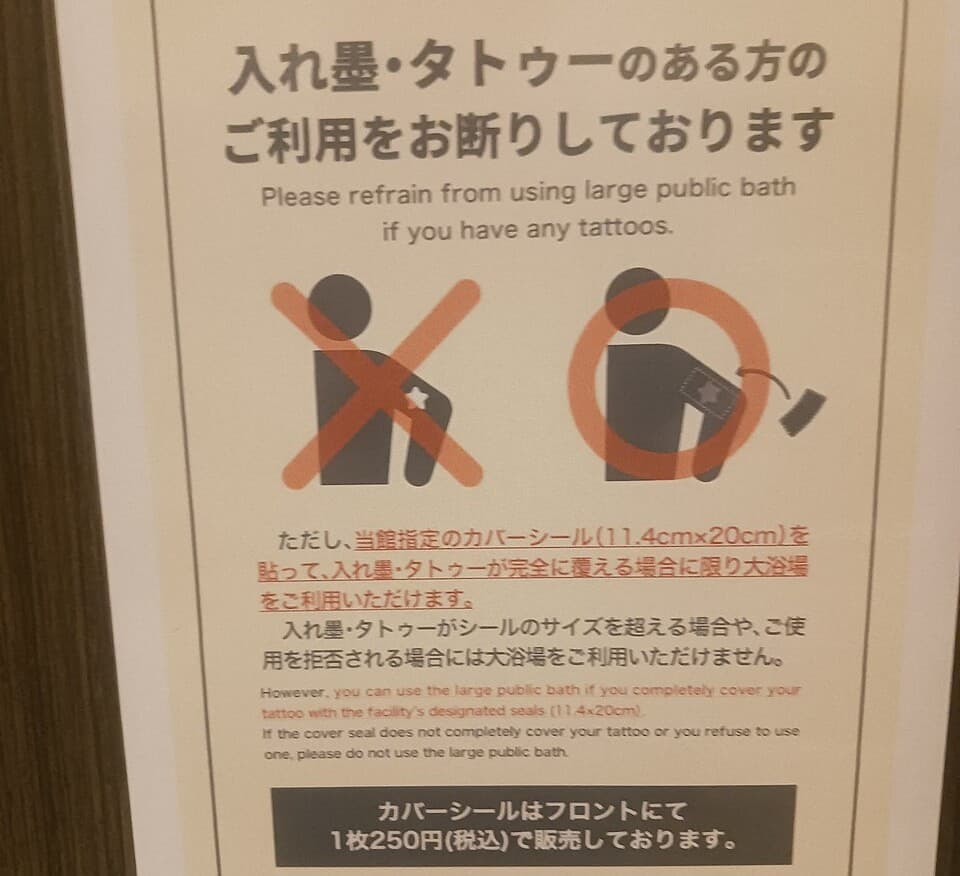
Tattoos are still restricted at a significant number of facilities, particularly the larger resort bathhouses. This policy has deep historical roots in Japan and is not going away soon. Smaller family-run onsen and many rural inns tend to be more flexible. The polite approach is to contact the facility in advance rather than arrive and hope.
Try to visit before dusk on your first time. The light is softer, the steam is more visible in the cooler air, and you can actually see the landscape you are soaking in. Evening baths are beautiful, but the environment reveals itself more clearly when there is still daylight left. Plan for 20 to 40 minutes in the water, longer in cooler weather, shorter in summer heat.
Leave your phone in the locker. Some facilities prohibit photography in the bathing areas. Others allow it, but the etiquette strongly discourages photographing other bathers. More than that, I think there is something genuinely valuable about giving yourself an hour that belongs entirely to you. No notifications, no scrolling, no capturing. Just water, air, and wherever you are.
I have been visiting rotenburo for years now, and the pull never fades. If anything, it deepens. Every outdoor bath is different: different minerals, different setting, different season, different light. But the feeling at the centre of the experience stays the same. The feeling of being fully present, warm and unhurried, in a world that keeps moving faster than any of us really want it to.
That feeling is worth travelling for.