

Public · Indoor & Outdoor · ¥600
4.1· 508 reviewsvia Google
28–32°CWater temp
11.3pH
¥600 (~$4)Entry fee
PublicBathing type
—Opening hours
About this spring
A hot spring area in northern Nagano Prefecture near the Nozawa Onsen highlands, with waters that register an extraordinary pH of 11.3, among the most alkaline of any natural hot spring in Japan. The silky, high-alkaline water is celebrated as a premier beauty spring for its remarkable skin-softening effects. The Hokuriku Shinkansen now reaches Iiyama Station, cutting the journey from Tokyo significantly.
Data: Wikipedia (CC BY-SA 4.0) · OpenStreetMap (ODbL)
Highlights
- pH 11.3 among Japan's most alkaline
- Premier beauty spring
- Hokuriku Shinkansen access
- Near Nozawa Onsen highlands
Suitability
Tattoo policy
Not permitted
Children policy
Family-friendly
pH note
Strongly alkaline (pH 11.3)
Altitude
100m
History
Iiyama's springs have been used since at least the Kamakura period.
Formal resort development began in the Kan'ei era of the 1620s-1630s when the feudal lord of the Iiyama Domain oversaw the construction of bathhouses and lodging, transforming informal local baths into an organized retreat. The area shares Nagano's deep communal outdoor bathing tradition with neighboring Nozawa Onsen. The 2024 extension of the Hokuriku Shinkansen to Iiyama Station dramatically improved access from Tokyo.
Local guide
On the limited express Romance Car out of Shinjuku, the city dissolves surprisingly quickly. Within forty-five minutes the Odakyu line is moving through forested hills in Kanagawa Prefecture, and the valley that holds Iiyama Onsen sits in the Atsugi mountains above a murmuring tributary stream. There is no resort town here, no grid of souvenir shops or illuminated hotel frontages. There is one old wooden ryokan called Motoyu, built above the stream, where the water coming out of the ground carries a pH of 11.3.
That number is worth pausing on. A pH of 7 is neutral. Most alkaline springs in Japan sit between 8 and 9.5. At 11.3, Iiyama Onsen ranks among the highest-alkaline spring waters recorded in the entire country. When you lower yourself into a bath here, the feeling is not simply warm water. The water has a distinctive slip to it, almost frictionless against the skin, and it has been described since the Edo period as a beauty spring because strong alkalinity acts as a natural exfoliant, dissolving the outer layer of dead skin cells as you soak. After twenty minutes you step out and your skin feels faintly different, not just clean but smooth in a way that tends to last through the following day.
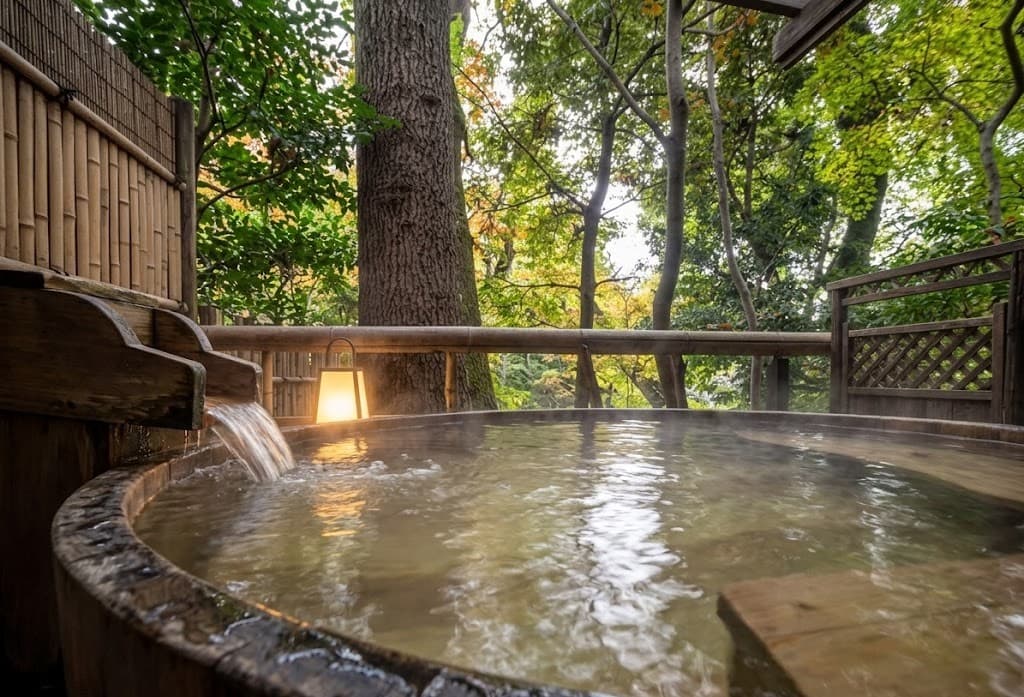
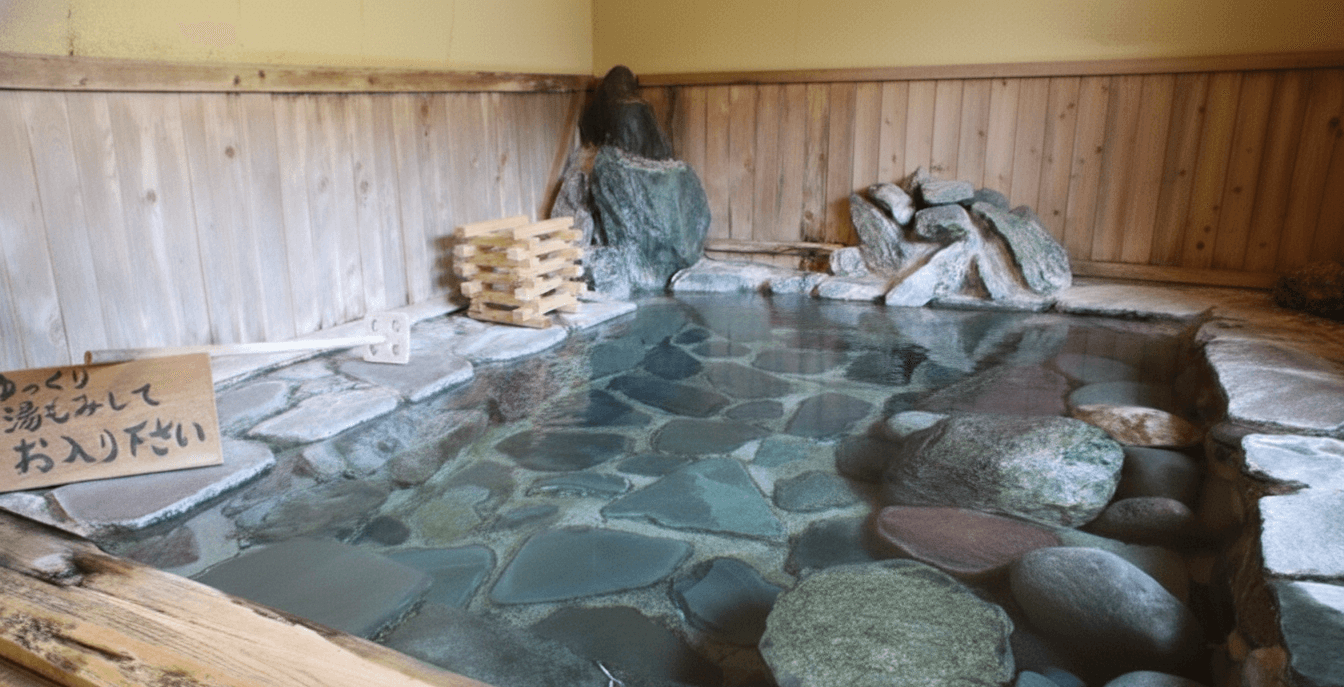
The indoor bath at Motoyu is lined with old wood and built low to the ground, in the style of baths that have not been redesigned to look rustic but simply are. The open-air bath looks directly onto the mountain stream below, and depending on the season you are listening to either rushing snowmelt or the slower summer current. A private kawa-buro style option lets you sit at the water level with the river moving past just below the wooden deck railing, which is a strange and genuinely good feeling.
The kitchen here is taken seriously. The head chef holds a Shijo Shinryu title in the traditional Japanese culinary arts, and kaiseki meals use local Kanagawa ingredients through the seasons. The freshwater ayu fish from the stream, served in autumn, is a specific reason some guests return. But the central draw of Iiyama remains the water, which is plain-looking and clear and almost inert-seeming until you have been in it for ten minutes and your skin starts to feel like it belongs to someone who sleeps eight hours a night.
How this spring compares
pH level
11.3
More alkaline than99% of Japan springs
More acidic than0% of Japan springs
Japan median7.3
Japan range1.2–11.3
n=121 springs
Max temperature
32°C
Hotter than2% of Japan springs
Japan median60°C
Japan hottest105°C
n=122 springs
Getting there
Take the Hokuriku Shinkansen to Iiyama Station. From there, take a local bus or taxi to your chosen onsen district. The journey from Tokyo takes about 2 hours.
Amenities
Towel rental
Locker
Restaurant
Café
Parking
Wheelchair access
English spoken
Tattoo-friendly
Private bath
Soap provided
Hair dryer
Location & nearby
4916 Iiyama, Atsugi, Kanagawa 243-0213
Odawara Station · 28.1 kmShinkansen
Aiko-Ishida Station · 7.7 km
Sobudaishita Station · 7.6 km
Hon-Atsugi Station · 7 km
飯山温泉入口(バス) · 0.2 km
Tokyo Haneda Airport · 43.8 km
Narita International Airport · 102.9 km
Kiyokawashobokunrenshorinji Helipad · 2 km
Iiyama Onsen Iriguchi (Bus Stop) · 0.2 km
Shidahara (Bus Stop) · 0.3 km
Kami-Iiyama (Bus Stop) · 0.5 km
Book a stay nearby
Hotels near Iiyama
2+ optionsSpringsAtlas may earn a commission from bookings made through these links.
More springs in Greater Tokyo
1 / 6

Last verified:
Data: OpenStreetMap (ODbL) · local tourism agencies
Verified listing