

Public · Indoor & Outdoor · ¥1,500
30–50°CWater temp
10.0pH
¥1,500 (~$10)Entry fee
PublicBathing type
—Opening hours
About this spring
One of Japan's oldest hot spring resorts, with a recorded history of over 1,200 years, set along the Shimobe River in Yamanashi Prefecture at the foot of the Minobu mountains. The spring is associated with the warlord Takeda Shingen, who is said to have brought wounded soldiers here after the battles of Kawanakajima to recover. The strongly alkaline waters reach pH 10.
Data: Wikipedia (CC BY-SA 4.0) · OpenStreetMap (ODbL)
Highlights
- 1,200-year history
- Takeda Shingen healing spring
- pH 10 strongly alkaline
- Japan's 100 Famous Hot Springs
Suitability
Tattoo policy
Not permitted
Children policy
Family-friendly
pH note
Alkaline water (pH 10.0)
Altitude
550m
Mineral chemistry
Sulfur
Benefits
Sulfuric hot springs are among the most studied in Japanese balneology. The sulfur compounds — primarily hydrogen sulfide and thiosulfate — have documented antimicrobial and anti-inflammatory properties. Regular bathing is associated with relief from chronic skin conditions including eczema and psoriasis, as well as joint inflammation and muscle soreness. Sulfuric waters have been prescribed in Japanese medical practice since the Edo period.
Note
The distinctive rotten-egg smell dissipates quickly after leaving the bath. Avoid if you have a sulfur allergy, very sensitive skin, or respiratory conditions. Remove silver jewellery before entering — sulfur will blacken it permanently.
History
The founding legend dates the discovery to the reign of Emperor Keiko, though historical records become firm in the medieval period.
The association with Takeda Shingen cemented the spring's reputation as a warrior's healing water during the Sengoku period. In the twentieth century Shimobe was designated one of Japan's 100 Famous Hot Springs. The resort spans both banks of the Shimobe River, with twelve distinct baths drawing on two spring sources.
Local guide
From Minobu Station, the road climbs into the hills along the Fuji River tributary toward Shimobe Onsen, passing through dense forest with no large towns between. The terrain here is southern Yamanashi at its most understated, no Fuji views, no famous gates, just a narrow valley and the kind of persistent quiet that comes from being far enough from any main route that casual traffic does not come through. Shimobe has been a hot spring settlement for over 1,200 years, associated with Takeda Shingen, who reportedly used the waters to treat battle wounds during his campaigns in the sixteenth century. The village has not changed shape dramatically since.
The spring water runs across two main types here, which is part of what makes Shimobe genuinely interesting to people who pay attention to water chemistry. The first is a simple alkaline sulfur spring with a pH of 10, which is strongly alkaline by any standard. In the bath, this water feels almost frictionless against the skin, the alkalinity breaking down surface oils until you feel completely clean in a way that takes a moment to identify. The second source is a simpler alkaline spring drawn from a different depth, cooler and softer. Used together across different tubs, the two types give Shimobe Hotel's twelve baths, seven of which are outdoor, a range of sensations that a single-source onsen cannot match.
Mount Minobu is the backdrop to all of this. The mountain is the location of Kuonji Temple, the head temple of Nichiren Buddhism, and it draws pilgrims from across Japan who climb its 287-step stone staircase to the main hall. Shimobe sits a short distance from that pilgrimage route, which partly explains why it has been in continuous use for so long. Pilgrims and travelers with sore legs have been stopping at these springs for the same reason for over a millennium.
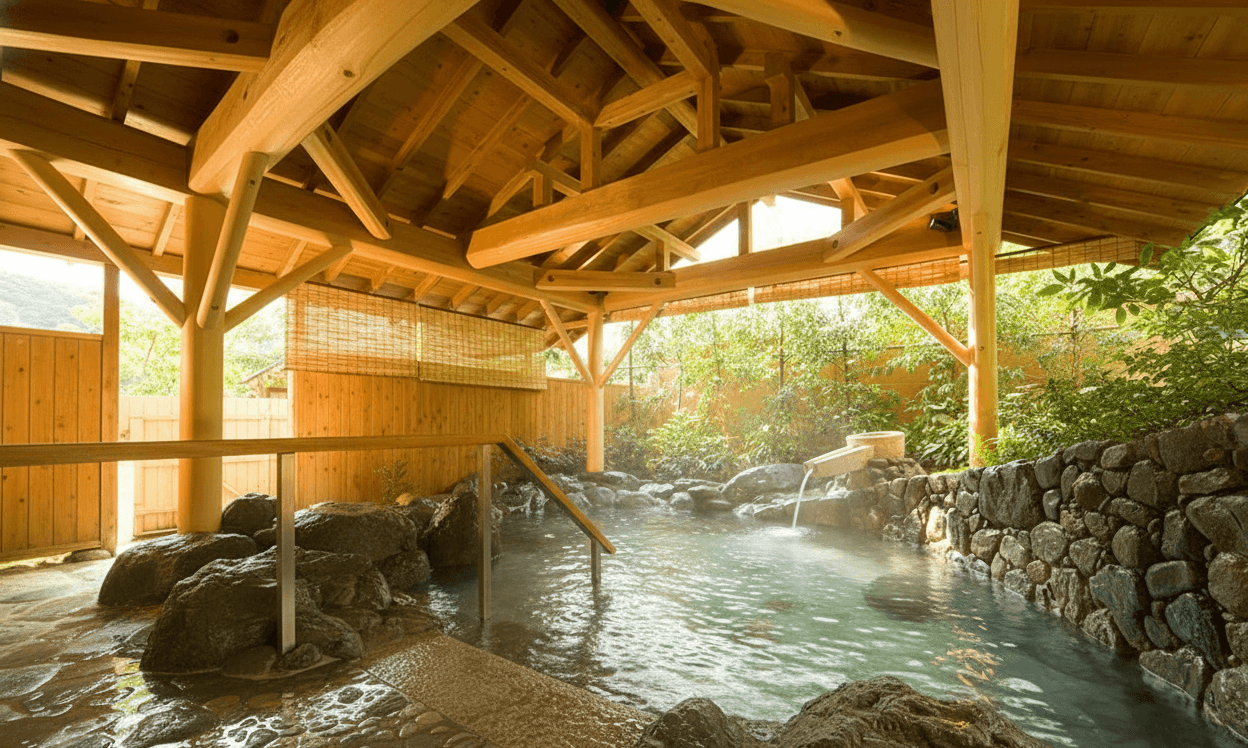
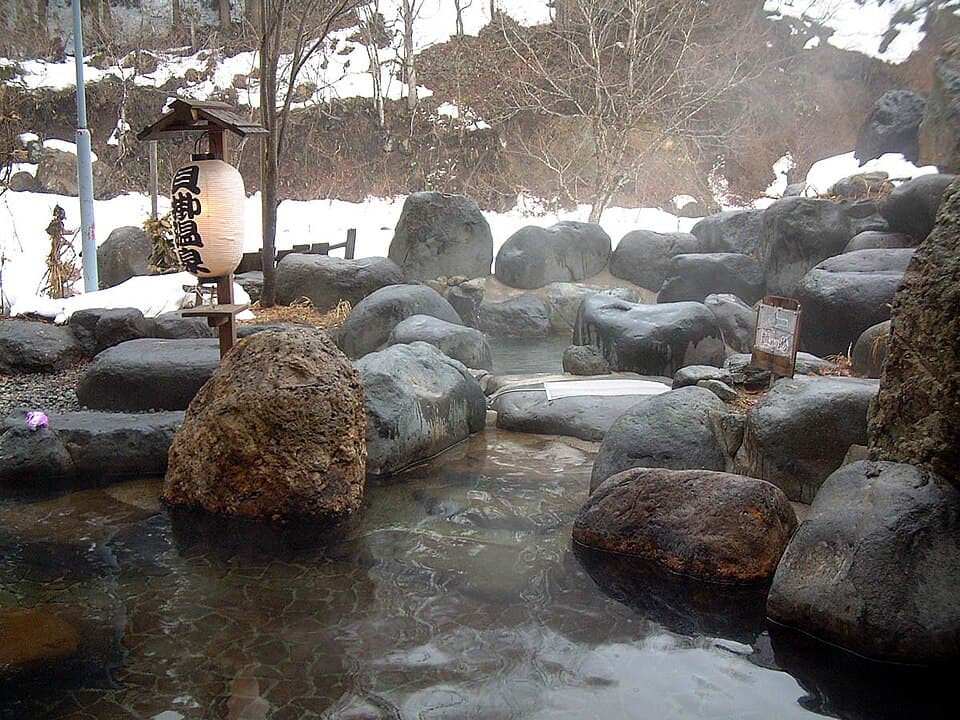
The outdoor baths here are positioned in the hillside garden above the river, surrounded by cedar and maple that shift through green, orange, and bare grey depending on the season. The water at the lower temperatures, around 30 degrees in some pools, is genuinely unusual for a hot spring, cool enough to sit in for an extended time while still feeling the mineral character of the water. After spending a day on the pilgrimage road, those cooler pools are exactly what the journey built toward.
How this spring compares
pH level
10.0
More alkaline than98% of Japan springs
More acidic than1% of Japan springs
Japan median7.3
Japan range1.2–11.3
n=121 springs
Max temperature
50°C
Hotter than24% of Japan springs
Japan median60°C
Japan hottest105°C
n=122 springs
Getting there
Take the JR Minobu Line from Fuji Station northbound or from Kofu Station southbound. Shimobe-Onsen Station is served by all trains including the Limited Express Fujikawa. From Shinjuku, take the Fujikawa limited express to Kofu, about 90 minutes, then transfer to a southbound Minobu Line train to Shimobe-Onsen Station, about 40 minutes. The onsen town is a short walk from the station.
Amenities
Towel rental
Locker
Restaurant
Café
Parking
Wheelchair access
English spoken
Tattoo-friendly
Private bath
Soap provided
Hair dryer
Location & nearby
Shimobe Onsen, Minobu, Minamikoma District, Yamanashi
Shimobe-Onsen Station · 0.8 km
Hadakajima Station · 2 km
Shin-Fuji Station · 35.1 kmShinkansen
Ichinose Station · 4.3 km
Shionosawa Station · 5.4 km
Kai-Tokiwa Station · 2.5 km
Shinshu-Matsumoto Airport · 96.8 km
Shizuoka Airport · 74.6 km
ヘリポート · 7 km
Book a stay nearby
Hotels near Shimobe
8+ optionsSpringsAtlas may earn a commission from bookings made through these links.
More springs in Chubu
1 / 13



Last verified:
Data: OpenStreetMap (ODbL) · local tourism agencies
Stale listing