
No photo yet
Public · Indoor · ¥400
4.5· 5,200 reviewsvia Google
42–55°CWater temp
8.5pH
¥400 (~$3)Entry fee
PublicBathing type
—Opening hours
About this spring
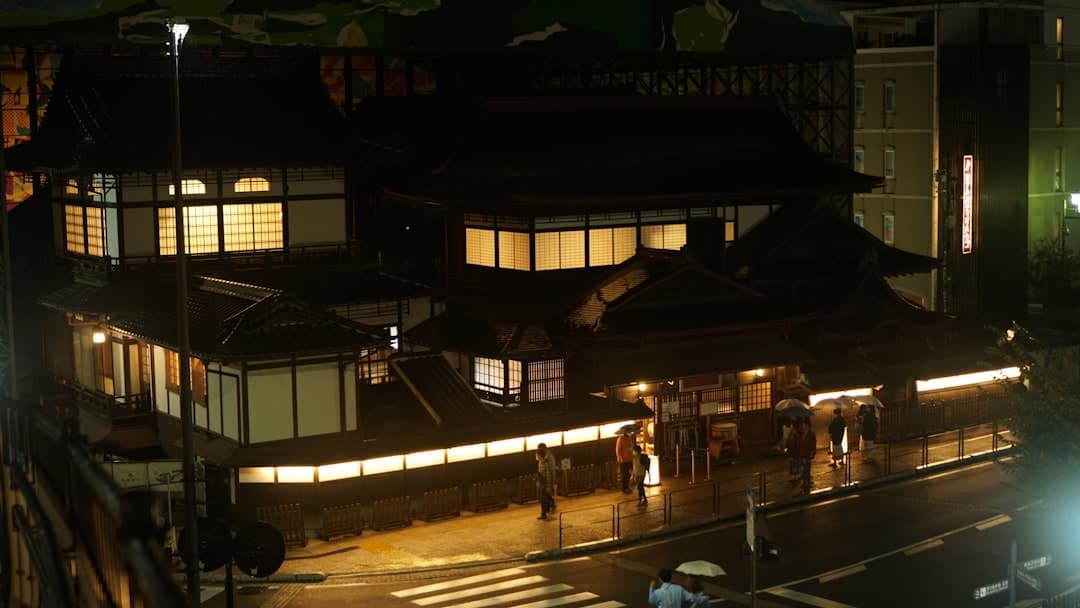
One of Japan's oldest hot springs, with a recorded history going back over 1,300 years and oral traditions reaching much further. The iconic Dogo Onsen Honkan, a three-storey wooden bathhouse completed in 1894, is said to have inspired the bathhouse in Studio Ghibli's Spirited Away. The gentle alkaline waters are known for their skin-softening properties.
Data: Wikipedia (CC BY-SA 4.0) · OpenStreetMap (ODbL)
Highlights
- 3,000-year history
- Spirited Away inspiration
- National Important Cultural Property
- Skin-softening alkaline water
Suitability
Tattoo policy
Welcome
Children policy
Family-friendly
Altitude
50m
Mineral chemistry
Simple Thermal
Benefits
Simple thermal springs (単純温泉) have a lower dissolved mineral content than other spring types but are valued for the pure therapeutic effect of heat immersion itself. The warmth increases core body temperature, promotes sweating, eases muscle tension, and improves peripheral circulation. Simple thermal springs are the most common onsen type in Japan and are recommended as the gentlest introduction to onsen bathing — suitable for a wide range of health conditions and ages.
Note
Simple thermal springs are the most broadly accessible onsen type. Standard precautions apply: avoid bathing within 30 minutes of eating, keep soaks to 10–15 minutes for first-timers, and hydrate before and after.
Alkaline
Benefits
Alkaline springs (pH above 8) are known in Japan as "bijin-no-yu" — beauty water — for their skin-softening effect. The high pH saponifies skin oils, producing a characteristic silky feel on the skin surface. Regular soaking is associated with improved skin moisture retention and a reduction in roughness. Strongly alkaline springs (pH above 10) are among the most effective for this effect.
Note
The slippery feeling underfoot in highly alkaline springs is normal — take care when standing and walking in the bath. Avoid prolonged soaking if you have dry or sensitive skin, as the same mechanism that softens skin can over-strip natural oils with excessive exposure.
History
The springs appear in the Nihon Shoki chronicle of 720 AD and in the Man'yoshu poetry anthology of the eighth century.
A founding legend tells of a white egret that healed its injured leg in water rising from the coastal rock, drawing the first human bathers to the site. Prince Shotoku, who died in 622, is said to have visited and carved a tribute to the spring's healing power. The current Honkan building was completed in 1894. The novelist Natsume Soseki, posted as an English teacher in Matsuyama in 1895, would have ridden Matsuyama's first electric tram to these baths. His memories of Dogo informed his comic novel Botchan, published in 1906. The Honkan is now a National Important Cultural Property and the first public bathhouse in Japan to receive recognition from the Michelin Guide.
Local guide
From Matsuyama Station, the orange Iyotetsu tram runs on a single track through the city center for twenty minutes before pulling into the terminus at Dogo Onsen Station. The tram is a real tram, not a tourist replica, and the station building beside it is a late Victorian wooden structure that the city has kept in its original condition. When you step off and turn to face the main bathhouse at the top of the shopping arcade, the three-tiered wooden tower of Dogo Onsen Honkan rises above the street in a way that immediately explains why Hayao Miyazaki used it as a reference for the bathhouse in Spirited Away. The resemblance is not a rumor. It is obvious from fifty meters away.
The Honkan was built in 1894 and is an Important Cultural Property, which meant that the five-year renovation that began in 2019 had to be carried out with exceptional care around a still-operating building. The full reopening in July 2024 returned access to all sections, including the Yushinden, the private imperial bath constructed in 1899 for the exclusive use of the Emperor's family. No emperor has bathed there since 1952, but for 500 yen you can take a guided tour through the lacquered rooms and understand why it was considered the finest bathing chamber in the country.
The water at Dogo is simple thermal alkaline, a pH of 8.5 and a temperature range of 42 to 55 degrees Celsius. It comes out clear and odorless, which is unusual for a spring with this much cultural weight behind it. The alkalinity makes it smooth and slightly slippery on the skin, and bathing here repeatedly has an unmistakable softening effect. Inside the Honkan the main communal stone bath, Kami-no-Yu, is the busier of the two gender-separated pools, while Tama-no-Yu, the Bath of the Spirits, is smaller and quieter. You bring your own towel or buy one at the front desk, and the attendants in traditional dress direct you upstairs to a tatami rest room between soaks.
Dogo has been operating for over three thousand years according to the oldest references, which appear in the eighth-century Nihon Shoki. In that time the town around it has accumulated a density of history that is unusual even by Japanese standards. Matsuyama Castle, one of the few original feudal castles still standing in Japan with all its towers intact, sits on a hilltop fifteen minutes away by tram and ropeway. The poet Masaoka Shiki and the novelist Natsume Soseki both spent time in this city, and their presence in the cultural memory of the place is still visible in the museums and the street names. Coming to Dogo Onsen is not just coming to a bath. It is coming to a place that has been the center of Matsuyama's identity for longer than the city itself has existed.
How this spring compares
pH level
8.5
More alkaline than82% of Japan springs
More acidic than10% of Japan springs
Japan median7.3
Japan range1.2–11.3
n=121 springs
Max temperature
55°C
Hotter than43% of Japan springs
Japan median60°C
Japan hottest105°C
n=122 springs
Getting there
Shikoku Ferry + Iyotetsu→ Matsuyama3h
Iyotetsu tram to Dogo Onsen (~20 min)
Total: 3h 30m
From Matsuyama Airport, take the Iyotetsu limousine bus to Dogo Onsen Station. The ride takes about 40 minutes. Alternatively, take the Iyotetsu tram Line 5 from JR Matsuyama Station to Dogo Onsen Station, about 20 minutes. Dogo Onsen Honkan is a 2-minute walk from the tram terminus.
Amenities
Towel rental
Locker
Restaurant
Café
Parking
Wheelchair access
English spoken
Tattoo-friendly
Private bath
Soap provided
Hair dryer
Location & nearby
Dogo Yunomachi, Matsuyama City, Ehime 790-0842
Dogo Onsen Station · 0.2 km
Shin-Iwakuni Station · 62 kmShinkansen
Ishitegawa Park Station · 2.8 km
Matsuyama City Station · 2.9 km
Komachi Station · 2.9 km
Matsuyama Airport · 8.4 km
Hiroshima Airport · 66.1 km
Dogo Onsen Eki mae · 0.2 km
Kiki Kinenkan-mae (Bus Stop) · 0.3 km
Book a stay nearby
Hotels near Matsuyama
31+ optionsSpringsAtlas may earn a commission from bookings made through these links.
More springs in Shikoku
1 / 1
Last verified:
Data: OpenStreetMap (ODbL) · local tourism agencies
Verified listing