Mixed · Indoor & Outdoor · ¥600
25–32°CWater temp
8.5pH
¥600 (~$4)Entry fee
MixedBathing type
—Opening hours
About this spring
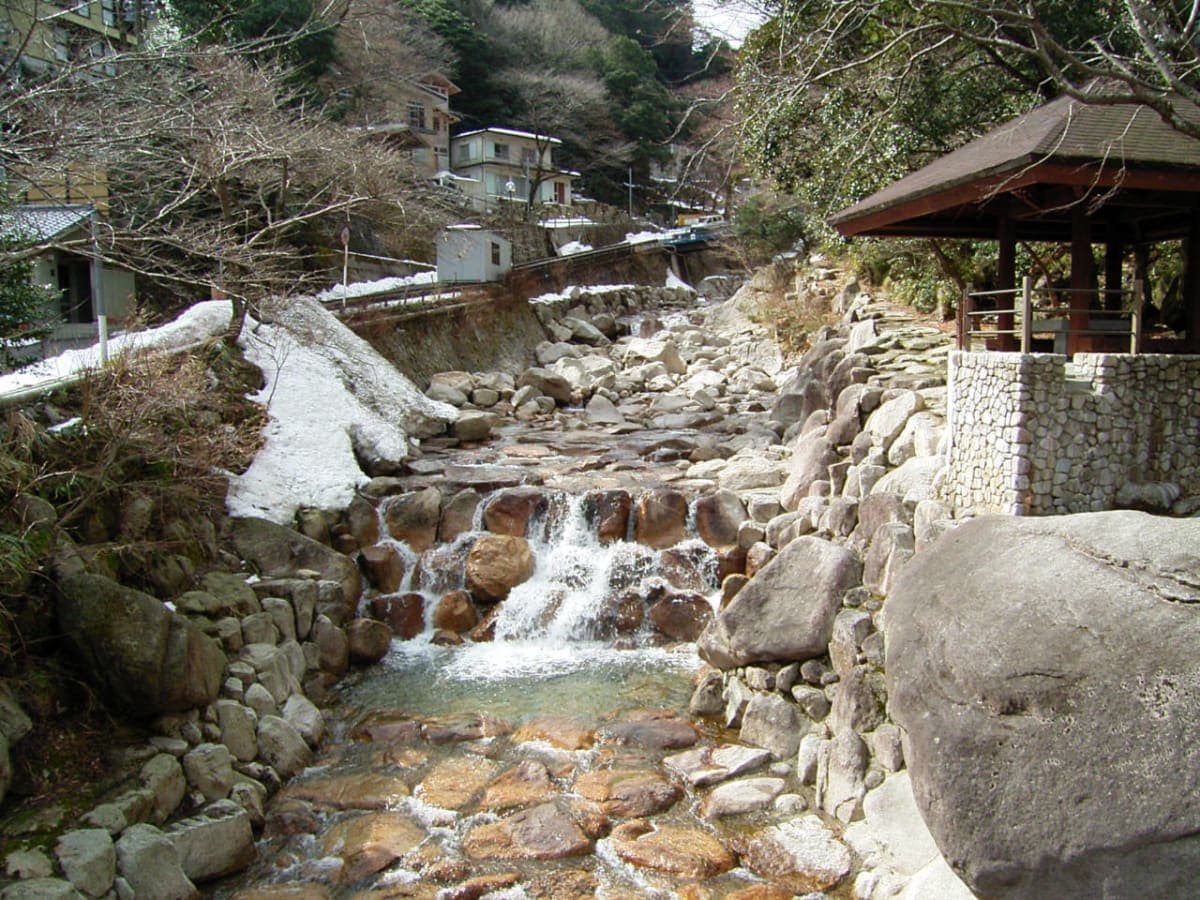
A riverside hot spring resort in Mie Prefecture's Suzuka Quasi-National Park, at the foot of Mount Gozaisho. The Gozaisho Ropeway, one of the longest in Japan at 2,161 meters, rises from near the onsen village to the rocky summit plateau. The combination of mountain air, clear river gorge, and traditional ryokan inns makes this an appealing destination through all four seasons.
Data: Wikipedia (CC BY-SA 4.0) · OpenStreetMap (ODbL)
Highlights
- Gozaisho Ropeway access
- Suzuka Quasi-National Park
- Gorge spring and autumn foliage
- 1,300-year history
Suitability
Tattoo policy
Policy varies
Children policy
Family-friendly
Altitude
350m
Mineral chemistry
Alkaline
Benefits
Alkaline springs (pH above 8) are known in Japan as "bijin-no-yu" — beauty water — for their skin-softening effect. The high pH saponifies skin oils, producing a characteristic silky feel on the skin surface. Regular soaking is associated with improved skin moisture retention and a reduction in roughness. Strongly alkaline springs (pH above 10) are among the most effective for this effect.
Note
The slippery feeling underfoot in highly alkaline springs is normal — take care when standing and walking in the bath. Avoid prolonged soaking if you have dry or sensitive skin, as the same mechanism that softens skin can over-strip natural oils with excessive exposure.
History
The spring is traditionally dated to 718 AD in the Nara period.
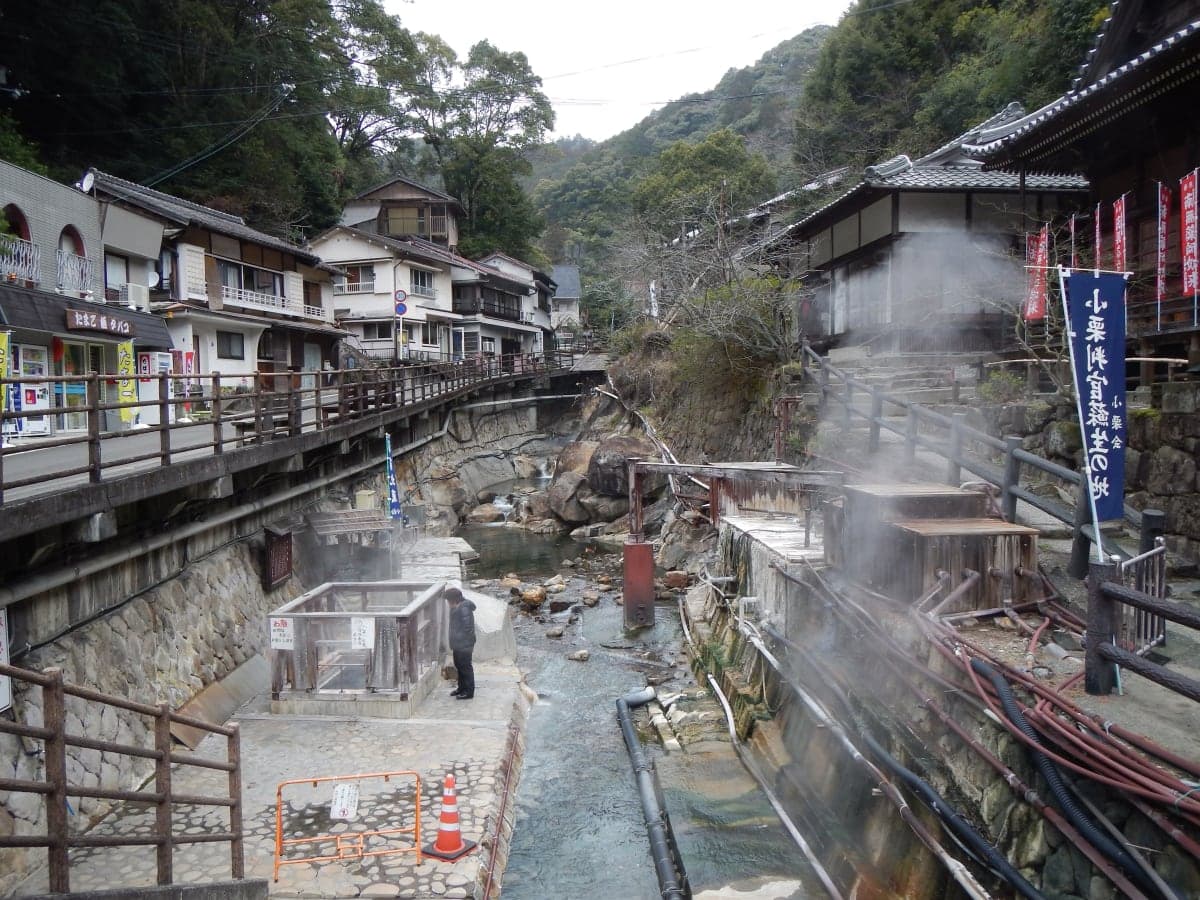
The local name Shika no Yu, meaning Deer's Hot Spring, comes from a founding legend of a wounded deer that healed itself in the warm water. The resort suffered significant damage in the sixteenth century when Oda Nobunaga's forces swept through the region and the inn quarter was largely destroyed by fire. The community rebuilt, and through the Edo period the inns along the Mitaki River gorge served travellers resting between Nagoya and the Ise shrines. The Gozaisho Ropeway opened in the modern era, transforming the town into a year-round destination.
Local guide
The Kintetsu Yunoyama Line ends at a small station called Yunoyama Onsen, and when you walk out of the turnstile the ropeway station is visible a short walk up the road. Mount Gozaisho rises directly behind it, 1,212 meters of granite and forest that forms the western edge of the Suzuka mountains on the Mie-Shiga border. The ropeway, built in 1959 and supported by what was for many years Japan's tallest pylon tower, takes fifteen minutes to reach the summit. From the bottom, looking up through the cable car window in late October, the entire slope is on fire with maple color: deep red and orange from the konara oaks, pale yellow from the birch stands, still-green patches of cedar that the autumn has not yet touched.
The springs at Yunoyama are alkaline, coming out of the ground at a cool 25 to 32 degrees Celsius, which means all the baths heat the water artificially rather than blending it down. The pH of 8.5 gives the water a clean, slightly slippery feel on the skin that is characteristic of alkaline springs. There is no smell. The water looks completely clear in the bath, though the alkalinity means that after soaking for thirty minutes you step out with a skin surface that is noticeably smoother than when you went in. The original spring here was apparently discovered by a wounded deer bathing in the water, an animal that keeps appearing in Japanese onsen founding stories because it requires no translation: the animal knows where to go, and humans follow.
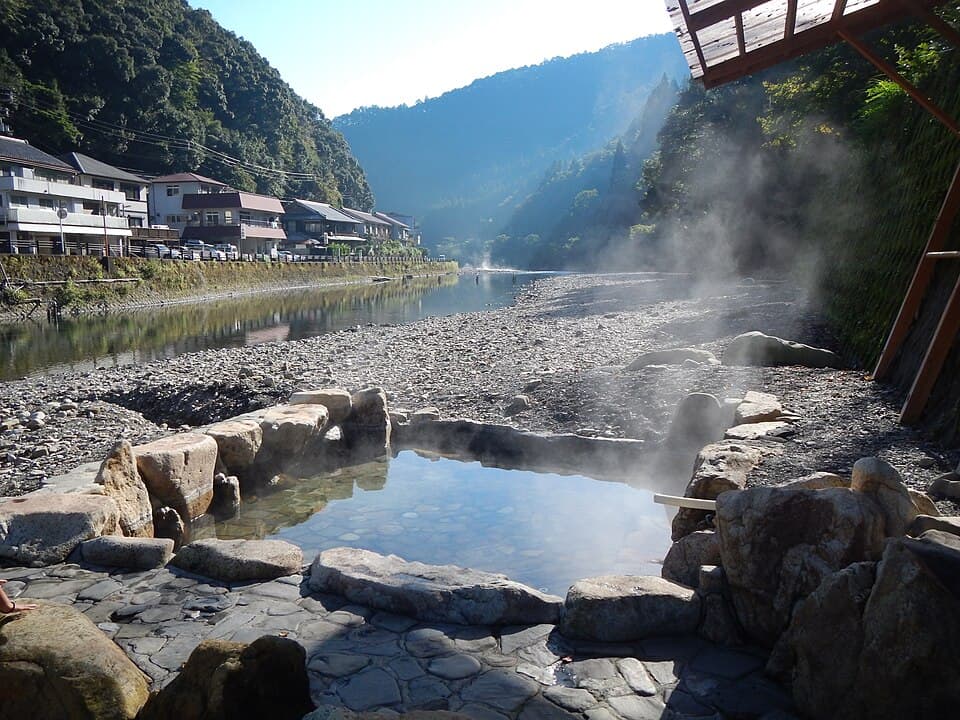
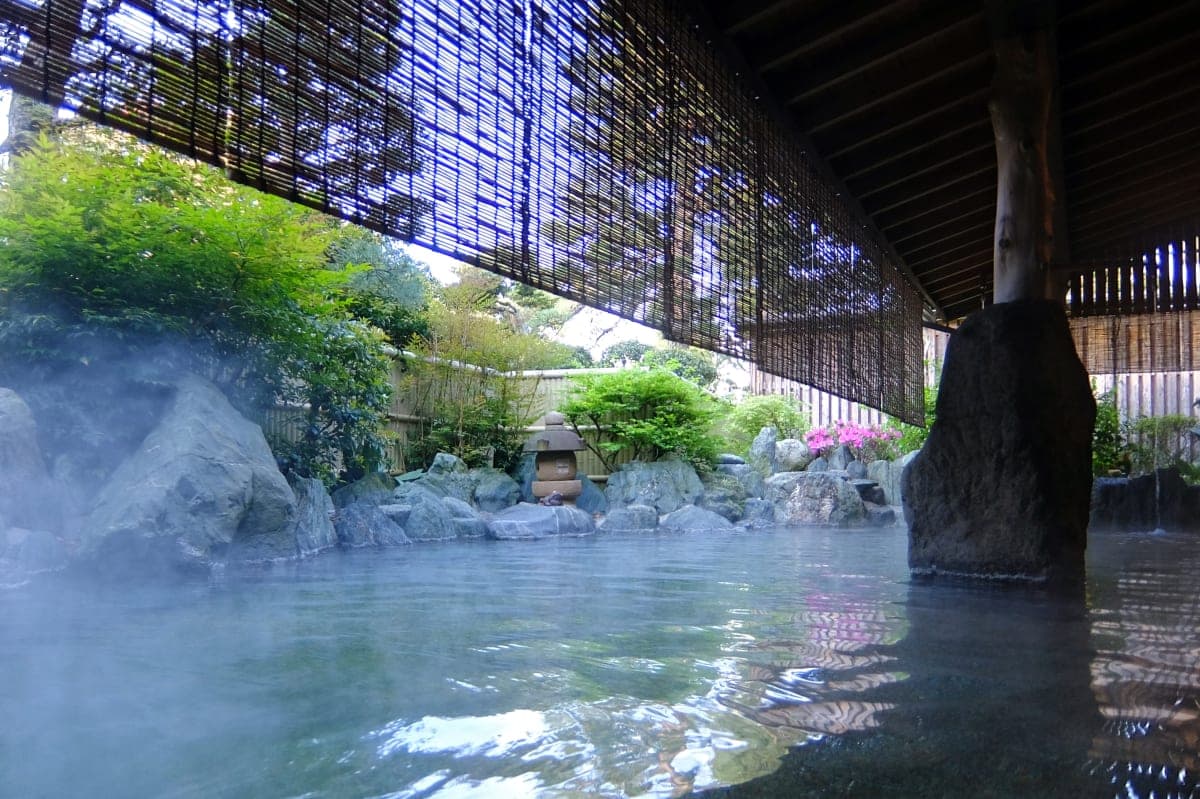
The best single experience at Yunoyama is riding the ropeway in the early morning on a clear day in peak autumn season, then descending and getting into an outdoor bath at one of the inns along the valley floor while the color-changed slopes are still lit by low-angle morning light. The combination is straightforward and almost embarrassingly good. You sit in hot water at 25 degrees Celsius output, heated to bathing temperature, and look up at a mountain that looks like it is actively burning. The valley has a small river running through it with footbath installations built into the stone ledges beside the water.
The access from Nagoya is about ninety minutes by Kintetsu Limited Express to Kintetsu-Yokkaichi, then a transfer to the Yunoyama Line. Osaka takes about two hours total. This makes Yunoyama a practical day trip from either city in autumn, and the ropeway lines get long on weekends during the first two weeks of November when the color peaks. Going midweek is strongly advisable. The town itself is small, a few dozen inns and a handful of restaurants, but the mountain behind it is large enough that it does not feel like a bottleneck. The scale of Gozaisho dominates everything down here, and that is entirely the point.
How this spring compares
pH level
8.5
More alkaline than82% of Japan springs
More acidic than10% of Japan springs
Japan median7.3
Japan range1.2–11.3
n=121 springs
Max temperature
32°C
Hotter than2% of Japan springs
Japan median60°C
Japan hottest105°C
n=122 springs
Getting there
Take the Kintetsu Nagoya Line to Kintetsu-Yunoyama Station, then transfer to the Kintetsu Yunoyama Line and ride to the terminus at Yunoyama Onsen Station. The journey from Nagoya takes about 75 minutes.
Amenities
Towel rental
Locker
Restaurant
Café
Parking
Wheelchair access
English spoken
Tattoo-friendly
Private bath
Soap provided
Hair dryer
Location & nearby
Yunoyama Onsen, Komono, Mie District, Mie
Maibara Station · 36.5 kmShinkansen
Yunoyama Onsen Station · 0.2 km
Obaneen Station · 4.3 km
Naka-Komono Station · 5.2 km
Komono Station · 6.4 km
Chubu Centrair (Nagoya) Airport · 37 km
Nagoya Komaki Airport · 50.9 km
Yunoyama onsen/Gozaisho ROPEWAY-mae · 0.2 km
Seikibashi · 1.5 km
Book a stay nearby
Hotels near Yunoyama
15+ optionsSpringsAtlas may earn a commission from bookings made through these links.
More springs in Kansai
1 / 13




Last verified:
Data: OpenStreetMap (ODbL) · local tourism agencies
Verified listing