
Public · Indoor & Outdoor · ¥700
Hirayu Onsen
平湯温泉
91°CPublic BathIndoor & Outdoorsulfursodium-bicarbonatesodium-chloridehydrogen-carbonatecalciumiron
50–91°CWater temp
6.7pH
¥700 (~$5)Entry fee
PublicBathing type
—Opening hours
About this spring
The oldest and largest of the five hot spring villages in the Okuhida Onsen-go cluster of Gifu Prefecture, set at the entrance to the Japanese Alps. Together the five villages produce over 37,000 liters of spring water per minute, the third highest output in Japan. Hirayu serves as the main bus hub for the Okuhida region and the surrounding national park, with connections to Takayama, Matsumoto, and beyond.
Data: Wikipedia (CC BY-SA 4.0) · OpenStreetMap (ODbL)
Highlights
- 37,000 L/min third in Japan
- Alps bus hub
- White monkey founding legend
- Chubusangaku National Park
Suitability
Tattoo policy
Policy varies
Children policy
Family-friendly
Altitude
1,250m
Mineral chemistry
Sulfur
Benefits
Sulfuric hot springs are among the most studied in Japanese balneology. The sulfur compounds — primarily hydrogen sulfide and thiosulfate — have documented antimicrobial and anti-inflammatory properties. Regular bathing is associated with relief from chronic skin conditions including eczema and psoriasis, as well as joint inflammation and muscle soreness. Sulfuric waters have been prescribed in Japanese medical practice since the Edo period.
Note
The distinctive rotten-egg smell dissipates quickly after leaving the bath. Avoid if you have a sulfur allergy, very sensitive skin, or respiratory conditions. Remove silver jewellery before entering — sulfur will blacken it permanently.
Bicarbonate
Benefits
Bicarbonate springs (sodium bicarbonate, calcium bicarbonate, or hydrogen carbonate) are particularly effective for skin conditions. The bicarbonate ions cleanse and soften the skin surface, removing excess sebum without stripping the skin's acid mantle. These springs are traditionally recommended for acne-prone skin and as a gentle option for sensitive skin types. The water has a characteristically clean, soft feel.
Note
Bicarbonate springs are generally among the most gentle and well-tolerated onsen types. Those with very dry skin may wish to apply moisturiser after bathing, as the cleansing effect can temporarily reduce surface oils.
Sodium Chloride (Salt)
Benefits
Sodium chloride springs — essentially natural saltwater baths — are celebrated for their warming and moisturising effects. The salt forms a thin film on the skin after bathing that slows moisture evaporation, keeping skin hydrated longer than a freshwater bath. This "heat-retaining" property means bathers stay warm for significantly longer after leaving the water, making these springs especially popular in winter. Salt springs are among the most accessible for first-time onsen visitors.
Note
Those with high blood pressure or heart conditions should consult a doctor before bathing, as the warming effect increases circulation. Avoid immersing open wounds. The salt will sting slightly in eyes — take care when submerging.
Calcium Chloride
Benefits
Calcium chloride springs share the heat-retaining property of sodium chloride springs but with a stronger warming effect due to the divalent calcium ion. They are prized for muscle and joint relief — the combination of heat retention and calcium's role in muscle function makes them a popular choice for athletes and those with chronic musculoskeletal complaints. The water has a slightly bitter mineral taste.
Note
The strong warming effect means those with cardiovascular conditions, high blood pressure, or pregnancy should limit soak duration and consult a doctor if in doubt. Avoid entering immediately after vigorous exercise — let your heart rate normalise first.
Iron
Benefits
Iron-bearing springs are recognised by their characteristic rust-red or amber colour and metallic taste. The iron content — primarily ferrous bicarbonate or ferric sulfate — is associated with stimulation of red blood cell production and is traditionally recommended for anaemia and fatigue recovery. The distinctive colouring comes from iron oxidising on contact with air and is not a sign of contamination.
Note
Iron springs will stain light-coloured swimwear and towels a persistent brownish-orange. Avoid wearing white or light fabrics into the water. Those with haemochromatosis (iron overload condition) should seek medical advice before bathing.
History
The spring's discovery is dated to the 1560s during the Warring States period.
According to legend, soldiers in the service of Takeda Shingen were crossing the Okuhida mountains when an aged white monkey led them from behind a waterfall to steaming pools in the valley. They bathed, rested, and recovered their strength. Takeda Shingen himself later soaked here. During the Edo period Hirayu became a lodging stop for lords of the Hokuriku region. The area sits within Chubusangaku National Park, tapping a geothermal system with over 100 individual sources.
Local guide
The bus from Takayama Station follows the Miyagawa River north and then climbs through a series of switchbacks into the Hida Mountains, arriving at Hirayu Bus Terminal at 1,250 meters above sea level after about an hour. Hirayu is the transport hub of the Okuhida Onsen region, which means buses to Norikura, Shin-Hotaka, and the other mountain villages all pass through here, and the terminal itself sits at the center of a small village surrounded by peaks. The Yakedake and Norikura volcanoes both rise to the east and west, and it is their ongoing geothermal activity that heats the forty separate spring sources flowing beneath the village floor.
The sulfur content at Hirayu is high enough to color some of the water white. The milky-white sulfur springs here are uncommon even within Gifu Prefecture, and the sodium bicarbonate and chloride compounds that mix with the sulfur give the water a slightly alkaline quality despite the volcanic origin. In the bath, the water feels light and just slightly slippery, not in the way of an alkaline simple spring but from the fine sulfur particles suspended in it. The smell is mild, the kind of sulfur you notice when you first lower yourself in and then stop noticing within a few minutes. It leaves a faint warmth on the skin that persists well after you dress.
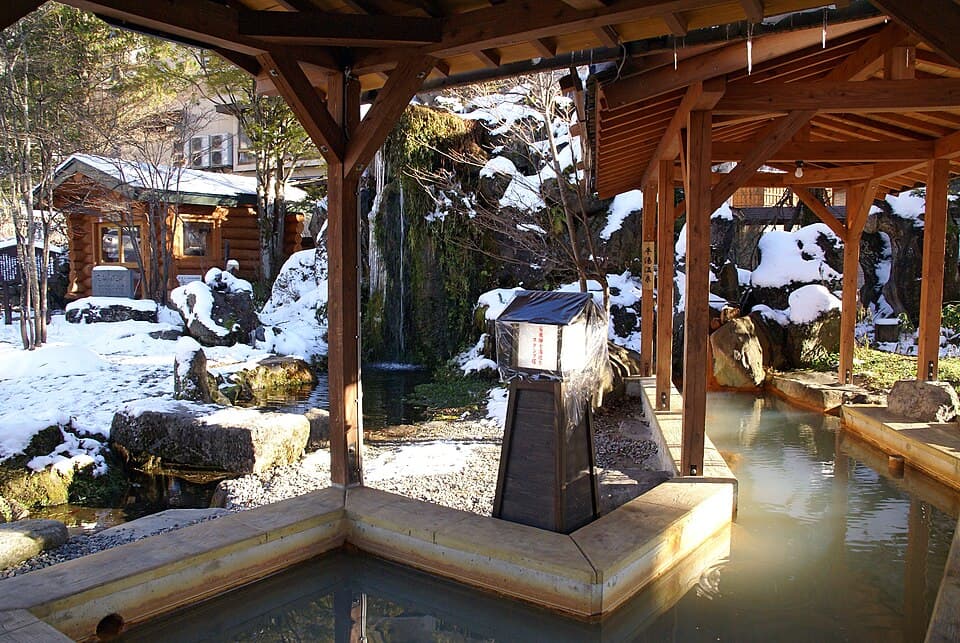
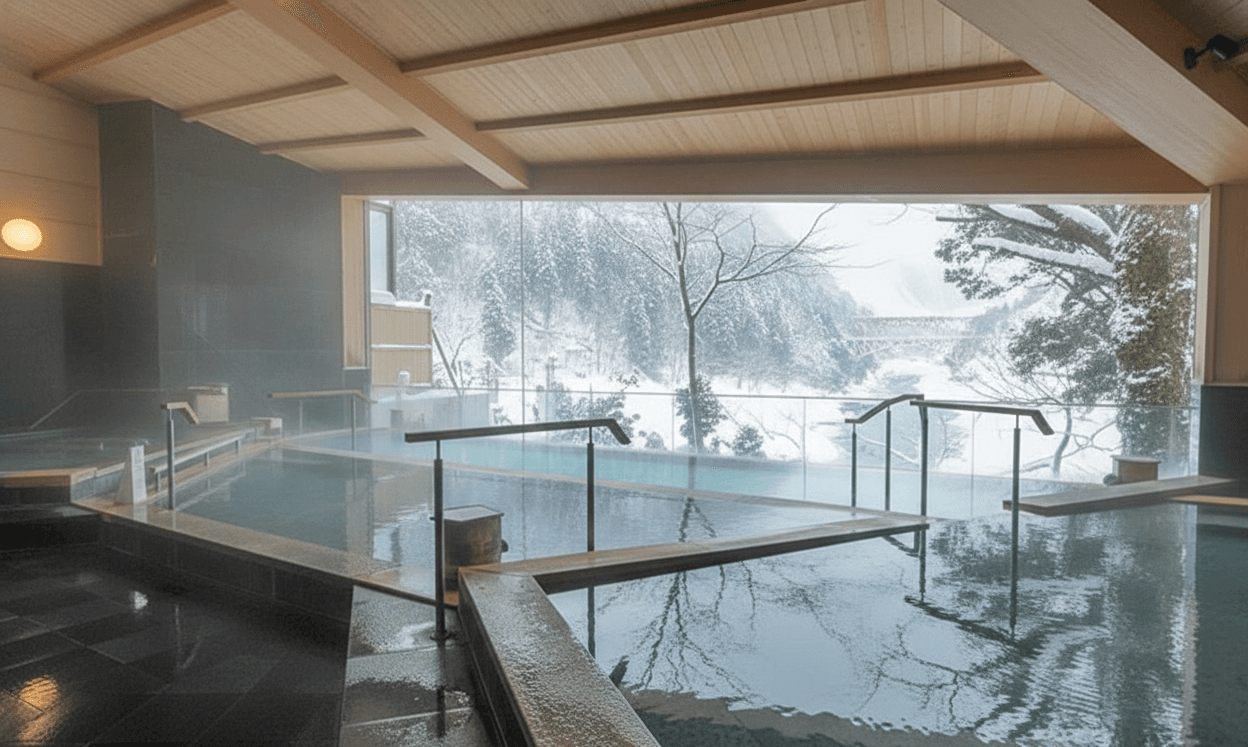
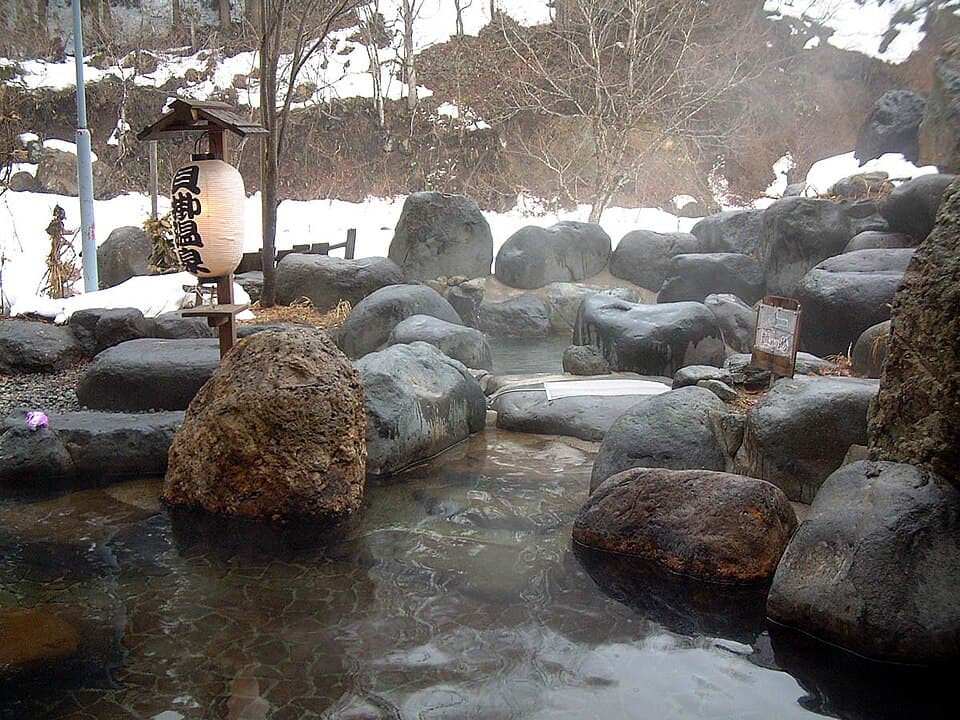
The flagship day-bath facility here is Hirayu no Mori, which operates sixteen separate outdoor rotenburo fed directly from the Norikura source. The pools vary in temperature, and the arrangement allows you to move between them across a wide area of outdoor space shaded by tall conifers. In winter, snow accumulates on the surrounding trees while the pools stay hot, and steam covers the entire bathing area in a low moving cloud. Beside the bus terminal, the small folk-history museum Hirayu Minzokukan runs its own outdoor bath called Hirayu no Yu, open from early morning until late evening for a suggested donation of 300 yen.
From Hirayu, a bus line runs directly to the Norikura Skyline during summer and autumn, reaching the second-highest paved road in Japan at 2,702 meters. You can soak at altitude in the morning and be standing at the edge of a snowfield by afternoon. The Shin-Hotaka Ropeway, Japan's only double-decker gondola, is forty minutes further along the valley road and lifts passengers to an observation platform at 2,156 meters. Most visitors base themselves at Hirayu for two nights to cover both, using the outdoor baths as the anchor point between longer excursions into the mountains.
How this spring compares
pH level
6.7
More alkaline than26% of Japan springs
More acidic than72% of Japan springs
Japan median7.3
Japan range1.2–11.3
n=121 springs
Max temperature
91°C
Hotter than86% of Japan springs
Japan median60°C
Japan hottest105°C
n=122 springs
Getting there
Hirayu Onsen has no train station. All access is by bus. From Matsumoto, take the Alpico highway bus toward Takayama and alight at Hirayu Onsen Bus Terminal, about 90 minutes. Seat reservations are required. From Takayama, Nohi Bus runs to Hirayu in about 60 minutes, departing roughly once per hour with no reservation needed.
Amenities
Towel rental
Locker
Restaurant
Café
Parking
Wheelchair access
English spoken
Tattoo-friendly
Private bath
Soap provided
Hair dryer
Location & nearby
Hirayu Onsen, Okuhida Onsengo Hirayu, Takayama, Gifu 506-1433
Toyama Station · 64.9 kmShinkansen
Shinshu-Matsumoto Airport · 33.4 km
Toyama Airport · 60.4 km
Hakkotsu Helipad · 8.1 km
Alps Kaido Hirayu · 0 km
Hirayu Onsen · 0 km
Book a stay nearby
Hotels near Hirayu
12+ optionsSpringsAtlas may earn a commission from bookings made through these links.
More springs in Chubu
1 / 13



Last verified:
Data: OpenStreetMap (ODbL) · local tourism agencies
Stale listing