
Mixed · Indoor & Outdoor · ¥500
Yuzawa Onsen
湯沢温泉
43°CMixed BathingIndoor & Outdoorsimple-alkalinesodium-chloride
43–43°CWater temp
7.5pH
¥500 (~$3)Entry fee
MixedBathing type
—Opening hours
About this spring
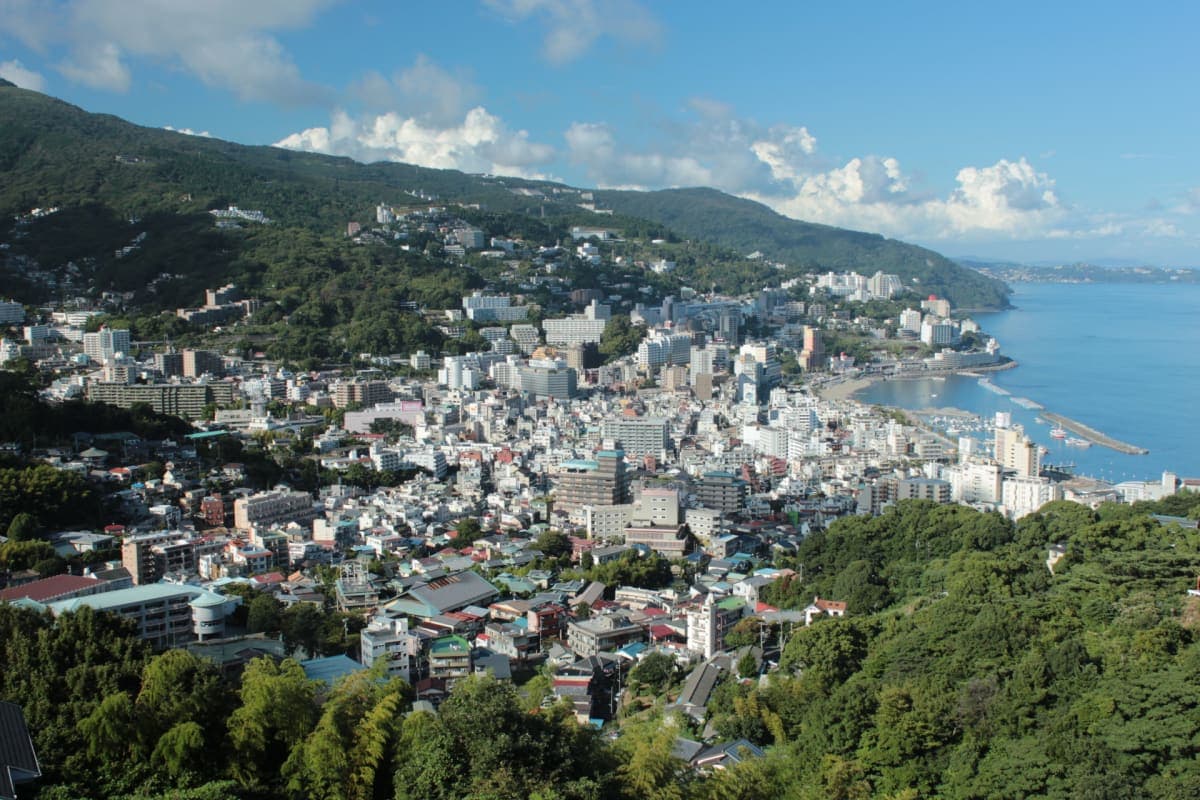
A hot spring town in Niigata Prefecture with at least 27 onsen and ryokan, set among the snowfields of the Uonuma highlands. The oldest spring, Kaikake Onsen, was first documented in the 1400s. The town offers both public and private bathing options and some smaller springs like Akayu Onsen are accessible via a mountain hike.
Data: Wikipedia (CC BY-SA 4.0) · OpenStreetMap (ODbL)
Highlights
- Historic Kaikake Onsen since 1400s
- 27 onsen in the town
- Mountain hike to Akayu Onsen
- Snowy highland setting
Suitability
Tattoo policy
Policy varies
Children policy
Family-friendly
Altitude
340m
Mineral chemistry
Sodium Chloride (Salt)
Benefits
Sodium chloride springs — essentially natural saltwater baths — are celebrated for their warming and moisturising effects. The salt forms a thin film on the skin after bathing that slows moisture evaporation, keeping skin hydrated longer than a freshwater bath. This "heat-retaining" property means bathers stay warm for significantly longer after leaving the water, making these springs especially popular in winter. Salt springs are among the most accessible for first-time onsen visitors.
Note
Those with high blood pressure or heart conditions should consult a doctor before bathing, as the warming effect increases circulation. Avoid immersing open wounds. The salt will sting slightly in eyes — take care when submerging.
History
Kaikake Onsen, the most historically significant spring in the area, was documented from at least the 1400s.
During the Sengoku period it was reportedly used by Uesugi Kenshin to treat wounded troops. In the Edo period the waters gained a reputation for treating eye diseases. The town of Yuzawa was formally established in 1955 through the merger of several villages.
Local guide
The Joetsu Shinkansen from Tokyo reaches Echigo-Yuzawa Station in about eighty minutes, carrying mostly skiers in winter and hikers in summer. But the station the data records as the nearest stop to Yuzawa Onsen is Echigo-Yuzawa, and the town it refers to is the same ski-and-spring resort destination that Yasunari Kawabata used as the setting for Snow Country, his Nobel Prize-winning novel. The opening sentence of that book may be the most famous geographical observation in Japanese literature: the train comes out of the long tunnel and there is the snow country. The tunnel he means is the Shimizu Tunnel, and when you ride it today the moment still works, the dark of the bore and then the sudden white landscape of the Niigata basin laid out below you.
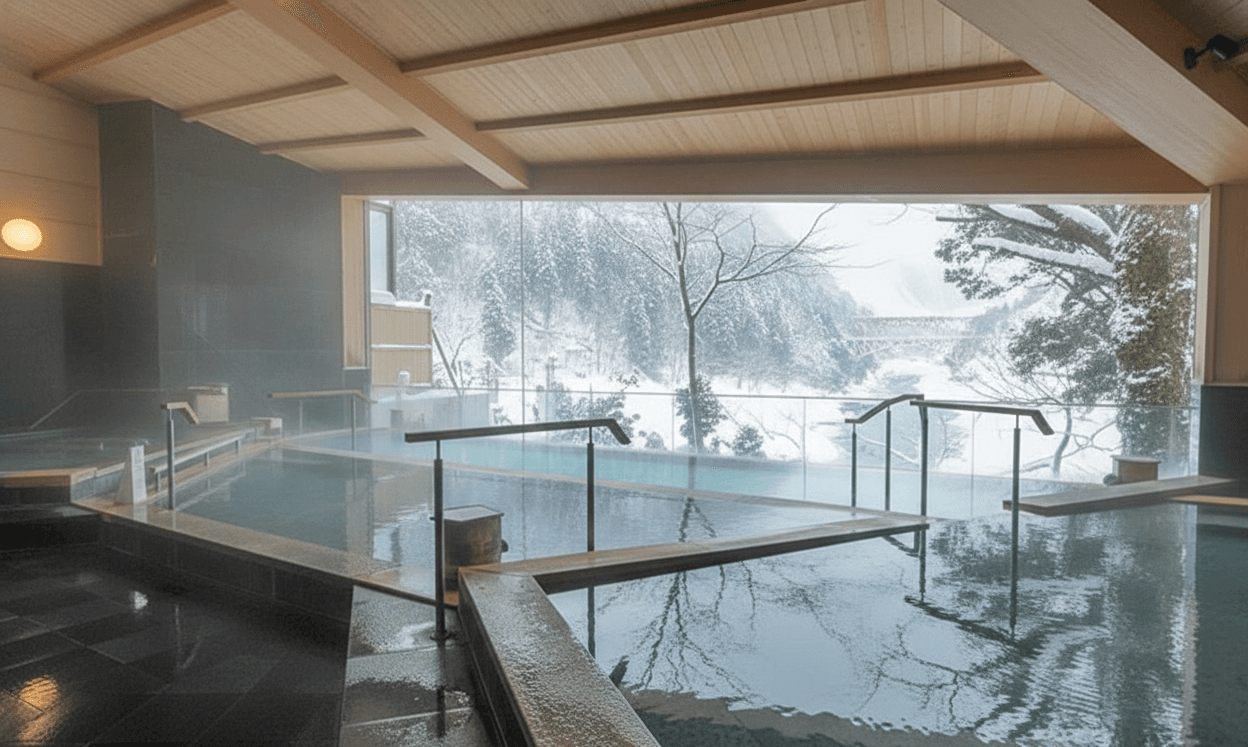
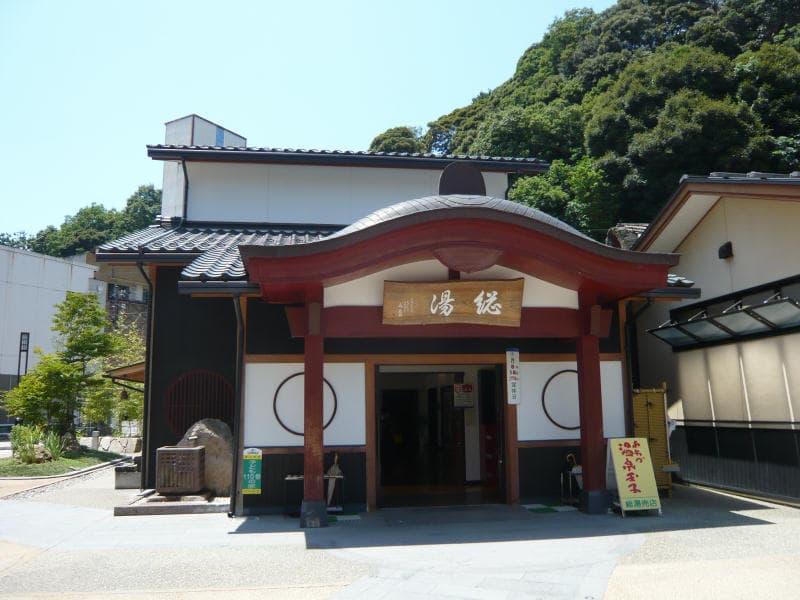
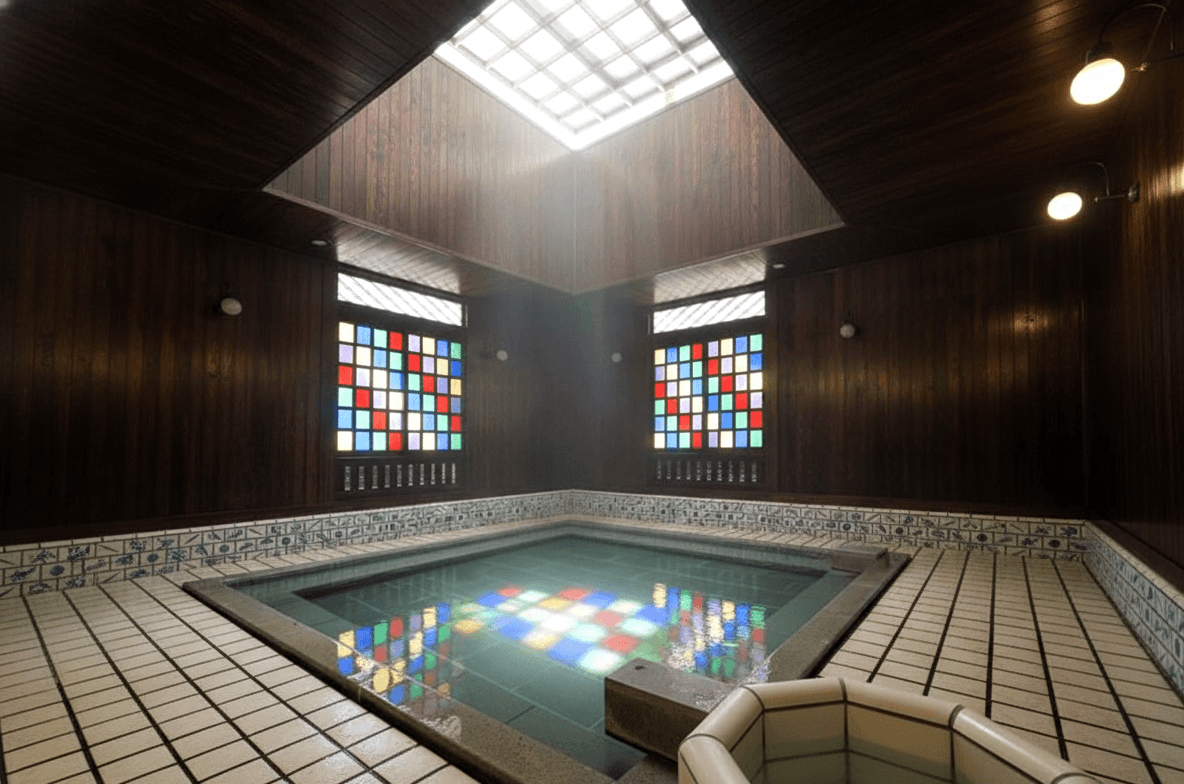
The springs here are simple alkaline and sodium chloride, neutral at pH 7.5, coming out of the ground at a steady 43 degrees Celsius. The water is clear with no strong odor and a mild mineral taste. It is warm water in the Japanese tradition of reliable, approachable bathing rather than dramatic chemistry. In the large communal baths at the resort hotels and in the public day-use bath facilities in the station building itself, the warmth is direct and honest. You stay in for forty minutes and come out with pink skin and slow thoughts. The outdoor baths in winter are the defining experience: hot water at 43 degrees, air temperature well below zero, heavy snowfall coming straight down, and the entire Niigata basin visible in the distance beyond the cedar ridge.
Kaikake Onsen, a single old inn about a thirty-minute walk or short taxi ride from the main resort area, predates the ski development by several centuries. The records go back to the 1400s, and the building has the feel of a place that has been continuously occupied rather than periodically renovated. The bath at Kaikake is smaller and quieter than the resort pools, fed by its own dedicated line, and the water has a slightly different mineral profile from the town's main source. It is the kind of bath where you understand why people came here before the train existed, before the ski lifts, before the sake vending machines in the station basement.
The snow in Yuzawa is not decorative. This part of Niigata gets among the heaviest snowfall in the inhabited world, averaging several meters per winter, and the rooftops are built with steep pitches to shed it. The ski area is substantial, and the resort town around the station has a functional, year-round energy rather than the seasonal hollowness of some mountain destinations. Come in February if you want the full Snow Country effect. The tunnel comes out into white, the valley is buried, and the baths are working at full capacity against the cold.
How this spring compares
pH level
7.5
More alkaline than56% of Japan springs
More acidic than36% of Japan springs
Japan median7.3
Japan range1.2–11.3
n=121 springs
Max temperature
43°C
Hotter than11% of Japan springs
Japan median60°C
Japan hottest105°C
n=122 springs
Getting there
Take the Joetsu Shinkansen from Tokyo to Echigo-Yuzawa Station. The journey takes about 80 minutes. Most of the onsen are within the town, reachable on foot or by local bus.
Amenities
Towel rental
Locker
Restaurant
Café
Parking
Wheelchair access
English spoken
Tattoo-friendly
Private bath
Soap provided
Hair dryer
Location & nearby
Echigoyuzawa Onsen, Yuzawa, Minamiuonuma District, Niigata 949-6101
Echigo-Yuzawa Station · 1.4 kmShinkansen
Yuzawa Ekimae(Echigo Yuzawa Sta.) · 0.2 km
Iwappara-Ski-jo-mae Station · 3 km
Gala-Yuzawa Station · 1.8 km
Echigo-Nakazato Station · 4.6 km
ECHIGO YUZAWA STATION · 0.1 km
Shinshu-Matsumoto Airport · 116.5 km
Niigata Airport · 116.7 km
Yuzawa Station · 0.2 km
Book a stay nearby
Hotels near Yuzawa
3+ optionsSpringsAtlas may earn a commission from bookings made through these links.
More springs in Chubu
1 / 13




Last verified:
Data: OpenStreetMap (ODbL) · local tourism agencies
Verified listing