


Mixed · Indoor & Outdoor · ¥460
48.3–48°CWater temp
7.8pH
¥460 (~$3)Entry fee
MixedBathing type
—Opening hours
About this spring
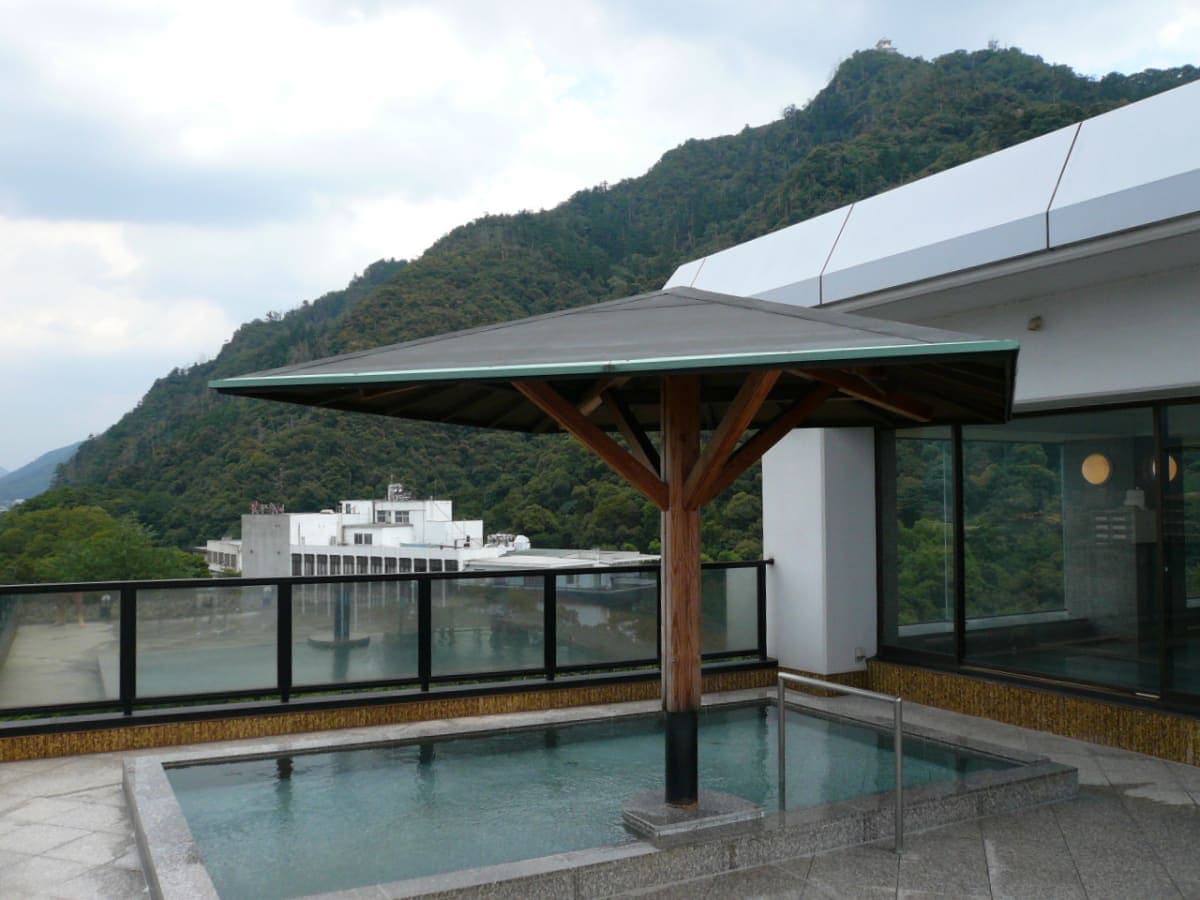
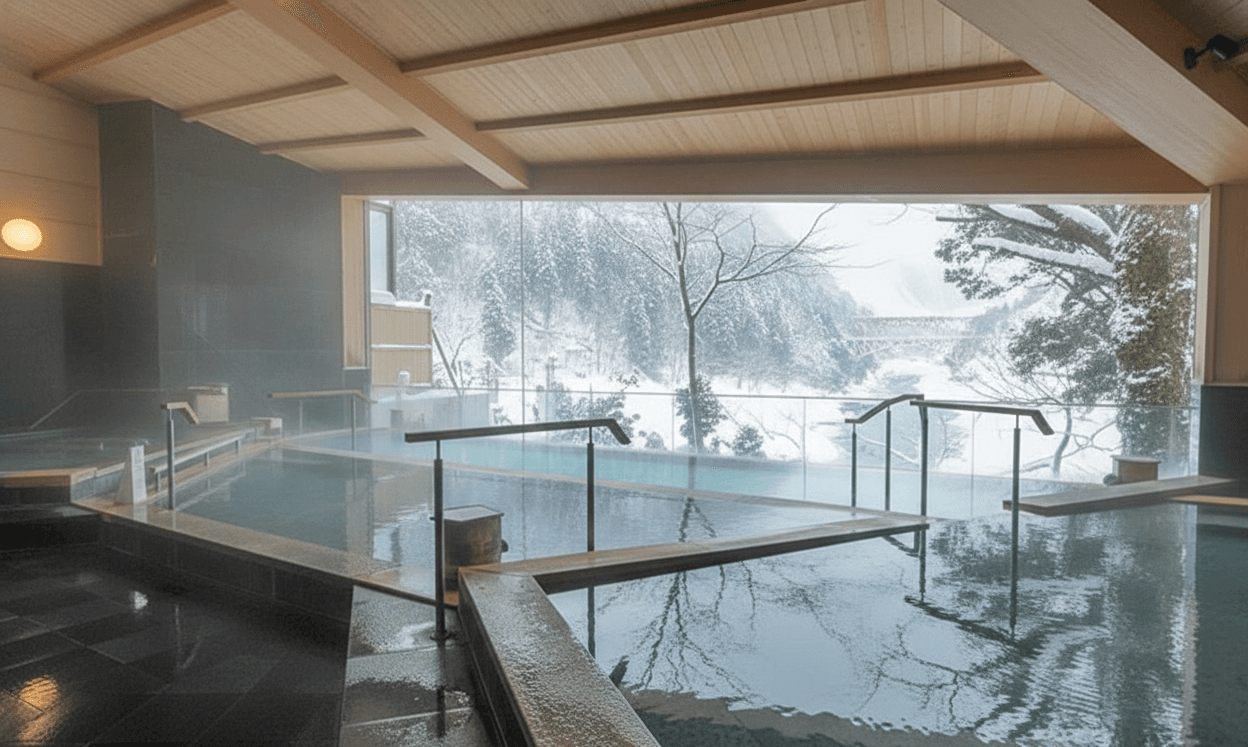
A mountain onsen town in Kaga, Ishikawa Prefecture, set along a gorge carved by the Daishoji River. The steep canyon walls and walking paths along the river make Yamanaka distinctive among the Kaga Onsen group. The poet Matsuo Basho visited in 1689 and praised the waters in his travel diary Oku no Hosomichi.
Data: Wikipedia (CC BY-SA 4.0) · OpenStreetMap (ODbL)
Highlights
- Daishoji River gorge walks
- Matsuo Basho literary heritage
- Kaga Onsen group
- Traditional wooden ryokan
Suitability
Tattoo policy
Not permitted
Children policy
Family-friendly
Altitude
230m
Mineral chemistry
Bicarbonate
Benefits
Bicarbonate springs (sodium bicarbonate, calcium bicarbonate, or hydrogen carbonate) are particularly effective for skin conditions. The bicarbonate ions cleanse and soften the skin surface, removing excess sebum without stripping the skin's acid mantle. These springs are traditionally recommended for acne-prone skin and as a gentle option for sensitive skin types. The water has a characteristically clean, soft feel.
Note
Bicarbonate springs are generally among the most gentle and well-tolerated onsen types. Those with very dry skin may wish to apply moisturiser after bathing, as the cleansing effect can temporarily reduce surface oils.
History
The springs were documented in the Muromachi period and developed in the Edo era under the patronage of the Ikkyo-ikki religious movement and later the Maeda clan.
Matsuo Basho's visit in 1689, during the journey he recorded in Oku no Hosomichi, gave the town a permanent place in Japanese literary history. He wrote that the waters of Yamanaka rivaled even Arima and Kusatsu. During World War II the town served as a military hospital area for the Imperial Japanese Navy.
Local guide
Arriving by bus from Kaga Onsen Station, the road follows the Daishoji River into the mountains and the valley tightens into the Kakusenkei Gorge just before the town begins. The gorge is narrow and dramatic, with mossy basalt walls dropping forty meters to the river below, and a walking path follows both banks between Korogi Bridge and Kurotani Bridge for just over a kilometer. The haiku poet Matsuo Basho walked this gorge in 1689 and wrote that he found the waters here more beautiful than Arima and Kinosaki, the two most celebrated springs of his era. The poem he left behind, about not needing to pick chrysanthemums when the waters already carry their fragrance, is carved into a stone at the gorge entrance.
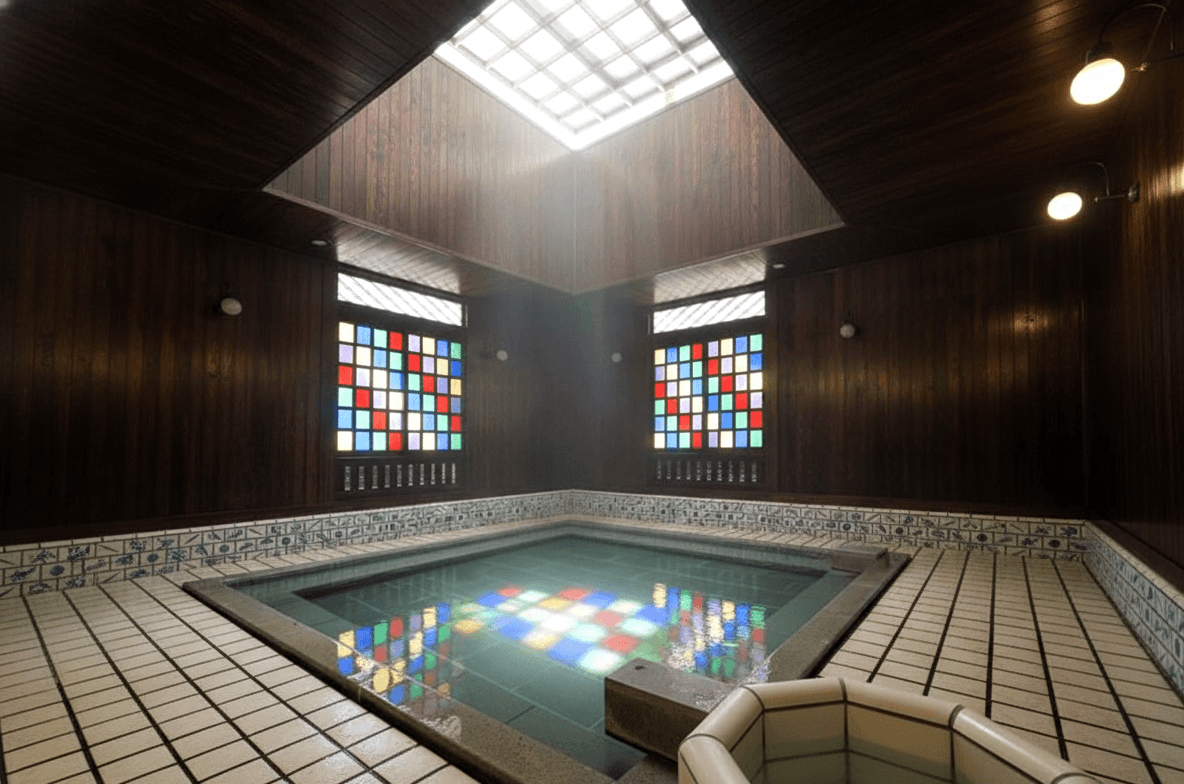
The spring water at Yamanaka is a sodium bicarbonate type that emerges at around 48 degrees Celsius. In the bath it is colorless and completely clear, with a smooth, faintly alkaline feel that the locals describe as bijin-no-yu, beauty water, because of the way it leaves skin soft. It has almost no distinctive smell, which makes it accessible even to people who find the sulfur-heavy springs in other parts of Japan overpowering. The absence of drama in the water itself means the experience is defined entirely by the setting and the quality of the soak, both of which hold up well.
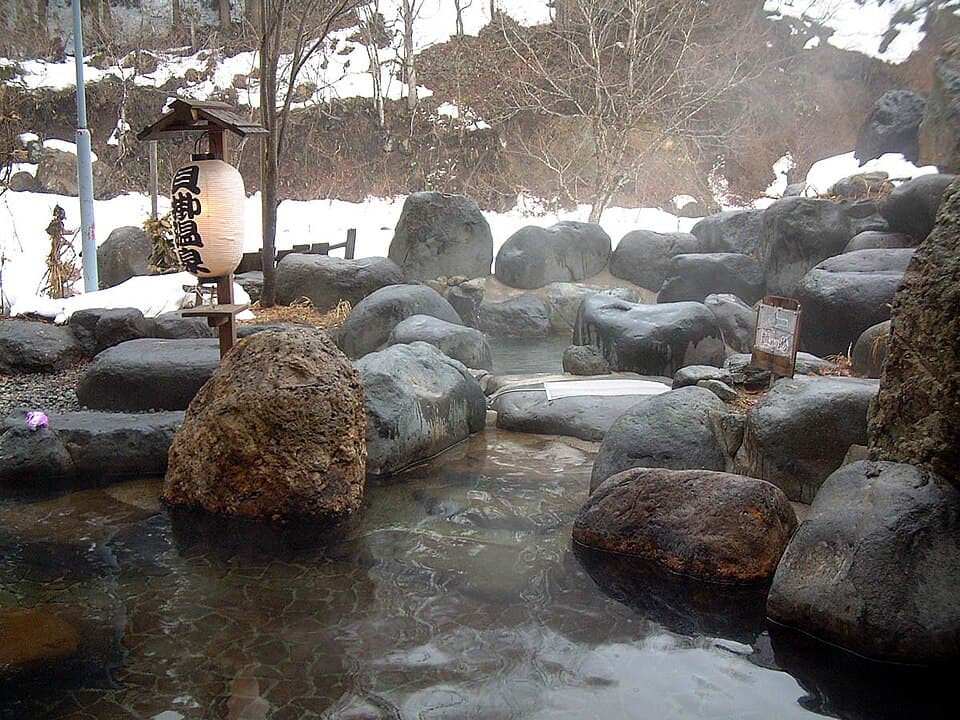
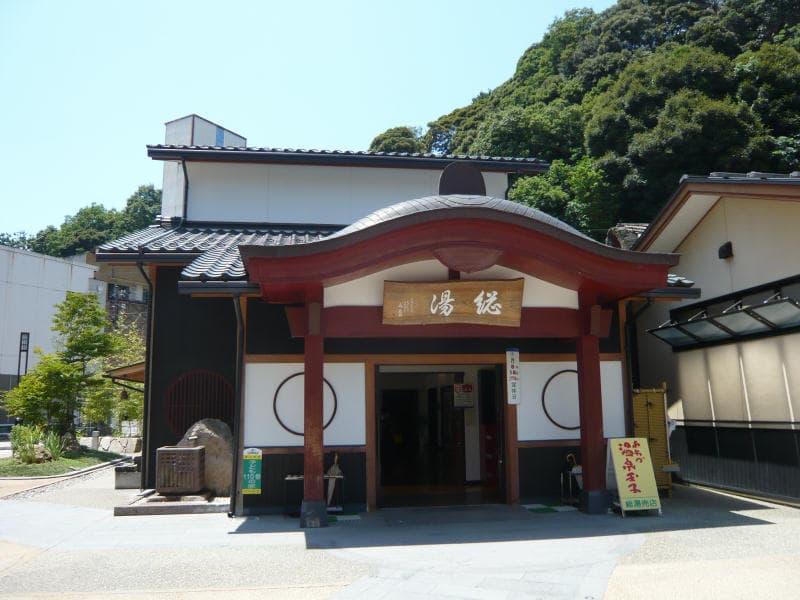
Kiku-no-yu, the public bathhouse at the center of town, is named after the chrysanthemum in Basho's poem. The building itself is modern but sits on the plaza where the original communal bath has stood for centuries, and the atmosphere inside is functional and honest, local people and travelers in the same water together. Going early in the morning, before the ryokan guests have woken up, gives you a quiet version of the place. The gorge walk works well either before or after a bath, and in any season the combination of moving water, old stone, and tall forest is exactly the kind of thing that justifies a long journey.
Yamanaka is one of three Kaga onsen towns, along with Yamashiro and Katayamazu. Traveling between them by bus is easy enough for a full day, but Yamanaka has the gorge, which the others do not, and that single geographical feature gives it a quality the neighboring towns cannot match.
How this spring compares
pH level
7.8
More alkaline than67% of Japan springs
More acidic than27% of Japan springs
Japan median7.3
Japan range1.2–11.3
n=121 springs
Max temperature
48°C
Hotter than22% of Japan springs
Japan median60°C
Japan hottest105°C
n=122 springs
Getting there
Take the Hokuriku Shinkansen to Kanazawa Station, then the JR Hakutaka line to Kaga-Onsen Station. From there, a local bus runs to Yamanaka Onsen in about 20 minutes.
Amenities
Towel rental
Locker
Restaurant
Café
Parking
Wheelchair access
English spoken
Tattoo-friendly
Private bath
Soap provided
Hair dryer
Location & nearby
Yamanaka Onsen, Kaga, Ishikawa
Kaga-Onsen Station · 8.4 kmShinkansen
Iburihashi Station · 8.5 km
Daishōji Station · 7.6 km
Ushinoya Station · 8.4 km
Komatsu Airport · 15.9 km
Fukui Airport · 18.5 km
Nishikatsuragicho Bus Stop · 0 km
Yamanaka Onsen (Bus Stop) · 0.2 km
Katsuragi-machi (Bus Stop) · 0.3 km
Book a stay nearby
Hotels near Yamanaka
23+ optionsSpringsAtlas may earn a commission from bookings made through these links.
More springs in Chubu
1 / 13


Last verified:
Data: OpenStreetMap (ODbL) · local tourism agencies
Verified listing