
Public · Indoor & Outdoor · ¥420
Noboribetsu Onsen
登別温泉
85°CPublic BathIndoor & Outdoorsulfursodium-chlorideiron
4.3· 2,800 reviewsvia Google
40–85°CWater temp
2.5pH
¥420 (~$3)Entry fee
PublicBathing type
—Opening hours
About this spring
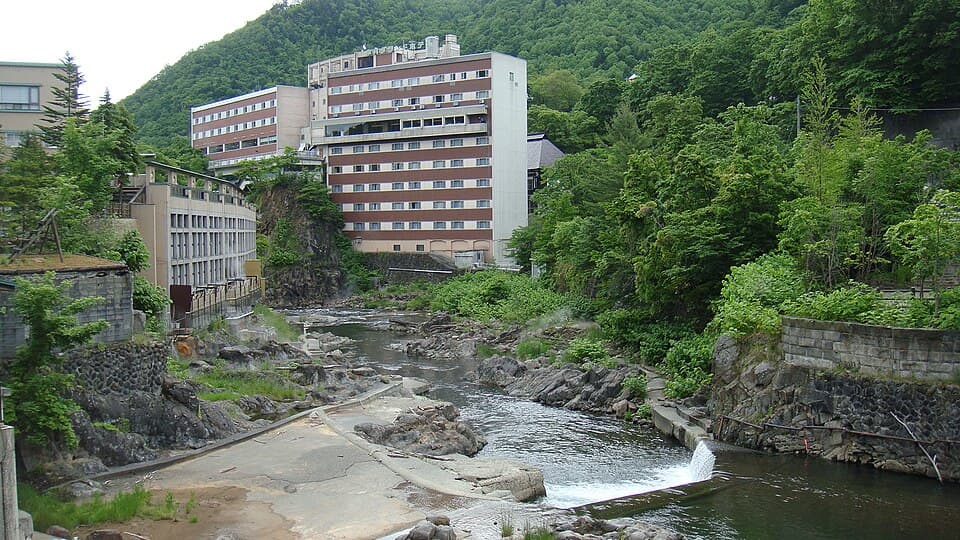
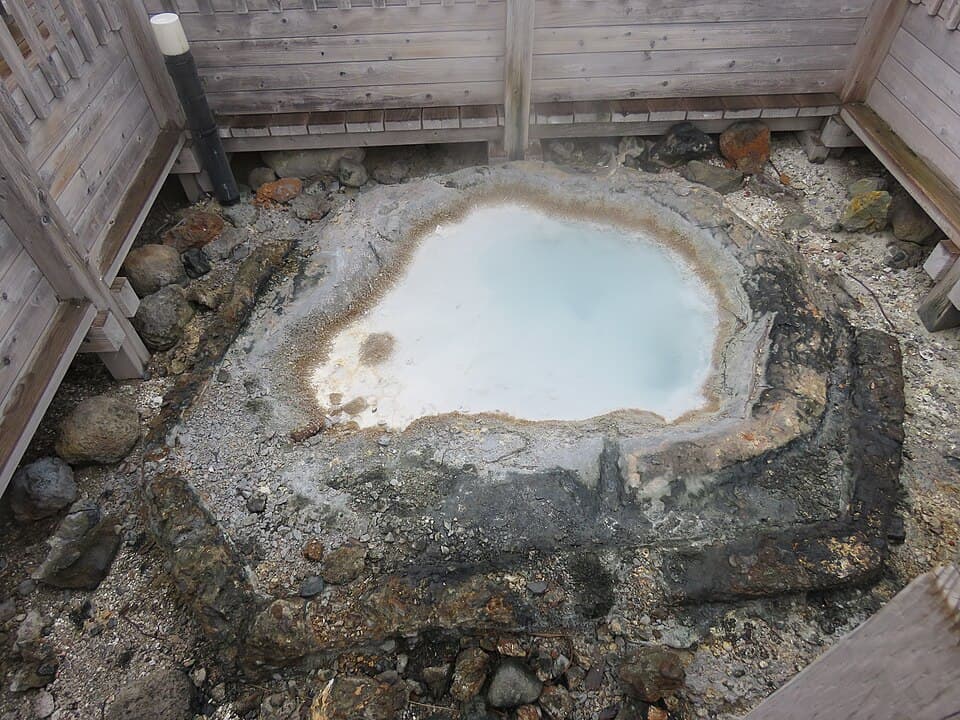
Hokkaido's most famous onsen town, built around a dramatic volcanic crater called Jigokudani, which means Hell Valley. Nine distinct spring types bubble up from beneath the valley floor. The sulfurous steam rising from the crater creates an atmosphere unlike anywhere else in Japan. This is where you go when you want to feel the earth still working.
Data: Wikipedia (CC BY-SA 4.0) · OpenStreetMap (ODbL)
Highlights
- Jigokudani Hell Valley
- Nine distinct spring types
- Winter snow baths
- Bear Park nearby
Suitability
Tattoo policy
Policy varies
Children policy
Family-friendly
pH note
Highly acidic (pH 2.5)
Altitude
200m
Mineral chemistry
Sulfur
Benefits
Sulfuric hot springs are among the most studied in Japanese balneology. The sulfur compounds — primarily hydrogen sulfide and thiosulfate — have documented antimicrobial and anti-inflammatory properties. Regular bathing is associated with relief from chronic skin conditions including eczema and psoriasis, as well as joint inflammation and muscle soreness. Sulfuric waters have been prescribed in Japanese medical practice since the Edo period.
Note
The distinctive rotten-egg smell dissipates quickly after leaving the bath. Avoid if you have a sulfur allergy, very sensitive skin, or respiratory conditions. Remove silver jewellery before entering — sulfur will blacken it permanently.
Sodium Chloride (Salt)
Benefits
Sodium chloride springs — essentially natural saltwater baths — are celebrated for their warming and moisturising effects. The salt forms a thin film on the skin after bathing that slows moisture evaporation, keeping skin hydrated longer than a freshwater bath. This "heat-retaining" property means bathers stay warm for significantly longer after leaving the water, making these springs especially popular in winter. Salt springs are among the most accessible for first-time onsen visitors.
Note
Those with high blood pressure or heart conditions should consult a doctor before bathing, as the warming effect increases circulation. Avoid immersing open wounds. The salt will sting slightly in eyes — take care when submerging.
Iron
Benefits
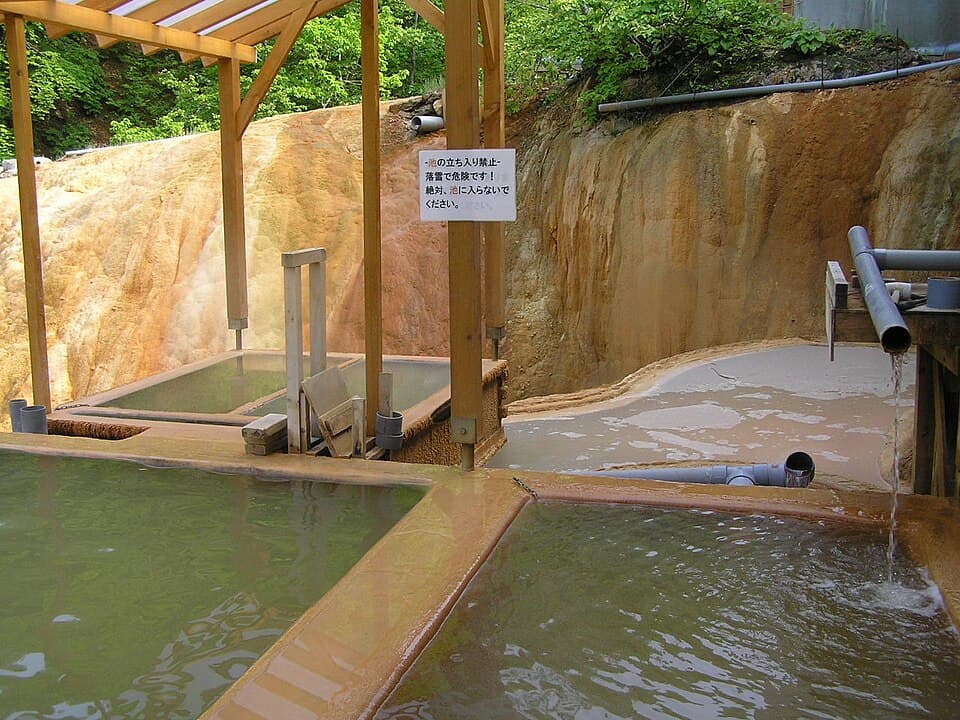
Iron-bearing springs are recognised by their characteristic rust-red or amber colour and metallic taste. The iron content — primarily ferrous bicarbonate or ferric sulfate — is associated with stimulation of red blood cell production and is traditionally recommended for anaemia and fatigue recovery. The distinctive colouring comes from iron oxidising on contact with air and is not a sign of contamination.
Note
Iron springs will stain light-coloured swimwear and towels a persistent brownish-orange. Avoid wearing white or light fabrics into the water. Those with haemochromatosis (iron overload condition) should seek medical advice before bathing.
History
The Ainu people were here first.
They called the steaming river valley nupur-pet, meaning murky river, and used the volcanic waters for treating illness long before Japanese settlers arrived. The first Edo-period documentation comes from 1790, when explorer Mogami Tokunai recorded the spring's therapeutic reputation. The modern resort story belongs to Kinzo Takimoto, a carpenter who arrived in 1858, built a hut to cure his wife's skin condition, and stayed to build an inn. By 1881 he had funded a road through the valley. In 1888 a two-storey building was opened. The dramatic Jigokudani crater was designated a protected landscape in 1934. Today the town draws visitors from across Japan to experience what nine volcanic spring types flowing from a single source actually feel like.
Local guide
Most people arrive at Noboribetsu Station and board the Donan Bus without really knowing what they are heading into. The twenty-minute ride deposits you at the Noboribetsu Onsen bus terminal, where the smell hits you before you have finished standing up. There is sulfur in the air, and something metallic underneath it, and the steam from the valley behind town drifts right across the main shopping street. You realize quickly that this is not an onsen town that happens to have hot springs. It is a town that exists entirely because the ground here is unstable and generous.
Noboribetsu Onsen is extraordinary because of its sheer variety. Eleven distinct spring types come out of the ground here, which is a number that has no rival in Japan. Within a few hundred meters you can move from a milky, odorless sodium bicarbonate pool, where the water leaves your skin feeling clean and slightly dry, to a strongly acidic iron spring that turns a deep rust color and smells like a struck match. The sulfur baths at the larger ryokan are a yellow-white and opaque, hot enough that you ease in slowly, and the water has a fine silky texture on your skin that feels nothing like ordinary hot water. The salt springs are heavier, warmer somehow even at the same temperature, and they leave a light film on your arms when you climb out.
The original ryokan in the area, Daiichi Takimotokan, opened in 1858 and built its first bath for the wife of its founder. Today it pipes five spring types into a three-story bathing complex with 35 pools. Walking between them in a single visit is a geology lesson no textbook can replicate, because each bath smells different, feels different, and leaves a different mark on your body.
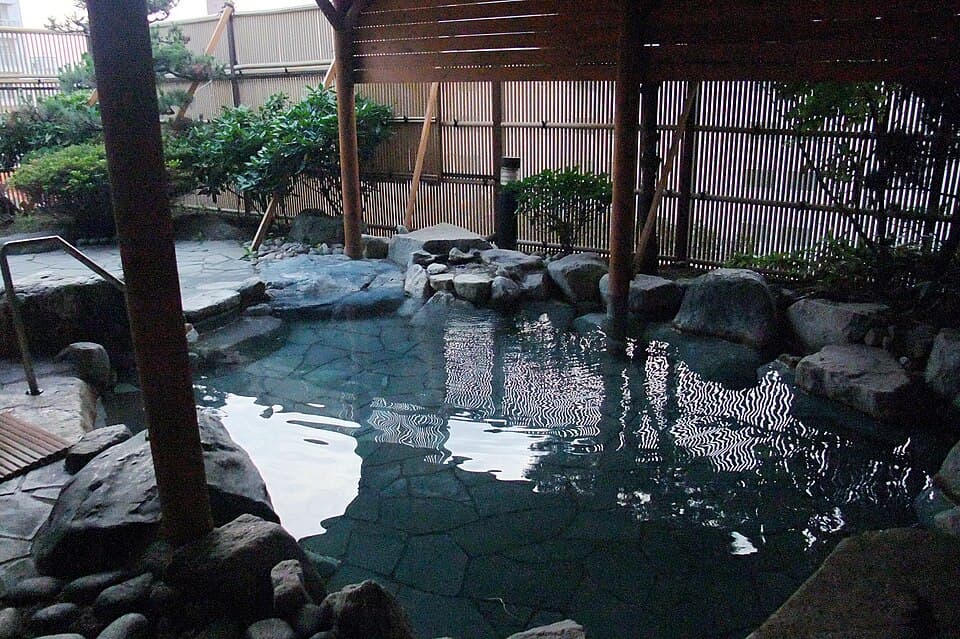
In winter, the outdoor rotenburo baths at the hotels along the valley edge fill with snow on their stone surrounds while the water stays searing hot. Sitting in a milky white sulfur pool with snow falling directly onto your shoulders, looking out toward the dark silhouette of the valley, is an experience that requires no special planning and no advance booking at most places. Just arrive, pay the day-use fee, and get in. The water will do the rest.
How this spring compares
pH level
2.5
More alkaline than11% of Japan springs
More acidic than87% of Japan springs
Japan median7.3
Japan range1.2–11.3
n=121 springs
Max temperature
85°C
Hotter than80% of Japan springs
Japan median60°C
Japan hottest105°C
n=122 springs
Getting there
Hokkaido Shinkansen→ Shin-Hakodate-Hokuto4h
Limited Express Hokuto to Noboribetsu Station, then Donan Bus (~20 min)
Total: 5h
Hokkaido Shinkansen→ Shin-Sapporo
Total: 8h
From Noboribetsu Station, take the Donan Bus on the Noboribetsu Onsen line. The ride takes about 20 minutes to the Noboribetsu Onsen bus terminal.
Amenities
Towel rental
Locker
Restaurant
Café
Parking
Wheelchair access
English spoken
Tattoo-friendly
Private bath
Soap provided
Hair dryer
Location & nearby
Noboribetsuonsencho, Noboribetsu City, Hokkaido 059-0551
Shin-Sapporo Station · 101 kmShinkansen
Horobetsu Station · 9.7 km
Tomiura Station · 11.1 km
Mareppu Station · 12 km
Okadama (Sapporo sub-airport) Airport · 76.8 km
New Chitose Airport · 63.7 km
Shiraoi Flying Club · 19.8 km
Shiryokan-mae (Bus Stop) · 7.4 km
Shin-Ta 21 Mae (Bus Stop) · 7.7 km
Ashichūtō Mae (Bus Stop) · 7.9 km
More springs in Hokkaido
1 / 13



Last verified:
Data: OpenStreetMap (ODbL) · local tourism agencies
Verified listing