Public · Outdoor · ¥1,100
3.9· 680 reviewsvia Google
43–43°CWater temp
7.1pH
¥1,100 (~$7)Entry fee
PublicBathing type
—Opening hours
About this spring
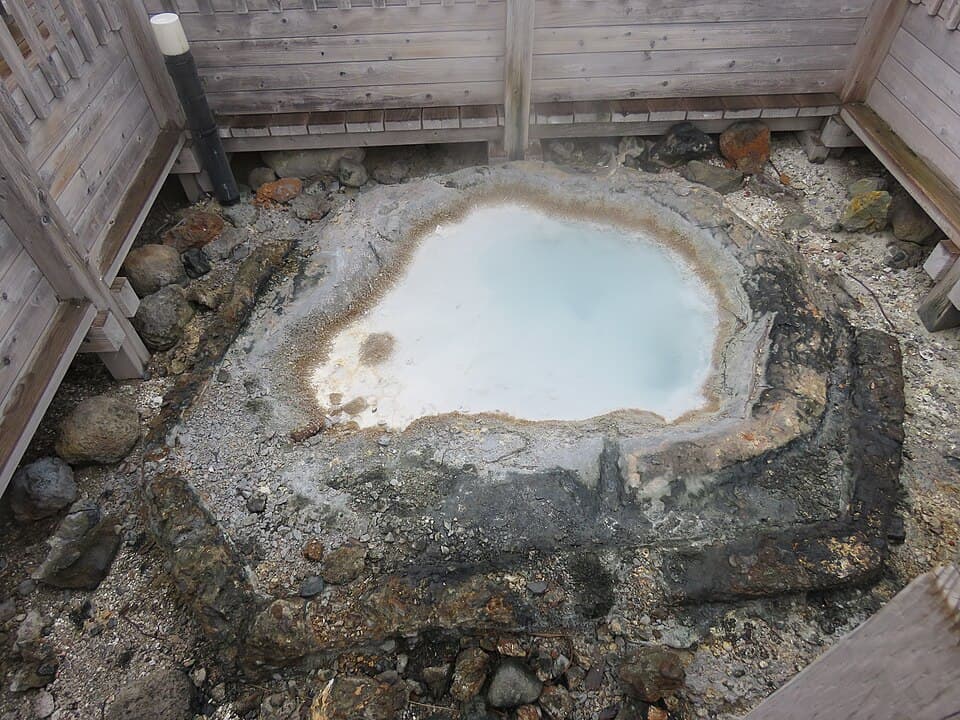
A remote hot spring resort in the forests of Oshamanbe in western Hokkaido, known for a remarkable natural monument: a 25-meter calcite dome formed over centuries by mineral-rich spring water. The waters contain natural radon. The dome is designated a Hokkaido Natural Monument. Getting here requires a car or pre-arranged transfer.
Data: Wikipedia (CC BY-SA 4.0) · OpenStreetMap (ODbL)
Highlights
- 25-metre calcite dome monument
- Radon spring waters
- Ainu heritage
- Old-growth forest setting
Suitability
Tattoo policy
Not permitted
Children policy
Family-friendly
Altitude
200m
Mineral chemistry
Sodium Chloride (Salt)
Benefits
Sodium chloride springs — essentially natural saltwater baths — are celebrated for their warming and moisturising effects. The salt forms a thin film on the skin after bathing that slows moisture evaporation, keeping skin hydrated longer than a freshwater bath. This "heat-retaining" property means bathers stay warm for significantly longer after leaving the water, making these springs especially popular in winter. Salt springs are among the most accessible for first-time onsen visitors.
Note
Those with high blood pressure or heart conditions should consult a doctor before bathing, as the warming effect increases circulation. Avoid immersing open wounds. The salt will sting slightly in eyes — take care when submerging.
Calcium Chloride
Benefits
Calcium chloride springs share the heat-retaining property of sodium chloride springs but with a stronger warming effect due to the divalent calcium ion. They are prized for muscle and joint relief — the combination of heat retention and calcium's role in muscle function makes them a popular choice for athletes and those with chronic musculoskeletal complaints. The water has a slightly bitter mineral taste.
Note
The strong warming effect means those with cardiovascular conditions, high blood pressure, or pregnancy should limit soak duration and consult a doctor if in doubt. Avoid entering immediately after vigorous exercise — let your heart rate normalise first.
History
The Ainu people called this place God's Onsen after observing injured animals heal themselves in the water.
In 1900, Yoshishige Saga built the first formal bathhouse, and the resort became known as Saga Onsen. The calcite dome, formed by centuries of mineral deposits from the spring water, was designated a Hokkaido Natural Monument in 1965, confirming the geological significance of the site.
Local guide
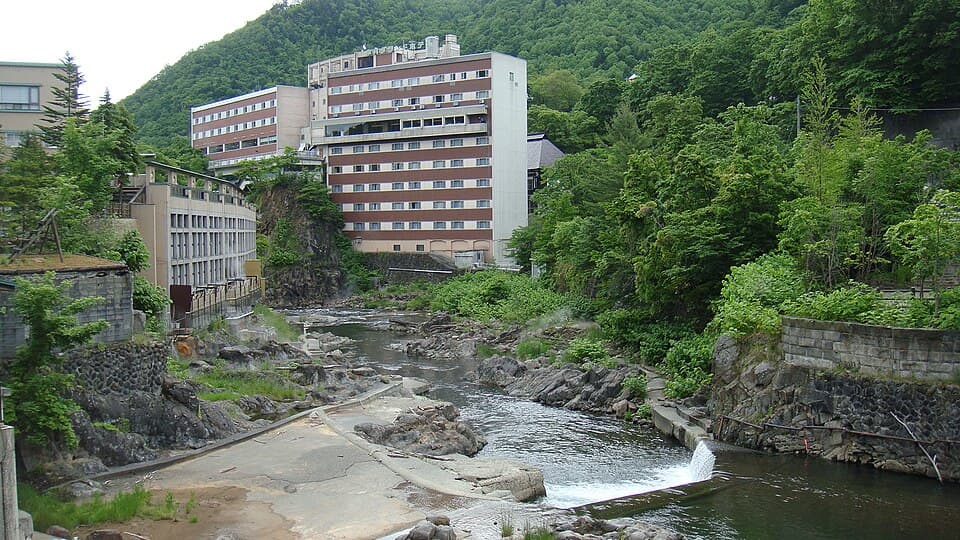
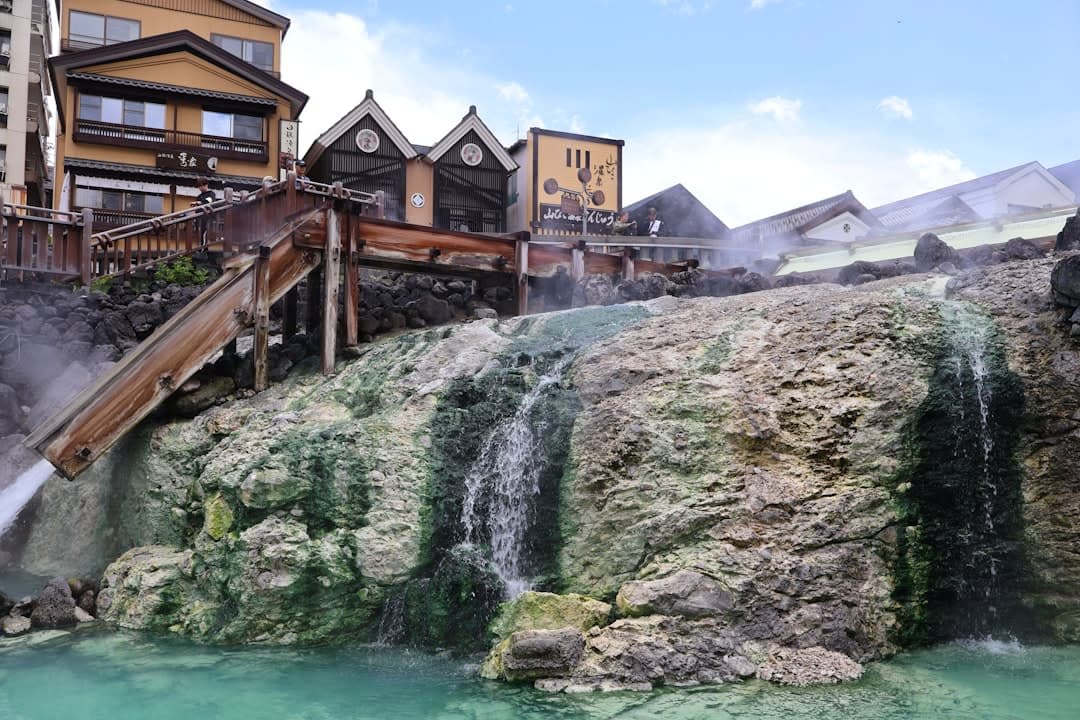
From the city of Toyako on the western shore of Lake Toya, the road curls inland through spruce and silver birch until it dead-ends at a single wooden building beside a small river. This is Futamata Radium Onsen, and the first thing you notice is not the bathhouse at all. Rising from the forest floor just beside the entry is a pale, dripping tower of layered calcium deposits, roughly twenty-five meters tall and still growing. Hokkaido Prefecture designated it a natural monument in 1965. It is one of only two calcareous sinter formations of this scale in the world, the other being Yellowstone's travertine terraces. The monument sits there in the trees, absolutely matter-of-fact, and nothing about the unpainted building beside it suggests you are looking at something rare.
The Ainu people found this spring long before any Japanese settler arrived. Their story goes that a wounded bear was seen wading in the pond here, and when the bear healed and walked back into the forest, the people named the water God's Onsen. Mr. Yoshishige Saga formalized the site in 1900, building the first hut and calling it Saga Onsen. The name Futamata Radium came later, after scientific analysis confirmed trace concentrations of naturally occurring radon dissolved in the water. The radon level is low enough to be safe but high enough to have earned the spring a devoted following among people who swear by its restorative effect on joints and circulation.
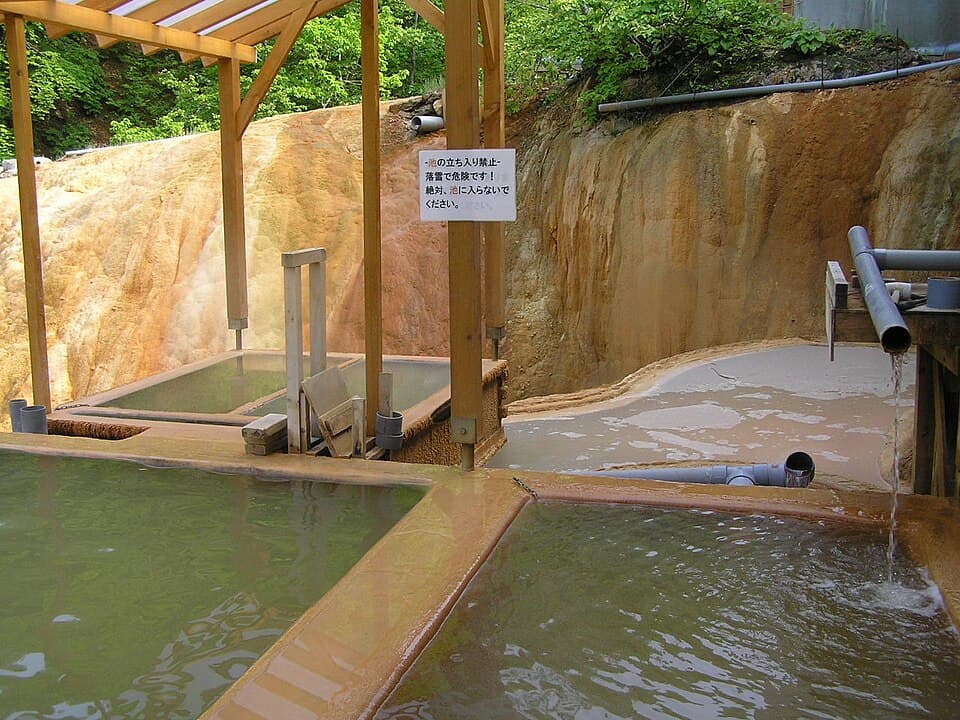
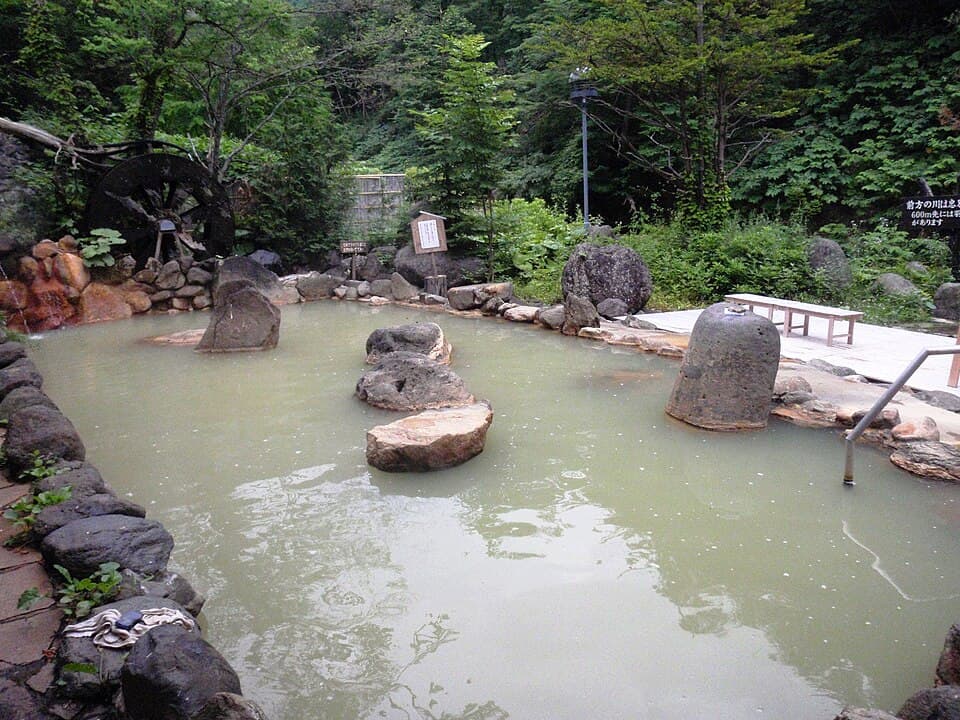
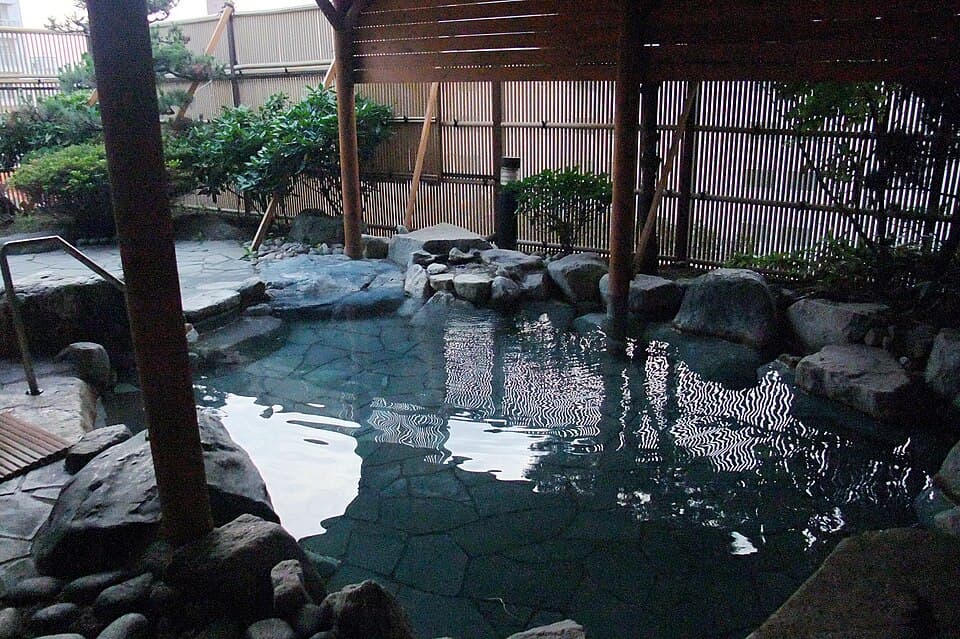
The outdoor pool is simple. Wooden planks surround a natural rock basin that fills with 43-degree water piped directly from the source. The water itself is clear, not cloudy, and slightly warmer than most outdoor baths, with a clean neutral smell and a faint silkiness on the skin from the dissolved calcium and sodium. Because you are outside and the forest presses in close on all sides, there is no traffic noise, no ambient resort hum. In summer you hear the river and the birds. In autumn the birch leaves come down bright yellow across the surface of the pool.
Kuromatsunai Station on the JR Hakodate Main Line is the closest rail point, about twelve kilometers back toward the coast, and from there you will need a taxi or a rental car. No bus serves the final stretch of road. That isolation is most of the point. The nearest other hot spring is more than twenty minutes away, and on a weekday outside of summer you may have the outdoor pool entirely to yourself, the carved wooden tub, the mineral tower dripping nearby, and the silence of a Hokkaido forest in the middle of the week.
How this spring compares
pH level
7.1
More alkaline than36% of Japan springs
More acidic than59% of Japan springs
Japan median7.3
Japan range1.2–11.3
n=121 springs
Max temperature
43°C
Hotter than11% of Japan springs
Japan median60°C
Japan hottest105°C
n=122 springs
Getting there
Futamata Onsen is most practically reached by car. From Sapporo, take the Doo Expressway to the Oshamanbe IC, then drive about 30 minutes into the valley. The nearest train station is Oshamambe on the JR Hakodate Main Line, but there is no bus from the station. Arrange a transfer with the ryokan in advance.
Amenities
Towel rental
Locker
Restaurant
Café
Parking
Wheelchair access
English spoken
Tattoo-friendly
Private bath
Soap provided
Hair dryer
Location & nearby
32 Ōmine, Oshamambe, Yamakoshi District, Hokkaido 049-3501
Kuromatsunai Station · 11.7 km
Shin-Hakodate-Hokuto Station · 82.1 kmShinkansen
Neppu Station · 15.6 km
Kunnui Station · 16.8 km
Oshamambe Station · 13.2 km
Okadama (Sapporo sub-airport) Airport · 110.7 km
Hakodate Airport · 101.7 km
Pirika Dam Helipad · 11.8 km
Kuromatsunai Eki mae · 11.7 km
Chayagawabashi · 11.9 km
More springs in Hokkaido
1 / 13



Last verified:
Data: OpenStreetMap (ODbL) · local tourism agencies
Verified listing