
Public · Indoor & Outdoor · Free
Kusatsu Onsen
草津温泉
95°CPublic BathIndoor & OutdoorsulfuracidiccalciumFree entry
4.5· 4,500 reviewsvia Google
45–95°CWater temp
2.1pH
FreeEntry fee
PublicBathing type
—Opening hours
About this spring
One of Japan's most celebrated onsen towns, set at 1,200 meters in the mountains of Gunma Prefecture. The spring output here exceeds 32,000 liters per minute, making it the highest in Japan. The strongly acidic sulfur waters are legendary for their skin-healing properties. Twice a day in the town square, staff perform yumomi: cooling the scalding water with long wooden paddles while singing traditional songs.
Data: Wikipedia (CC BY-SA 4.0) · OpenStreetMap (ODbL)
Highlights
- Highest spring output in Japan
- Daily yumomi ritual
- Strongly acidic sulfur water
- Free public bathhouses
Suitability
Tattoo policy
Welcome
Children policy
Family-friendly
pH note
Highly acidic (pH 2.1)
Altitude
1,200m
Mineral chemistry
Sulfur
Benefits
Sulfuric hot springs are among the most studied in Japanese balneology. The sulfur compounds — primarily hydrogen sulfide and thiosulfate — have documented antimicrobial and anti-inflammatory properties. Regular bathing is associated with relief from chronic skin conditions including eczema and psoriasis, as well as joint inflammation and muscle soreness. Sulfuric waters have been prescribed in Japanese medical practice since the Edo period.
Note
The distinctive rotten-egg smell dissipates quickly after leaving the bath. Avoid if you have a sulfur allergy, very sensitive skin, or respiratory conditions. Remove silver jewellery before entering — sulfur will blacken it permanently.
Acidic
Benefits
Acidic springs (pH below 6) have natural exfoliating properties. The low pH gently dissolves dead skin cells, leaving skin noticeably smoother after a soak. Strongly acidic springs (pH below 3) also carry antimicrobial effects potent enough that they have historically been used to treat skin infections. Japan has some of the world's most acidic hot springs, with a handful recording pH values below 2.
Note
Limit initial soaks to 3–5 minutes until you know how your skin responds. Rinse thoroughly with fresh water afterwards to neutralise the acid. Not recommended for broken skin, active eczema flare-ups, fresh tattoos, or children under 10. Strongly acidic springs (pH below 3) should not be entered without checking recommended soak times on-site.
Calcium Chloride
Benefits
Calcium chloride springs share the heat-retaining property of sodium chloride springs but with a stronger warming effect due to the divalent calcium ion. They are prized for muscle and joint relief — the combination of heat retention and calcium's role in muscle function makes them a popular choice for athletes and those with chronic musculoskeletal complaints. The water has a slightly bitter mineral taste.
Note
The strong warming effect means those with cardiovascular conditions, high blood pressure, or pregnancy should limit soak duration and consult a doctor if in doubt. Avoid entering immediately after vigorous exercise — let your heart rate normalise first.
History
Toyotomi Hideyoshi recommended these waters to Tokugawa Ieyasu in a letter dated 1595.
The eighth Tokugawa shogun, Yoshimune, had water transported sealed in containers all the way to Edo Castle. In formal hot spring rankings of the Edo period, Kusatsu was consistently placed first among the springs of eastern Japan. In 1878, the German physician Dr. Erwin von Baelz made his first visit and spent decades analyzing the spring chemistry. He published findings in German academic journals and introduced Kusatsu to Western medical science. A memorial hall in town still honors his advocacy. Today Kusatsu has been ranked Japan's top hot spring destination for more than twenty consecutive years in national surveys.
Local guide
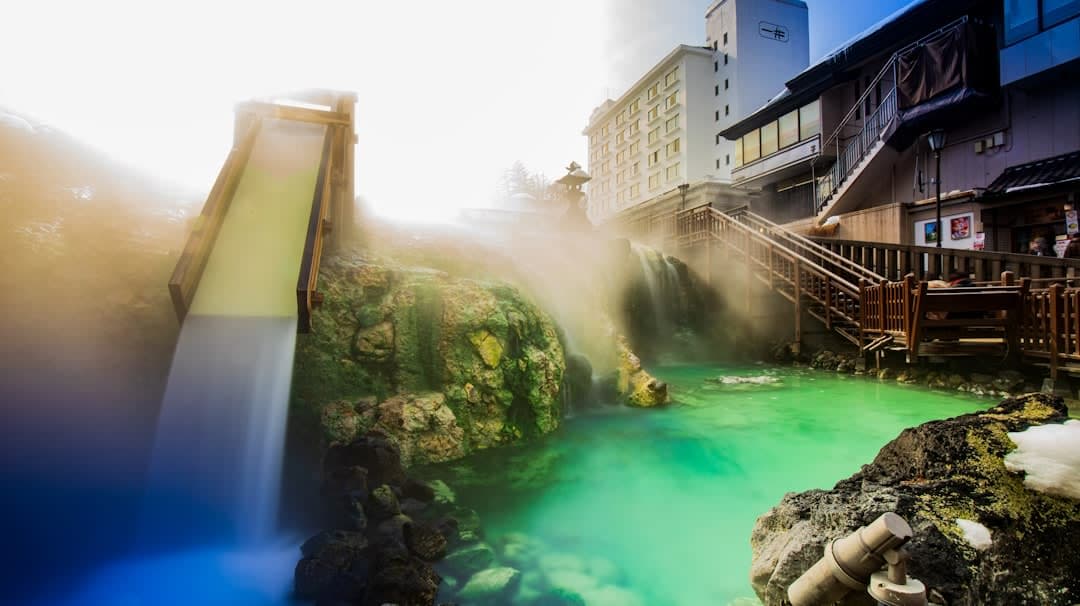
From Naganohara-Kusatsuguchi Station at the end of the JR Agatsuma Line, a bus climbs for twenty-five minutes through spruce forest and then crests a rise and drops into a wide volcanic plateau. Kusatsu sits in a bowl of its own steam. The Yubatake, the hot spring field at the center of town, covers an area roughly the size of a city block and produces water from over thirty separate vents simultaneously, the combined output exceeding 32,300 liters per minute. That figure makes it the highest natural hot spring output in Japan, and standing at the railing above the Yubatake with the steam rolling across the wooden channeling boards in front of you, the number becomes physically comprehensible.
The water temperature at the Yubatake vents runs between 50 and 94 degrees, which is too hot to bathe in without cooling. The traditional method for lowering it is called yumomi, and it involves a group of people standing in a line and stirring the water with wooden boards about 180 centimeters long in a coordinated motion, working the heat out by surface contact rather than diluting the spring with cold water. Cold water is not used because it would reduce the mineral concentration, and the minerals are the entire point. A performance of the yumomi ritual runs daily at the Netsu-no-Yu bathhouse in the town center, complete with traditional songs and the option for visitors to try the boards themselves.
The chemistry at Kusatsu is extreme. The pH sits between 1.7 and 2.1, making it one of the most acidic naturally occurring bathing waters in Japan, roughly equivalent to vinegar. The sulfur, aluminum sulfate, and chloride compounds dissolved in that water are present in such concentration that an iron nail placed in the bath would rust through in nine days. On skin, the effect is sharply antiseptic. There is a distinct tingle, like a mild exfoliant working, and the smell is sulfur without apology, thick and volcanic. After twenty minutes in a Kusatsu bath you step out with skin that looks slightly flushed and feels scrubbed clean from the inside.
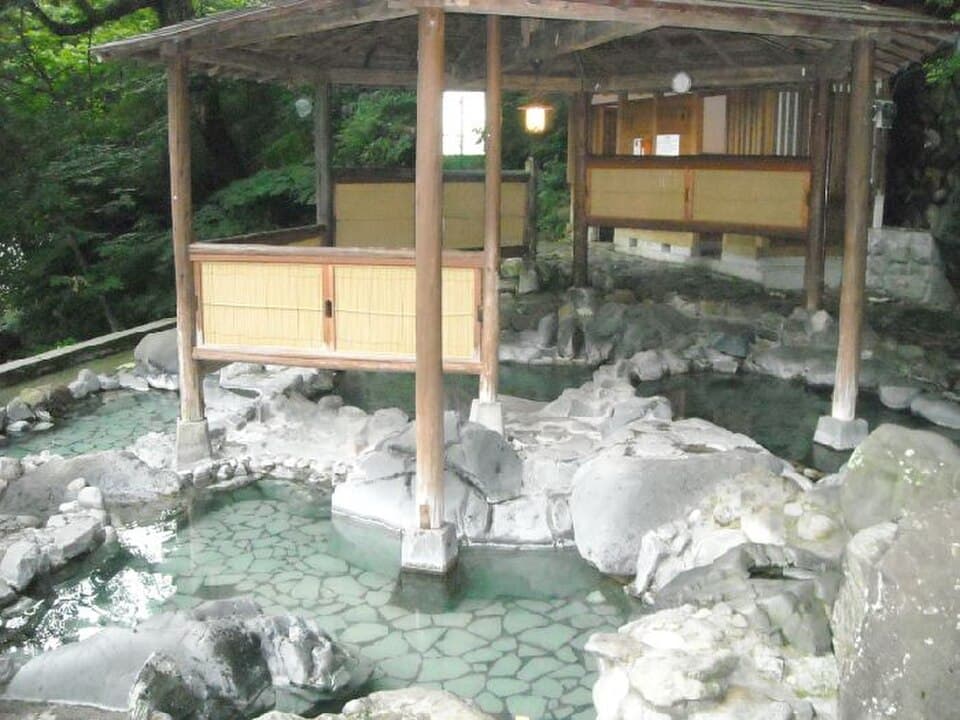
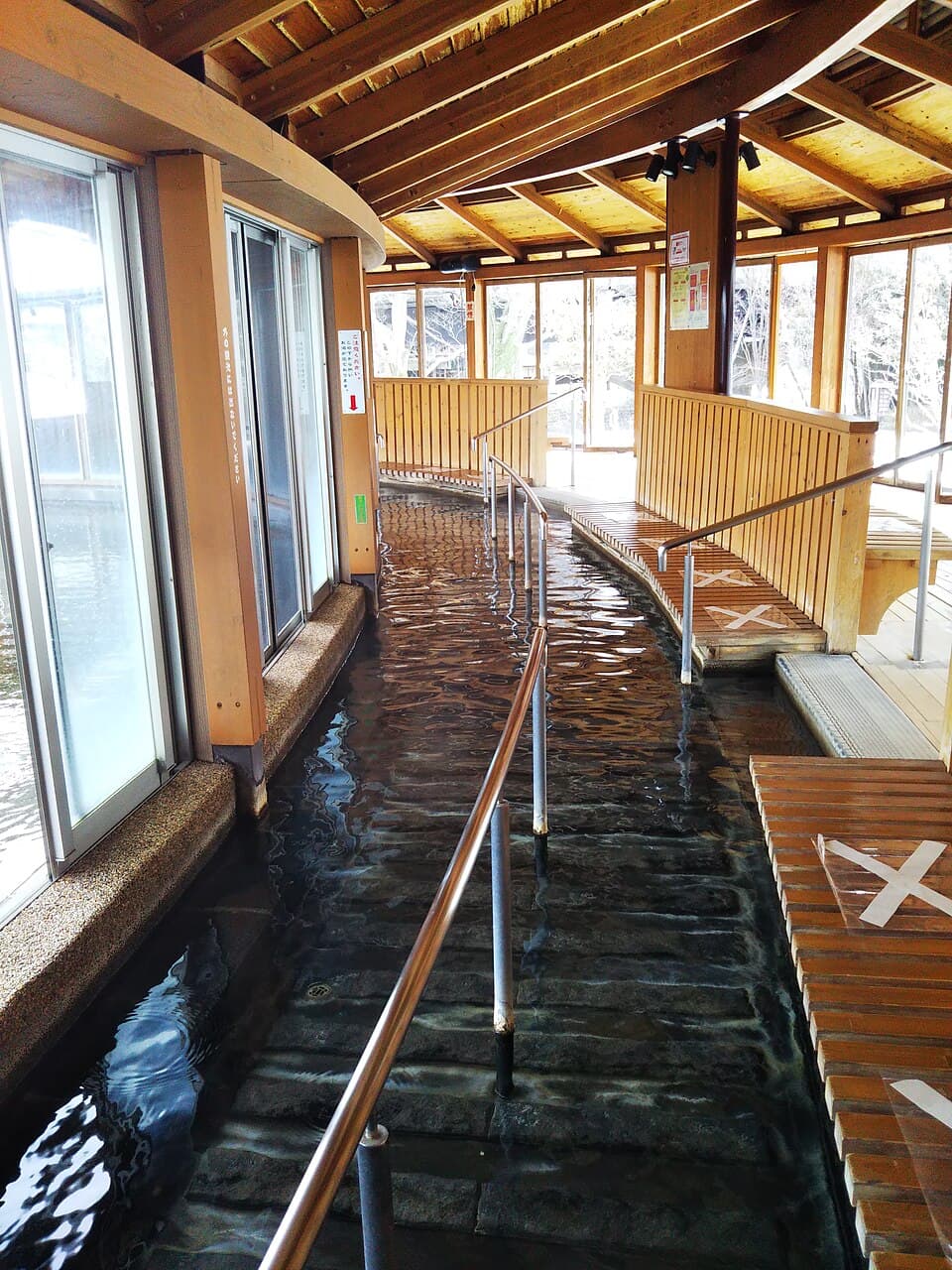
The free public bathhouses, the most famous being Otaki-no-yu, Gozanoyu, and Sainokawara outdoor rotenburo, are open to all visitors with no reservation required. Sainokawara is the largest, a wide outdoor pool fed by water from the same fields, surrounded by stone walls and open sky. At night in winter, with snow on the surrounding rocks and the sulfur smell rising through freezing air, the heat of the water at pH 2 becomes something close to necessary. Kusatsu has been voted Japan's top onsen repeatedly in public surveys for years, and standing in that acid bath at midnight while it snows, the ranking does not feel like a surprise.
How this spring compares
pH level
2.1
More alkaline than6% of Japan springs
More acidic than93% of Japan springs
Japan median7.3
Japan range1.2–11.3
n=121 springs
Max temperature
95°C
Hotter than90% of Japan springs
Japan median60°C
Japan hottest105°C
n=122 springs
Getting there
Hokuriku Shinkansen + Agatsuma Line→ Naganohara-Kusatsuguchi1h 40m
Bus to Kusatsu (~25 min)
Total: 2h 10m
Take the JR Agatsuma Line to Naganohara-Kusatsuguchi Station, then the bus to Kusatsu. The bus ride takes about 25 minutes.
Amenities
Towel rental
Locker
Restaurant
Café
Parking
Wheelchair access
English spoken
Tattoo-friendly
Private bath
Soap provided
Hair dryer
Location & nearby
Kusatsu-machi, Agatsuma-gun, Gunma 377-1711
Jomokogen Station · 17.2 kmShinkansen
Gunma-Otsu Station · 8 km
Haneo Station · 7.9 km
Fukurogura Station · 8.6 km
Kusatsu onsen · 0 km
Shinshu-Matsumoto Airport · 78.6 km
Toyama Airport · 125.7 km
Kusatsuongakunomori Helipad · 1.4 km
Kusatsu Onsen Bus Terminal · 0 km
Book a stay nearby
Hotels near Kusatsu
77+ optionsSpringsAtlas may earn a commission from bookings made through these links.
More springs in Kanto
1 / 10


Last verified:
Data: OpenStreetMap (ODbL) · local tourism agencies
Verified listing