Public · Indoor & Outdoor · ¥500
Nikko Yumoto Onsen
日光湯元温泉
78°CPublic BathIndoor & Outdoorsulfursimple-thermal
4.2· 1,500 reviewsvia Google
38–78°CWater temp
6.5pH
¥500 (~$3)Entry fee
PublicBathing type
—Opening hours
About this spring
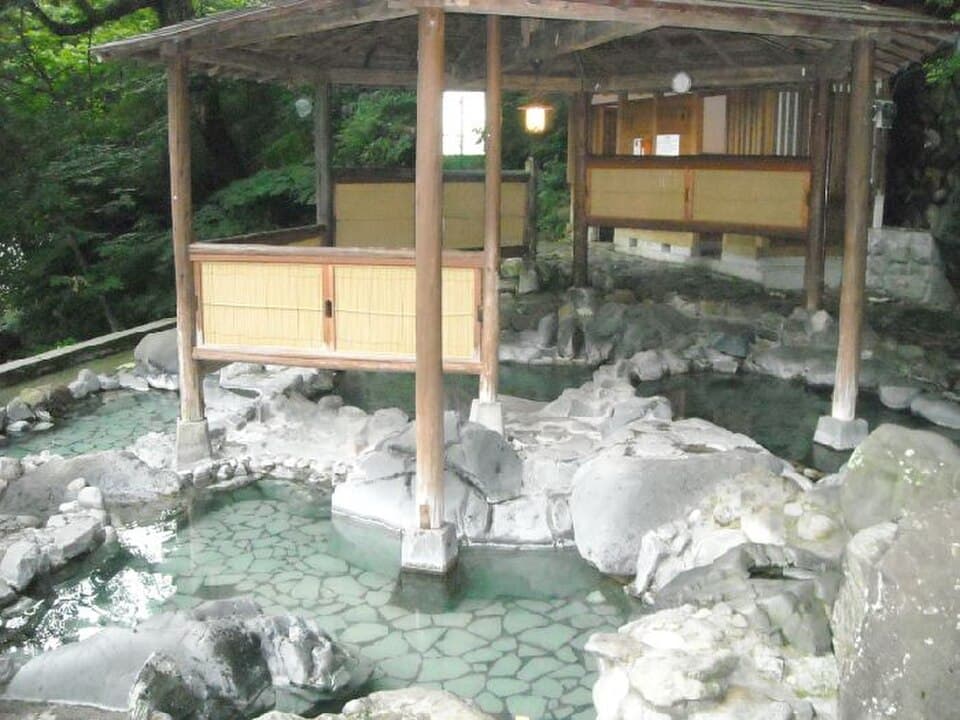
A mountain onsen beside Lake Yunoko within Nikko National Park. The milky, sulfurous waters have drawn visitors for centuries. After long hikes through the park's sacred forests and waterfalls, soaking here feels like exactly the right reward.
Data: Wikipedia (CC BY-SA 4.0) · OpenStreetMap (ODbL)
Highlights
- Lake Yunoko views
- Inside Nikko National Park
- Milky sulfur springs
- Hiking trail access
Suitability
Tattoo policy
Not permitted
Children policy
Family-friendly
Altitude
1,500m — seasonal access
Mineral chemistry
Sulfur
Benefits
Sulfuric hot springs are among the most studied in Japanese balneology. The sulfur compounds — primarily hydrogen sulfide and thiosulfate — have documented antimicrobial and anti-inflammatory properties. Regular bathing is associated with relief from chronic skin conditions including eczema and psoriasis, as well as joint inflammation and muscle soreness. Sulfuric waters have been prescribed in Japanese medical practice since the Edo period.
Note
The distinctive rotten-egg smell dissipates quickly after leaving the bath. Avoid if you have a sulfur allergy, very sensitive skin, or respiratory conditions. Remove silver jewellery before entering — sulfur will blacken it permanently.
Simple Thermal
Benefits
Simple thermal springs (単純温泉) have a lower dissolved mineral content than other spring types but are valued for the pure therapeutic effect of heat immersion itself. The warmth increases core body temperature, promotes sweating, eases muscle tension, and improves peripheral circulation. Simple thermal springs are the most common onsen type in Japan and are recommended as the gentlest introduction to onsen bathing — suitable for a wide range of health conditions and ages.
Note
Simple thermal springs are the most broadly accessible onsen type. Standard precautions apply: avoid bathing within 30 minutes of eating, keep soaks to 10–15 minutes for first-timers, and hydrate before and after.
History
The origins here go back to 788 AD, when the Buddhist monk Shodo Shonin, founder of the great Rinnoji temple complex, discovered the spring while crossing the mountains above Lake Yunoko.
He enshrined a statue of Yakushi Nyorai, the Buddha of Healing, beside the source and named the site Yakushi-yu. For centuries the spring was controlled by the Rinnoji temple and access was granted only with official permission. The religious significance deepened after 1617, when Tokugawa Ieyasu was enshrined at the nearby Toshogu, drawing steady streams of pilgrims through the mountains. By the Edo period, temple-managed bathhouses were formally open to pilgrims and mountain ascetics.
Local guide
Most visitors to Nikko stop at Toshogu Shrine and turn back for Tokyo. The ones who keep going board the bus at Tobu-Nikko Station and follow the road that climbs for forty minutes through increasingly wild forest, past the Kegon waterfall, along the shore of Lake Chuzenji, and finally up to a plateau at 1,500 meters where the trees thin out and the air smells of something between cold water and struck matches. Yumoto is at the end of this road, a small collection of inns and bathhouses at the northern edge of Lake Yunoko, and it is far enough from the shrine complex that almost everyone who arrives here has made a deliberate decision to be here.
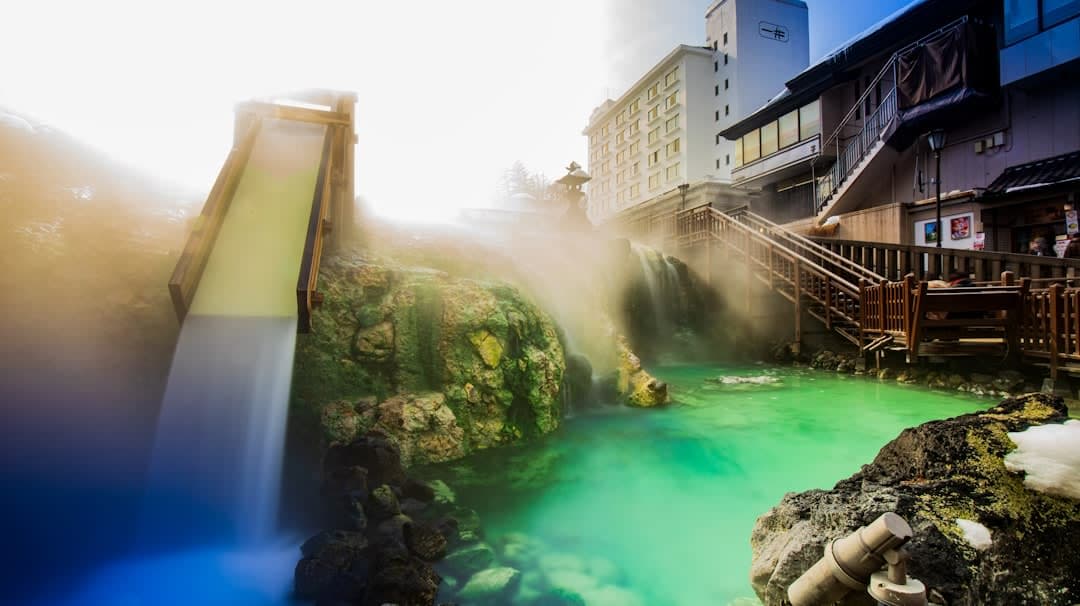
The springs at Yumoto were discovered, according to established tradition, by the Buddhist monk Shodo Shonin in the year 788. Shodo is the founder of Nikko in any practical sense: he built the first temples here, established the religious routes through the mountains, and is credited with finding or sanctifying nearly every significant site in the region. The water he found at Yumoto is a sulfur spring that comes from the earth a remarkable emerald green, then turns milky white on exposure to air as the sulfur compounds oxidize. By the time it reaches the baths, it is an opaque, pale jade color in summer and almost pure white in the colder months. The pH runs around 6.5, close to neutral, and the sulfur smell is strong and immediate but not aggressive. The water temperature at source reaches 78 degrees and is mixed down for use.
The most specific visual experience at Yumoto happens at the point where the lake's outlet stream, the Yukawa River, drops away from the flat plateau surface at Yudaki waterfall, a wide curtain of water about ten meters high. The Senjogahara Plateau Nature Trail starts here, running south through marshland and forest for roughly four kilometers to Ryuzu Falls and Lake Chuzenji. In late October this entire trail runs through peak foliage, and the contrast of the yellow larch groves against the dark volcanic rock is intense. Coming back from the trail at dusk, when the wooden bathhouses of Yumoto are already lit from inside and their steam is rising into cold mountain air, creates the particular reward that long alpine walks exist to deliver.
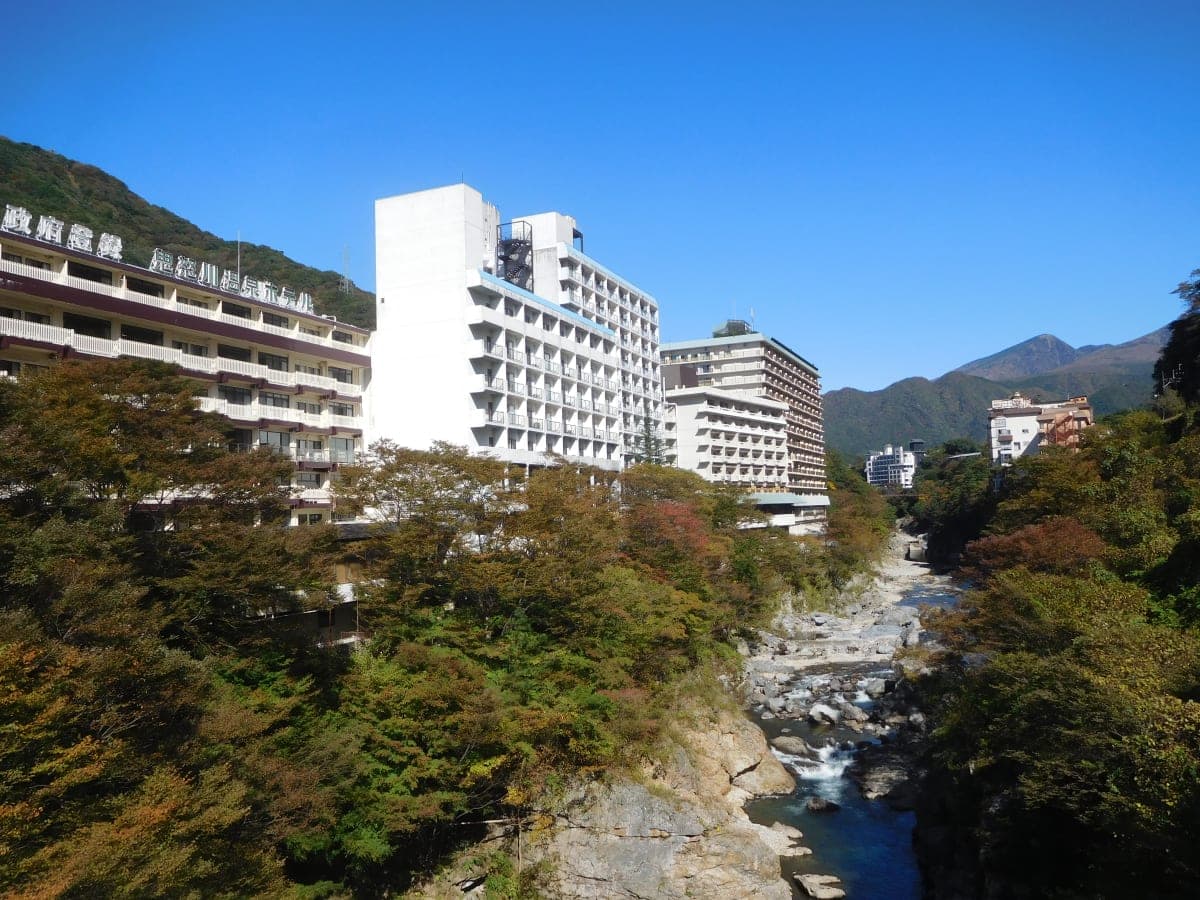
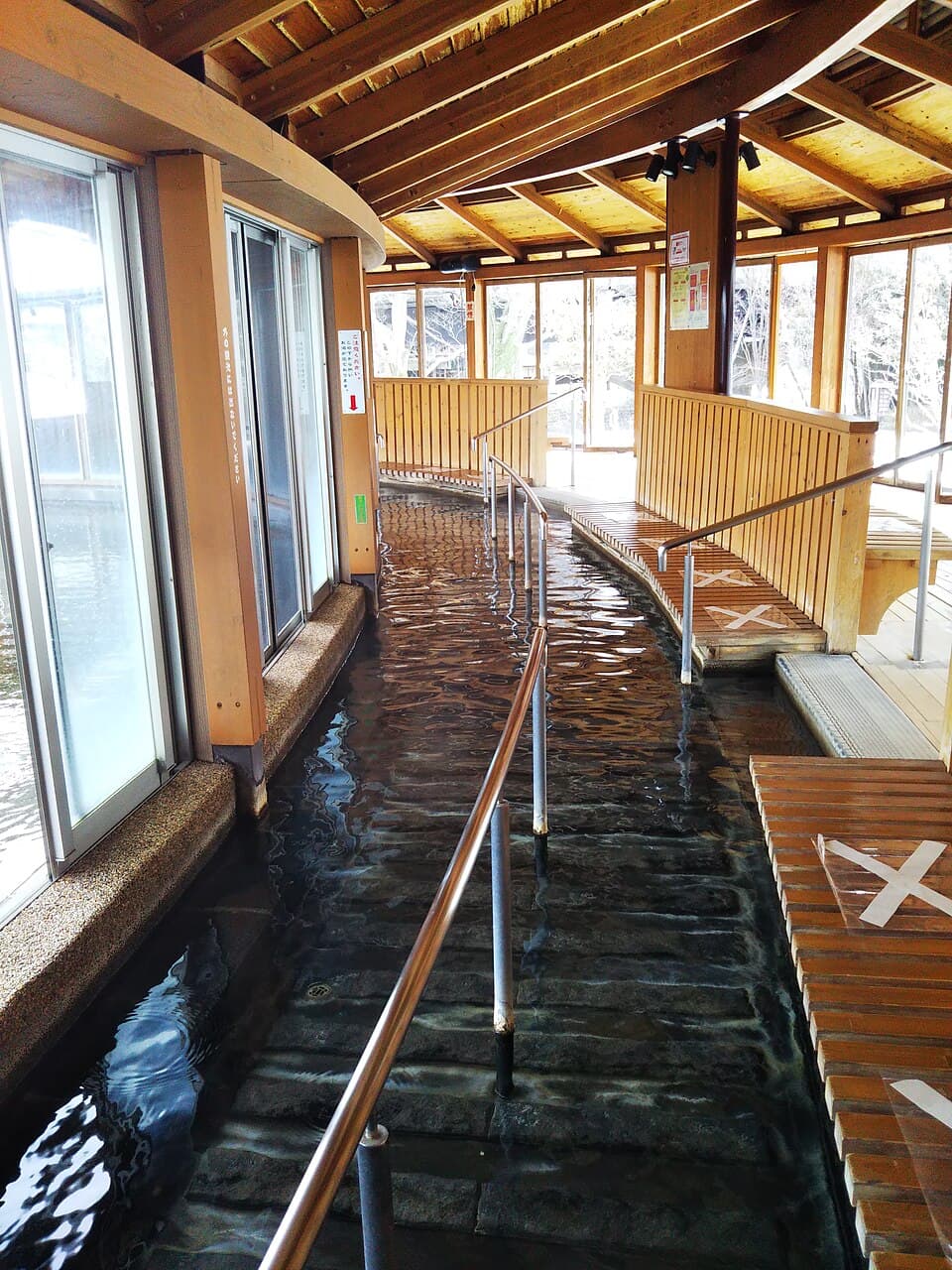
The town itself is a few streets. There is a small shrine built over the hot spring source, a public foot bath by the lake shore, and a handful of ryokans whose outdoor tubs look directly at Lake Yunoko, which sits in a shallow volcanic basin with no development on its far bank. The combination of Nikko's historical weight, Toshogu's gilded excess a forty-minute bus ride back down the mountain, and the quiet, milky baths up here makes Yumoto feel like the version of Nikko that the monk was actually trying to build.
How this spring compares
pH level
6.5
More alkaline than19% of Japan springs
More acidic than75% of Japan springs
Japan median7.3
Japan range1.2–11.3
n=121 springs
Max temperature
78°C
Hotter than71% of Japan springs
Japan median60°C
Japan hottest105°C
n=122 springs
Getting there
Tobu Nikko Line→ Tobu-Nikko2h
Bus to Yumoto Onsen (~40 min)
Total: 2h 50m
From Tobu-Nikko Station, take the bus to Yumoto Onsen. The journey takes about 40 minutes through the national park.
Amenities
Towel rental
Locker
Restaurant
Café
Parking
Wheelchair access
English spoken
Tattoo-friendly
Private bath
Soap provided
Hair dryer
Location & nearby
Yumoto, Nikko City, Tochigi 321-1662
Utsunomiya Station · 50.7 kmShinkansen
Mato Station · 16.6 km
Ashio Station · 17.8 km
Tsudo Station · 18.2 km
湯元温泉(バス) · 0.9 km
Fukushima Airport · 101.8 km
Ibaraki Airport · 112.6 km
大清水場外離着陸場 · 12.7 km
Yumoto Onsen · 0.9 km
Kohanmae (Bus Stop) · 1 km
Book a stay nearby
Hotels near Nikko
11+ optionsSpringsAtlas may earn a commission from bookings made through these links.
More springs in Kanto
1 / 10

Last verified:
Data: OpenStreetMap (ODbL) · local tourism agencies
Verified listing