
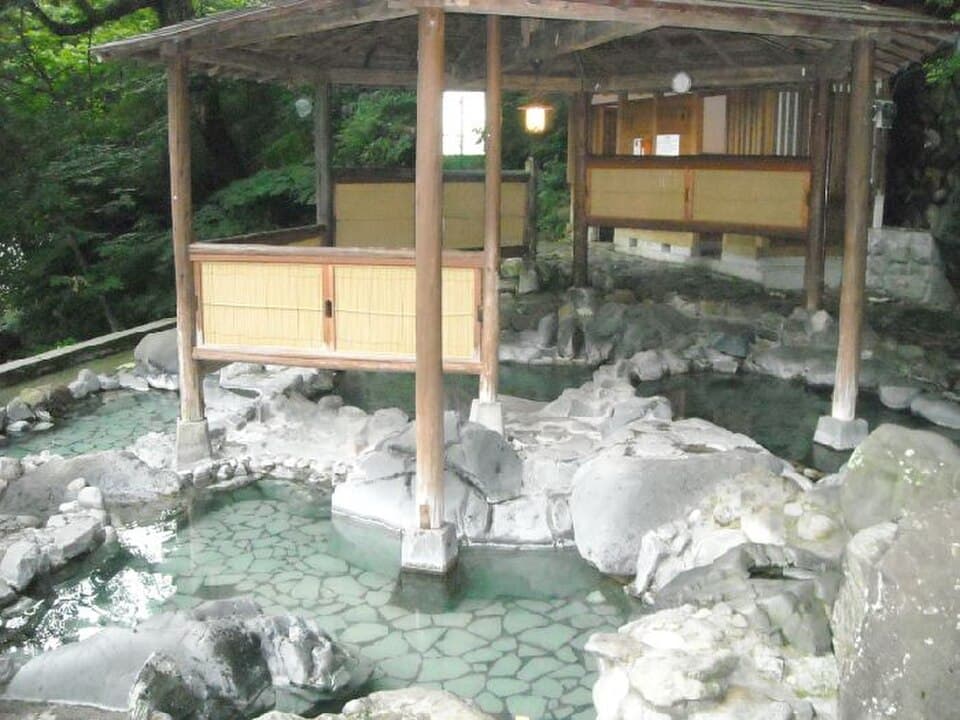
Public · Indoor & Outdoor · ¥410
4.1· 1,900 reviewsvia Google
38–55°CWater temp
6.2pH
¥410 (~$3)Entry fee
PublicBathing type
—Opening hours
About this spring
A hilltop onsen town in Gunma Prefecture built along 365 stone steps that climb through a valley lined with inns and old shops. The iron-rich golden-brown waters have been used since the Nara period. The staircase is the town's spine: everything happens along it or just off it.
Data: Wikipedia (CC BY-SA 4.0) · OpenStreetMap (ODbL)
Highlights
- 365 historic stone steps
- Golden iron-rich waters
- Traditional ryokan streetscape
- Natsume Soseki connection
Suitability
Tattoo policy
Policy varies
Children policy
Family-friendly
Altitude
700m
Mineral chemistry
Iron
Benefits
Iron-bearing springs are recognised by their characteristic rust-red or amber colour and metallic taste. The iron content — primarily ferrous bicarbonate or ferric sulfate — is associated with stimulation of red blood cell production and is traditionally recommended for anaemia and fatigue recovery. The distinctive colouring comes from iron oxidising on contact with air and is not a sign of contamination.
Note
Iron springs will stain light-coloured swimwear and towels a persistent brownish-orange. Avoid wearing white or light fabrics into the water. Those with haemochromatosis (iron overload condition) should seek medical advice before bathing.
Sulfate
Benefits
Sulfate springs (硫酸塩泉) contain dissolved calcium, sodium, or magnesium sulfate and are among the most therapeutically versatile spring types. Calcium sulfate springs are traditionally associated with wound healing and post-surgical recovery — the calcium ions support tissue repair and the sulfate has mild astringent properties. Sodium sulfate springs are linked to liver and digestive function; they are one of the few spring types used in Japan's national spa therapy clinics for chronic digestive complaints. The water typically has a clean, slightly bitter mineral taste.
Note
Sulfate springs are generally well-tolerated. Those with kidney stones of the calcium oxalate type should consult a doctor before bathing regularly. Sodium sulfate springs can have a mild laxative effect in sensitive individuals — stay hydrated.
History
These springs appear in the Man'yoshu poetry anthology compiled around 759 AD, suggesting the waters were already valued in the Nara period.
The stone staircase has a more martial origin. After his defeat at the Battle of Nagashino in 1575, the warlord Takeda Katsuyori ordered his general Sanada Masayuki to build the stairway as a system for distributing spring water to bathhouses along the route. Wounded soldiers needed both water supply and access to healing baths. During the Edo period the resort served domain lords and travellers seeking recuperation in the mountains. The Meiji and Taisho eras brought a new class of visitor: literary pilgrims. Natsume Soseki, Tokutomi Roka, Takehisa Yumeji, and Hagiwara Sakutaro all spent time here.
Local guide
From Shibukawa Station, the bus climbs the lower slopes of Mount Haruna and deposits you at the base of a stone staircase that runs three hundred meters straight up the center of the town. The steps are granite, there are three hundred and sixty-five of them, and the number is intentional: the town's wish that it stay busy year-round, every day of the year, pressed into the very architecture. On either side of the staircase, old inns and small restaurants have been here for the better part of four hundred years, and a narrow channel runs alongside the steps carrying water that looks nothing like water.
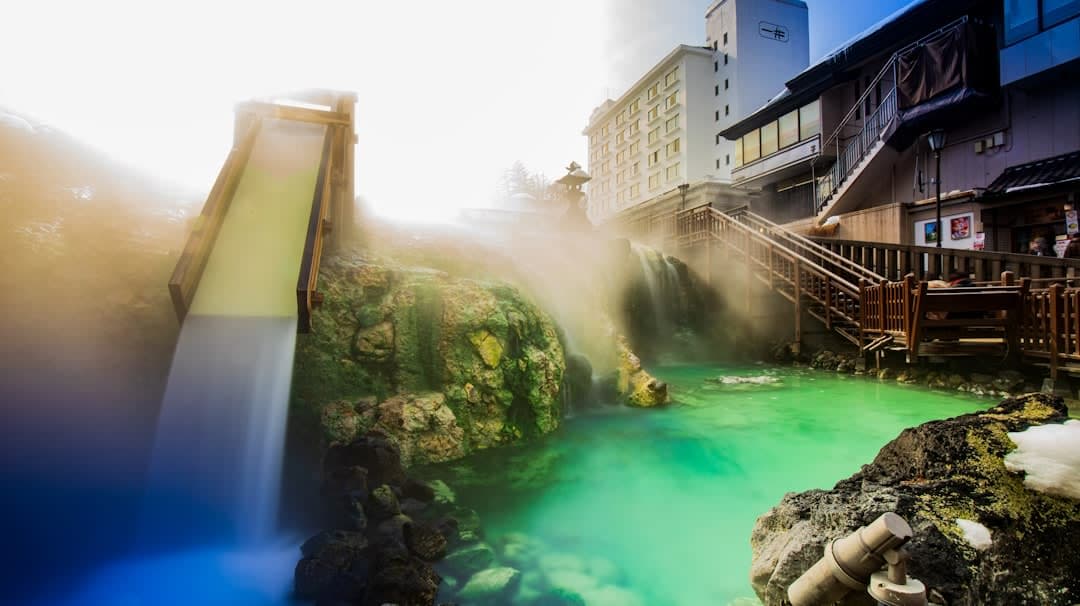
Ikaho's signature bath, Kogane no Yu, carries the highest iron content of any hot spring in Gunma Prefecture. The water comes out of the earth already loaded with dissolved iron, and when it hits oxygen it turns. By the time it reaches the tub it is a deep amber-brown, the color of weak tea darkened to opacity, sitting warm and faintly metallic at a pH of 6.2. At 38 to 55 degrees, the range covers everything from a slow, comfortable soak to something that requires you to lower yourself in slowly. On your skin the iron water feels heavier than plain water, not slimy but substantial, and it leaves the faintest mineral residue when you dry off.
There is a second spring in Ikaho, Shirogane no Yu, discovered more recently, which is clear and colorless. Both waters flow in separate pipes through the town, and the better bathhouses offer both. But the brown water is what people come for, and it runs openly through a channel visible right beside the stone steps so that even before you reach the bath you can smell the faint iron on the air and watch the rust-colored water moving down through the heart of the town.
Natsume Soseki spent time here in the Meiji period, along with several other writers of that era who found something useful in Ikaho's combination of mild mountain air and unusual water. The literary connection is mentioned on plaques near the top of the stairs, but the place does not make too much of it. On a weekday morning in autumn, when you climb to the top of the stone steps and look back down at the brown-water channel flanked by old wooden inn fronts and the forested slopes of Haruna framing everything behind, it earns itself on its own terms.
How this spring compares
pH level
6.2
More alkaline than17% of Japan springs
More acidic than82% of Japan springs
Japan median7.3
Japan range1.2–11.3
n=121 springs
Max temperature
55°C
Hotter than43% of Japan springs
Japan median60°C
Japan hottest105°C
n=122 springs
Getting there
JR Takasaki Line→ Shibukawa1h 15m
Bus to Ikaho Onsen (~25 min)
Total: 1h 45m
From Shibukawa Station, take the bus to Ikaho Onsen. The ride takes about 25 minutes.
Amenities
Towel rental
Locker
Restaurant
Café
Parking
Wheelchair access
English spoken
Tattoo-friendly
Private bath
Soap provided
Hair dryer
Location & nearby
Ikaho-machi, Shibukawa City, Gunma 377-0102
Annaka-Haruna Station · 8.6 kmShinkansen
Gunma-Yawata Station · 7.2 km
Kita-Takasaki Station · 9.7 km
Ino Station · 10.3 km
Shinshu-Matsumoto Airport · 92.5 km
Tokyo Haneda Airport · 121.8 km
JGSDF Somagahara Airbase · 5.6 km
Ikaho Onsen [Machi no Eki] · 0.2 km
Kamikanaihara kouminkanmae · 0.1 km
Sekisho mae · 0.1 km
Ishidangaiguchi · 0.1 km
Ikaho Bus Terminal(IG12) · 0.3 km
Kanaihara jujiro · 0.4 km
Kanaihara iriguchi · 0.6 km
Ikaho Stone Steps Street · 0.1 km
More springs in Kanto
1 / 10

Last verified:
Data: OpenStreetMap (ODbL) · local tourism agencies
Verified listing