
Public · Indoor & Outdoor · ¥510
52–52°CWater temp
7.1pH
¥510 (~$3)Entry fee
PublicBathing type
—Opening hours
About this spring
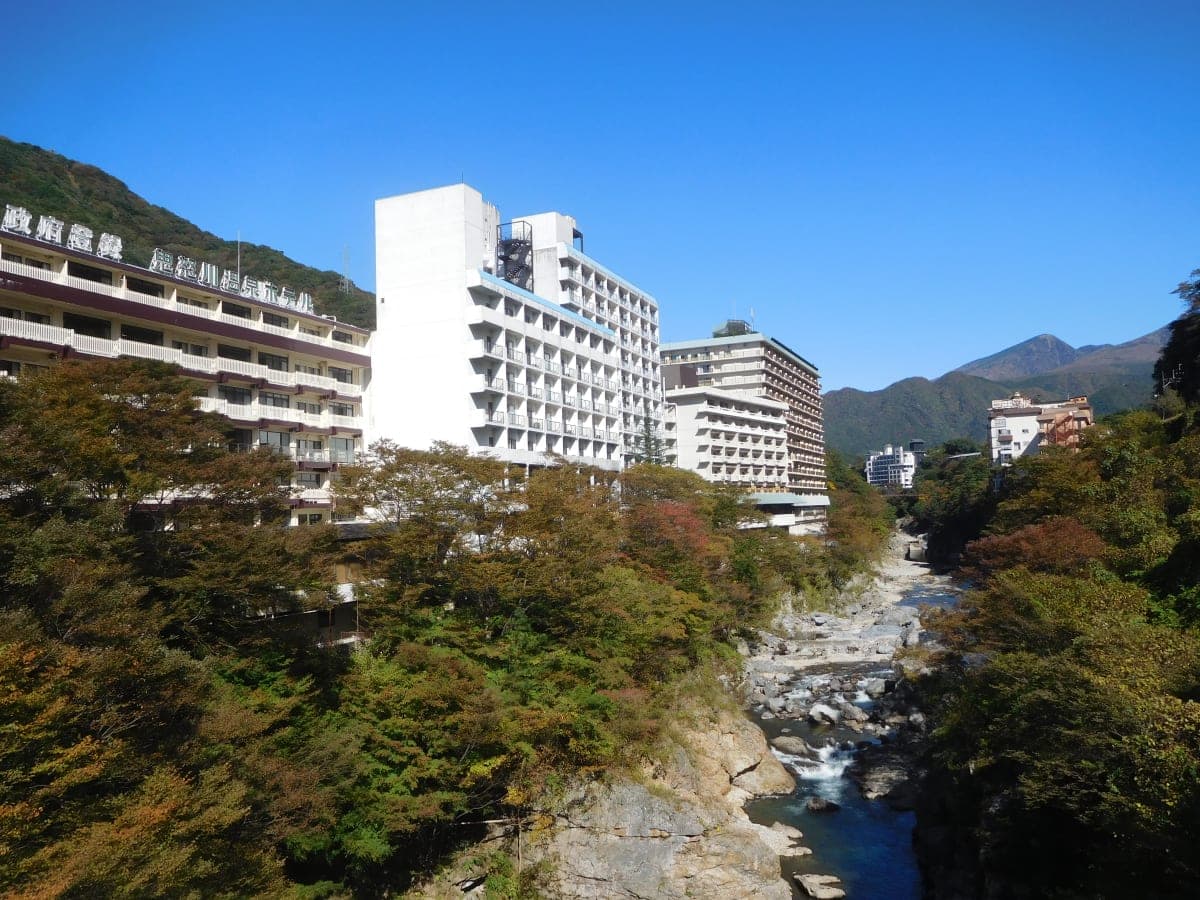
A riverside hot spring resort along the Kinugawa River in Tochigi Prefecture, about two hours from Tokyo by express train. The gorge scenery is dramatic in autumn when the maples turn. The resort is also the nearest onsen town to Nikko and makes a natural overnight stop for visitors to the Toshogu shrine complex.
Data: Wikipedia (CC BY-SA 4.0) · OpenStreetMap (ODbL)
Highlights
- Kinugawa River gorge
- Autumn maple foliage
- Gateway to Nikko Toshogu
- Edo Wonderland theme park
Suitability
Tattoo policy
Policy varies
Children policy
Family-friendly
Altitude
300m
History
Hot springs were discovered here in the early Meiji period.
The resort developed through the 1970s into a major domestic tourism destination but struggled in the economic slowdown of the 1990s. A recovery in the 2000s was driven by improved rail access and the opening of Edo Wonderland Nikko Edomura, a large open-air Edo-period theme park nearby. Today the town is quieter than its peak years but well-maintained, with good ryokan options along the river.
Local guide
Two hours north of Tokyo on the Tobu Nikko Line, just before the tracks climb toward the cryptomeria forests and Edo-period shrines of Nikko, you pull into Kinugawa-Onsen Station and step out into a gorge. The town does not announce itself gently. The Kinugawa River has spent roughly 20 million years cutting through a stack of volcanic rock, leaving walls of white rhyolite, green tuff, and purplish andesite rising above both sides of the water. The three-kilometer gorge section called Ryuokyo, which means Dragon King's Canyon, runs just upstream from the resort hotels, and the dragon reference comes from the way the twisted rock formations writhe above the current like something out of an old woodblock print.
The springs here were discovered in 1691, at which point access was restricted entirely to Nikko's Buddhist priests and the feudal lords who came to worship. The general public had to wait until 1868, and once the gates opened the resort grew quickly. The water that comes up through the riverside rock is a simple alkaline spring at pH 7.1, very clean, with almost no smell. Temperature at the source runs around 52 degrees, which means most outdoor baths receive the water without much dilution. On your skin it is soft without being slippery, the kind of water that cleans without stripping, and the warmth stays with you for a long time after you step out.
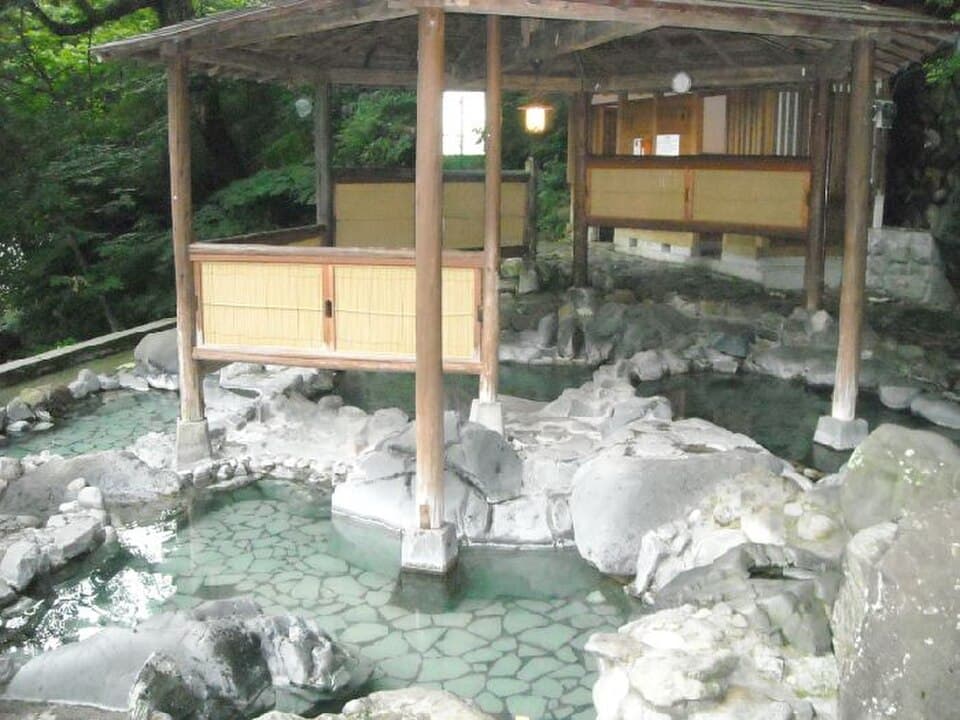
Kinugawa has a complicated reputation and deserves credit for honesty about it. The resort boom of the 1970s left some large hotels that have since closed and fallen into advanced ruin, their facades still visible above the gorge walls from certain angles. But the gorge itself is indifferent to economic cycles. The outdoor riverside baths at several hotels hang directly over the water, and from them you look down into the rushing green current of the Kinugawa while steam lifts around you. The contrast between the cold sound of the river and the hot water you are sitting in is one of the better sensory experiences in the Kanto region.
From the station, most hotel baths are reachable on foot in under ten minutes. The gorge walking path along Ryuokyo is a separate thirty-minute loop with suspension bridges and close views of the andesite cliffs, best done before or after bathing while your legs still work. Nikko's UNESCO shrines are a twenty-minute bus ride away, which makes Kinugawa a practical base for a two-day trip that combines temple architecture and a hot river gorge.
How this spring compares
pH level
7.1
More alkaline than36% of Japan springs
More acidic than59% of Japan springs
Japan median7.3
Japan range1.2–11.3
n=121 springs
Max temperature
52°C
Hotter than34% of Japan springs
Japan median60°C
Japan hottest105°C
n=122 springs
Getting there
From Tokyo, take the Tobu Spacia limited express from Asakusa Station directly to Kinugawa-Onsen Station. The journey takes about 2 hours with no transfers required. The riverside resort area is within easy walking distance of the station.
Amenities
Towel rental
Locker
Restaurant
Café
Parking
Wheelchair access
English spoken
Tattoo-friendly
Private bath
Soap provided
Hair dryer
Location & nearby
Kinugawa Onsen, Nikko, Tochigi
Kinugawa-onsen Sta. · 0.1 km
Nasushiobara Station · 28.3 kmShinkansen
Tobu World Square Station · 1.8 km
Kosagoe Station · 2.5 km
Kinugawa-Koen Station · 2 km
鬼怒川温泉駅(バス) · 0.1 km
Ibaraki Airport · 94.9 km
Fukushima Airport · 77.7 km
Namekawa Helipad · 13.2 km
Kinugawaonsen Station (Bus Stop) · 0.1 km
EDO WANDĀRU NIHOKU EDOMURA Station · 4 km
Kinugawaonsen Station · 0.1 km
Book a stay nearby
Hotels near Nikko
37+ optionsSpringsAtlas may earn a commission from bookings made through these links.
More springs in Kanto
1 / 10

Last verified:
Data: OpenStreetMap (ODbL) · local tourism agencies
Verified listing