
Public · Indoor & Outdoor · ¥200
Yufuin Onsen
湯布院温泉
55°CPublic BathIndoor & Outdoorsimple-thermalsodium-bicarbonate
4.3· 2,900 reviewsvia Google
38–55°CWater temp
7.8pH
¥200 (~$1)Entry fee
PublicBathing type
—Opening hours
About this spring
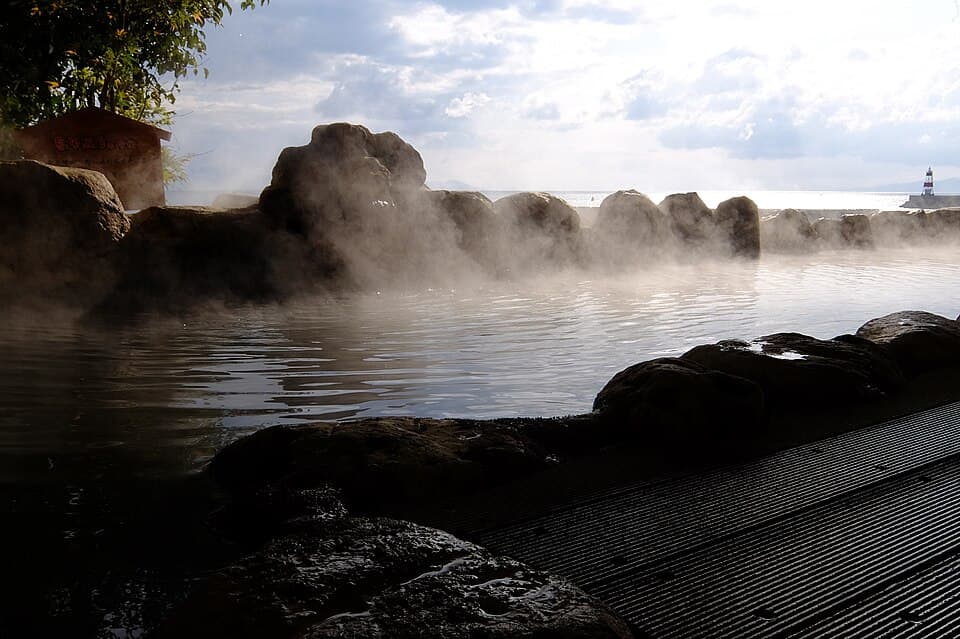
A peaceful artsy onsen town at the foot of Mt. Yufu in Oita Prefecture. The town is known for boutique galleries, craft shops, and ryokan with private outdoor baths. Lake Kinrin sits at the heart of it all. On quiet mornings, steam rises off the lake's surface in a way that seems almost designed to make you stop and stand still.
Data: Wikipedia (CC BY-SA 4.0) · OpenStreetMap (ODbL)
Highlights
- Lake Kinrin morning mist
- Boutique galleries and craft shops
- Mt. Yufu views
- Private rotenburo ryokan
Suitability
Tattoo policy
Policy varies
Children policy
Family-friendly
Altitude
450m
Mineral chemistry
Simple Thermal
Benefits
Simple thermal springs (単純温泉) have a lower dissolved mineral content than other spring types but are valued for the pure therapeutic effect of heat immersion itself. The warmth increases core body temperature, promotes sweating, eases muscle tension, and improves peripheral circulation. Simple thermal springs are the most common onsen type in Japan and are recommended as the gentlest introduction to onsen bathing — suitable for a wide range of health conditions and ages.
Note
Simple thermal springs are the most broadly accessible onsen type. Standard precautions apply: avoid bathing within 30 minutes of eating, keep soaks to 10–15 minutes for first-timers, and hydrate before and after.
Bicarbonate
Benefits
Bicarbonate springs (sodium bicarbonate, calcium bicarbonate, or hydrogen carbonate) are particularly effective for skin conditions. The bicarbonate ions cleanse and soften the skin surface, removing excess sebum without stripping the skin's acid mantle. These springs are traditionally recommended for acne-prone skin and as a gentle option for sensitive skin types. The water has a characteristically clean, soft feel.
Note
Bicarbonate springs are generally among the most gentle and well-tolerated onsen types. Those with very dry skin may wish to apply moisturiser after bathing, as the cleansing effect can temporarily reduce surface oils.
History
Yufuin appears in the eighth-century geographical chronicle Bungo no Kuni Fudoki as a recognised bathing destination.
During the Edo period the stone-paved main street was laid, and the town developed a prosperous inn culture. The modern identity of Yufuin was shaped by a single decision in 1970, when residents successfully blocked a major corporation from building a golf course on the valley floor. That act of self-determination set the town on a different path from the entertainment-district model then spreading across Japan. Local leaders visited quiet German health resorts for inspiration and came back committed to small-scale, landscape-sensitive development. In 1975, the Yufuin Music Festival and Film Festival were launched. Artists, writers, and cultural figures arrived. The galleries and craft shops that now line the approaches to Kinrinko Lake are the result of that deliberate choice.
Local guide
The bus from Beppu to Yufuin takes about an hour, and by the time it crests the final ridge and drops you into the wide, flat basin, you already know this place is different. Beppu assaults you with steam vents and boiling mud pits and the constant low hiss of earth under pressure. Yufuin does the opposite. The basin is quiet and green, and the twin peaks of Yufu-dake rise straight up at the far end like a natural wall built to keep the outside world out. From Yufuin Station, a single pedestrian street called Yunotsubo Kaido runs 1.5 kilometers toward Lake Kinrin, lined with small wooden galleries, homemade jam shops, and glass studio storefronts. Walk it before ten in the morning and you will have it mostly to yourself.
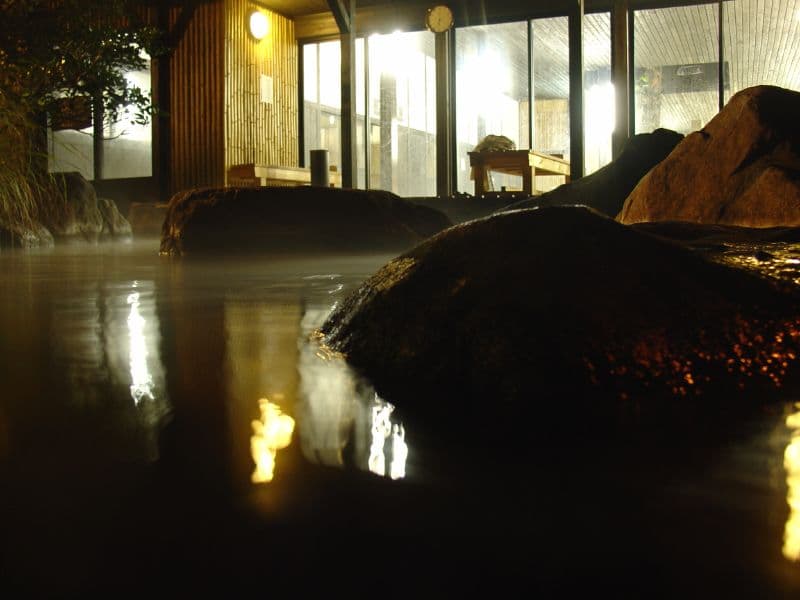
The water here comes out of the earth at temperatures between 38 and 55 degrees Celsius, neutral to slightly alkaline at pH 7.8. It is a sodium bicarbonate spring, which means the water is completely clear and has almost no smell at all. When you step in, the initial sensation is of softness more than heat. The water has a faint slippery texture against your skin, the kind you notice on your hands when you press your palms together under the surface. It is not dramatic water. It does not sting or smell or change color in the light. It is simply clean and warm and very, very easy to stay in.
The reason most people travel to Yufuin is Lake Kinrin. On autumn mornings, when the air temperature drops but the lake water stays warm from the hot spring inflow feeding the lake floor, a thick white mist rises off the surface and rolls slowly across the water toward the small wooden torii gate that stands at the far edge. The effect lasts maybe an hour before the sun burns it off. If you have walked down from the station early, you can stand at the shore in complete quiet while the steam curls around your ankles and watch the torii disappear and reappear in the white. It is one of those moments that does not feel staged.
Most ryokan in Yufuin offer private outdoor baths, called kashi-kiri rotenburo, where you rent a small wooden-walled garden bath for an hour with nobody else in it. The practice fits the town's general preference for intimacy over spectacle. You can choose a bath with a direct view of Yufu-dake and sit in the clear, warm water while cloud shadows move across the volcano's double summit. The town resisted large hotel development for decades, and the policy shows. There are no concrete towers blocking the mountain lines here, just low wooden buildings and a lot of open sky. Come for a weeknight if you can. The weekend crowds on Yunotsubo Kaido are substantial.
How this spring compares
pH level
7.8
More alkaline than67% of Japan springs
More acidic than27% of Japan springs
Japan median7.3
Japan range1.2–11.3
n=121 springs
Max temperature
55°C
Hotter than43% of Japan springs
Japan median60°C
Japan hottest105°C
n=122 springs
Getting there
JR Kyudai Main Line→ Yufuin2h
Walk to bathhouse
Total: 2h 5m
Take the JR Kyudai Main Line from Hakata or Beppu to Yufuin Station. The journey takes about 2 hours from Hakata.
Amenities
Towel rental
Locker
Restaurant
Café
Parking
Wheelchair access
English spoken
Tattoo-friendly
Private bath
Soap provided
Hair dryer
Location & nearby
Yufuin-cho, Yufu City, Oita 879-5102
Yufuin Station · 0 km
Kumamoto Station · 77.9 kmShinkansen
Shōnai Station · 9.7 km
Yunohira Station · 7.5 km
Minami-Yufu Station · 3.3 km
農協前[湯布院町] · 0.2 km
Oita Airport · 42.5 km
Kumamoto Airport · 66.7 km
Nogyōkai Mae [Yuibun-machi] Station · 0.2 km
Yufuin Eki Mae · 0.3 km
Yufuin-Ekimae Bus Center (Bus Stop) · 0 km
Iwao Byoin Mae · 0.2 km
Yufuin Chousha-mae Station · 0.2 km
Yufuin Station · 0 km
Book a stay nearby
Hotels near Yufuin
109+ optionsSpringsAtlas may earn a commission from bookings made through these links.
More springs in Kyushu
1 / 13


Last verified:
Data: OpenStreetMap (ODbL) · local tourism agencies
Verified listing