
Public · Indoor & Outdoor · ¥320
Nanki-Katsuura Onsen
南紀勝浦温泉
75°CPublic BathIndoor & Outdoorsodium-chloridesulfur
55–75°CWater temp
7.0pH
¥320 (~$2)Entry fee
PublicBathing type
—Opening hours
About this spring
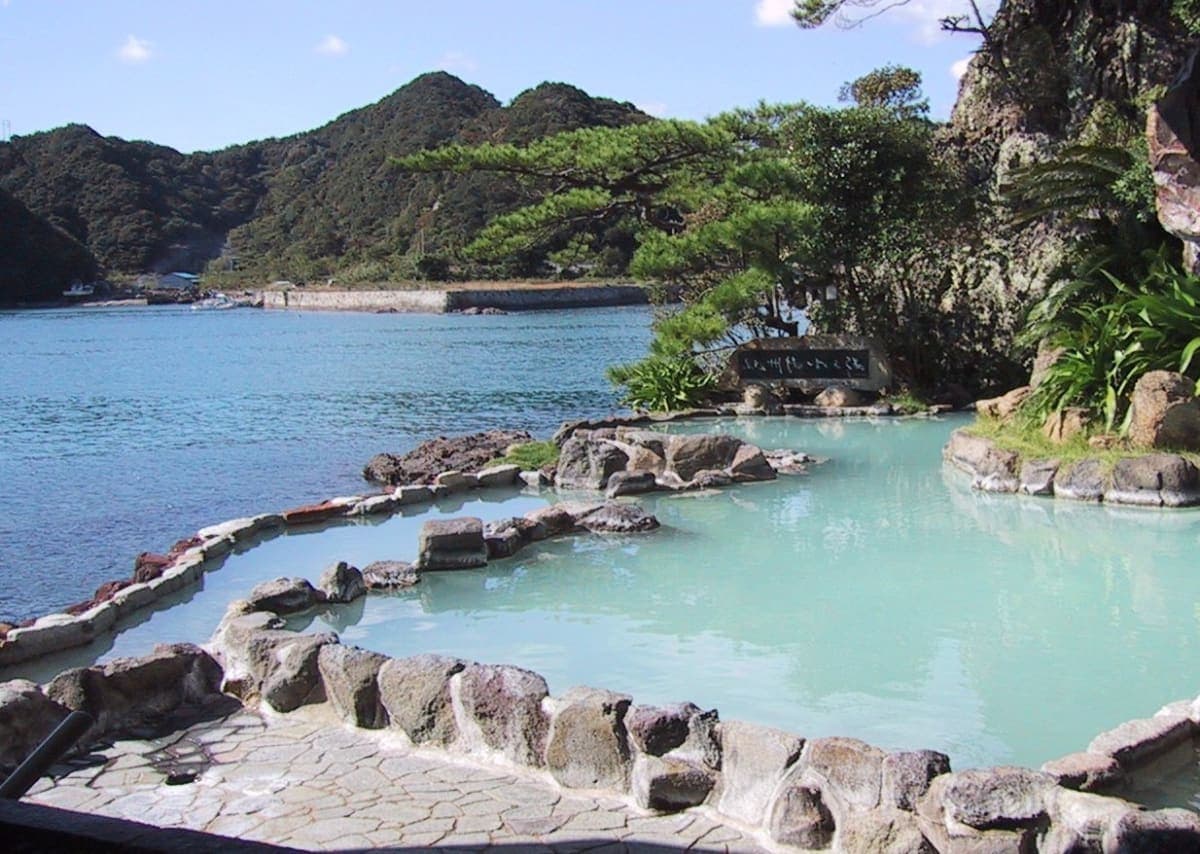
A coastal hot spring resort on a rugged stretch of the Kii Peninsula in Wakayama Prefecture, set within Yoshino-Kumano National Park. Over 100 springs emerge from the cliffs and peninsulas around Katsuura Bay. Some of the most distinctive facilities are built into sea caves and on small islands reached by boat from the harbor.
Data: Wikipedia (CC BY-SA 4.0) · OpenStreetMap (ODbL)
Highlights
- Sea cave and island baths
- Boat access to island springs
- Yoshino-Kumano National Park
- Fresh bluefin tuna harbor
Suitability
Tattoo policy
Policy varies
Children policy
Family-friendly
Altitude
5m
Mineral chemistry
Sodium Chloride (Salt)
Benefits
Sodium chloride springs — essentially natural saltwater baths — are celebrated for their warming and moisturising effects. The salt forms a thin film on the skin after bathing that slows moisture evaporation, keeping skin hydrated longer than a freshwater bath. This "heat-retaining" property means bathers stay warm for significantly longer after leaving the water, making these springs especially popular in winter. Salt springs are among the most accessible for first-time onsen visitors.
Note
Those with high blood pressure or heart conditions should consult a doctor before bathing, as the warming effect increases circulation. Avoid immersing open wounds. The salt will sting slightly in eyes — take care when submerging.
Sulfur
Benefits
Sulfuric hot springs are among the most studied in Japanese balneology. The sulfur compounds — primarily hydrogen sulfide and thiosulfate — have documented antimicrobial and anti-inflammatory properties. Regular bathing is associated with relief from chronic skin conditions including eczema and psoriasis, as well as joint inflammation and muscle soreness. Sulfuric waters have been prescribed in Japanese medical practice since the Edo period.
Note
The distinctive rotten-egg smell dissipates quickly after leaving the bath. Avoid if you have a sulfur allergy, very sensitive skin, or respiratory conditions. Remove silver jewellery before entering — sulfur will blacken it permanently.
History
The resort dates to the Edo period, when the area was known simply as Katsuura Onsen.
The name was later changed to Nanki-Katsuura to distinguish it from another Katsuura in Chiba. The area is close to sacred sites on the Kumano pilgrimage route, giving it cultural as well as scenic significance. The harbor town built its modern reputation on both its springs and its tuna fishing: Katsuura is one of Japan's foremost landing ports for fresh bluefin tuna.
Local guide
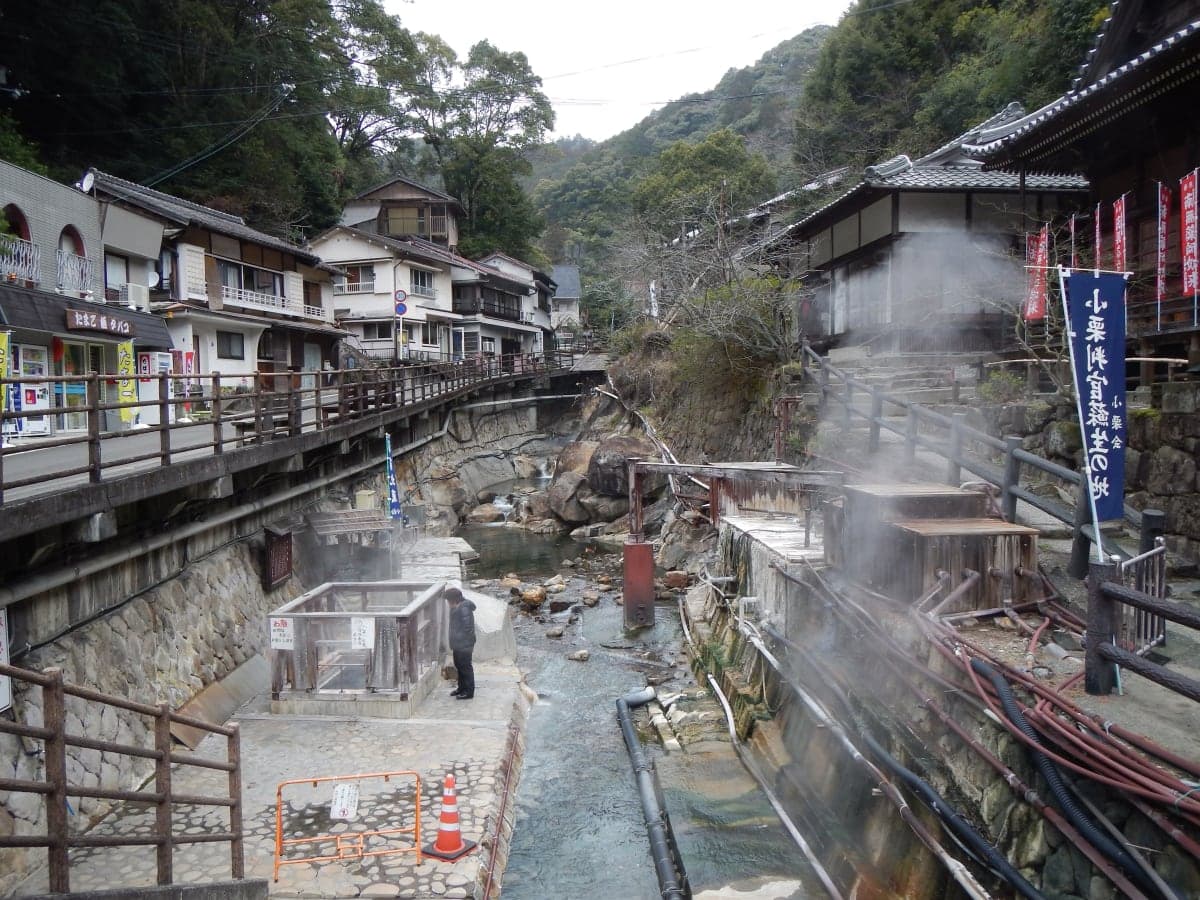
At Kii-Katsuura Station you follow signs down toward the harbor, and within a few minutes you are standing at a small pier looking out at Katsuura Bay. The water here is very deep and very blue, and scattered across it are a handful of small rocky islands covered in dense subtropical vegetation that grows right down to the waterline. A few of these islands have buildings on them, accessible only by the short ferry boats that run throughout the day from the tourist pier. This is how Nanki-Katsuura's most distinctive hot spring hotels are reached, and the five-minute crossing changes the character of the visit before you have even entered a bath.
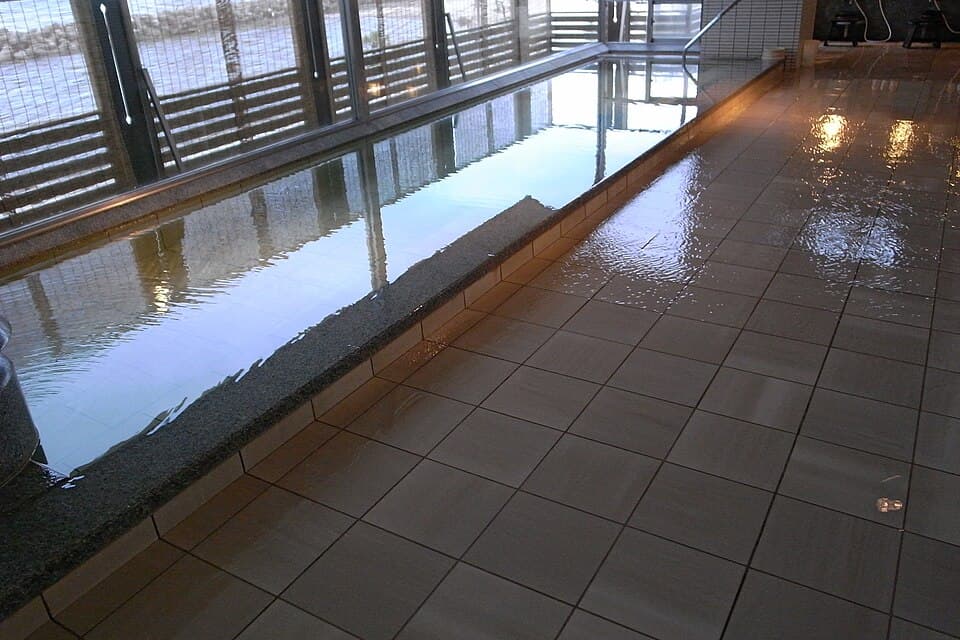
The water in the Nanki-Katsuura area is predominantly sodium chloride, drawn from over a hundred springs that dot the rugged coastline and its surrounding terrain. It is clear and carries a mild saltiness that coats the skin without being heavy. What sets this area apart from other coastal onsen towns is not the chemistry of the water but the architecture of the bathing. Hotel Urashima, on the Urashima Peninsula, houses the most talked-about bath in the region: the Bokido, a cave formed naturally in the cliff face at sea level, open on the ocean side, where you can sit in the hot water and watch the Pacific moving just a few meters below. The cave amplifies the sound of the waves so the whole bath hums with a low, rhythmic reverberation. On rough days, sea spray drifts in from the opening.
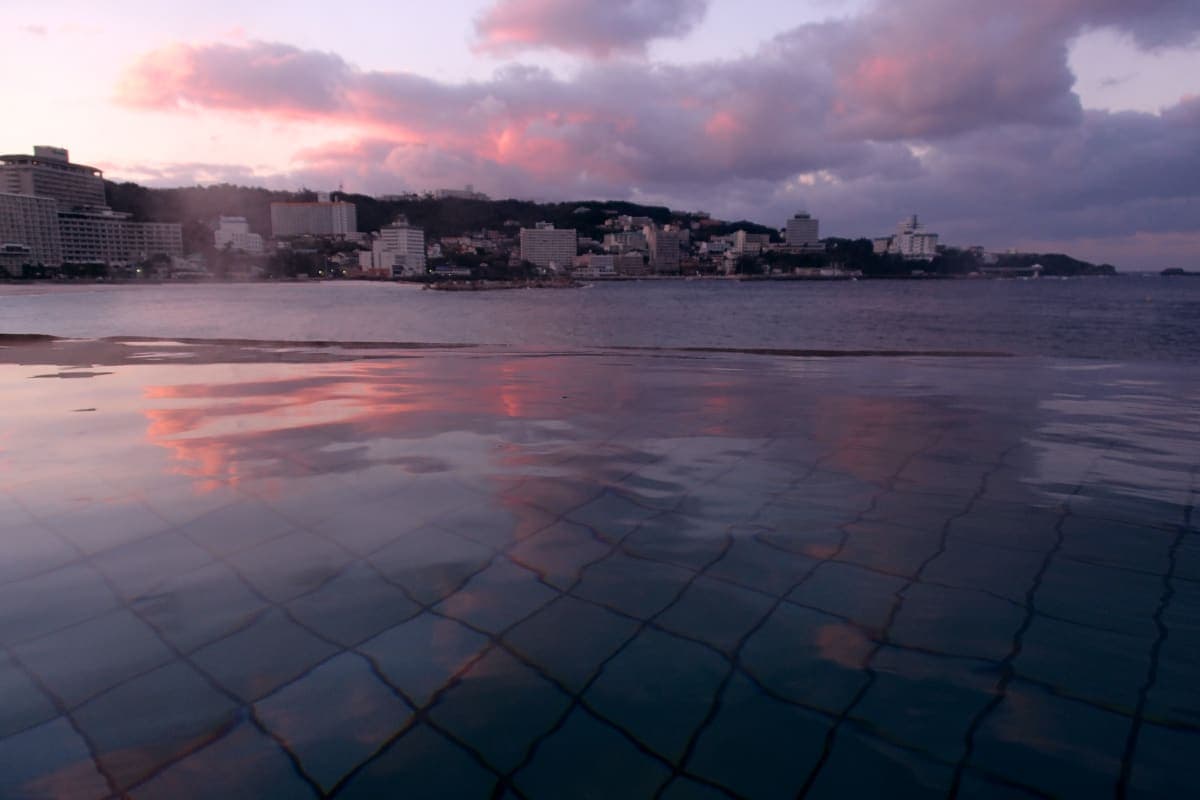
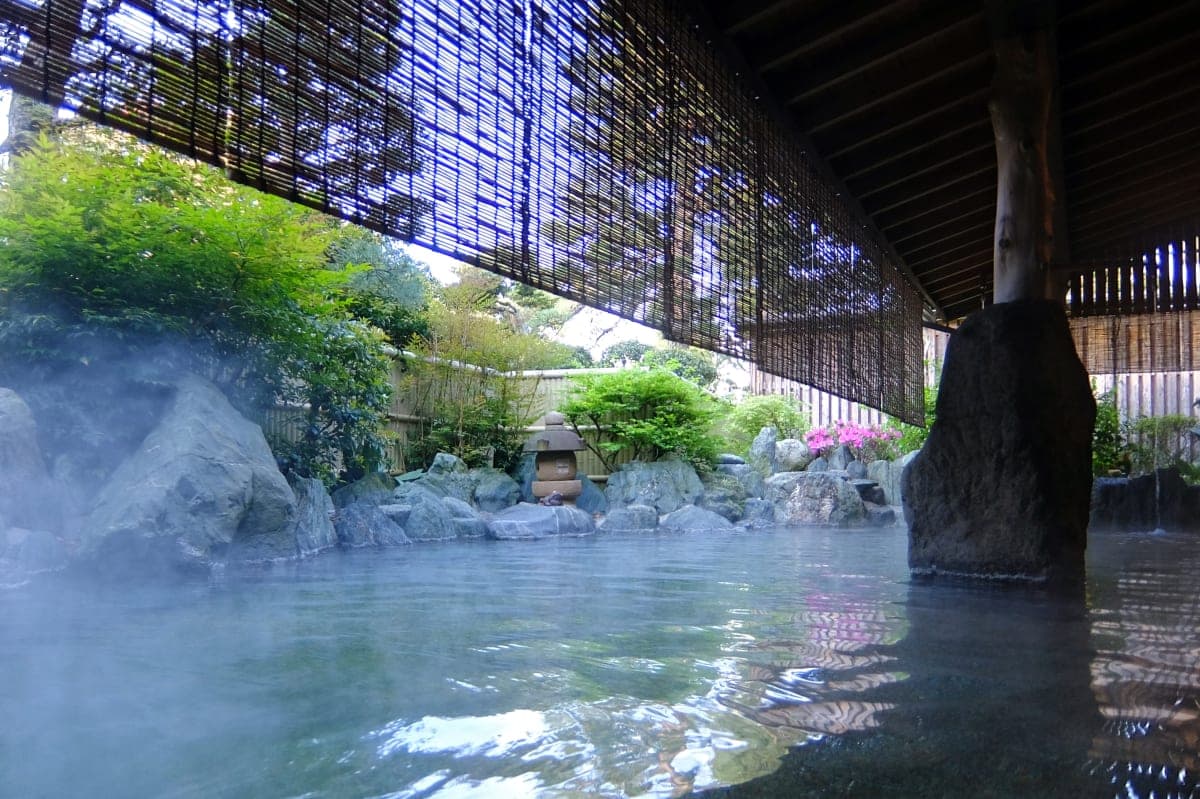
On Nakanoshima Island, reached by a separate ferry, Kumano-Bettei's outdoor terrace bath looks directly across the bay toward the mainland hills. In the late afternoon the water turns from green to dark blue and the light on the far cliffs goes orange, and you are in a hot bath in the middle of this, which is one of those situations that Japanese travel writing correctly refuses to overexplain. The island has a human population most easily counted on one hand outside of the hotel staff, and the quiet that comes with that is absolute after the last ferry leaves for the evening.
The town of Kii-Katsuura itself is worth more than a night. It is one of Japan's most important tuna ports, and the morning market at the harbor runs on a scale that makes ordinary fish markets look modest. Whole bluefin tuna are lined up on pallets while traders move between them making quick, precise bids. Eating tuna in a town this serious about tuna, then crossing the harbor by boat to a cave in a cliff face full of hot seawater, is the kind of two-part day that justifies the four-hour train from Osaka without any qualification.
How this spring compares
pH level
7.0
More alkaline than31% of Japan springs
More acidic than64% of Japan springs
Japan median7.3
Japan range1.2–11.3
n=121 springs
Max temperature
75°C
Hotter than70% of Japan springs
Japan median60°C
Japan hottest105°C
n=122 springs
Getting there
From Osaka, take the JR Kuroshio limited express to Kii-Katsuura Station. The journey takes about 3 hours 40 minutes. From Nagoya, take the JR Kisei Line for about 3 hours 20 minutes.
Amenities
Towel rental
Locker
Restaurant
Café
Parking
Wheelchair access
English spoken
Tattoo-friendly
Private bath
Soap provided
Hair dryer
Location & nearby
Nankikatsuura Onsen, Wakayama
Katsuura Sta. · 0 km
Yukawa Station · 2.6 km
Nachi Station · 1.8 km
Kii-Tenma Station · 1.1 km
Kansai International (Osaka) Airport · 110.2 km
Nanki-Shirahama Airport · 53.6 km
Nachigyoko Helipad · 2 km
Kii-Katsuura Sta. · 0.1 km
Kii-Katsuura Station · 0 km
Katsuurakyoku-mae · 0.2 km
More springs in Kansai
1 / 13



Last verified:
Data: OpenStreetMap (ODbL) · local tourism agencies
Verified listing