


Public · Indoor & Outdoor · ¥450
55–84°CWater temp
9.2pH
¥450 (~$3)Entry fee
PublicBathing type
—Opening hours
About this spring
A riverside hot spring town on the banks of the Hida River in Gifu Prefecture, counted alongside Arima and Kusatsu as one of Japan's three great hot springs. The designation goes back to the writings of the Muromachi-period monk Banri Shukyu and was later confirmed by Edo-period scholars. The waters here are a sodium bicarbonate spring at pH 9.2, known for their smooth, silky feel.
Data: Wikipedia (CC BY-SA 4.0) · OpenStreetMap (ODbL)
Highlights
- One of Japan's three great springs
- pH 9.2 silky bicarbonate water
- Hida River setting
- 75 min from Nagoya
Suitability
Tattoo policy
Policy varies
Children policy
Family-friendly
Altitude
370m
Mineral chemistry
Alkaline
Benefits
Alkaline springs (pH above 8) are known in Japan as "bijin-no-yu" — beauty water — for their skin-softening effect. The high pH saponifies skin oils, producing a characteristic silky feel on the skin surface. Regular soaking is associated with improved skin moisture retention and a reduction in roughness. Strongly alkaline springs (pH above 10) are among the most effective for this effect.
Note
The slippery feeling underfoot in highly alkaline springs is normal — take care when standing and walking in the bath. Avoid prolonged soaking if you have dry or sensitive skin, as the same mechanism that softens skin can over-strip natural oils with excessive exposure.
History
References to the spring appear in documents from the Heian period, around 901-957 AD.
Local legend connects the discovery to an injured egret that healed itself in the river's warm water. A great flood in 1859 destroyed the underground water veins entirely, cutting off the spring for a generation. Recovery came through the Meiji and Taisho eras as local residents drilled for new sources. The decisive turning point was 1931, when the Takayama Main Line railway reached Gero, placing the town within two hours of Nagoya.
Local guide
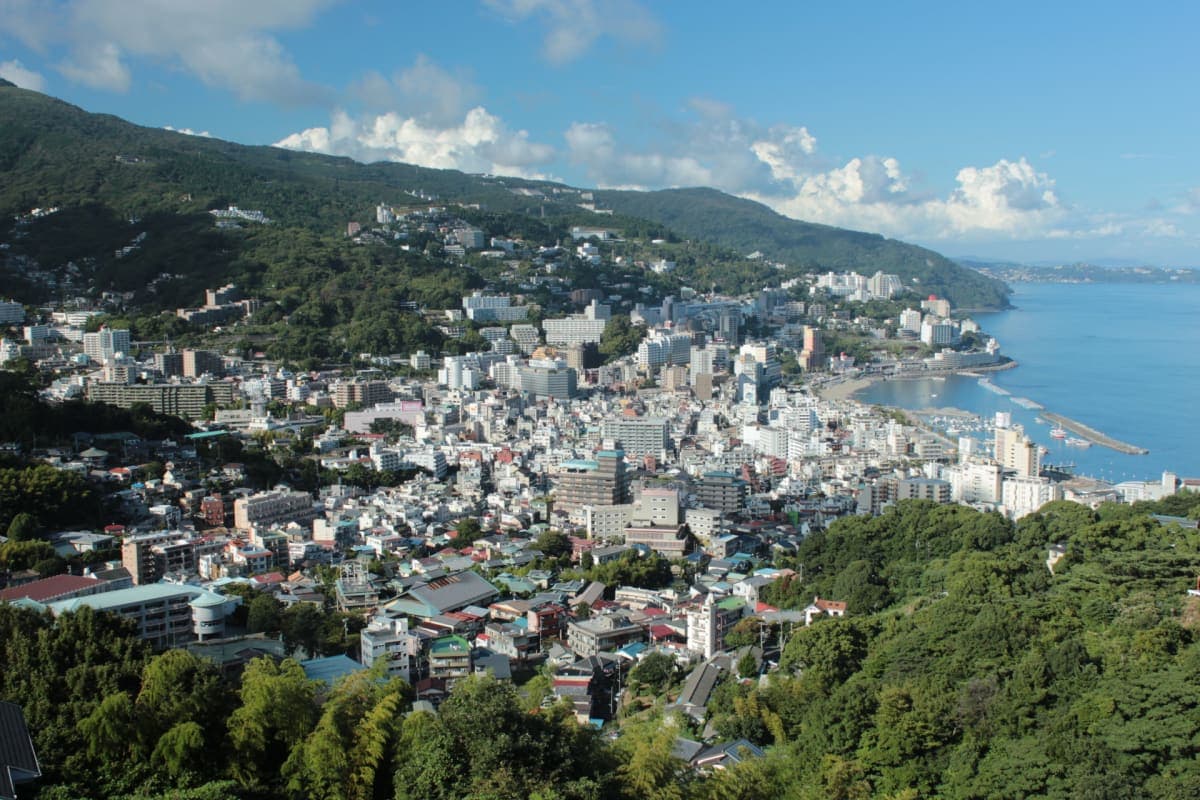
The Limited Express Hida from Nagoya takes about ninety minutes to reach Gero, following the Hida River upstream through increasingly steep canyon walls. By the time the train pulls into Gero Station, the valley has narrowed down to almost nothing, with forested ridges rising directly from the town's edge on both sides. Walk out of the station, cross the main road, and you can hear the river before you see it. Gero Onsen spreads along both banks of the Hida, and the water is everywhere: steaming from cracks in the stone steps, rising from public foot-soaking benches, flowing through channels cut into the pavement along the shopping street.
Gero sits alongside Arima and Kusatsu as one of Japan's three most celebrated hot spring towns, a designation that has been claimed since the medieval period. The water is a strongly alkaline simple spring, pushing pH 9.2 and surfacing at temperatures between 55 and 84 degrees. It is colorless and odorless, which can make it easy to underestimate. But the alkalinity does something distinctive on skin: it dissolves the faint layer of dead cells on the surface, leaving the skin soft and slightly warm long after you step out. Locals call it bijin no yu, the beautiful-skin water.
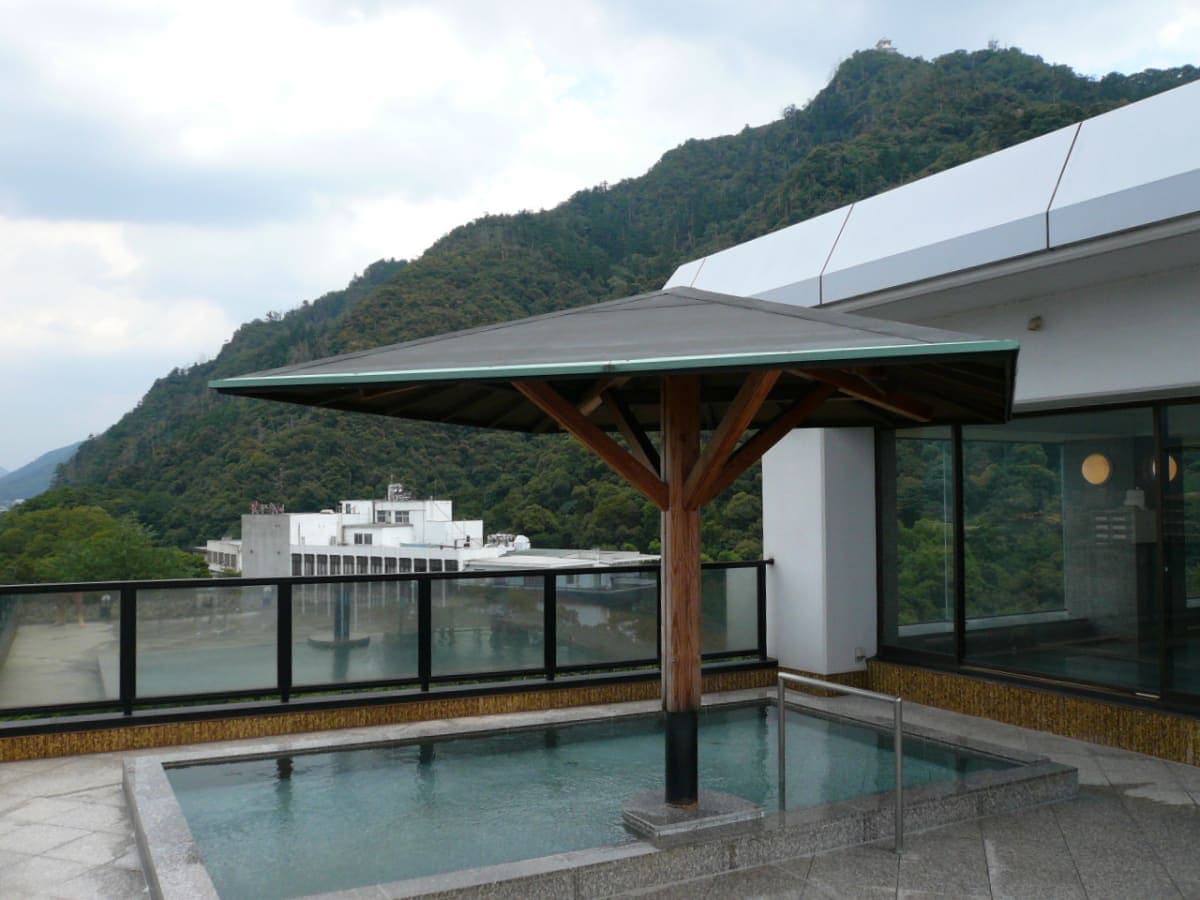
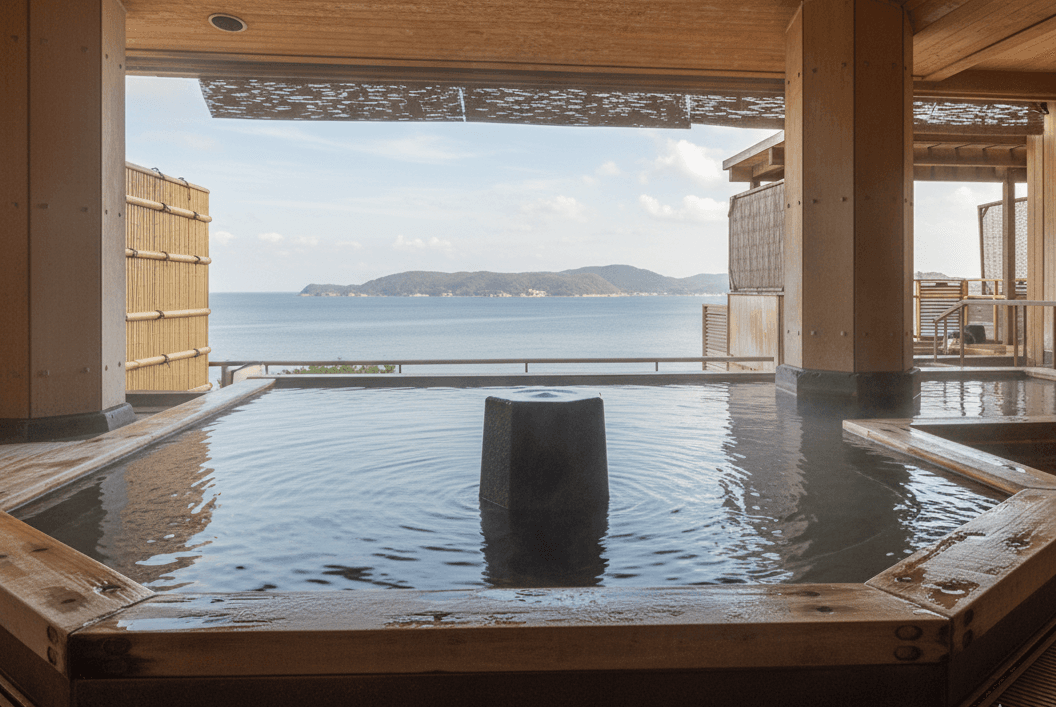
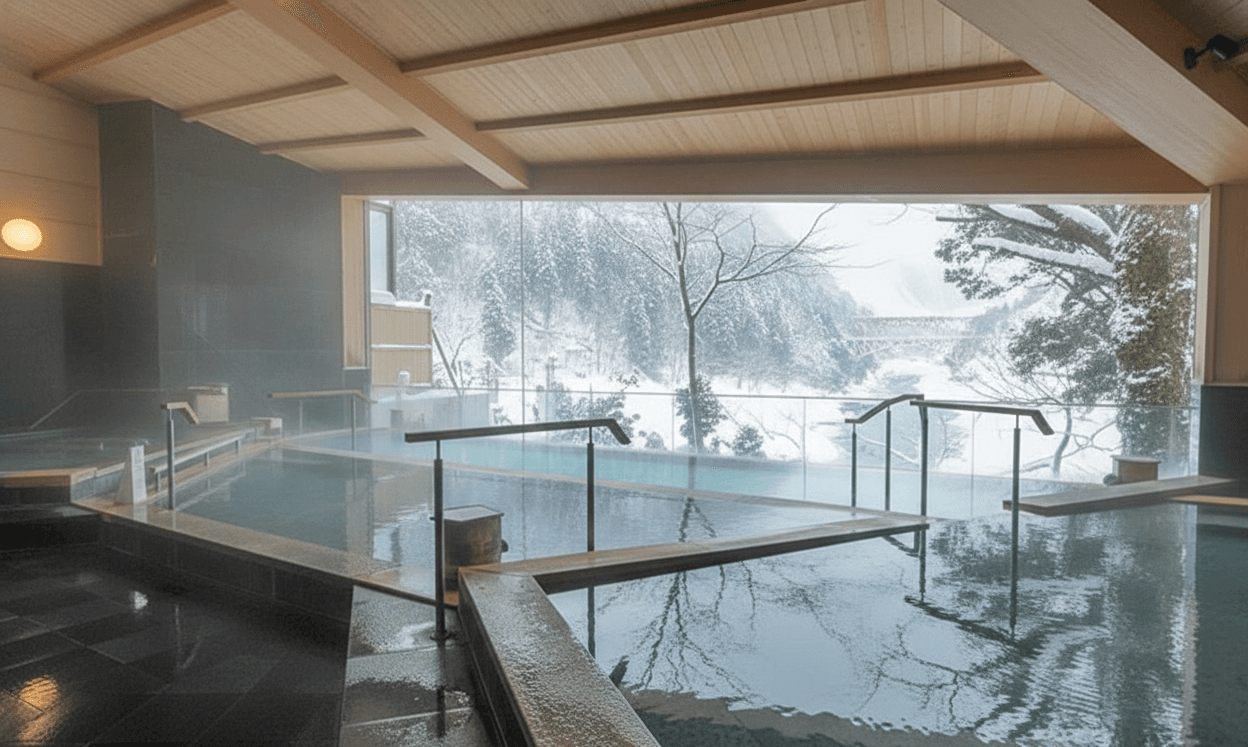
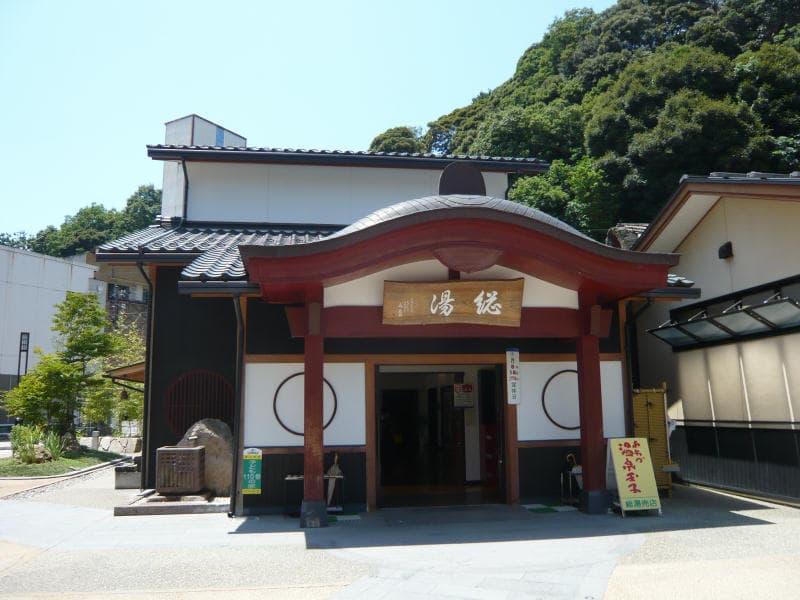
The most accessible starting point is Funsenchi, a free public bath right on the riverbank beside the main bridge. It has been here since 1983, mixed-gender, open from early morning until late evening, and requires nothing more than removing your shoes at the edge. Day visitors can also buy a Yumeguri Tegata pass for around 1,300 yen, which covers entry to three participating ryokan bathhouses around town. Each facility draws from the same alkaline source but the architecture and atmosphere differ considerably, from cedar-paneled rooms with garden views to open platforms hanging directly above the rushing Hida River below.
The best way to understand the town's scale is to walk the riverside path after dark. The ryokan lights reflect across the water, and steam rises from the drainage channels in the road in a way that makes the whole place feel slightly unreal. The surrounding hills still have patches of old cedar forest, and on clear days the ridgeline above town catches clouds that stream between the peaks all afternoon. It is a practical, well-maintained onsen town without pretension, and the free bath by the river means you can spend very little money here and still come away with the thing you came for.
How this spring compares
pH level
9.2
More alkaline than93% of Japan springs
More acidic than6% of Japan springs
Japan median7.3
Japan range1.2–11.3
n=121 springs
Max temperature
84°C
Hotter than79% of Japan springs
Japan median60°C
Japan hottest105°C
n=122 springs
Getting there
Take the Wide View Hida limited express from Nagoya Station directly to Gero Station. The journey takes about 75 minutes. Trains depart every one to two hours. The main riverside hot spring street is a 5-minute walk from the station exit.
Amenities
Towel rental
Locker
Restaurant
Café
Parking
Wheelchair access
English spoken
Tattoo-friendly
Private bath
Soap provided
Hair dryer
Location & nearby
Gero Onsen, Gero, Gifu
Gifu-Hashima Station · 72.2 kmShinkansen
Gero Station · 0.1 km
Hida-Hagiwara Station · 7.9 km
Yakeishi Station · 9.7 km
Zenshoji Station · 4.9 km
Shinshu-Matsumoto Airport · 73.4 km
Nagoya Komaki Airport · 67.6 km
Geroonsen Byoin Helipad · 1.2 km
Kyu Gero Onsen Byoin Guchi · 0.1 km
Gero JR Station · 0.1 km
Book a stay nearby
Hotels near Gero
32+ optionsSpringsAtlas may earn a commission from bookings made through these links.
More springs in Chubu
1 / 13



Last verified:
Data: OpenStreetMap (ODbL) · local tourism agencies
Verified listing