
Public · Indoor & Outdoor · ¥700
45–85°CWater temp
7.5pH
¥700 (~$5)Entry fee
PublicBathing type
—Opening hours
About this spring
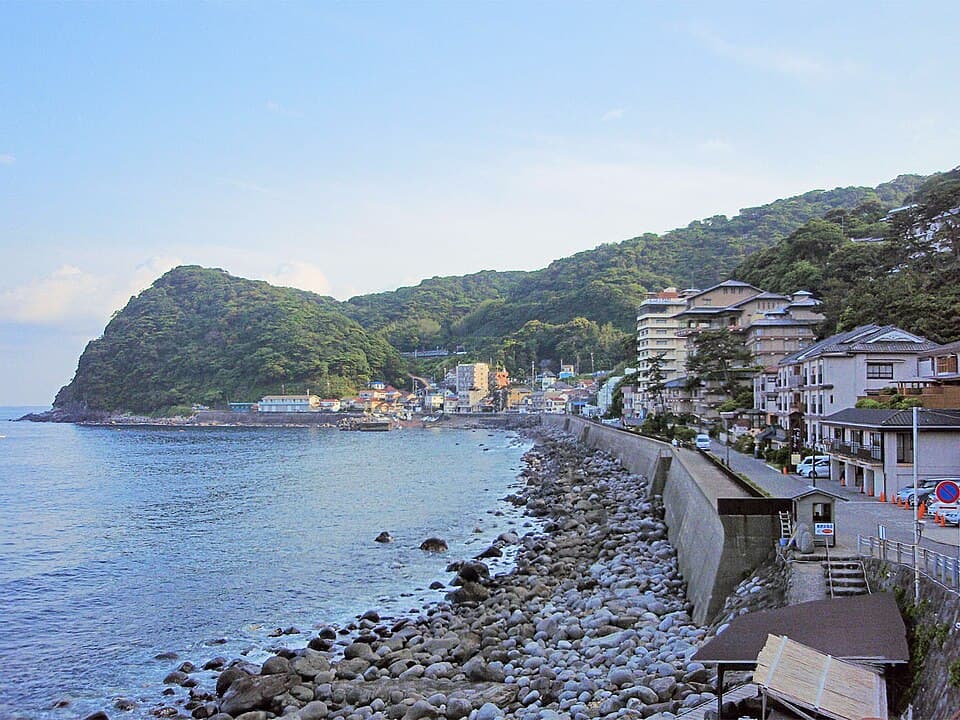
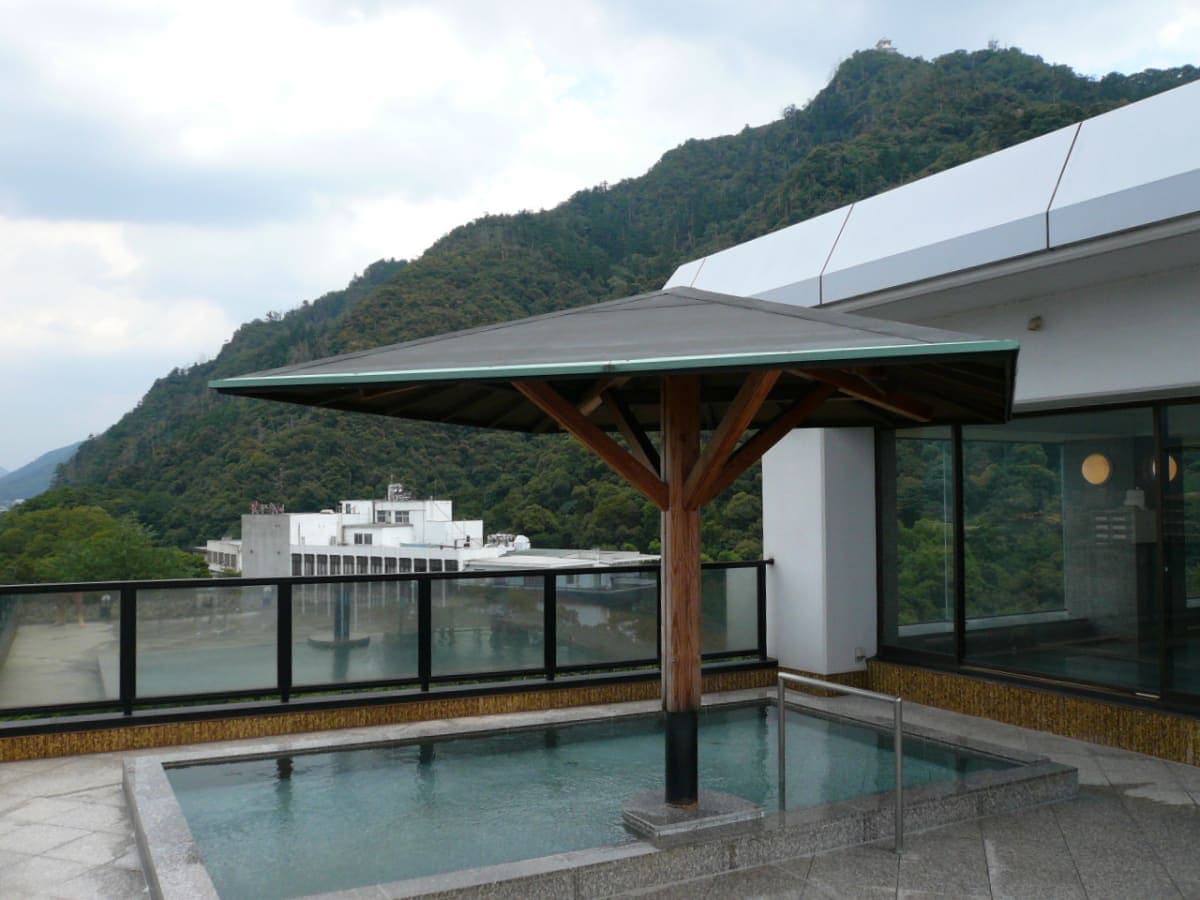
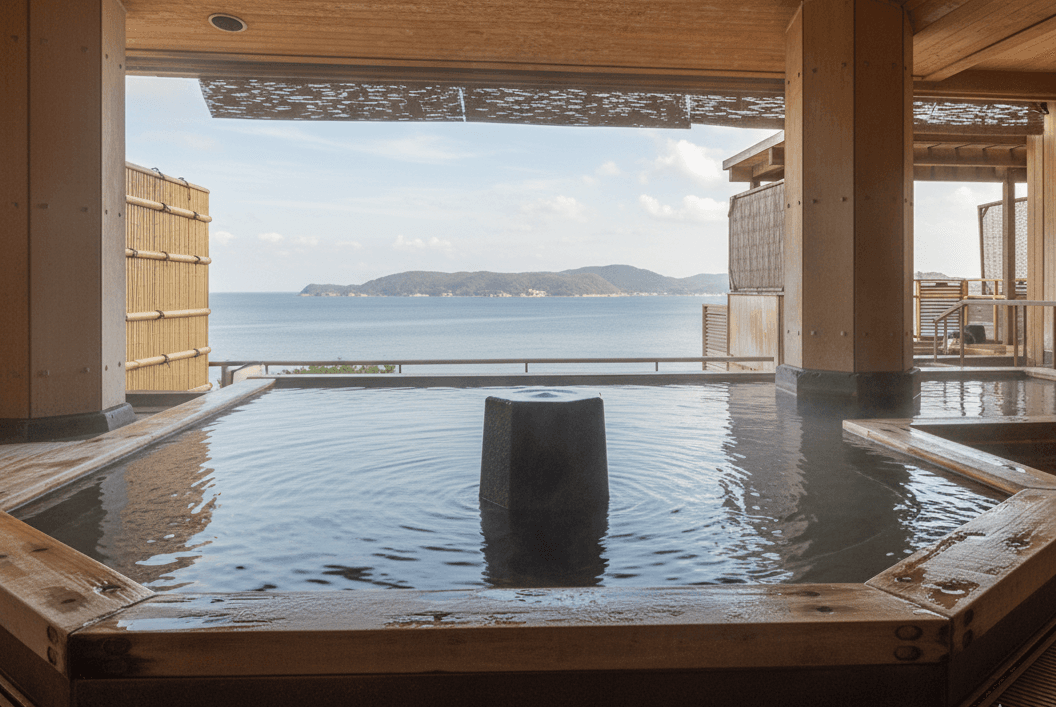
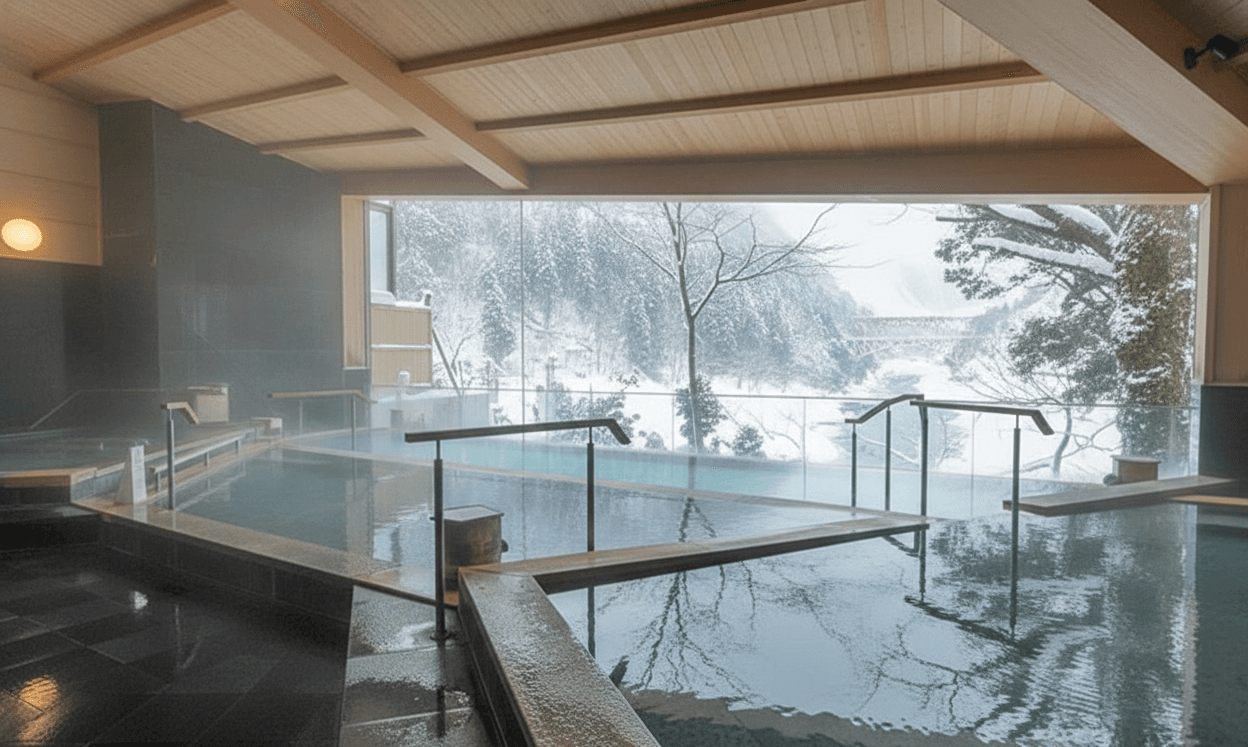
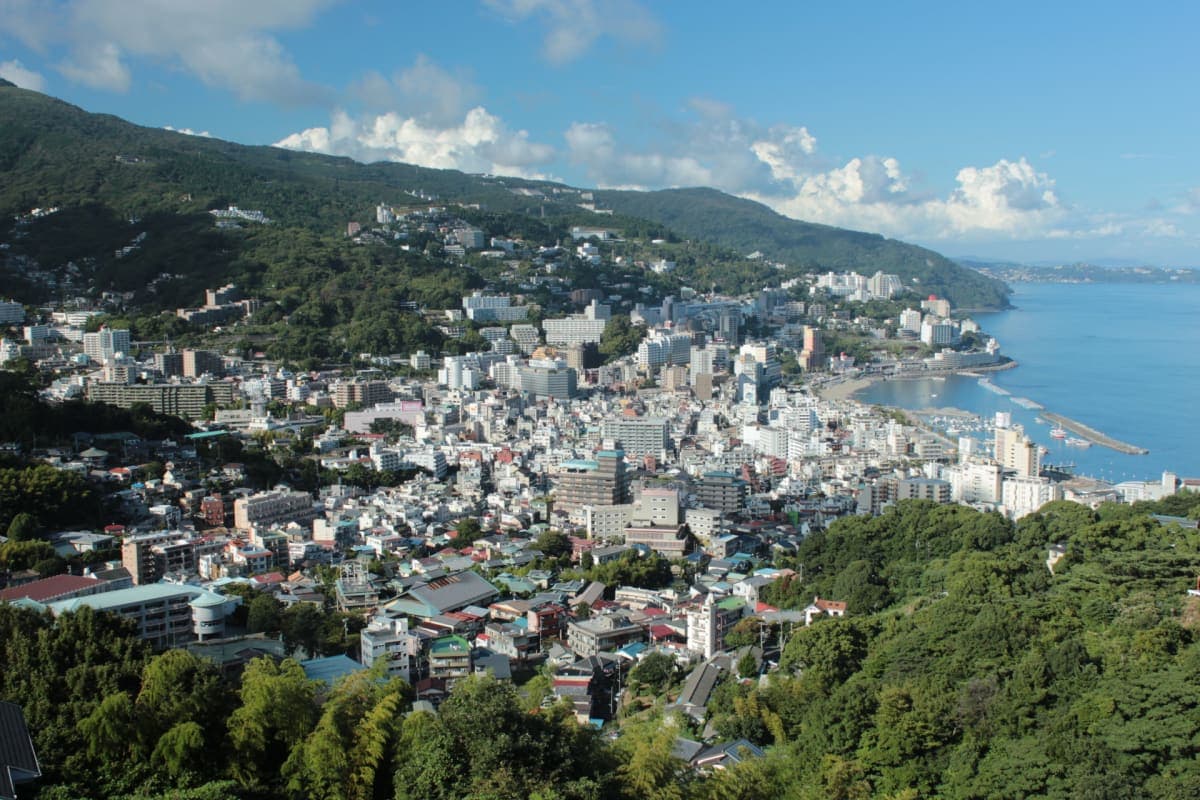
A coastal hot spring on the eastern coast of the Izu Peninsula in Shizuoka Prefecture, with views across the Pacific. The sodium chloride water rises here at temperatures up to 85 degrees Celsius. Outdoor baths where you can gaze across the open ocean are the defining experience. The town is small and the ryokan intimate.
Data: Wikipedia (CC BY-SA 4.0) · OpenStreetMap (ODbL)
Highlights
- Pacific ocean-view baths
- Up to 85 degrees Celsius
- Top 10 natural setting
- 1,200-year Izu history
Suitability
Tattoo policy
Policy varies
Children policy
Family-friendly
Altitude
0m
Mineral chemistry
Sodium Chloride (Salt)
Benefits
Sodium chloride springs — essentially natural saltwater baths — are celebrated for their warming and moisturising effects. The salt forms a thin film on the skin after bathing that slows moisture evaporation, keeping skin hydrated longer than a freshwater bath. This "heat-retaining" property means bathers stay warm for significantly longer after leaving the water, making these springs especially popular in winter. Salt springs are among the most accessible for first-time onsen visitors.
Note
Those with high blood pressure or heart conditions should consult a doctor before bathing, as the warming effect increases circulation. Avoid immersing open wounds. The salt will sting slightly in eyes — take care when submerging.
History
The Izu Peninsula's extraordinary concentration of hot springs comes from its unique geology: four tectonic plates converge beneath the seabed here, driving intense volcanic and hydrothermal activity.
Hokkawa's springs are among the oldest documented in the region, with over 1,200 years of recorded use. The dramatic setting, with mountains rising steeply behind the village and the Pacific opening wide in front, made Hokkawa particularly valued for open-air ocean-facing baths. The spring was ranked among Japan's top 10 baths in natural settings by the Nikkei newspaper.
Local guide
The eastern coast of the Izu Peninsula runs roughly an hour south of Atami by local train and bus, and Hokkawa sits near the end of that stretch where the mountains drop sharply to a coastline of black volcanic rock and small fishing coves. Getting here from Tokyo requires either the Odoriko express to Inatori and a short bus, or a drive down the coastal road from Ito. Either way, you arrive in a place that functions primarily as a small fishing town that happens to have been producing hot spring water since at least the ninth century. The Pacific is directly below the village on the eastern side, and the mountains are directly above it on the west, leaving a narrow inhabited strip in between.
The water at Hokkawa is a sodium chloride spring, the same broad category as many coastal Izu springs, but the specific composition here is on the stronger end for salt concentration. In the bath it is clear and odorless, and the dissolved salt gives it a density you notice immediately. It holds heat efficiently, which is why a soak here in the cooler months leaves you genuinely warm rather than just briefly flushed. The skin stays salt-coated in a light, invisible way for an hour or two afterward, which keeps the warmth sealed in. The springs have been here long enough that every family-run inn in the village has its own private pipe to the source.
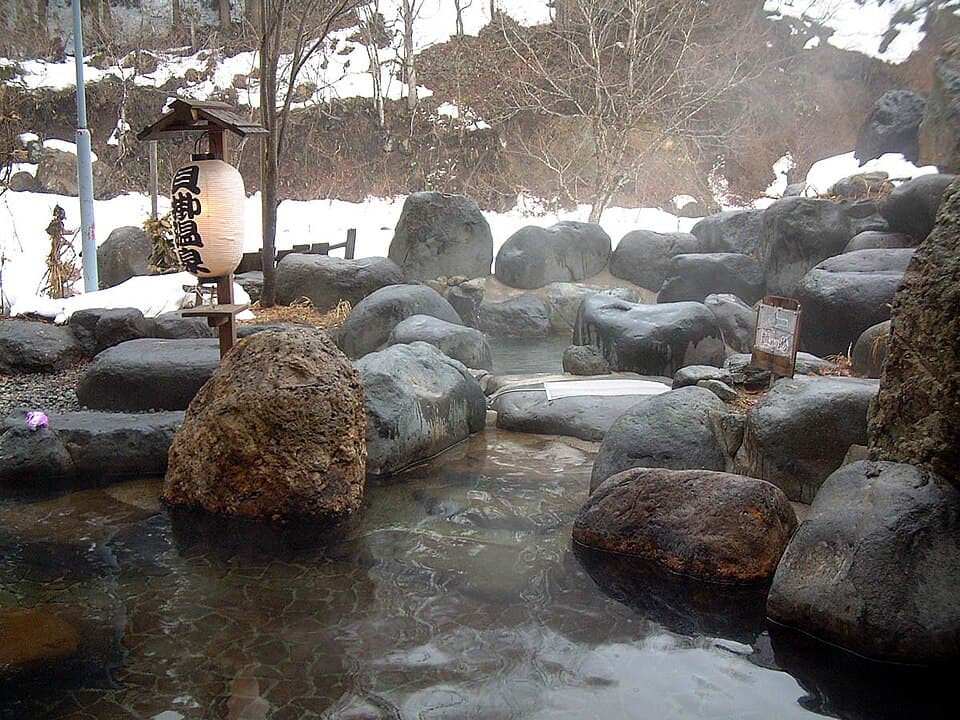
The standout outdoor experience at Hokkawa is Kuroneiwa, a public rotenburo built directly on the beach at sea level on a platform of black volcanic rock. The admission is 600 yen. The pool sits far enough from the water's edge to be safe, but close enough that the ocean fills your entire view when you sink down into it. On calm days the Pacific is a flat deep blue all the way to the horizon. On rougher days the spray reaches the outer wall of the pool. The wind here comes off open water with no land intervening between the Izu coast and the open ocean, and after a long soak at Kuroneiwa in early winter, stepping out into that cold salt air feels like a genuine physical contrast.
Hokkawa is not a busy resort town. Most of the accommodation is in small traditional inns rather than large hotels, and the pace of the place matches the fishing village rhythm rather than the tourist calendar. Spring and autumn bring the most comfortable bathing weather, and the black volcanic coastline that runs both north and south from Hokkawa makes for good walking between soaks, especially at low tide when the tidal pools along the lava shelf are exposed and full of sea life.
How this spring compares
pH level
7.5
More alkaline than56% of Japan springs
More acidic than36% of Japan springs
Japan median7.3
Japan range1.2–11.3
n=121 springs
Max temperature
85°C
Hotter than80% of Japan springs
Japan median60°C
Japan hottest105°C
n=122 springs
Getting there
Take the JR Tokaido Line to Atami Station, then transfer to the Izu Kyuko Line to Izu-Hokkawa Station. The journey takes about 40 minutes from Atami. The onsen's riverside and seaside baths are within walking distance of the station. From Tokyo, the Odoriko limited express runs directly to the Izu coast, taking about 2 hours 20 minutes.
Amenities
Towel rental
Locker
Restaurant
Café
Parking
Wheelchair access
English spoken
Tattoo-friendly
Private bath
Soap provided
Hair dryer
Location & nearby
Hokkawa Onsen, Shizuoka
Hokkawa · 0.2 km
Atami Station · 29.6 kmShinkansen
Izuatagawa Station · 1.7 km
Kataseshirata Station · 3.5 km
Izu-Okawa Station · 1.3 km
Tokyo Haneda Airport · 102.3 km
Shizuoka Airport · 80.9 km
Oshima Airport (Tokyo Oshima Camelia Airport) · 26.9 km
Hokkawa Onsen · 0 km
Izu-Hokkawa Station · 0.6 km
Book a stay nearby
Hotels near Hokkawa
29+ optionsSpringsAtlas may earn a commission from bookings made through these links.
More springs in Chubu
1 / 13



Last verified:
Data: OpenStreetMap (ODbL) · local tourism agencies
Stale listing