
Public · Outdoor · ¥420
4.2· 2,200 reviewsvia Google
32–70°CWater temp
7.4pH
¥420 (~$3)Entry fee
PublicBathing type
—Opening hours
About this spring
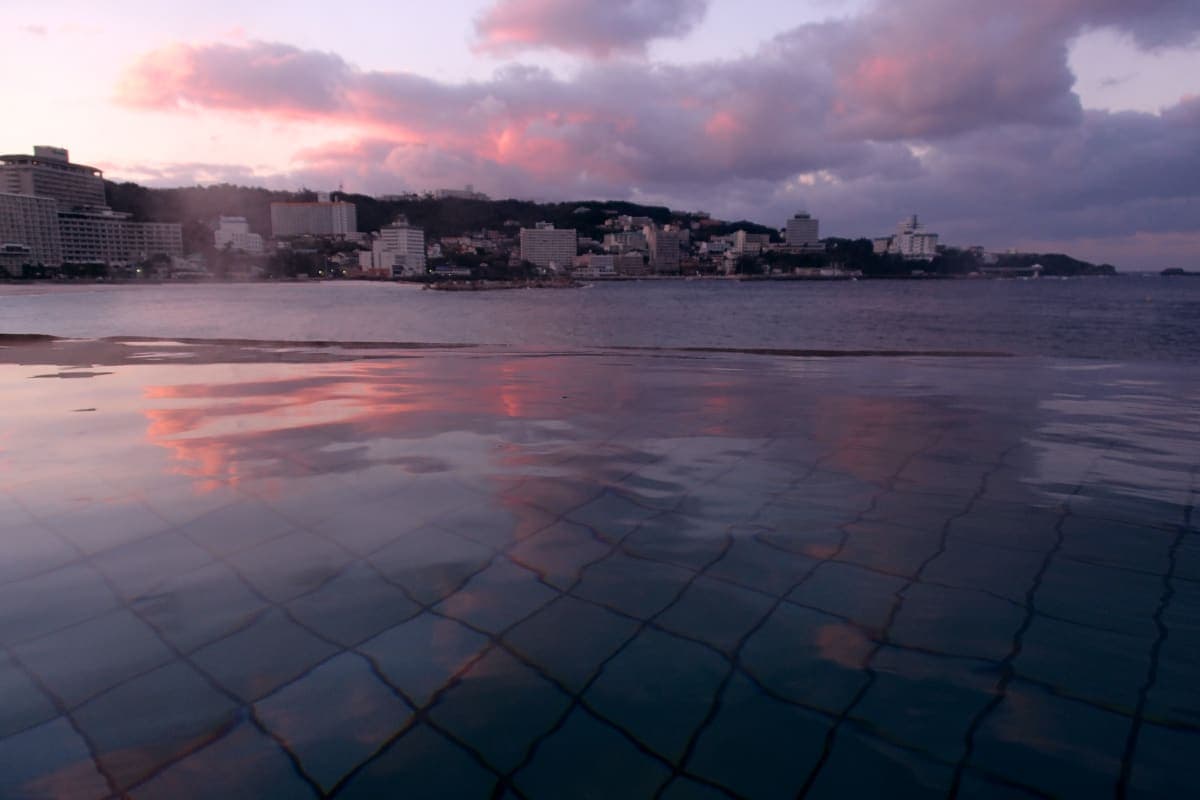
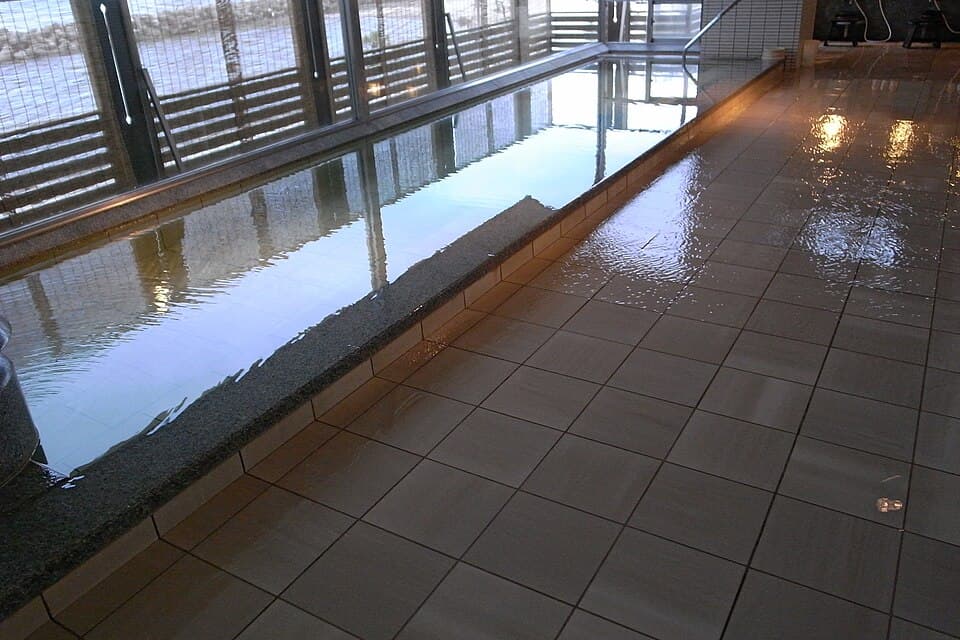
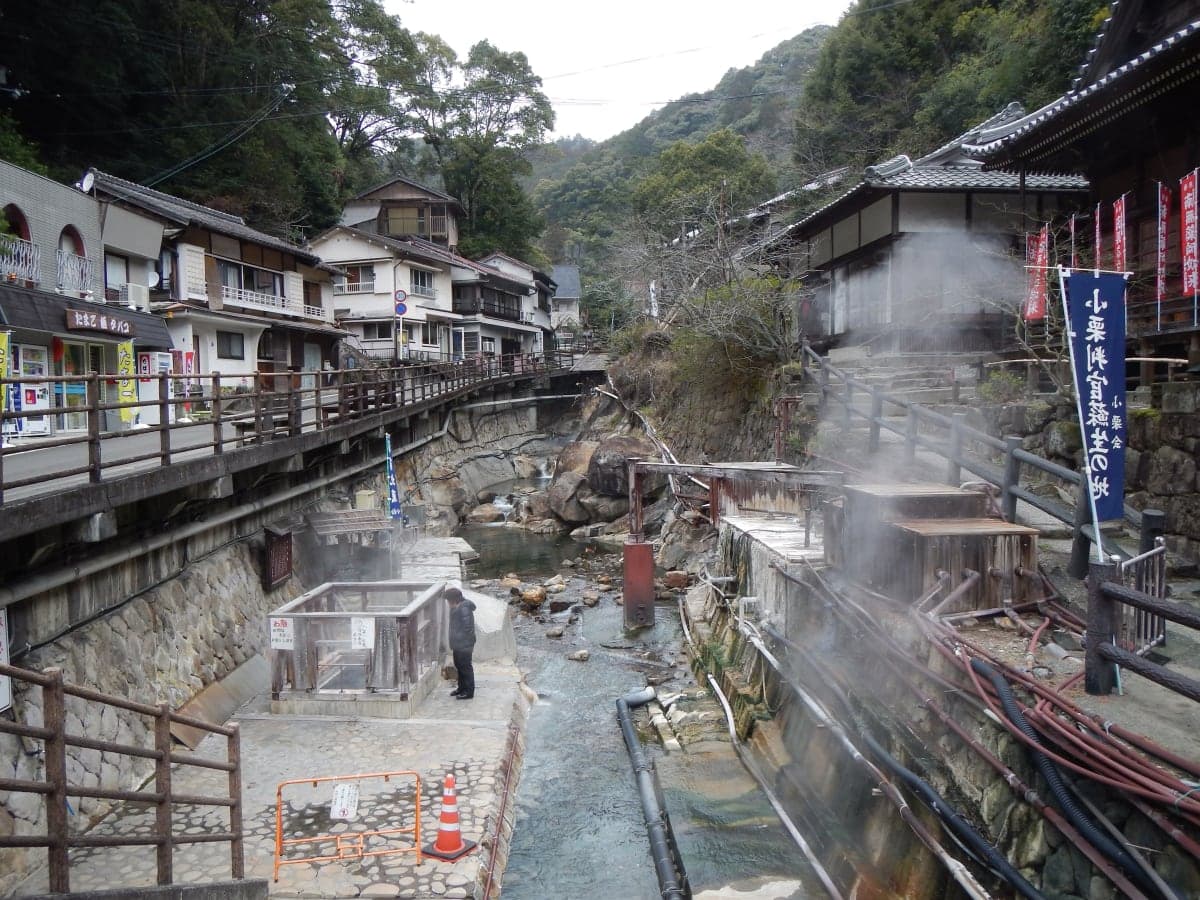
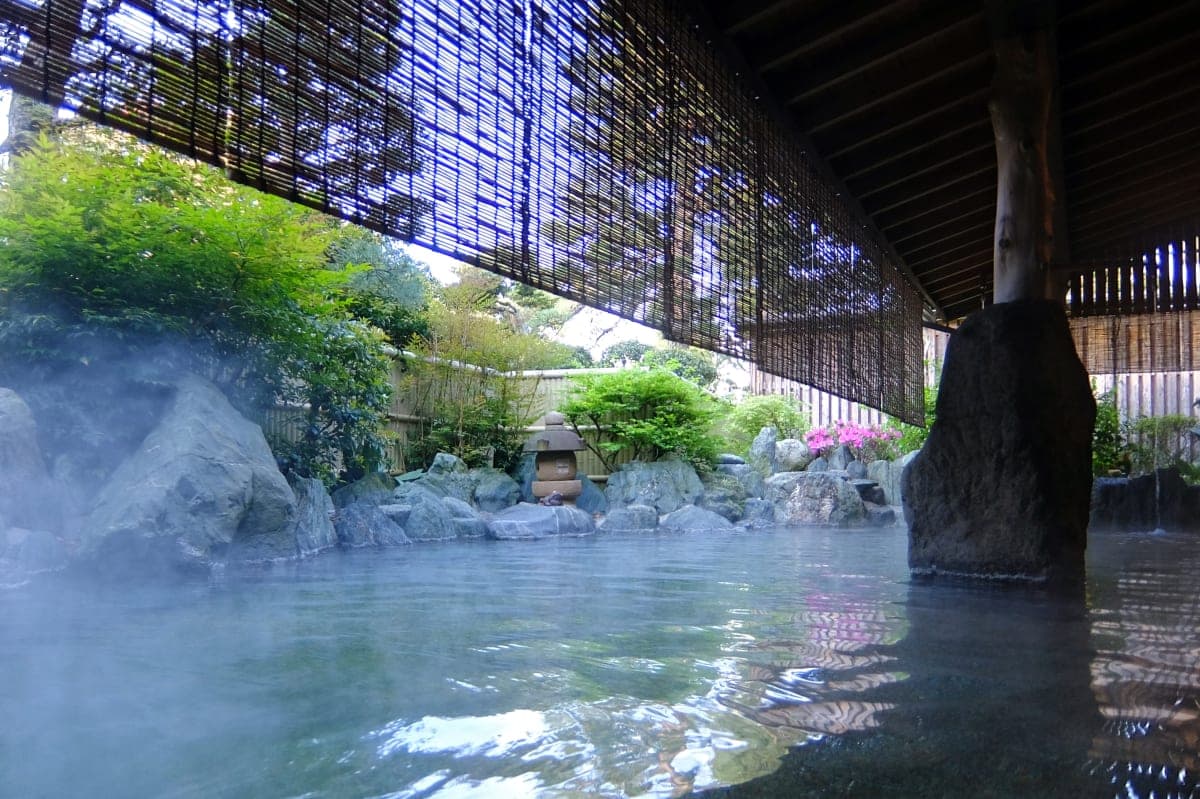
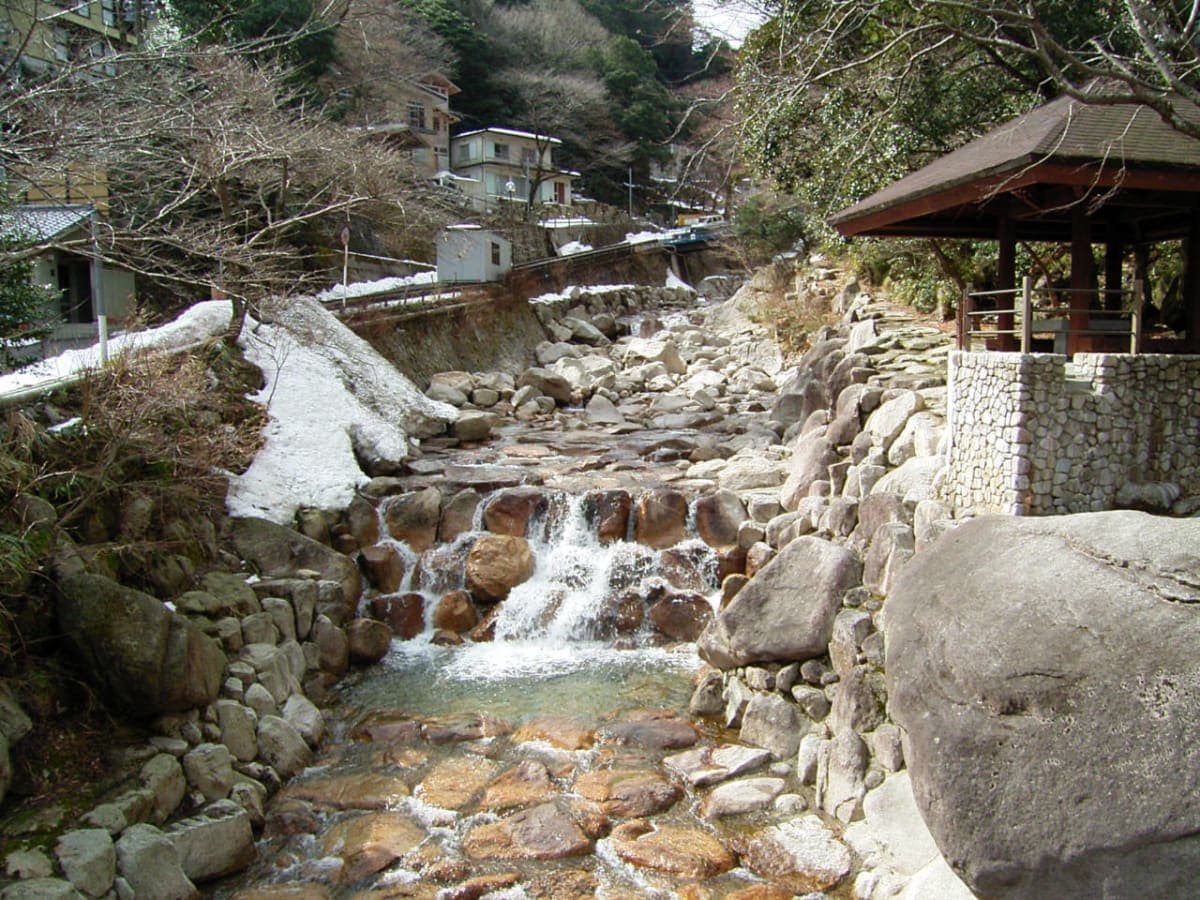
An old coastal resort town where hot springs meet the Pacific. The white-sand beach and dramatic rock formations create a setting unlike most onsen destinations. The ancient outdoor baths of Saki-no-Yu sit directly above the ocean. You soak while watching the waves crash below you.
Data: Wikipedia (CC BY-SA 4.0) · OpenStreetMap (ODbL)
Highlights
- Saki-no-Yu ocean-edge baths
- One of Japan's three oldest springs
- White-sand beach
- Engetsuto Island views
Suitability
Tattoo policy
Policy varies
Children policy
Family-friendly
Altitude
5m
Mineral chemistry
Sodium Chloride (Salt)
Benefits
Sodium chloride springs — essentially natural saltwater baths — are celebrated for their warming and moisturising effects. The salt forms a thin film on the skin after bathing that slows moisture evaporation, keeping skin hydrated longer than a freshwater bath. This "heat-retaining" property means bathers stay warm for significantly longer after leaving the water, making these springs especially popular in winter. Salt springs are among the most accessible for first-time onsen visitors.
Note
Those with high blood pressure or heart conditions should consult a doctor before bathing, as the warming effect increases circulation. Avoid immersing open wounds. The salt will sting slightly in eyes — take care when submerging.
Simple Thermal
Benefits
Simple thermal springs (単純温泉) have a lower dissolved mineral content than other spring types but are valued for the pure therapeutic effect of heat immersion itself. The warmth increases core body temperature, promotes sweating, eases muscle tension, and improves peripheral circulation. Simple thermal springs are the most common onsen type in Japan and are recommended as the gentlest introduction to onsen bathing — suitable for a wide range of health conditions and ages.
Note
Simple thermal springs are the most broadly accessible onsen type. Standard precautions apply: avoid bathing within 30 minutes of eating, keep soaks to 10–15 minutes for first-timers, and hydrate before and after.
History
These springs are among the oldest recorded in Japan.
The Nihon Shoki chronicle of 720 AD places them alongside Dogo and Arima as one of the country's three most ancient hot spring destinations. The oldest site, Saki-no-Yu, has documented use going back to 657 AD. Several emperors made the journey here in the Asuka and Nara periods. For much of early Japanese history, access was a privilege of the imperial family and high aristocracy. By around 1600, the waters were opened to the general public. The modern resort developed through the late nineteenth and twentieth centuries as rail connections extended along the Kii Peninsula.
Local guide
The JR Kuroshio limited express from Osaka follows the Kii Peninsula coast south for about two and a half hours, and when it pulls into Shirahama Station you step onto a platform with the Pacific Ocean visible at the end of the access road. Shirahama is a proper beach resort town, with the white sand of Shirara Beach pulling summer crowds and the cliff-top hotels that characterize mid-century Japanese coastal development lining the headland above it. Underneath that resort surface, though, is something considerably older. The Nihon Shoki, Japan's second oldest chronicle, records imperial visits to these springs in the seventh century. Shirahama sits alongside Arima and Dogo as one of Japan's three oldest recorded hot spring destinations.
The water is a sodium chloride and simple thermal type, clear and colorless in the bath, with a pH of 7.4 that makes it neutral and comfortable against the skin. Temperatures range from 32 to 70 degrees depending on the facility and the source draw. The salt content is high enough to leave a noticeable mineral residue on your skin after the bath, the kind that holds heat in for an hour afterward while you sit in a yukata looking at the sea. The water does not smell of sulfur and does not stain the tub. It is a functional, straightforward coastal spring.
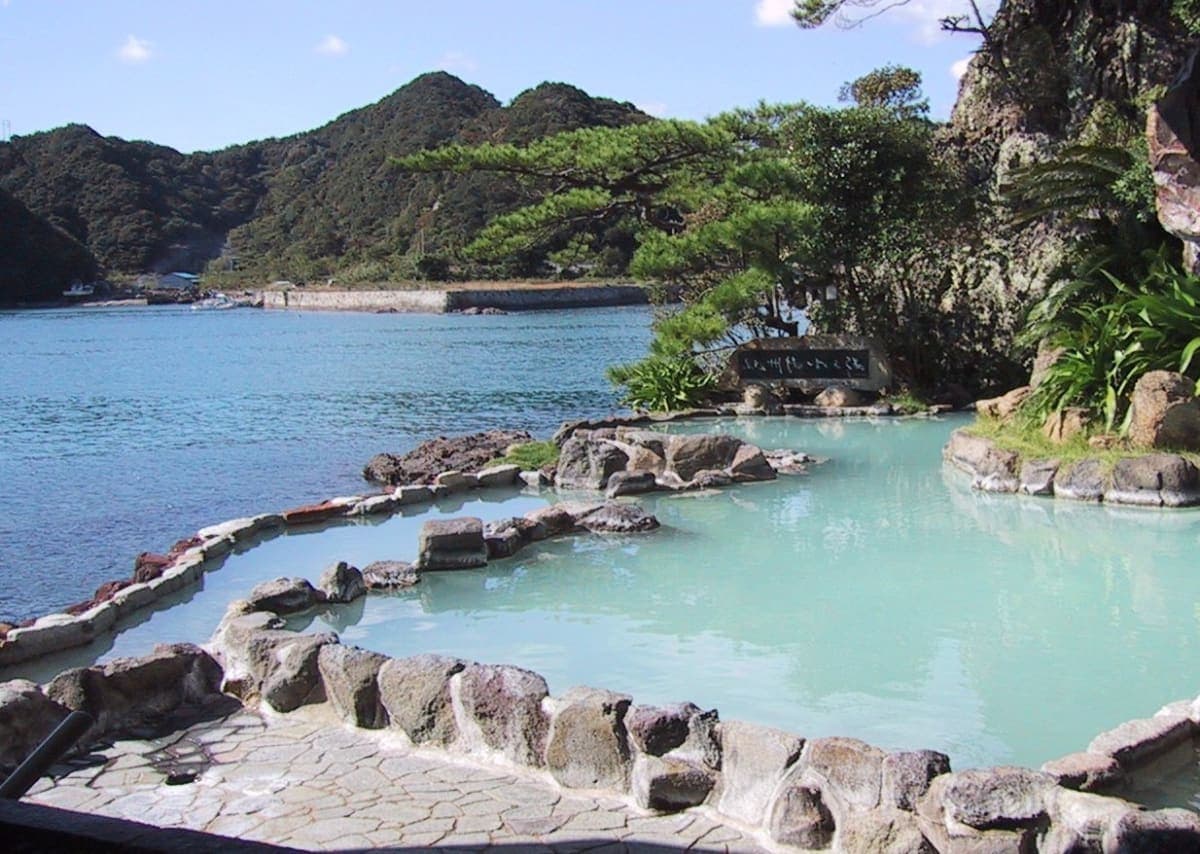
The bath that demands attention is Saki-no-Yu, an outdoor facility set directly on the Pacific coastline at the southern tip of the Shirahama headland. The pools are carved into or built beside coastal rock, and the ocean sits a few meters beyond the outer wall. At high tide, waves push up against the stone and send spray across the bathing area. You can sit in 42-degree water while the Pacific rolls in underneath you, which is an experience that is difficult to replicate anywhere else in Japan. The original site dates back over a thousand years. Of the Yuzaki Nanayu, the seven ancient baths of the area, Saki-no-Yu is the only one remaining in its original coastal position.
Shirahama works well as a two-day trip. The first afternoon you swim at Shirara Beach and visit the famous sandstone rock arch at Sandanbeki cliff. The second morning, before the day visitors arrive from Osaka, you take the first entry at Saki-no-Yu and have the ocean bath largely to yourself. That sequence makes good use of what the place actually offers.
How this spring compares
pH level
7.4
More alkaline than53% of Japan springs
More acidic than44% of Japan springs
Japan median7.3
Japan range1.2–11.3
n=121 springs
Max temperature
70°C
Hotter than65% of Japan springs
Japan median60°C
Japan hottest105°C
n=122 springs
Getting there
JR Kuroshio limited express→ Shirahama2h 30m
Walk or taxi to bathhouse
Total: 2h 35m
From Osaka, take the JR Kuroshio limited express to Shirahama Station. The journey takes about 2.5 hours.
Amenities
Towel rental
Locker
Restaurant
Café
Parking
Wheelchair access
English spoken
Tattoo-friendly
Private bath
Soap provided
Hair dryer
Location & nearby
Shirahama-cho, Nishimuro-gun, Wakayama 649-2211
Shirahama Station · 1.7 km
Kii-Shinjo Station · 4.2 km
Asso Station · 3.8 km
Nanki-Shirahama Airport · 3.4 km
Kansai International (Osaka) Airport · 83.6 km
Nanki-Shirahama Airport (Kumano-Shirahama Resort Airport) · 3.4 km
Hosono · 1 km
Toretore Ichiba-mae · 1 km
Book a stay nearby
Hotels near Shirahama
14+ optionsSpringsAtlas may earn a commission from bookings made through these links.
More springs in Kansai
1 / 13



Last verified:
Data: OpenStreetMap (ODbL) · local tourism agencies
Verified listing