

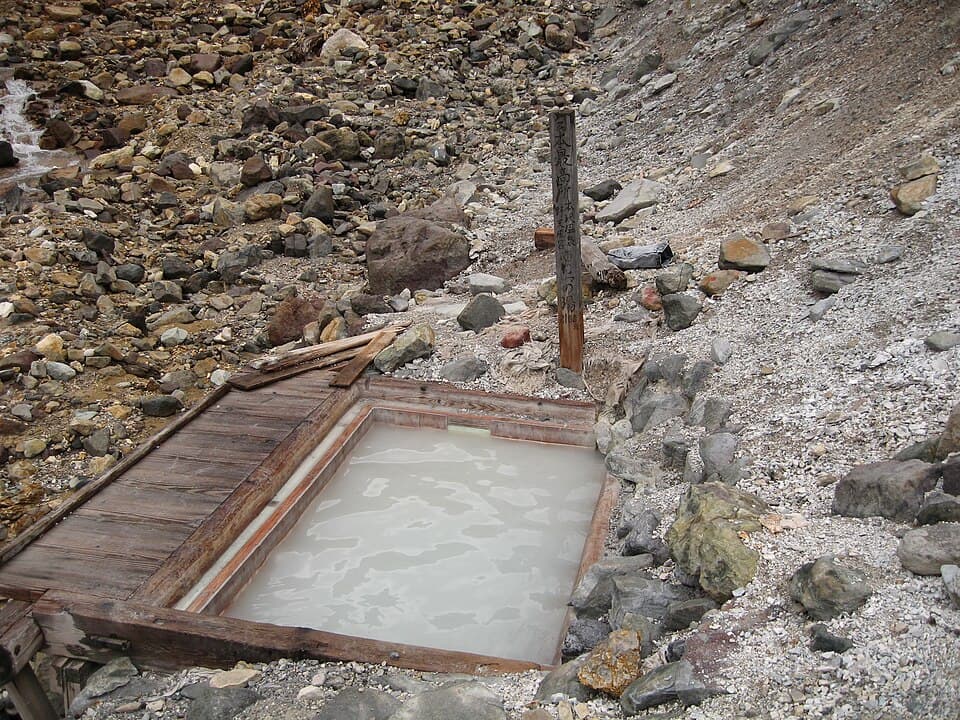
Mixed · Indoor & Outdoor · ¥1,000
Honzawa Onsen
本沢温泉
60°CMixed BathingIndoor & Outdoorcalcium-sulfatesodium-bicarbonatesulfuriron
4.2· 235 reviewsvia Google
40–60°CWater temp
2.3pH
¥1,000 (~$7)Entry fee
MixedBathing type
—Opening hours
About this spring
A hot spring in the Hakone volcanic zone of Kanagawa Prefecture, fed by the same ancient geothermal system that has shaped the Hakone caldera for over 300,000 years. The waters are sulfurous and mineral-rich. The setting is forested mountain valley.
Data: Wikipedia (CC BY-SA 4.0) · OpenStreetMap (ODbL)
Highlights
- 300,000-year volcanic system
- Sulfurous mineral-rich spring
- Forested mountain valley
- Hakone hot spring tradition
Suitability
Tattoo policy
Welcome
Children policy
Family-friendly
pH note
Highly acidic (pH 2.3)
Altitude
2,150m — seasonal access
Mineral chemistry
Bicarbonate
Benefits
Bicarbonate springs (sodium bicarbonate, calcium bicarbonate, or hydrogen carbonate) are particularly effective for skin conditions. The bicarbonate ions cleanse and soften the skin surface, removing excess sebum without stripping the skin's acid mantle. These springs are traditionally recommended for acne-prone skin and as a gentle option for sensitive skin types. The water has a characteristically clean, soft feel.
Note
Bicarbonate springs are generally among the most gentle and well-tolerated onsen types. Those with very dry skin may wish to apply moisturiser after bathing, as the cleansing effect can temporarily reduce surface oils.
Sulfur
Benefits
Sulfuric hot springs are among the most studied in Japanese balneology. The sulfur compounds — primarily hydrogen sulfide and thiosulfate — have documented antimicrobial and anti-inflammatory properties. Regular bathing is associated with relief from chronic skin conditions including eczema and psoriasis, as well as joint inflammation and muscle soreness. Sulfuric waters have been prescribed in Japanese medical practice since the Edo period.
Note
The distinctive rotten-egg smell dissipates quickly after leaving the bath. Avoid if you have a sulfur allergy, very sensitive skin, or respiratory conditions. Remove silver jewellery before entering — sulfur will blacken it permanently.
Iron
Benefits
Iron-bearing springs are recognised by their characteristic rust-red or amber colour and metallic taste. The iron content — primarily ferrous bicarbonate or ferric sulfate — is associated with stimulation of red blood cell production and is traditionally recommended for anaemia and fatigue recovery. The distinctive colouring comes from iron oxidising on contact with air and is not a sign of contamination.
Note
Iron springs will stain light-coloured swimwear and towels a persistent brownish-orange. Avoid wearing white or light fabrics into the water. Those with haemochromatosis (iron overload condition) should seek medical advice before bathing.
History
Honzawa's springs share the deep geological history of the entire Hakone region.
Hakone's hot springs were first documented in the Nara period, around 738 AD. The valley developed as a rest stop on the Tokaido Highway during the Edo period. A guide to the springs of Hakone published in 1811 classified the area's primary sources, establishing the framework for resort development through the Meiji era.
Local guide
Past Hirayu, the road into the Okuhida valley follows the Gamata River further up into the mountains until the trees close in and the paving ends at a small cluster of buildings. Honzawa Onsen sits at around 1,100 meters in the narrowest section of the upper Okuhida valley, with the Hida Mountains rising on both sides and the river audible from every building. From Hirayu Bus Terminal, a local bus covers the route in about twenty minutes, though the last service back runs in the early evening and missing it means a long walk. Snow closes the upper road for part of winter, and the timing of the seasonal reopening determines when the year's first guests can return.
The spring chemistry at Honzawa is calcium sulfate and sodium bicarbonate with a trace of sulfur, and the water emerges at 60 degrees with a pH of 6.9, which is almost perfectly neutral. In the bath it reads as milky or faintly translucent white, softer than the stronger sulfur springs at nearby Shin-Hotaka but with a similar mineral depth. The calcium sulfate content is what gives the water its particular skin feel: not the silky alkalinity of a high-pH simple spring, but a smoother, slightly velvety quality that coats without clinging. The sulfur note is mild, the kind you register once and then forget.
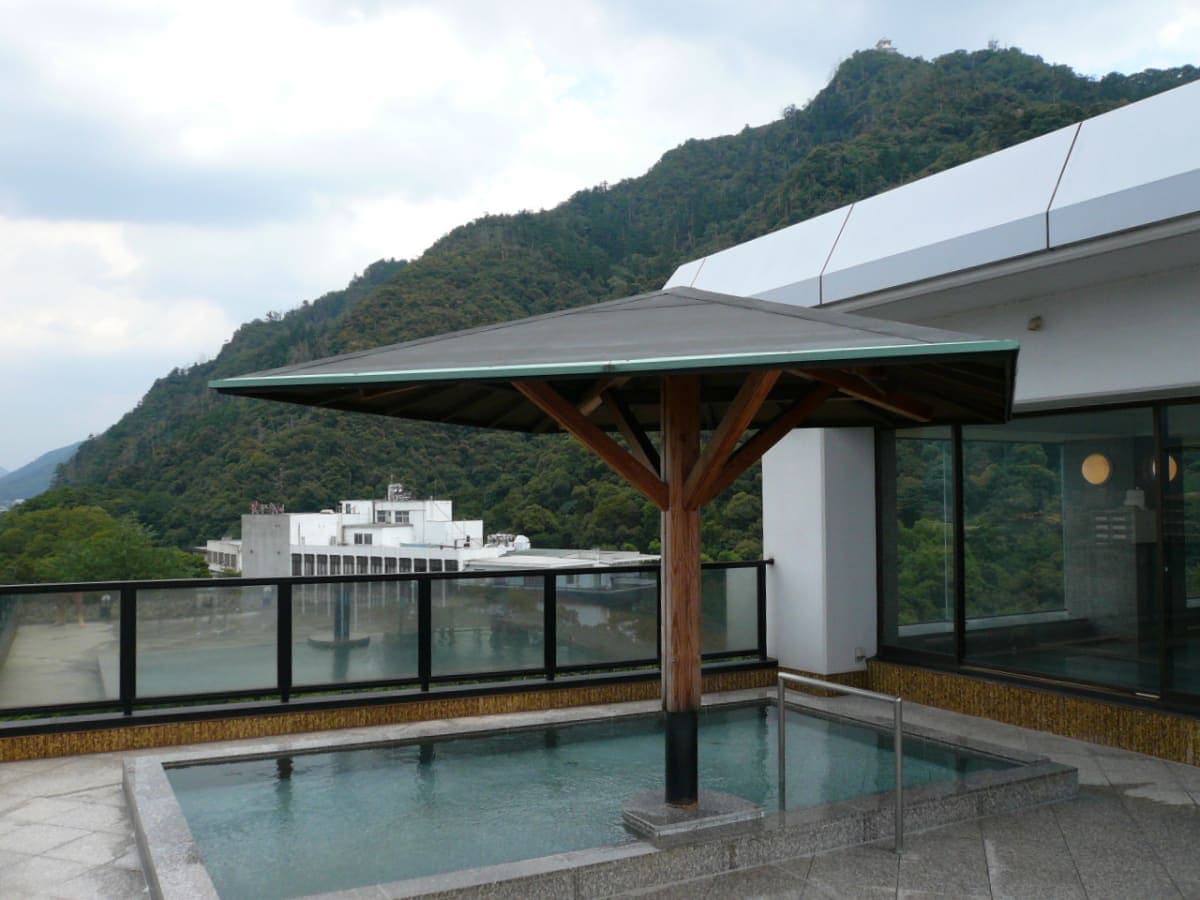
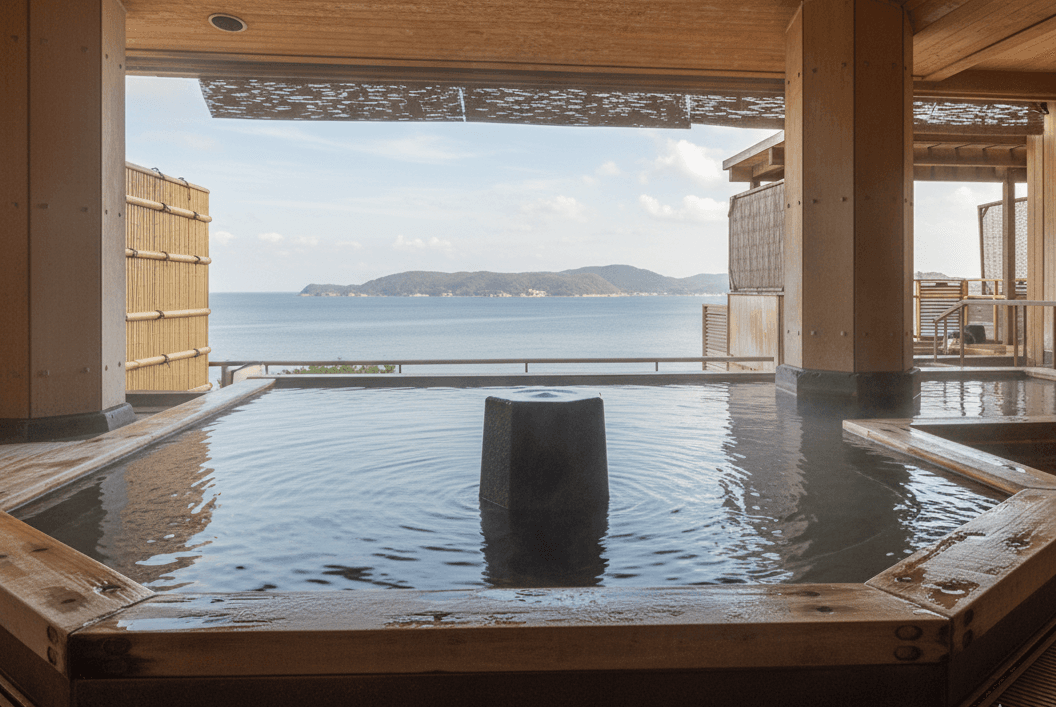
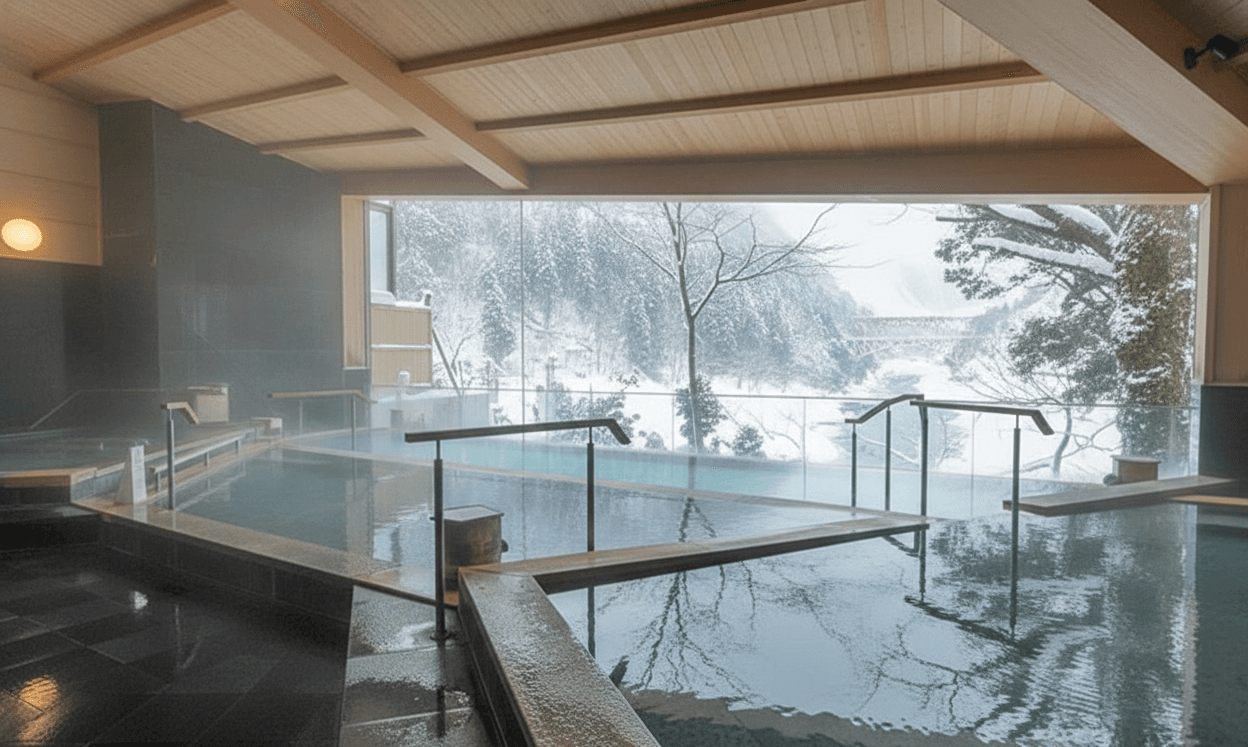
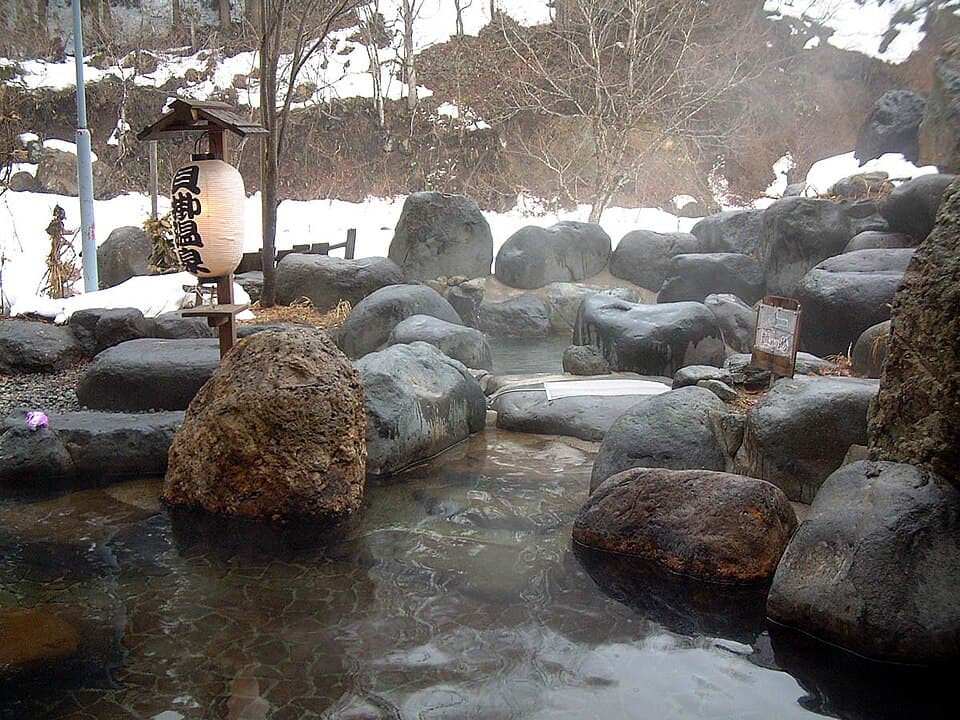
The valley setting at Honzawa produces one of the more striking outdoor bathing situations in the Okuhida region. The outdoor pools at the main facility here look directly up the river gorge toward the Hida ridgeline, and in autumn the beech and maple canopy on the slopes above turns yellow and red from the valley floor up to the treeline in sequence as the weeks progress. By late October, when the upper slopes are already bare, the lower forest is still in full color, and the steam from the outdoor baths rises through the cold air against that backdrop in a way that is hard to photograph and easy to remember.
The Shin-Hotaka Ropeway, Japan's only double-decker gondola, is about fifteen minutes further up the valley from Honzawa and lifts riders to a platform at 2,156 meters above sea level. Most visitors who stay at Honzawa use the ropeway as the main daytime activity, returning to the outdoor baths in the late afternoon. The combination of high altitude views, cold mountain air, and then the warm neutral water of a calcium sulfate pool at dusk is the particular pleasure this corner of Gifu does better than most places in the Japanese Alps.
How this spring compares
pH level
2.3
More alkaline than10% of Japan springs
More acidic than89% of Japan springs
Japan median7.3
Japan range1.2–11.3
n=121 springs
Max temperature
60°C
Hotter than49% of Japan springs
Japan median60°C
Japan hottest105°C
n=122 springs
Getting there
Take the Joetsu Shinkansen from Tokyo to Minakami Station. The journey takes about 70 minutes. From Minakami, take a local bus toward Honzawa Onsen, about 30 minutes further into the mountains.
Amenities
Towel rental
Locker
Restaurant
Café
Parking
Wheelchair access
English spoken
Tattoo-friendly
Private bath
Soap provided
Hair dryer
Location & nearby
〒384-1301 Nagano, Minamisaku District, Minamimaki, Umijiri, 国定公園内
Sakudaira Station · 35.4 kmShinkansen
Umijiri Station · 9.6 km
Saku-Uminokuchi Station · 10.6 km
Matsubarako Station · 10.3 km
Shinshu-Matsumoto Airport · 43.9 km
Toyama Airport · 127.6 km
Kirigamine Glider Airport · 18.8 km
Shibunoyu · 4.8 km
Shirokoma Pond · 5.1 km
Shirakomaike Iriguchi Station · 5.1 km
Book a stay nearby
Hotels near Honzawa
4+ optionsSpringsAtlas may earn a commission from bookings made through these links.
More springs in Chubu
1 / 13



Last verified:
Data: OpenStreetMap (ODbL) · local tourism agencies
Verified listing