

Public · Indoor & Outdoor · ¥460
40–47°CWater temp
6.8pH
¥460 (~$3)Entry fee
PublicBathing type
—Opening hours
About this spring
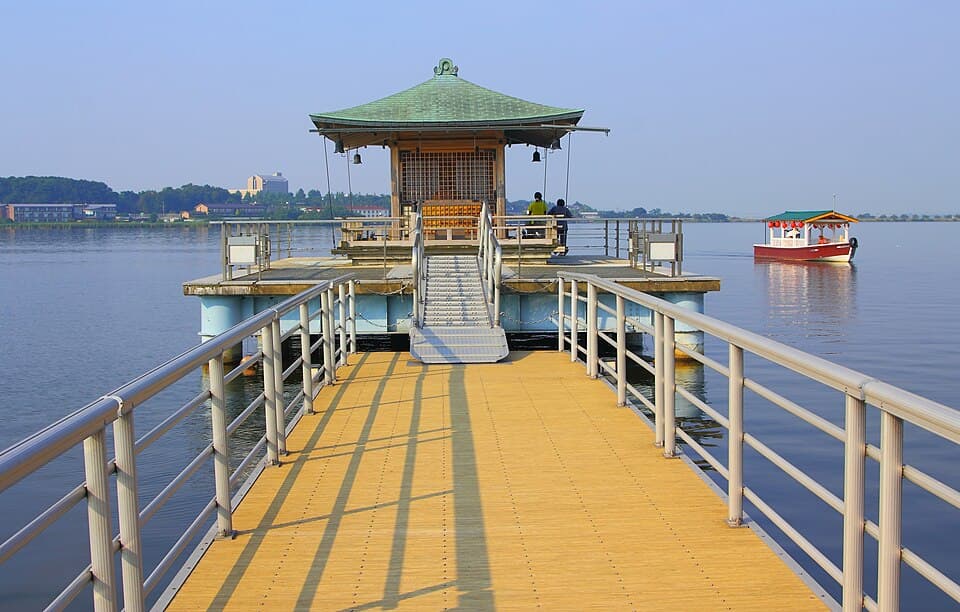
A lakeside hot spring resort on the shore of Lake Shibayamagata in the Kaga district of Ishikawa Prefecture. The lake is said to shift through seven different colors over the course of a day. The resort is the youngest of the four Kaga Onsen towns but draws on over 1,300 years of collective bathing tradition in the region.
Data: Wikipedia (CC BY-SA 4.0) · OpenStreetMap (ODbL)
Highlights
- Lake shifts seven colors daily
- Kaga Onsen group
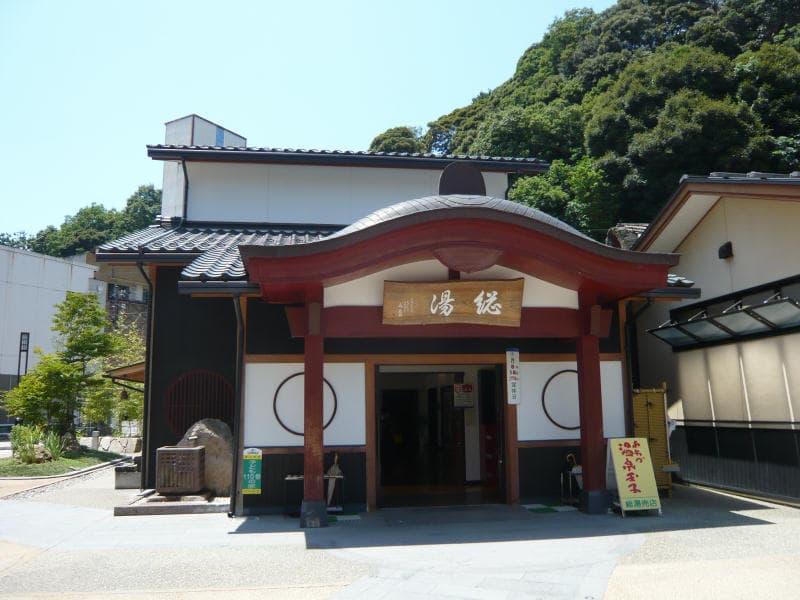
- Katayamazu Soyu public bath
- Mt. Hakusan views
Suitability
Tattoo policy
Policy varies
Children policy
Family-friendly
Altitude
3m
Mineral chemistry
Sodium Chloride (Salt)
Benefits
Sodium chloride springs — essentially natural saltwater baths — are celebrated for their warming and moisturising effects. The salt forms a thin film on the skin after bathing that slows moisture evaporation, keeping skin hydrated longer than a freshwater bath. This "heat-retaining" property means bathers stay warm for significantly longer after leaving the water, making these springs especially popular in winter. Salt springs are among the most accessible for first-time onsen visitors.
Note
Those with high blood pressure or heart conditions should consult a doctor before bathing, as the warming effect increases circulation. Avoid immersing open wounds. The salt will sting slightly in eyes — take care when submerging.
History
In 1653, the feudal lord of the Daishoji Domain noticed waterfowl gathering persistently at one spot on the lake surface, drawn by warmth rising from the lakebed.
He understood the significance and ordered excavations, but the spring could not be reached with the technology of the time. It was not until the Meiji era that improved drilling techniques finally brought the spring water to the surface. The reclamation of part of Lake Shibayama during the same period created the land on which the present town was built.
Local guide
Coming from Kaga Station on the Hokuriku Shinkansen, you travel by bus for about twenty minutes through flat rice country before the road swings south and Lake Shibayama appears through the windshield, low and silver and hemmed in by low forested hills. Katayamazu Onsen lines the northern shore of the lake, a compact strip of traditional inns and bathhouses that face the water across a narrow promenade. The lake is not large, but it does something unusual. Locals say the surface changes color seven times a day as the light shifts and the wind moves across it, going from pale grey to deep blue to a flat copper at sunset. A fountain in the middle of the lake fires up thirteen times daily, a thin white column visible from almost any outdoor bath in town.
The spring itself was discovered by accident in 1653 when the daimyo of Daishoji, Maeda Toshiaki, was falconing near the lakeshore and noticed birds congregating over a patch of open water. Closer investigation revealed hot springs seeping up from the lake bottom. Access to those springs required more than two centuries of patience, and it was not until a major land reclamation project partially filled in the lake that the water became properly accessible for bathing. The spring is a sodium chloride type, and the water it produces is clear and noticeably heavy, with a mild saltiness you can taste if you get a mouthful. On your skin it feels dense and warming, the kind of heat that does not let go quickly.
The cultural artifact that catches you off guard in Katayamazu is a wooden building called Hanayakata, constructed in 1920 as a practice hall for the geisha and maiko who once entertained guests in the town's larger inns. No geisha remain in Katayamazu today, and the hall has been converted into a workshop space for visitors interested in tofu making or cloth dyeing, but the building itself is beautiful. The cypress floors and low practice mirrors speak to a period when this lakeshore town was considerably more fashionable than it is now.
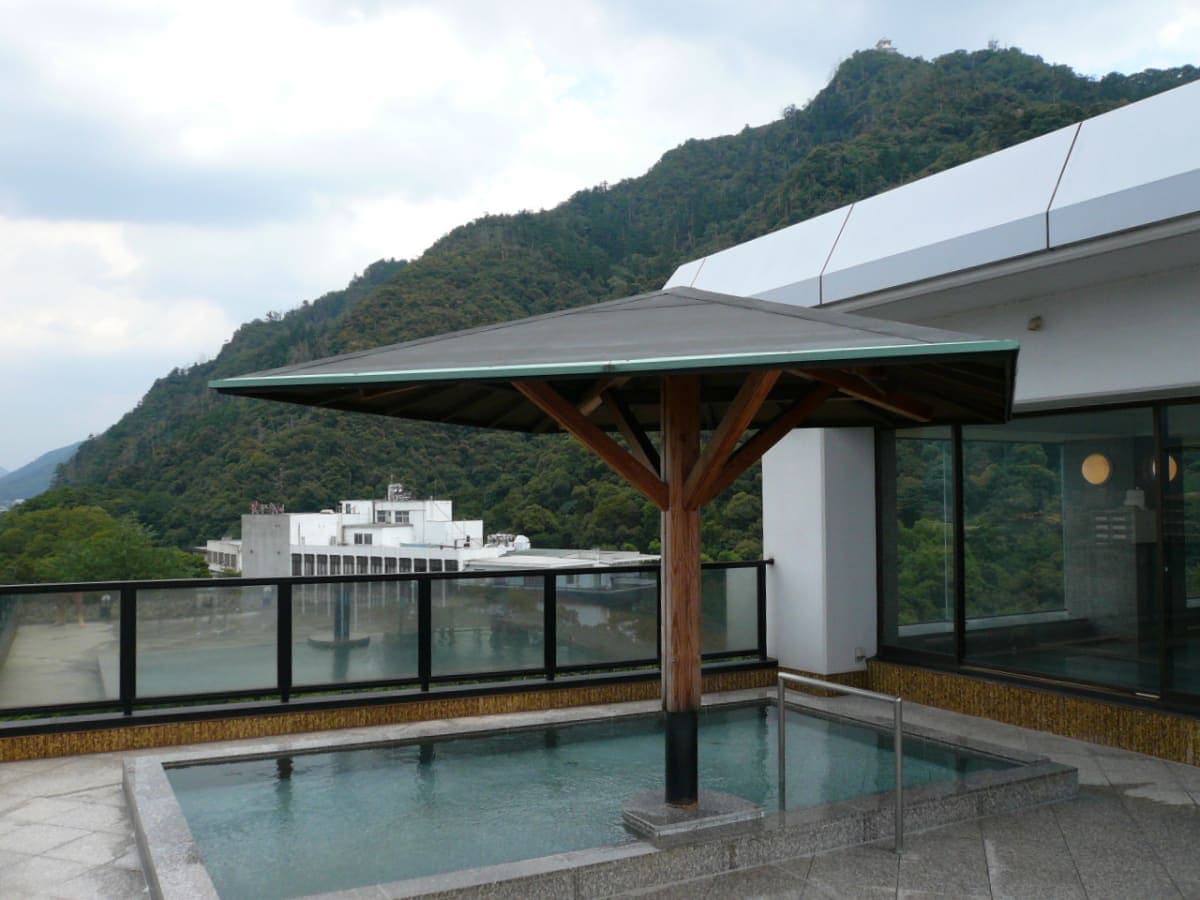
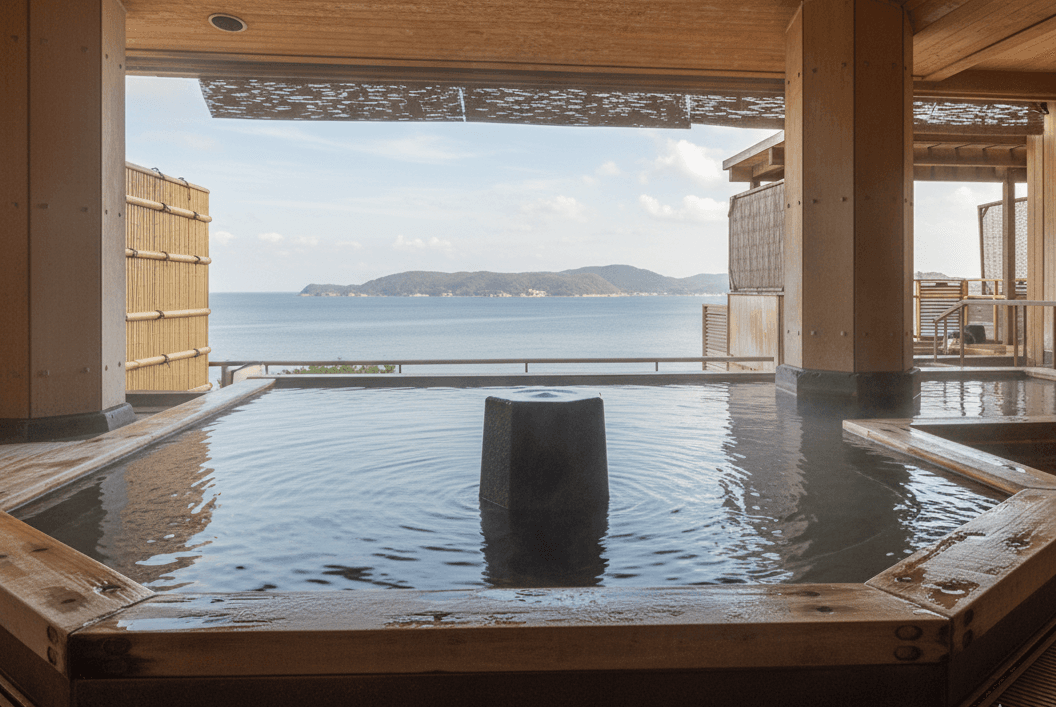
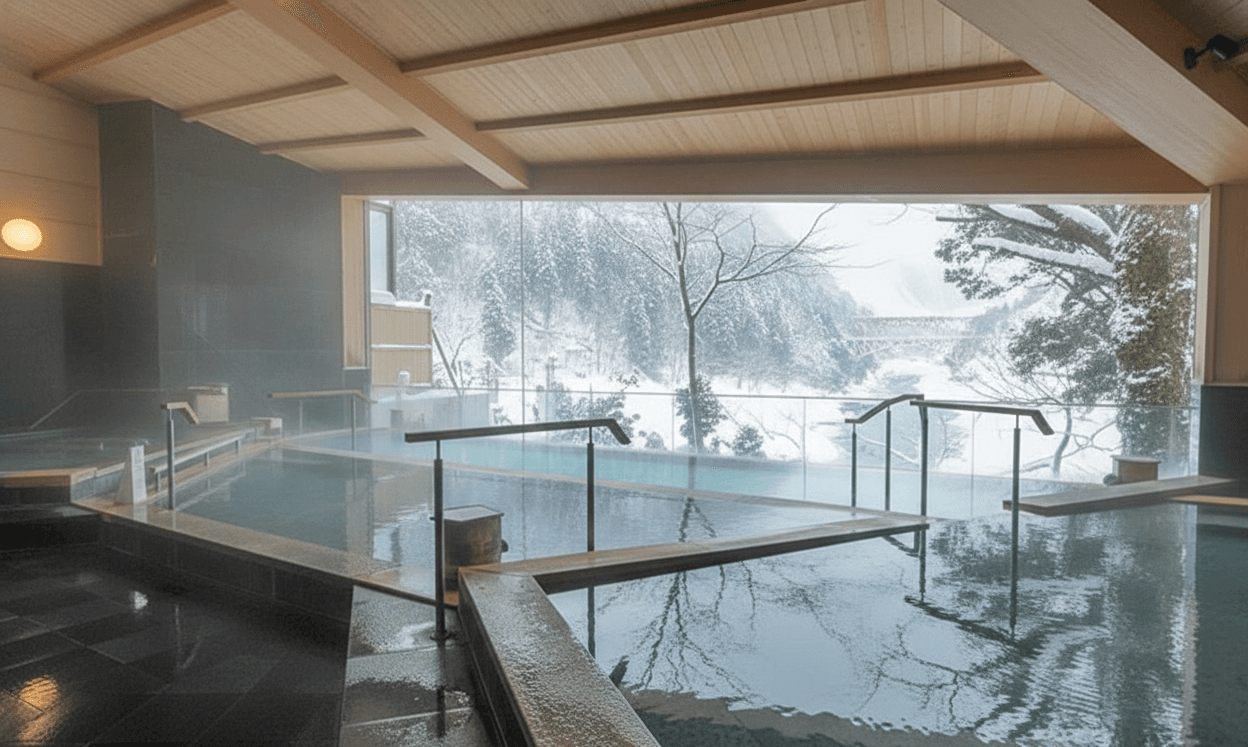
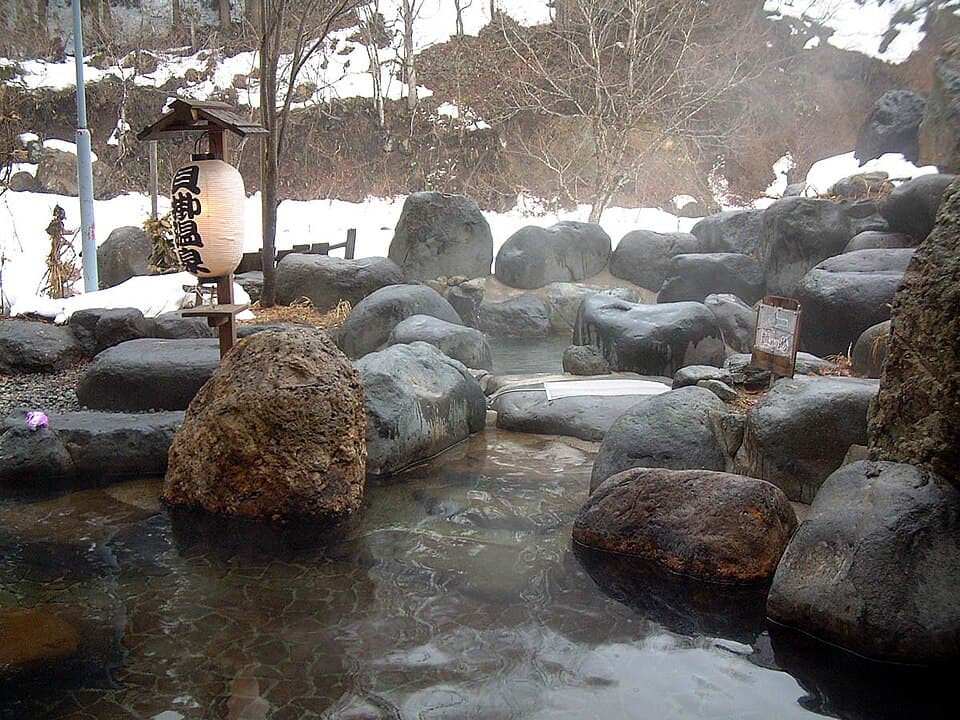
From the outdoor baths of most hotels here you look directly out at Lake Shibayama and, on clear days, at the sharp white shape of Mount Hakusan rising behind the lake to the southwest. The Hokuriku coast gets its share of winter snow, and from a hot outdoor pool with snowflakes falling into the steaming water and the fountain catching what light there is in the middle of the silver lake, Katayamazu becomes a different place entirely. Come in December if you can manage it.
How this spring compares
pH level
6.8
More alkaline than28% of Japan springs
More acidic than69% of Japan springs
Japan median7.3
Japan range1.2–11.3
n=121 springs
Max temperature
47°C
Hotter than21% of Japan springs
Japan median60°C
Japan hottest105°C
n=122 springs
Getting there
Take the Hokuriku Shinkansen to Kaga-Onsen Station, then take a local bus or taxi to Katayamazu Onsen. The journey from Kanazawa takes about 30 minutes.
Amenities
Towel rental
Locker
Restaurant
Café
Parking
Wheelchair access
English spoken
Tattoo-friendly
Private bath
Soap provided
Hair dryer
Location & nearby
Katayamazu Onsen, Kaga, Ishikawa
Kaga-Onsen Station · 6 kmShinkansen
Daishōji Station · 6.8 km
Iburihashi Station · 2.3 km
Awazu Station · 5.3 km
Komatsu Airport · 6.4 km
Fukui Airport · 26.2 km
Katayamazu Hot Spring Bus Stop · 0.1 km
Katayamazu Onsen Sōyu (Bus Stop) (Komatsu Airport Line, Downward) · 0.1 km
Katazumotonosyu Sogyumae (Bus Stop) · 0.1 km
Book a stay nearby
Hotels near Katayamazu
13+ optionsSpringsAtlas may earn a commission from bookings made through these links.
More springs in Chubu
1 / 13



Last verified:
Data: OpenStreetMap (ODbL) · local tourism agencies
Stale listing