


Public · Indoor & Outdoor · ¥500
50–90°CWater temp
4.5pH
¥500 (~$3)Entry fee
PublicBathing type
—Opening hours
About this spring
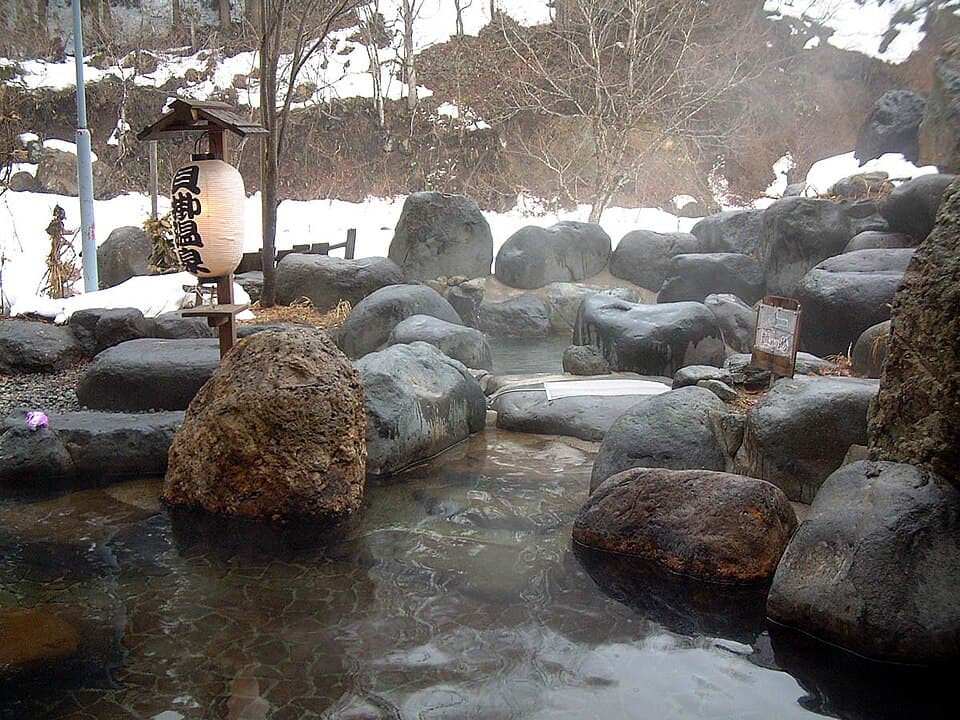
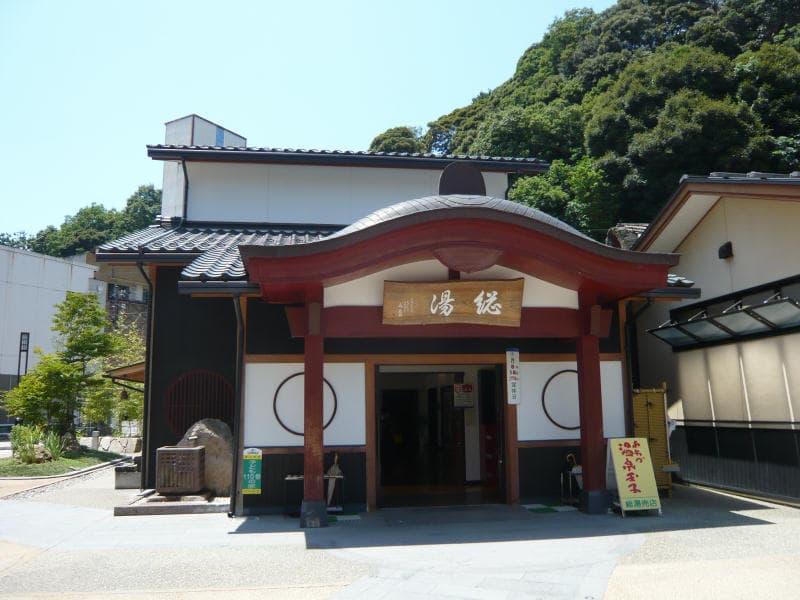
A narrow stone-paved lane of dark timber ryokan in the Yamanouchi district of Nagano Prefecture, with history going back over 1,300 years. Nine public bathhouses, each said to cure a specific ailment, are distributed through the town and free for inn guests to use in any sequence. The streetscape of paper lanterns and wooden facades has barely changed in four centuries. The nearby Jigokudani snow monkey park draws visitors who combine primate-watching with bathing in this ancient village.
Data: Wikipedia (CC BY-SA 4.0) · OpenStreetMap (ODbL)
Highlights
- Nine ailment-specific bathhouses
- Edo-period lantern streetscape
- Snow monkey park gateway
- 1,300-year history
Suitability
Tattoo policy
Policy varies
Children policy
Family-friendly
Altitude
700m
Mineral chemistry
Sodium Chloride (Salt)
Benefits
Sodium chloride springs — essentially natural saltwater baths — are celebrated for their warming and moisturising effects. The salt forms a thin film on the skin after bathing that slows moisture evaporation, keeping skin hydrated longer than a freshwater bath. This "heat-retaining" property means bathers stay warm for significantly longer after leaving the water, making these springs especially popular in winter. Salt springs are among the most accessible for first-time onsen visitors.
Note
Those with high blood pressure or heart conditions should consult a doctor before bathing, as the warming effect increases circulation. Avoid immersing open wounds. The salt will sting slightly in eyes — take care when submerging.
Sulfate
Benefits
Sulfate springs (硫酸塩泉) contain dissolved calcium, sodium, or magnesium sulfate and are among the most therapeutically versatile spring types. Calcium sulfate springs are traditionally associated with wound healing and post-surgical recovery — the calcium ions support tissue repair and the sulfate has mild astringent properties. Sodium sulfate springs are linked to liver and digestive function; they are one of the few spring types used in Japan's national spa therapy clinics for chronic digestive complaints. The water typically has a clean, slightly bitter mineral taste.
Note
Sulfate springs are generally well-tolerated. Those with kidney stones of the calcium oxalate type should consult a doctor before bathing regularly. Sodium sulfate springs can have a mild laxative effect in sensitive individuals — stay hydrated.
History
The spring is attributed to the Nara-period monk Gyoki, who identified its healing properties during travels through the Shinshu highlands.
The earliest visitors were Kyoto pilgrims on their way to Zenkoji Temple. During the Edo period, samurai of the Sanada clan used the waters for recuperation. Some of the wooden ryokan lining the narrow lanes date from that era. The nine sotoyu public bathhouses, each dedicated to a specific ailment, were formalized during the Edo period. The Nagano Electric Railway opened in 1927, connecting Shibu to Nagano city and expanding the resort significantly.
Local guide
From Nagano Station, the Nagano Dentetsu line takes you east to Yudanaka Station, and from there a local bus climbs the last stretch to Shibu Onsen in about fifteen minutes. You know you have arrived when the pavement changes to old stone and the street narrows to the width of two people walking side by side. Shibu is a compact onsen town with wooden inns built close together along a handful of cobblestone lanes, and on evenings when steam drifts across the lantern light, it looks remarkably like a place that has not changed in a long time, because in many ways it has not.
The water at Shibu comes from multiple sources across nine public bathhouses, and the chemistry varies from one to the next. The common character is a sodium chloride and sulfate combination, coming out of the ground at temperatures between fifty and ninety degrees. In the baths, the water is clear with a faint yellowish tinge in some of the older wooden tubs where minerals have stained the wood over decades. The temperature runs hot by any standard, and the sulfate content leaves your muscles genuinely soft afterward, not just warm but actually loosened. The smell is mild sulfur, noticeable when you first enter and then forgotten.
The nine public bathhouses are for ryokan guests only, accessed by a key given at check-in. The tradition is to visit all nine in a single evening, collecting a stamp at each one on a special towel. If you complete all nine and add a final stamp at Takaiyakushi Shrine at the top of the hill, you supposedly receive blessings for health and long life. In practice, the walk takes two or three hours through the stone lanes in yukata and wooden sandals, stopping to soak briefly at each bath before moving on. The sound of geta on cobblestones carries through the whole district after dark.
The broader context matters here. Jigokudani Monkey Park, where wild Japanese macaques soak in a hot spring pool, is thirty minutes up the valley on foot. The photograph of those snow monkeys bathing in winter, taken in 1970, appeared on the cover of Life magazine and introduced the area to the world. Shibu sits downstream from that same geothermal system. The monkeys found their hot spring for the same reason the town exists.
How this spring compares
pH level
4.5
More alkaline than14% of Japan springs
More acidic than85% of Japan springs
Japan median7.3
Japan range1.2–11.3
n=121 springs
Max temperature
90°C
Hotter than82% of Japan springs
Japan median60°C
Japan hottest105°C
n=122 springs
Getting there
Take the Shinkansen to Nagano Station, then transfer to the Nagano Dentetsu line and get off at Yudanaka Station. The journey takes about 35 minutes from Nagano. From Yudanaka, take a local bus to Shibu Onsen, about 10 minutes.
Amenities
Towel rental
Locker
Restaurant
Café
Parking
Wheelchair access
English spoken
Tattoo-friendly
Private bath
Soap provided
Hair dryer
Location & nearby
Yudanakashibu Onsenkyo, Yamanouchi, Shimotakai District, Nagano
Iiyama Station · 15.1 kmShinkansen
Yudanaka Station · 1.9 km
Yomase Station · 4 km
Kamijo Station · 2.9 km
Shinshu-Matsumoto Airport · 77.8 km
Toyama Airport · 111.4 km
Kasagatake Helipad · 7.7 km
Shibu Wagobashi · 0.1 km
Kutsuno · 0.2 km
Shibu Onsen · 0.3 km
Book a stay nearby
Hotels near Shibu
31+ optionsSpringsAtlas may earn a commission from bookings made through these links.
More springs in Chubu
1 / 13



Last verified:
Data: OpenStreetMap (ODbL) · local tourism agencies
Stale listing