

Public · Indoor & Outdoor · ¥400
4.2· 408 reviewsvia Google
43–43°CWater temp
8.9pH
¥400 (~$3)Entry fee
PublicBathing type
—Opening hours
About this spring
A remote hot spring village deep in the Sumata Gorge of the Southern Alps in Shizuoka Prefecture. The water is a simple sulfur spring at pH 8.9 known locally as bijin-no-yu: beauty water. The village sits near a dramatic turquoise dam reservoir and the famous Yume no Tsuribashi suspension bridge. Getting here requires the historic Oigawa Railway.
Data: Wikipedia (CC BY-SA 4.0) · OpenStreetMap (ODbL)
Highlights
- pH 8.9 bijin-no-yu beauty water
- Turquoise Ohma Dam reservoir
- Yume no Tsuribashi suspension bridge
- Heritage steam railway
Suitability
Tattoo policy
Not permitted
Children policy
Family-friendly
Altitude
400m
Mineral chemistry
Sulfur
Benefits
Sulfuric hot springs are among the most studied in Japanese balneology. The sulfur compounds — primarily hydrogen sulfide and thiosulfate — have documented antimicrobial and anti-inflammatory properties. Regular bathing is associated with relief from chronic skin conditions including eczema and psoriasis, as well as joint inflammation and muscle soreness. Sulfuric waters have been prescribed in Japanese medical practice since the Edo period.
Note
The distinctive rotten-egg smell dissipates quickly after leaving the bath. Avoid if you have a sulfur allergy, very sensitive skin, or respiratory conditions. Remove silver jewellery before entering — sulfur will blacken it permanently.
History
The original spring sources near the Yuzan district were identified around 1889.
They were lost when the Ohma Dam flooded the low-lying sites. After the dam was completed, new sources were found by drilling in 1962, producing water at 43.7 degrees Celsius with the same characteristic sulfur composition. The village that grew after 1962 has remained deliberately small, with around eight inns. The turquoise dam reservoir and the Yume no Tsuribashi suspension bridge drew increasing visitors from the 1980s onward.
Local guide
Getting to Sumatakyo requires a level of commitment that filters out casual visitors. You take the Oigawa Railway from Kanaya Station, one of the few remaining steam locomotive lines in Japan, and ride it deep into the Oi River valley past a series of dam lakes that grow progressively more green and isolated as the train climbs. The final stop, Senzu, drops you at the edge of a landscape that feels genuinely remote. From there, the road into the Sumata Gorge follows the narrow river upstream, pressed between walls of dark rock that the water has been carving for a very long time.
The gorge is the reason people make this trip, and it is more impressive in person than any photograph suggests. The Sumata River runs a vivid teal-green where it pools between boulders, and the rock walls rise on both sides in columns and overhangs layered like sediment compressed under enormous weight. Near the cluster of ryokan that make up Sumatakyo Onsen, the valley opens just enough to hold a handful of buildings and a trail that leads to the Yume no Tsuribashi suspension bridge. The bridge is 90 meters long and sits 8 meters above the reservoir, with wooden plank decking and open sides so you can look straight down at the green water below. The planks flex underfoot, the bridge sways in any wind, and the effect is that of being suspended in the middle of the gorge with nothing solid for a very long way in any direction.
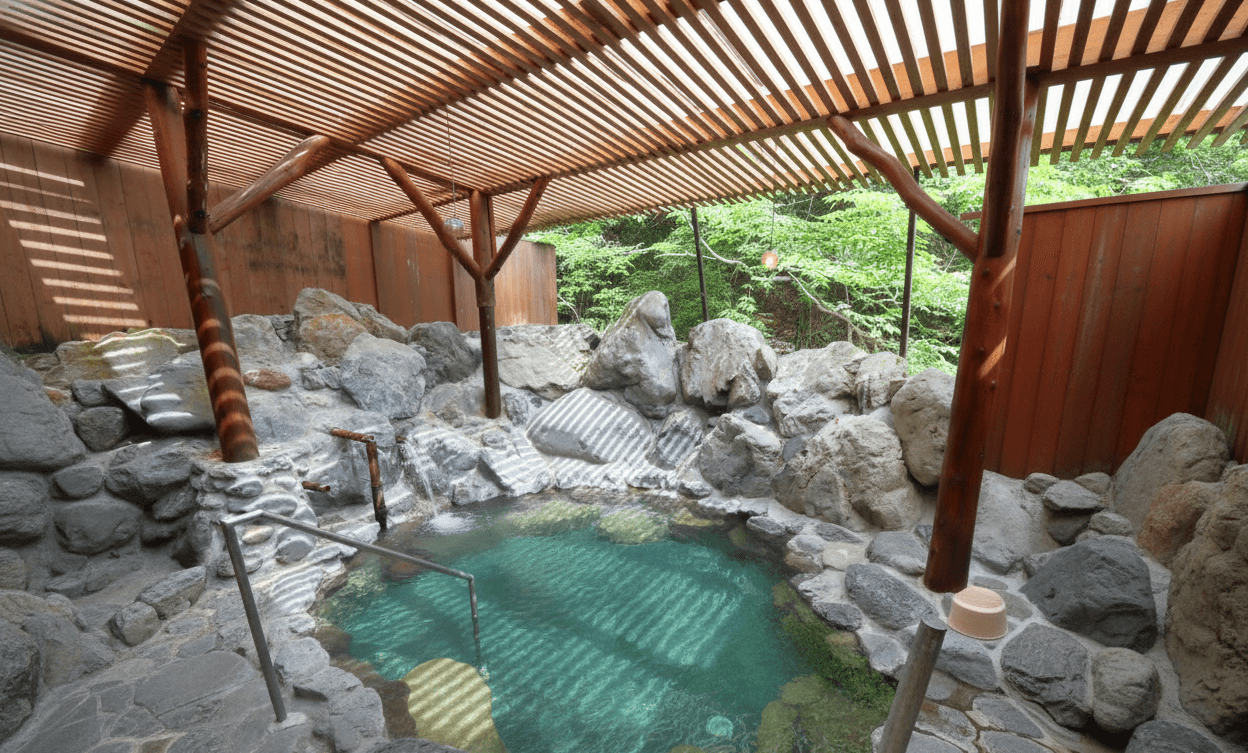
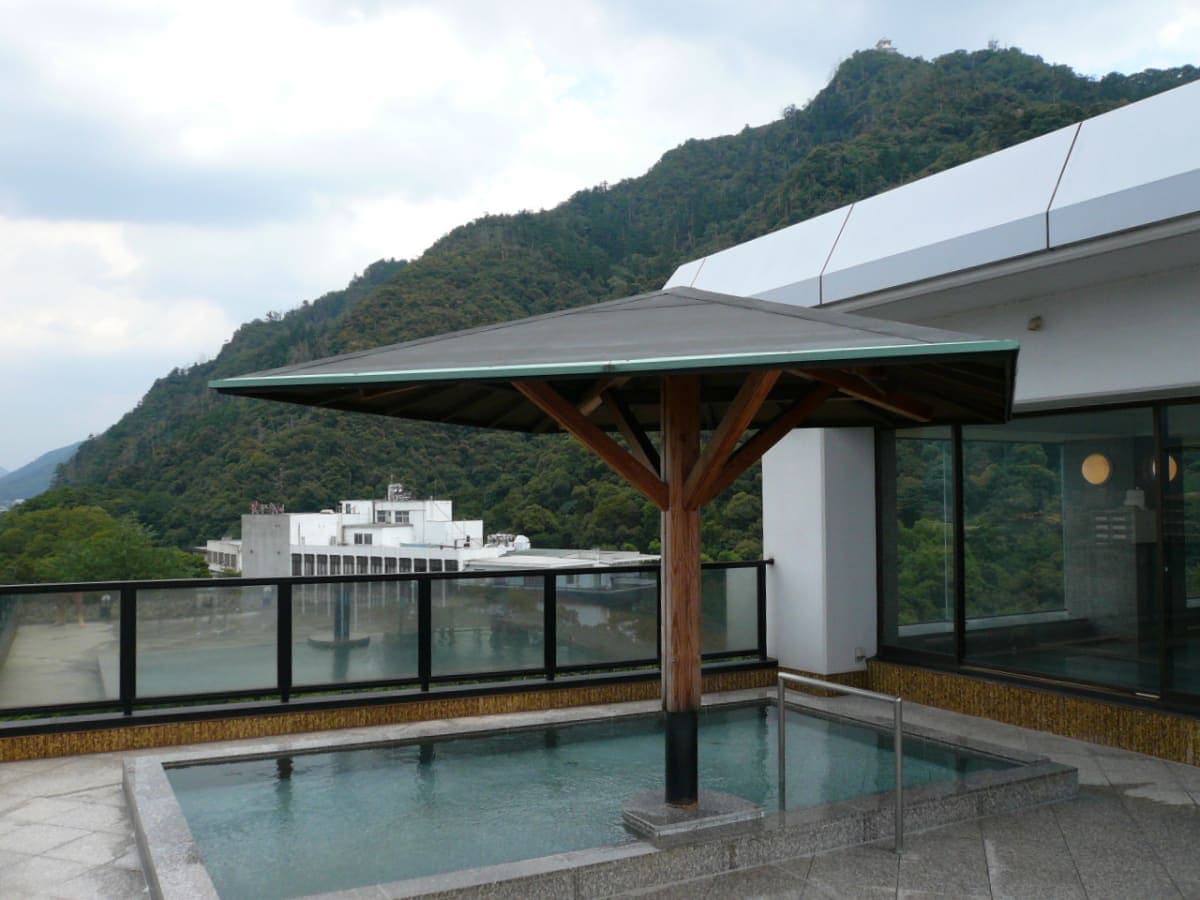
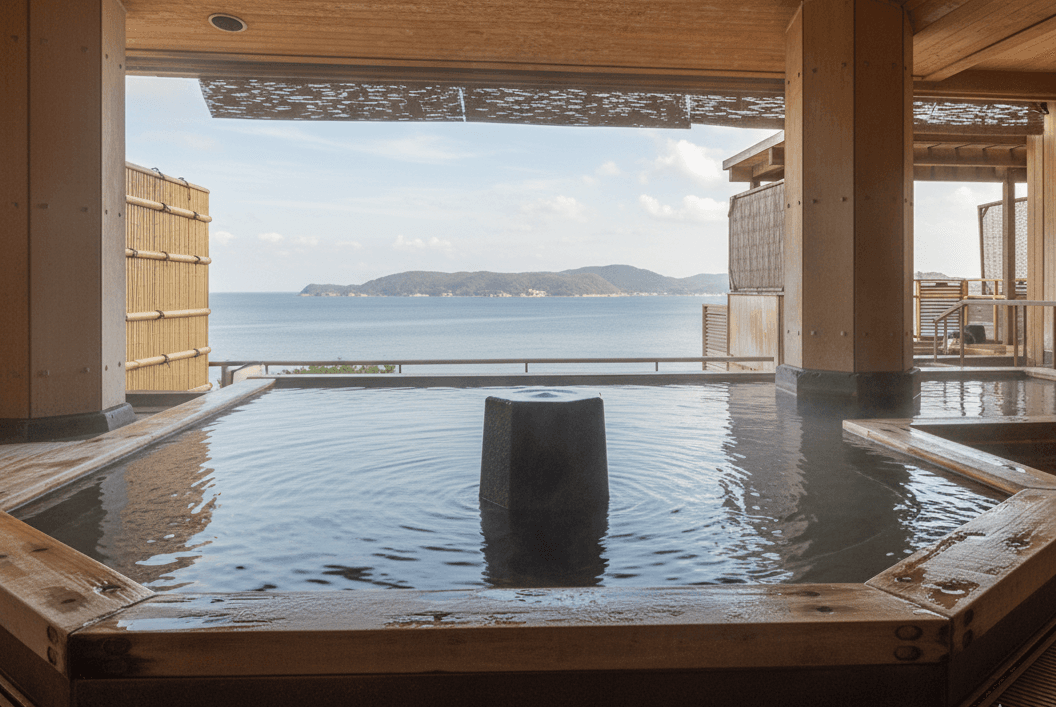
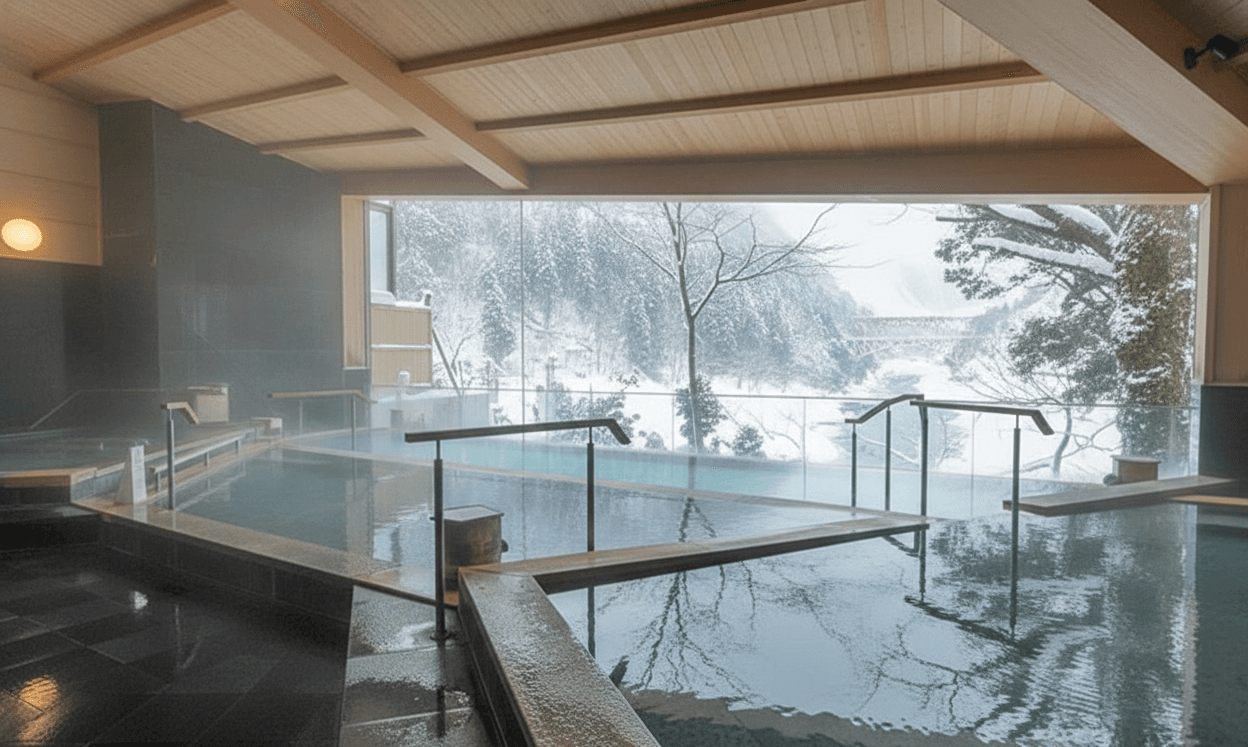
The hot spring water here is alkaline sulfur, arriving at 43 degrees Celsius with a pH of 8.9. It is clear in the glass but reads slightly bluish in the deeper pools, and it has the light sulfur smell that hangs in the steam without being oppressive. The texture on your skin is smooth and faintly slippery, the kind of water that makes you feel like you have applied something to your hands after you dry off. Each of the small ryokan in the gorge draws from the same source and channels it directly into their baths, usually with an outdoor option cut into the rock or positioned on a wooden deck overlooking the river.
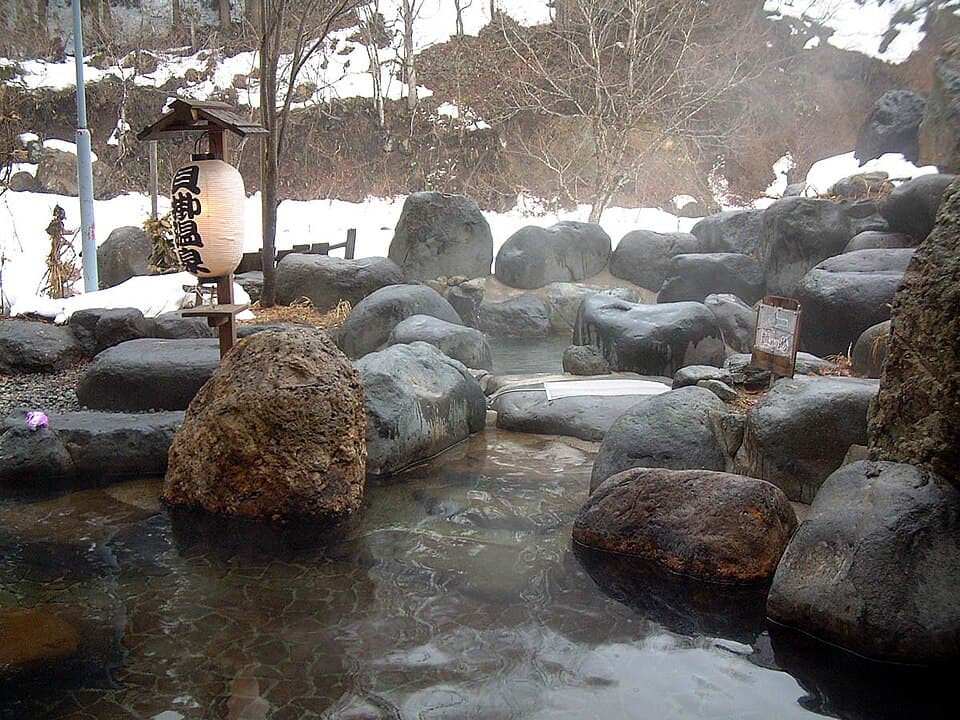
The best time to be in the outdoor bath at Sumatakyo is in the early evening, when the light leaves the top of the gorge walls last and the river below goes quiet except for the sound of the current running over the stones. The tall cedar and cypress on the slopes above hold the damp air in place, and the steam from the pools rises and then flattens against the cold air coming down off the mountains. It is a fundamentally enclosed experience, the gorge walls doing the work that the walls of a building would do elsewhere. You are in the water, surrounded by rock and dark forest, with the sound of the river running just below you. That combination of confinement and wildness is the specific thing that Sumatakyo does that nowhere else quite replicates.
How this spring compares
pH level
8.9
More alkaline than92% of Japan springs
More acidic than7% of Japan springs
Japan median7.3
Japan range1.2–11.3
n=121 springs
Max temperature
43°C
Hotter than11% of Japan springs
Japan median60°C
Japan hottest105°C
n=122 springs
Getting there
From Kanaya Station, take the private Oigawa Railway Oigawa Main Line to Senzu Station. The journey takes about 90 minutes, with some services using heritage steam locomotives. At Senzu, transfer to an Oigawa Railway bus to Sumatakyo Onsen, about 40 minutes further up the gorge.
Amenities
Towel rental
Locker
Restaurant
Café
Parking
Wheelchair access
English spoken
Tattoo-friendly
Private bath
Soap provided
Hair dryer
Location & nearby
368-3 Senzu, Kawanehon, Haibara District, Shizuoka 428-0411
Shizuoka Station · 33.5 kmShinkansen
Abt Ichishiro Station · 2.6 km
Okuizumi Station · 3.8 km
Nagashima Dam Station · 3.6 km
Nagoya Komaki Airport · 108.8 km
Shizuoka Airport · 42.6 km
井川簡易水道田代ポンプ場 · 14.1 km
Sumatakyo Onsen · 0.1 km
Kominkan-mae · 0.4 km
Senta Mori Ressha Ishoken Ryōsha (Train Station) · 0.5 km
Book a stay nearby
Hotels near Sumatakyo
3+ optionsSpringsAtlas may earn a commission from bookings made through these links.
More springs in Chubu
1 / 13



Last verified:
Data: OpenStreetMap (ODbL) · local tourism agencies
Stale listing