

Public · Indoor · ¥480
4.2· 663 reviewsvia Google
51–51°CWater temp
8.5pH
¥480 (~$3)Entry fee
PublicBathing type
—Opening hours
About this spring
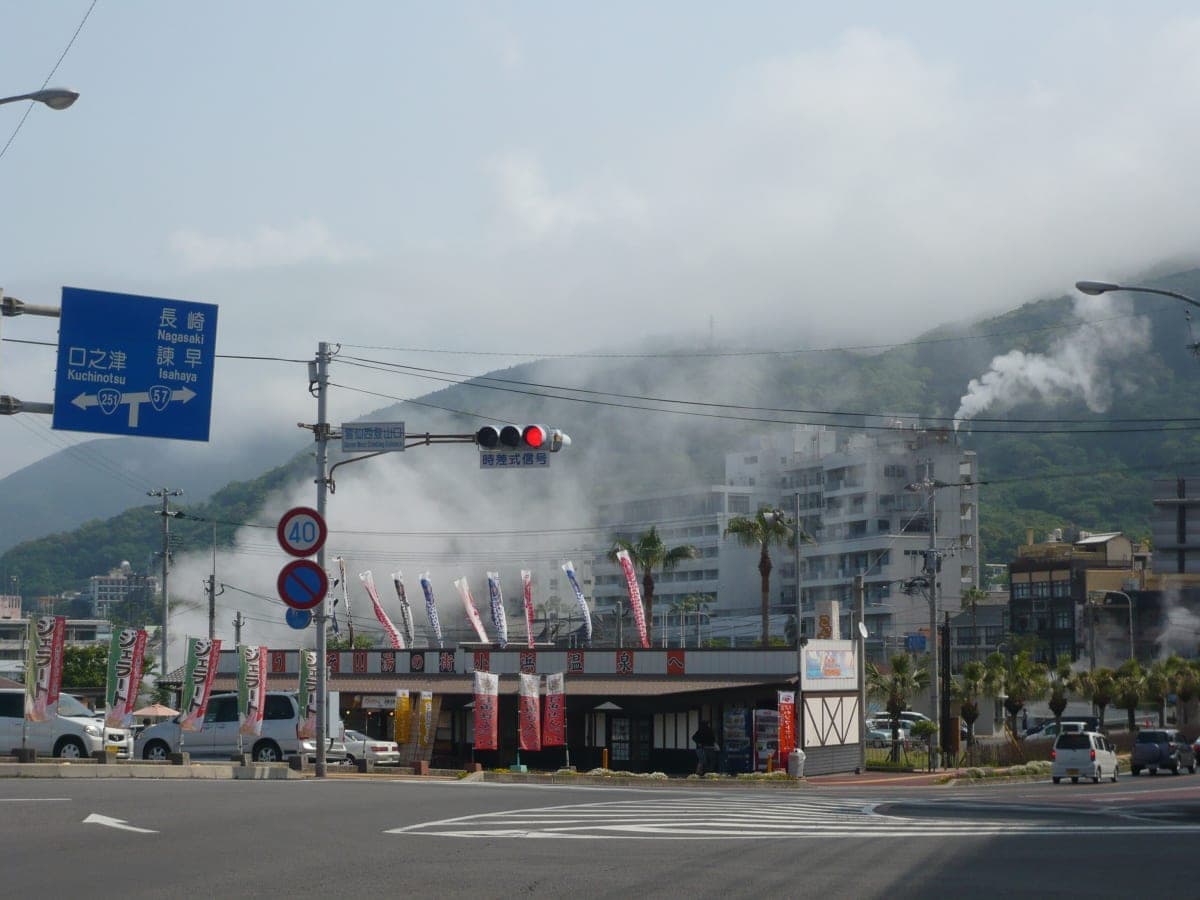
A volcanic hot spring area spread across the foothills of the Kirishima mountain range in Kagoshima Prefecture, with views stretching over Sakurajima and Kagoshima Bay. Dozens of spring types emerge across four distinct hot spring towns. The area is perhaps most famous as the honeymoon destination of the samurai leader Sakamoto Ryoma in 1866, an event celebrated locally as Japan's first modern honeymoon.
Data: Wikipedia (CC BY-SA 4.0) · OpenStreetMap (ODbL)
Highlights
- Sakurajima volcano views
- Sakamoto Ryoma honeymoon site
- Four distinct onsen towns
- Multiple volcanic spring types
Suitability
Tattoo policy
Not permitted
Children policy
Family-friendly
Altitude
700m
Mineral chemistry
Sulfur
Benefits
Sulfuric hot springs are among the most studied in Japanese balneology. The sulfur compounds — primarily hydrogen sulfide and thiosulfate — have documented antimicrobial and anti-inflammatory properties. Regular bathing is associated with relief from chronic skin conditions including eczema and psoriasis, as well as joint inflammation and muscle soreness. Sulfuric waters have been prescribed in Japanese medical practice since the Edo period.
Note
The distinctive rotten-egg smell dissipates quickly after leaving the bath. Avoid if you have a sulfur allergy, very sensitive skin, or respiratory conditions. Remove silver jewellery before entering — sulfur will blacken it permanently.
Sodium Chloride (Salt)
Benefits
Sodium chloride springs — essentially natural saltwater baths — are celebrated for their warming and moisturising effects. The salt forms a thin film on the skin after bathing that slows moisture evaporation, keeping skin hydrated longer than a freshwater bath. This "heat-retaining" property means bathers stay warm for significantly longer after leaving the water, making these springs especially popular in winter. Salt springs are among the most accessible for first-time onsen visitors.
Note
Those with high blood pressure or heart conditions should consult a doctor before bathing, as the warming effect increases circulation. Avoid immersing open wounds. The salt will sting slightly in eyes — take care when submerging.
Iron
Benefits
Iron-bearing springs are recognised by their characteristic rust-red or amber colour and metallic taste. The iron content — primarily ferrous bicarbonate or ferric sulfate — is associated with stimulation of red blood cell production and is traditionally recommended for anaemia and fatigue recovery. The distinctive colouring comes from iron oxidising on contact with air and is not a sign of contamination.
Note
Iron springs will stain light-coloured swimwear and towels a persistent brownish-orange. Avoid wearing white or light fabrics into the water. Those with haemochromatosis (iron overload condition) should seek medical advice before bathing.
History
The volcanic springs here were revered in ancient times due to Kirishima's position as a sacred mountain in Shinto tradition, home to the grand Kirishima Jingu shrine.
The area gained national attention in 1866 when Sakamoto Ryoma, a central figure of the Meiji Restoration, honeymooned here with his wife Oryo after surviving an assassination attempt. Systematic resort development began in the Meiji and Taisho eras as railways extended through Kagoshima Prefecture. Today Kirishima encompasses four distinct onsen towns, each drawing from the same volcanic geothermal system.
Local guide
Take the Kyushu Shinkansen to Kagoshima-Chuo and then a bus north into the mountains, and within an hour the coastal city gives way to volcanic highland. The Kirishima mountain range is 23 overlapping volcanic peaks, some still active, their upper slopes bare and sulfurous above a skirt of forest. You pass the red torii gate of Kirishima Jingu shrine on the way up, vermillion against the dark cedar, and then the road levels out into the highland resort zone where the hot spring inns sit surrounded by forest with a view of clear-cut volcanic skyline in every direction.
The water composition here shifts from inn to inn because the Kirishima geothermal system is enormous and draws from different strata in different places. Some baths are sulfuric and run milky white. Others are sodium chloride and crystal clear with a warm salt coating on the skin. Still others carry iron, running a pale rust color that stains the stone of old pools orange. The alkaline springs, the ones that read around pH 8.5, feel the softest on skin, and those are the ones that made Kirishima famous in 1866 when a wounded samurai named Sakamoto Ryoma came here with his wife Oryo to recover from an assassination attempt. He stayed eighteen days. He later described the waters as the thing that brought him back to health. The Japanese have claimed this as the country's first modern honeymoon, and there is a walking route through the area called the Ryoma Honeymoon Walk.
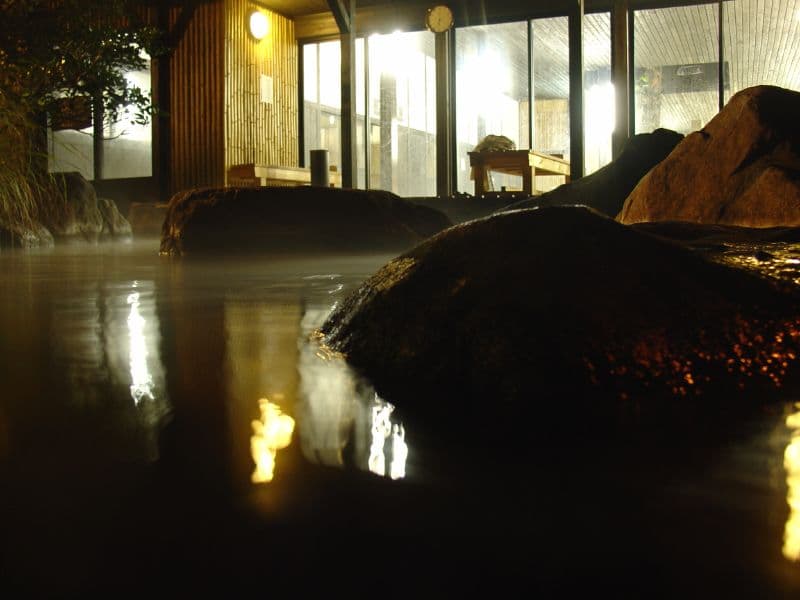
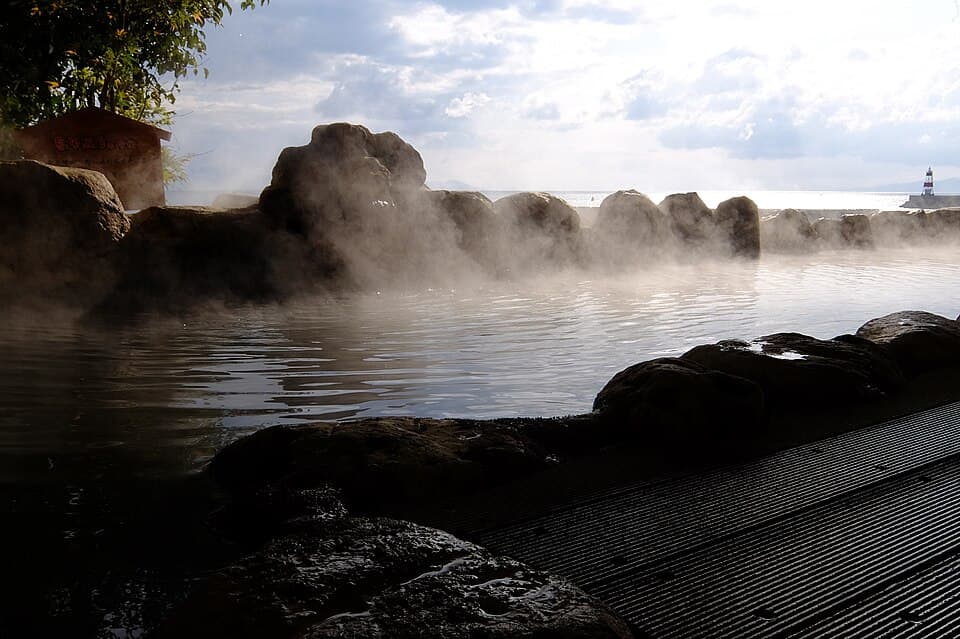
The outdoor baths that face south and west give you the volcano views, specifically Sakurajima, the enormous active island volcano in Kagoshima Bay. On clear evenings the summit catches the last light long after the mountain resort is in shadow. If Sakurajima is producing ash, which it does regularly, the plume drifts east and the sunset behind it turns colors that are difficult to describe cleanly. You are in a hot bath on a volcanic plateau watching another active volcano produce a weather event of its own making.
The four distinct hot spring towns in the Kirishima area, Kirishima Onsen, Maruo Onsen, Kirishima Iwa Onsen, and Fudoin Onsen, are close enough together that a car lets you visit all of them in a day. The smaller inns in the upper zones tend to have the most dramatic outdoor pools and the fewest day visitors. Go in late autumn when the highland maples are turning and the air is cold enough that stepping out of a hot volcanic bath feels like an event.
How this spring compares
pH level
8.5
More alkaline than82% of Japan springs
More acidic than10% of Japan springs
Japan median7.3
Japan range1.2–11.3
n=121 springs
Max temperature
51°C
Hotter than30% of Japan springs
Japan median60°C
Japan hottest105°C
n=122 springs
Getting there
Take the Kyushu Shinkansen to Kagoshima-Chuo Station, then take a local bus or taxi to Kirishima Onsen in Kirishima City. The journey takes about 1 hour from Kagoshima.
Amenities
Towel rental
Locker
Restaurant
Café
Parking
Wheelchair access
English spoken
Tattoo-friendly
Private bath
Soap provided
Hair dryer
Location & nearby
6-20 Nishisengokuchō, Kagoshima, 892-0847
Kagoshima-Chuo Station · 0.7 kmShinkansen
Sengan-en Station · 4 km
Minami-Kagoshima Station · 3.9 km
Korimoto Station · 2.8 km
中之平 · 0.1 km
Kagoshima International Airport · 28.5 km
Miyazaki Airport · 91 km
Nakano Hira Station · 0.1 km
Kajiya-Cho · 0.3 km
Takamibaba · 0.3 km
Sengoku Bajā (Bus Stop) · 0.2 km
Sengoku-Baba (Urai) Station · 0.2 km
Book a stay nearby
Hotels near Kirishima
13+ optionsSpringsAtlas may earn a commission from bookings made through these links.
More springs in Kyushu
1 / 13


Last verified:
Data: OpenStreetMap (ODbL) · local tourism agencies
Verified listing