
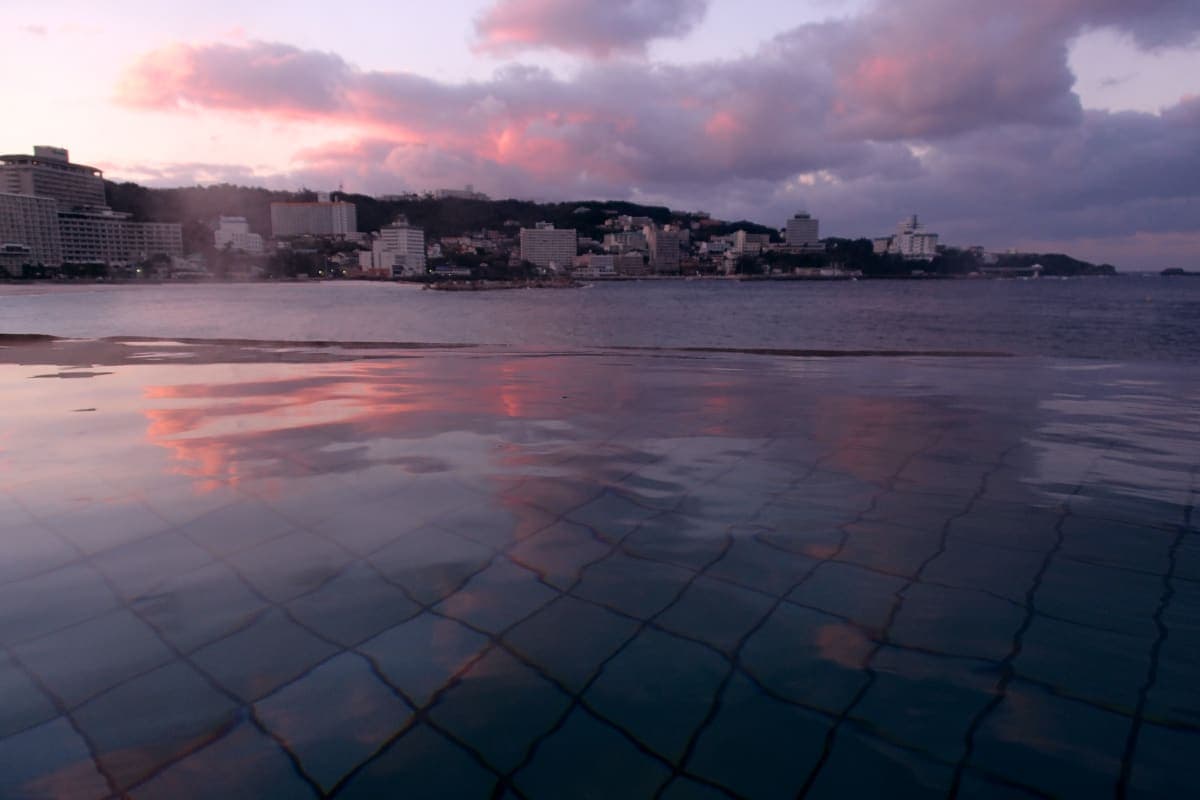

Public · Indoor & Outdoor · ¥800
Yunogo Onsen
湯郷温泉
40°CPublic BathIndoor & Outdoorsodium chloridecalcium chloride
40–40°CWater temp
7.5pH
¥800 (~$6)Entry fee
PublicBathing type
—Opening hours
About this spring
A small hot spring town in Mimasaka, Okayama Prefecture, with a documented history of about 1,200 years. The waters are a sodium chloride and calcium chloride spring that flows at 540 liters per minute. The town's founding is linked to a Buddhist priest named En-nin-houshi who observed an injured heron healing in the warm water, a story commemorated in a statue near the main bathhouse.
Data: Wikipedia (CC BY-SA 4.0) · OpenStreetMap (ODbL)
Highlights
- 1,200-year history
- Healing heron founding legend
- Heron statue at bathhouse
- Authentic small-town atmosphere
Suitability
Tattoo policy
Not permitted
Children policy
Family-friendly
Altitude
125m
Mineral chemistry
Sodium Chloride (Salt)
Benefits
Sodium chloride springs — essentially natural saltwater baths — are celebrated for their warming and moisturising effects. The salt forms a thin film on the skin after bathing that slows moisture evaporation, keeping skin hydrated longer than a freshwater bath. This "heat-retaining" property means bathers stay warm for significantly longer after leaving the water, making these springs especially popular in winter. Salt springs are among the most accessible for first-time onsen visitors.
Note
Those with high blood pressure or heart conditions should consult a doctor before bathing, as the warming effect increases circulation. Avoid immersing open wounds. The salt will sting slightly in eyes — take care when submerging.
Calcium Chloride
Benefits
Calcium chloride springs share the heat-retaining property of sodium chloride springs but with a stronger warming effect due to the divalent calcium ion. They are prized for muscle and joint relief — the combination of heat retention and calcium's role in muscle function makes them a popular choice for athletes and those with chronic musculoskeletal complaints. The water has a slightly bitter mineral taste.
Note
The strong warming effect means those with cardiovascular conditions, high blood pressure, or pregnancy should limit soak duration and consult a doctor if in doubt. Avoid entering immediately after vigorous exercise — let your heart rate normalise first.
History
En-nin-houshi, a Buddhist priest, is credited with discovering the spring about 1,200 years ago after seeing an injured heron bathing and recovering in the warm water.
The legend gave the onsen its name Sagi no Yu: hot water of the heron. The town developed quietly through the Edo period and is today a small, authentic onsen community well off the main tourist circuit.
Local guide
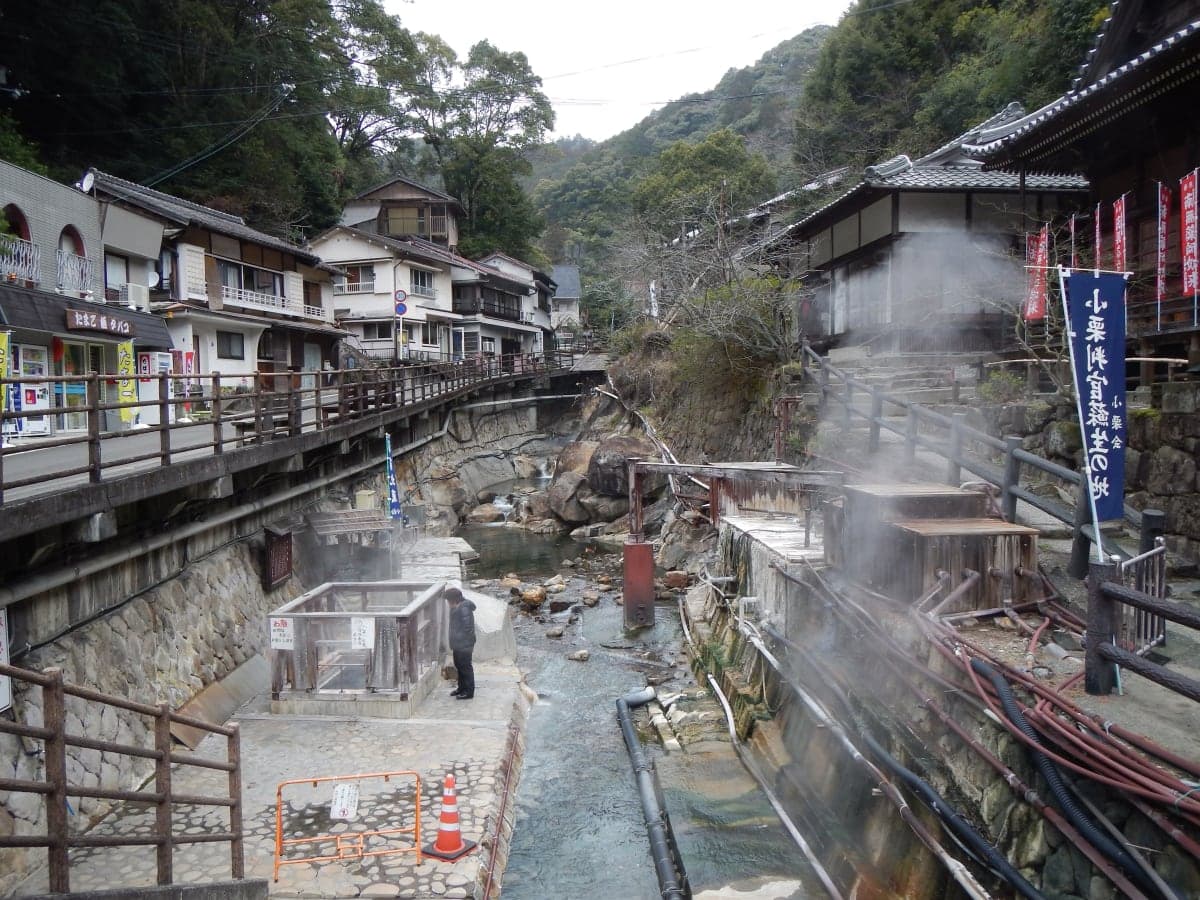
Yunogo Onsen sits in a shallow mountain bowl in Mimasaka City, about forty minutes by bus from Tsuyama in Okayama Prefecture. The road follows a river called the Yoshii upstream through rice paddies and persimmon groves, and the onsen town announces itself with a cluster of old wooden inns pressed together along both banks. A stone statue near the main public bathhouse marks the founding legend: the monk Ennin, traveling through in the 9th century, found an injured white heron standing in a warm spring and healing its wounds. The heron legend turns up in many Japanese onsen towns, but in Yunogo the statue is everywhere, the white bird has become the logo of the whole place, and the bathhouse nearest the original spring site is still called the Sagi-no-yu, or Heron's Bath.
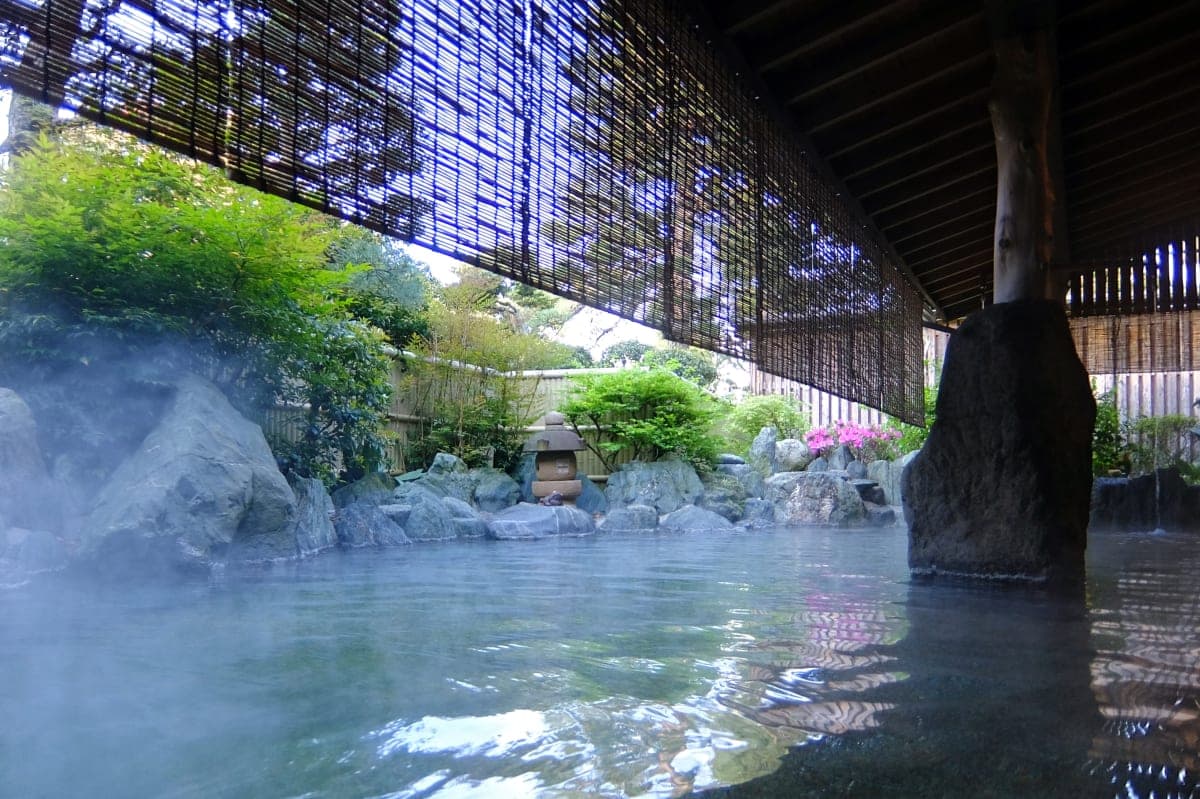
The water chemistry here is the reason Yunogo Onsen is known as the home of Yunogo Bijin, a phrase that means roughly the beautiful-skin water of Yunogo. The spring is a chloride type with traces of radium, colorless and completely transparent when it fills the bath. The temperature holds around 40 to 43 degrees, warm enough to soak thoroughly without forcing you out in fifteen minutes. When you sit in the water for half an hour and then stand up, your skin has a finished, smooth quality, as if the outer layer has been lightly polished. There is no sharp smell, no visual drama, no color change. The beauty spring effect is real but quiet, which fits the town.
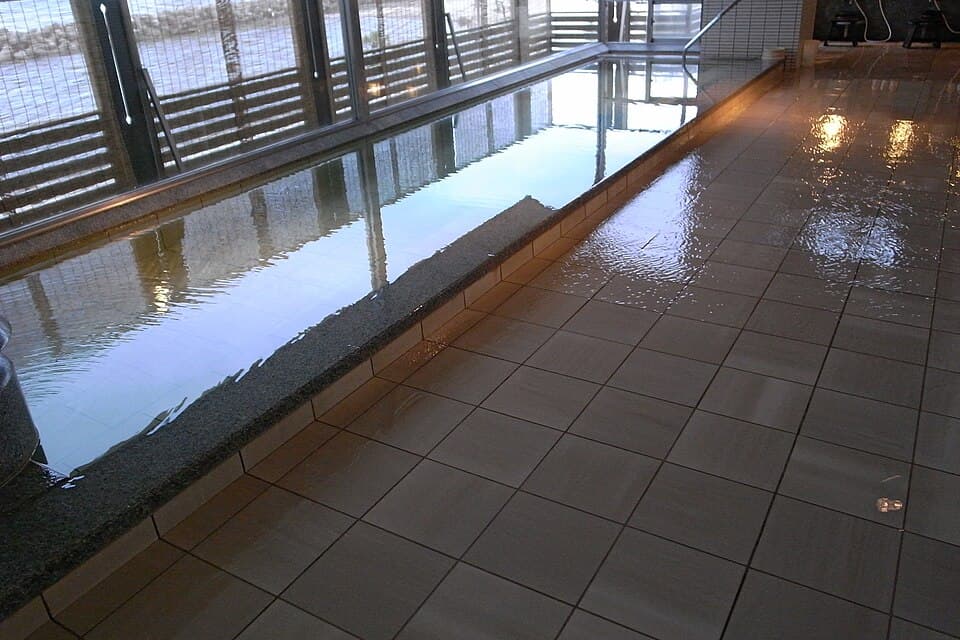
The public bathhouse at the original spring site has a wooden exterior that has aged to a dark grey, and the bath inside is simple stone with a single wide window looking out toward the trees on the hillside. At 540 liters per minute output the flow is generous, and in the older bath halls the water is always moving slightly, fresh and replaced constantly. In the late afternoon, when the autumn light comes sideways through that window and the steam hangs still in the air, the bath takes on a quality you would not find in a new facility. It is a working, unrestored bathhouse that has been doing the same job for over a thousand years.
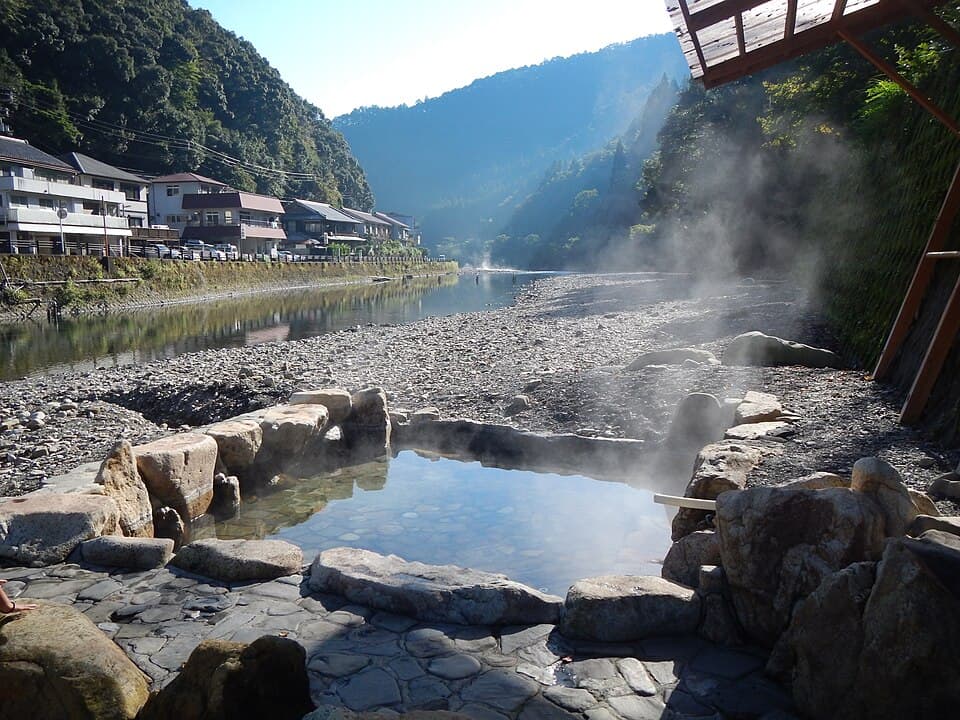
Yunogo is one of the three famous hot springs of Mimasaka along with Okutsu and Yubara, and the local tourism materials treat them as a circuit. If you have a car, you can visit all three valleys in a day. But Yunogo has a slightly more lived-in, less polished feeling than its neighbors. The covered arcade along the main street has a few restaurants, a sake shop, and an okonomiyaki place with handwritten menus taped to the wall. In the evenings, the lights from the inn windows reflect in the Yoshii River, and if you walk the stone path along the bank after your bath, still warm from the water, the quiet is substantial.
How this spring compares
pH level
7.5
More alkaline than56% of Japan springs
More acidic than36% of Japan springs
Japan median7.3
Japan range1.2–11.3
n=121 springs
Max temperature
40°C
Hotter than7% of Japan springs
Japan median60°C
Japan hottest105°C
n=122 springs
Getting there
From Okayama Station, take the JR Tsuyama Line to Tsuyama, then transfer to the JR Kishin Line and get off at Hayashino Station. A taxi from Hayashino takes about 8 minutes. Several ryokan offer a free shuttle from the station with advance reservation.
Amenities
Towel rental
Locker
Restaurant
Café
Parking
Wheelchair access
English spoken
Tattoo-friendly
Private bath
Soap provided
Hair dryer
Location & nearby
Yunogo Onsen, Yunogo, Mimasaka, Okayama 707-0062
Yuge Onsen Station · 0.1 km
Aioi Station · 36.5 kmShinkansen
Hayashino Station · 2.6 km
Katsumada Station · 4.9 km
Narahara Station · 5.5 km
湯郷観光案内所前 · 0 km
Okayama Momotaro Airport · 36.7 km
Tottori Airport · 59.7 km
Yugō Kankō Annaijo Mae (Bus Stop) · 0 km
Yunogo Onsen Kami Station · 0.2 km
Book a stay nearby
Hotels near Yunogo
11+ optionsSpringsAtlas may earn a commission from bookings made through these links.
More springs in Kansai
1 / 13



Last verified:
Data: OpenStreetMap (ODbL) · local tourism agencies
Verified listing