
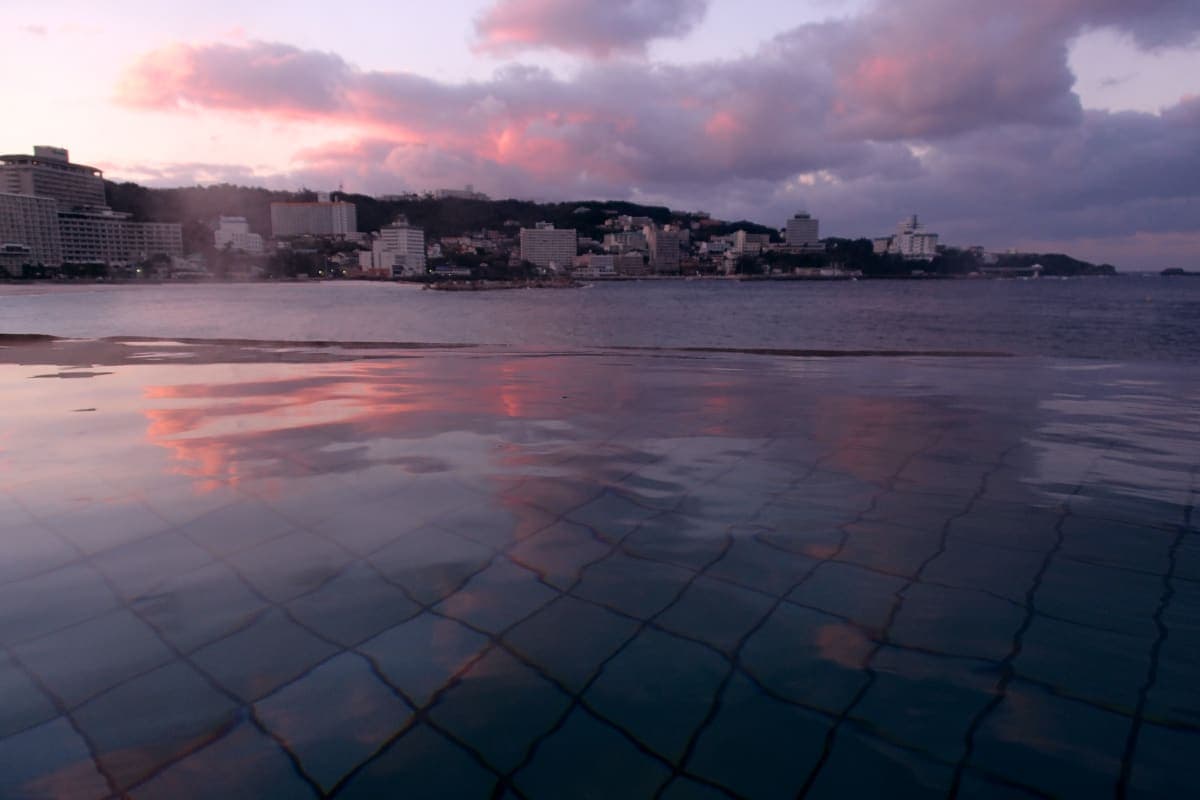

Public · Outdoor · Free
42–42°CWater temp
9.3pH
FreeEntry fee
PublicBathing type
—Opening hours
About this spring
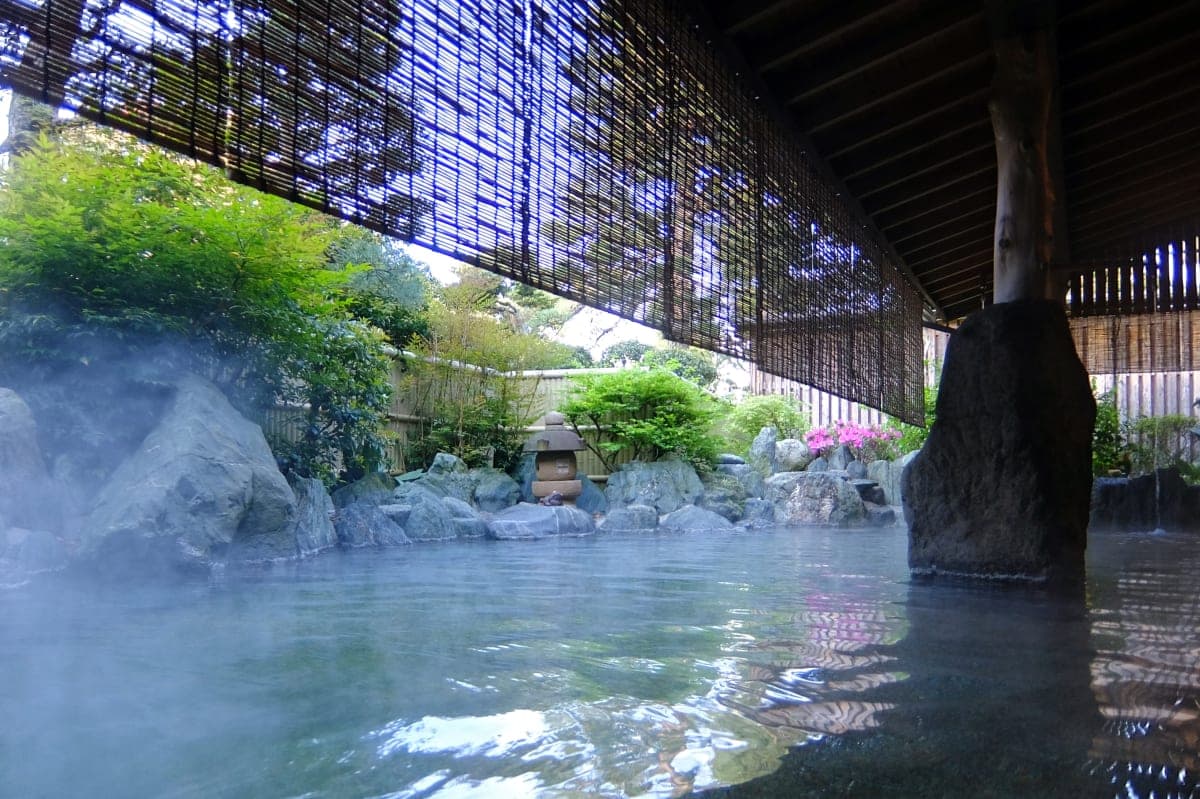
Nestled in the serene landscapes of Yubara, Japan, Yubara Onsen offers a tranquil retreat for visitors seeking relaxation and rejuvenation. The hot spring is renowned for its rich mineral waters, believed to have therapeutic properties that soothe both body and mind. Surrounded by lush greenery and traditional architecture, this onsen provides an authentic Japanese experience where guests can unwind in natural pools or enjoy the local cuisine at nearby ryokans.
Data: Wikipedia (CC BY-SA 4.0) · OpenStreetMap (ODbL)
Highlights
- Experience serene natural surroundings with lush greenery and traditional Japanese architecture.
- Enjoy the reputed therapeutic benefits of rich mineral-rich waters.
- Explore local attractions such as Yubara's historic sites and nearby nature trails.
- Indulge in authentic onsen culture, including communal bathing practices.
- Savor regional cuisine at local restaurants offering fresh, seasonal dishes.
Suitability
Tattoo policy
Not permitted
Children policy
Family-friendly
Altitude
250m
History
Yubara Onsen stretches along the Asahi River in what is now Maniwa City in northern Okayama Prefecture, and its history as a therapeutic destination is rooted in the late Sengoku period.
The springs gained particular prominence through a connection to the ruling class of the era: Ukita Hideie, one of Toyotomi Hideyoshi's Five Great Elders, had a hot spring bath built at Yubara for his mother Ofuku — a consort of Hideyoshi renowned for her beauty — when she fell ill, and this aristocratic endorsement elevated the springs from a local resource to a destination of regional significance. The Mimasaka region in which Yubara sits was subsequently administered through the Edo period by the Tsuyama Domain, under whose governance the therapeutic springs attracted travellers seeking relief from neuralgia and poor circulation along the San'yo road network. The defining physical feature of Yubara Onsen is the Sunayu, an open-air bath where thermal water bubbles naturally up through the sandy riverbed directly below the Yubara Dam, requiring no pump or infrastructure — visitors simply lower themselves into water that the earth itself supplies, free of charge, twenty-four hours a day. This spectacle of hot water welling through river sand at the base of a dam wall remains one of the most unusual bathing experiences in western Japan, and has been ranked at the top of nationwide surveys of open-air baths. The spring's modern setting was shaped in the mid-twentieth century when the Yubara Dam was constructed across the Asahi River, though the thermal activity downstream proved undimmed by the engineering works above it.
Local guide
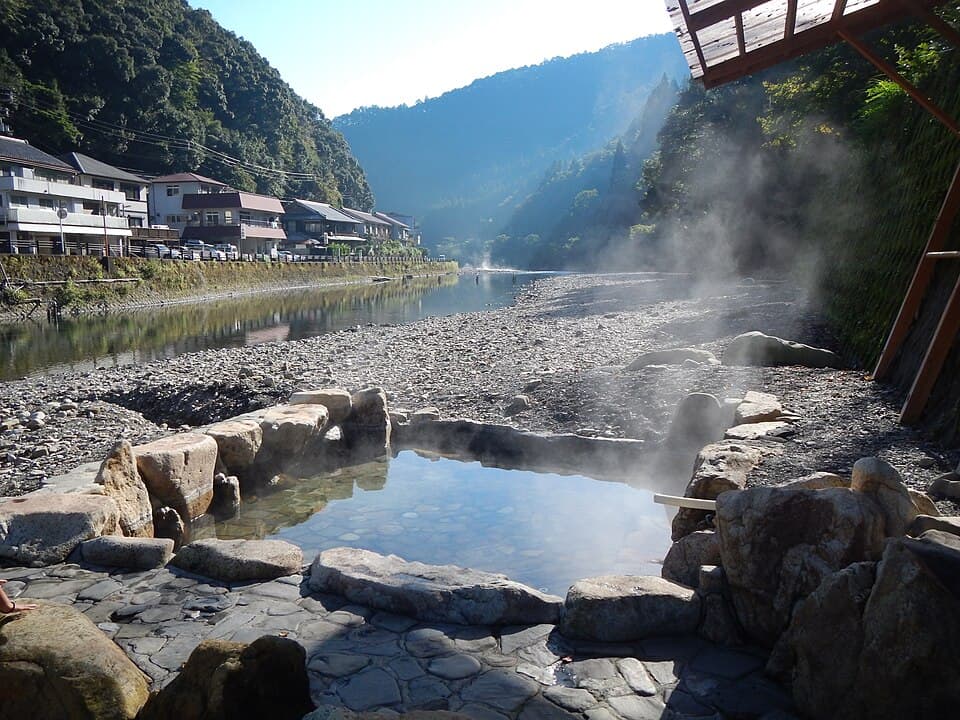
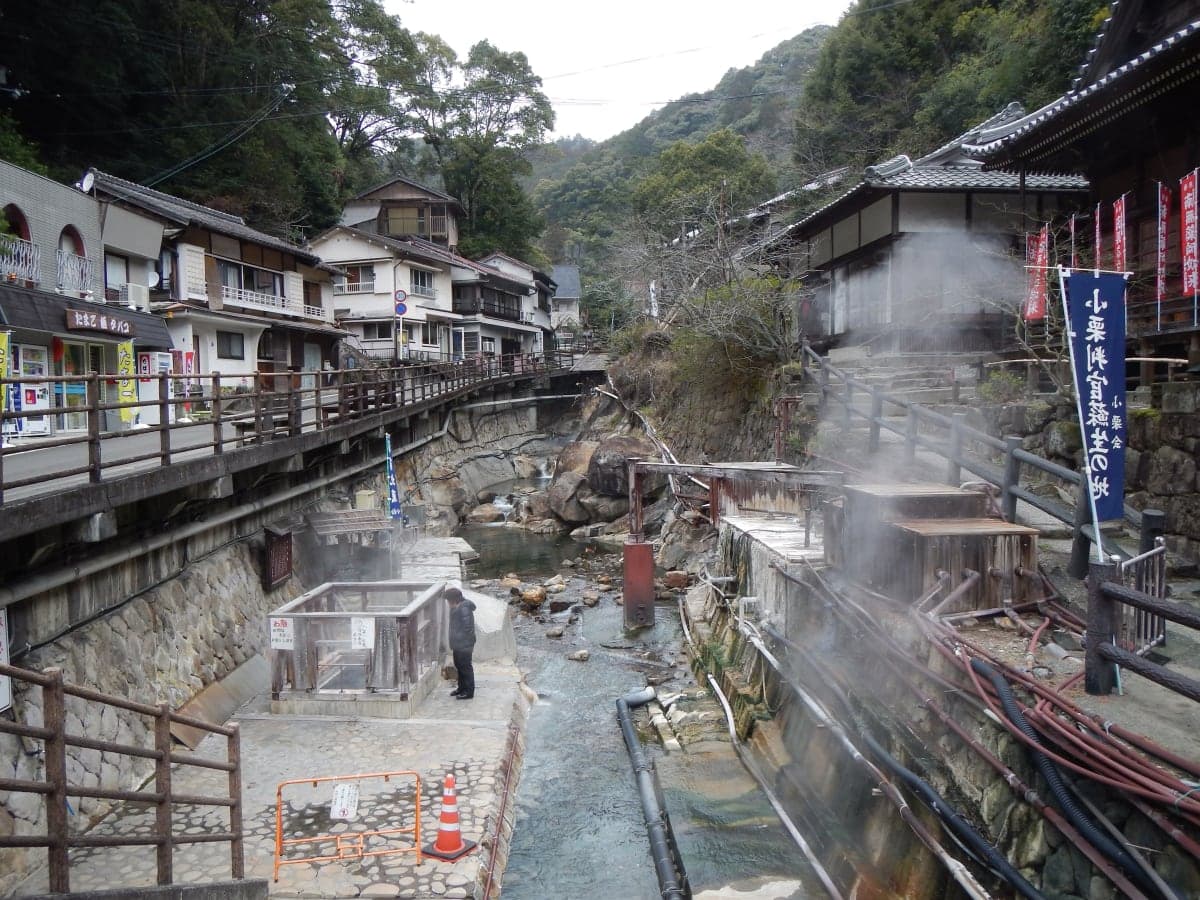
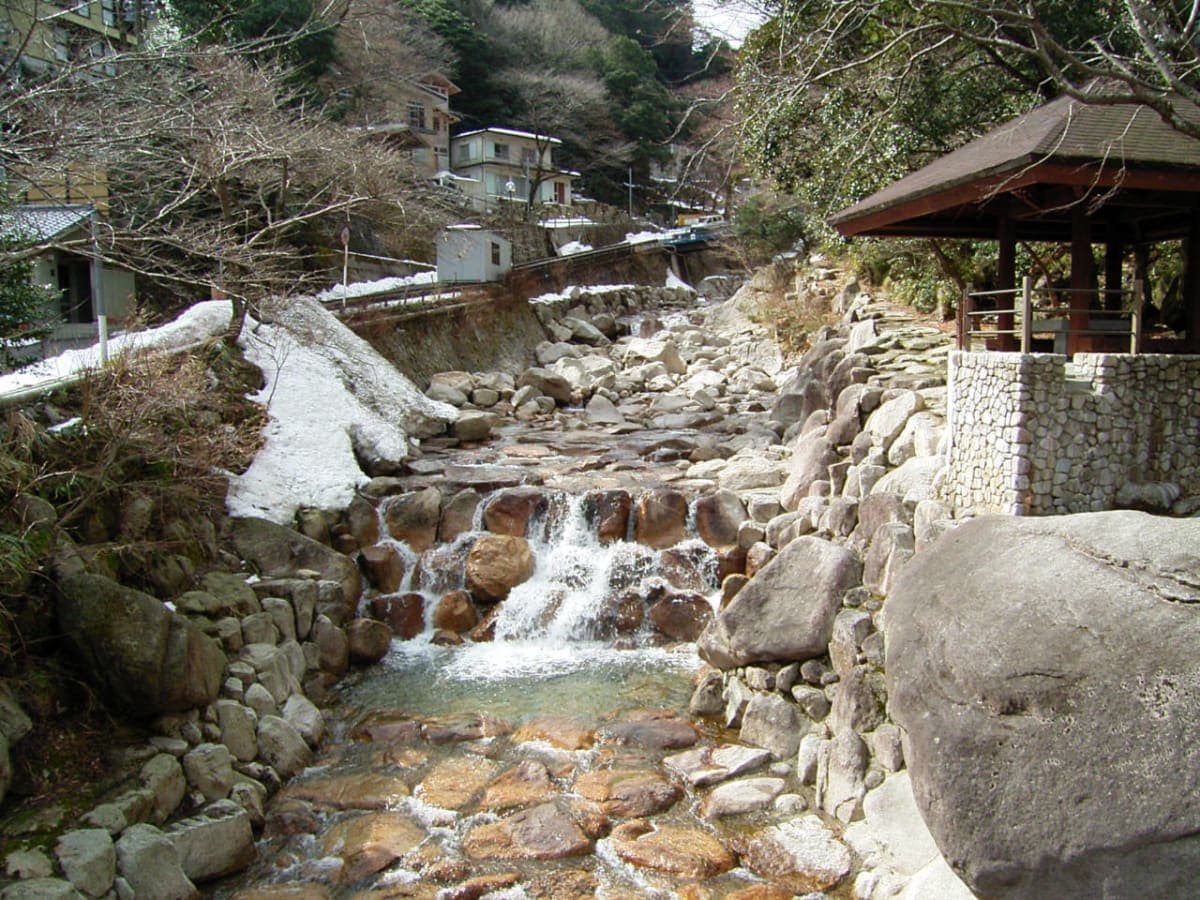
The route to Yubara Onsen from Okayama City is a long bus ride north through the Chugoku Mountains that earns its destination. The road follows river valleys through rice terraces and cedar plantations, and by the time you reach Maniwa and start dropping into the Asahi River canyon, the scale of the landscape changes. Yubara Dam sits at the head of a long reservoir, and the onsen town is squeezed onto the bank just downstream, its inns backing up against the canyon wall while the river runs along the front of them. The free outdoor bath, Sunayu, is built right on the riverbank itself, open twenty-four hours, with no roof overhead and the canyon walls rising on both sides.
Sunayu is one of the few rotenburo in Japan where the hot spring water wells up through the actual riverbed sand, which is where it gets its name. Sand bath is a slight mistranslation, since you are bathing in hot water, not sand, but the sand does visibly shift at the bottom of the pool where the water pushes up. The pH here runs at 9.3, which puts Yubara in the upper range of alkaline springs in Japan. At that level the water feels notably slippery, almost coating on the skin, because the high alkalinity softens the top layer of dead skin cells. It does not sting or tingle like acidic springs. It is just very smooth, and the effect lasts noticeably after you dry off.
The experience of bathing in Sunayu at night is something specific to this place. The bath is lit from below and sits at water level against the river, and the Yubara Dam face is visible from the pool in daylight. After dark the canyon walls disappear into black above you, the dam is a pale outline lit by a single lamp, and the sound of the river fills the whole space. Other guests move in and out through the night. There is no staff, no ticket machine, and no fence. The bath has been sitting here for anyone to use at any hour for longer than anyone currently living can remember.
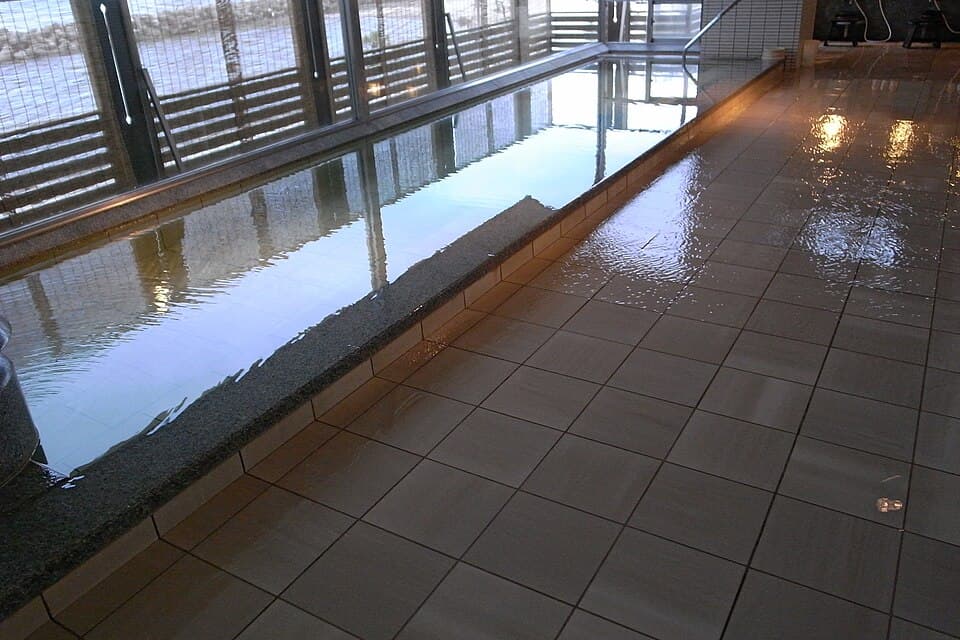
The wider resort has a relaxed, slightly old-fashioned energy. The indoor facilities at the ryokan along the riverbank draw from the same alkaline source and are notably warmer than the free outdoor bath. Lunch sets at the restaurants nearby tend toward local river fish and mountain vegetables. Yubara is classified among the Mimasaka Three Hot Springs alongside Okutsu and Yunogo, but Sunayu on the riverbank is the thing that makes it genuinely distinctive.
How this spring compares
pH level
9.3
More alkaline than94% of Japan springs
More acidic than5% of Japan springs
Japan median7.3
Japan range1.2–11.3
n=121 springs
Max temperature
42°C
Hotter than8% of Japan springs
Japan median60°C
Japan hottest105°C
n=122 springs
Getting there
From Okayama Station, take the JR Tsuyama Line to Tsuyama Station (~70 min), then transfer to the JR Kishin Line and alight at Chugoku-Katsuyama Station; from there a Maniwa City community bus runs to Yubara Onsen (~35 min). Alternatively, highway express buses run directly from Okayama Station's Tenmaya Bus Center to Katsuyama with a connection to Yubara, or from Osaka. The famous free 24-hour riverside Sunayu open-air bath is a short walk from the main bus stop.
Amenities
Towel rental
Locker
Restaurant
Café
Parking
Wheelchair access
English spoken
Tattoo-friendly
Private bath
Soap provided
Hair dryer
Location & nearby
Yubara Onsen, Maniwa, Okayama
Okayama Station · 61.9 kmShinkansen
Chugoku-Katsuyama Station · 13.9 km
Kuse Station · 13.4 km
Komi Station · 17.1 km
Tottori Airport · 53.8 km
Okayama Momotaro Airport · 50.6 km
すいか空港 · 26.5 km
Sayama · 0 km
Yubara Onsen · 0.1 km
Yubara Ohashi · 0.3 km
Book a stay nearby
Hotels near Yubara
11+ optionsSpringsAtlas may earn a commission from bookings made through these links.
More springs in Kansai
1 / 13



Last verified:
Data: OpenStreetMap (ODbL) · local tourism agencies
Verified listing