
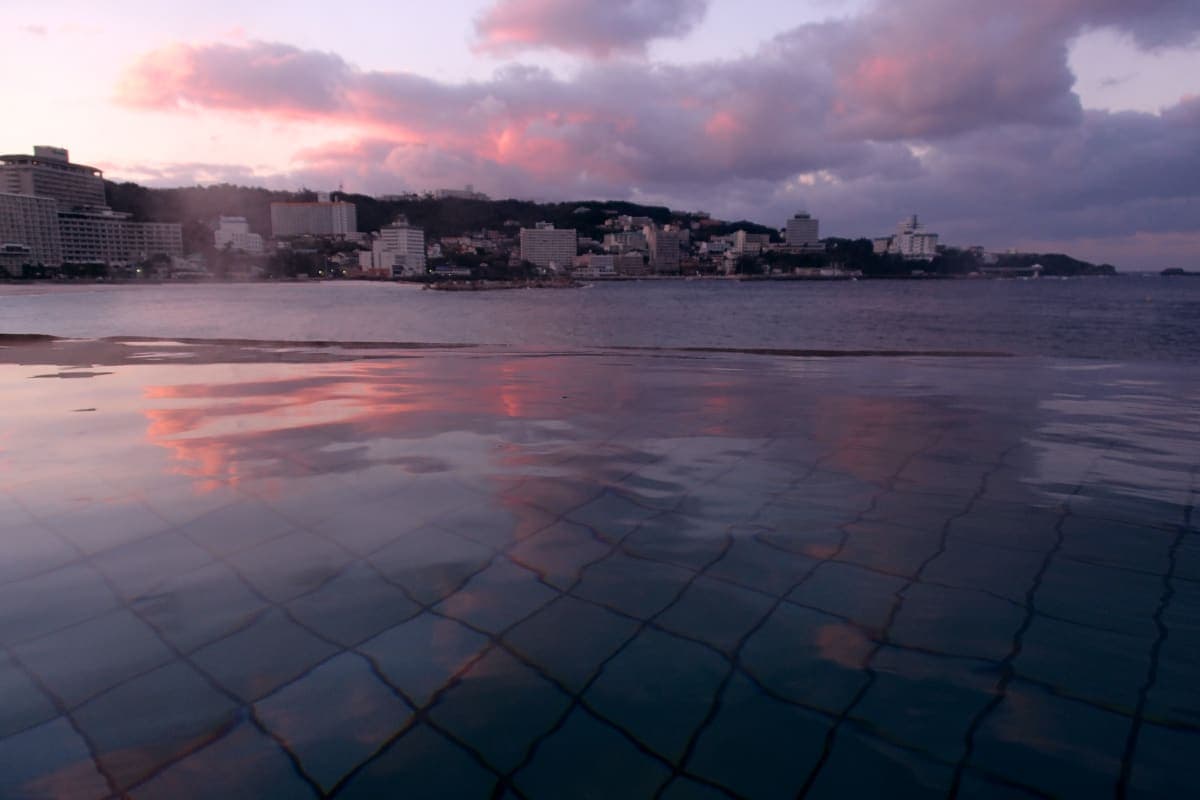

Mixed · Indoor & Outdoor · ¥1,000
98–98°CWater temp
7.3pH
¥1,000 (~$7)Entry fee
MixedBathing type
—Opening hours
About this spring
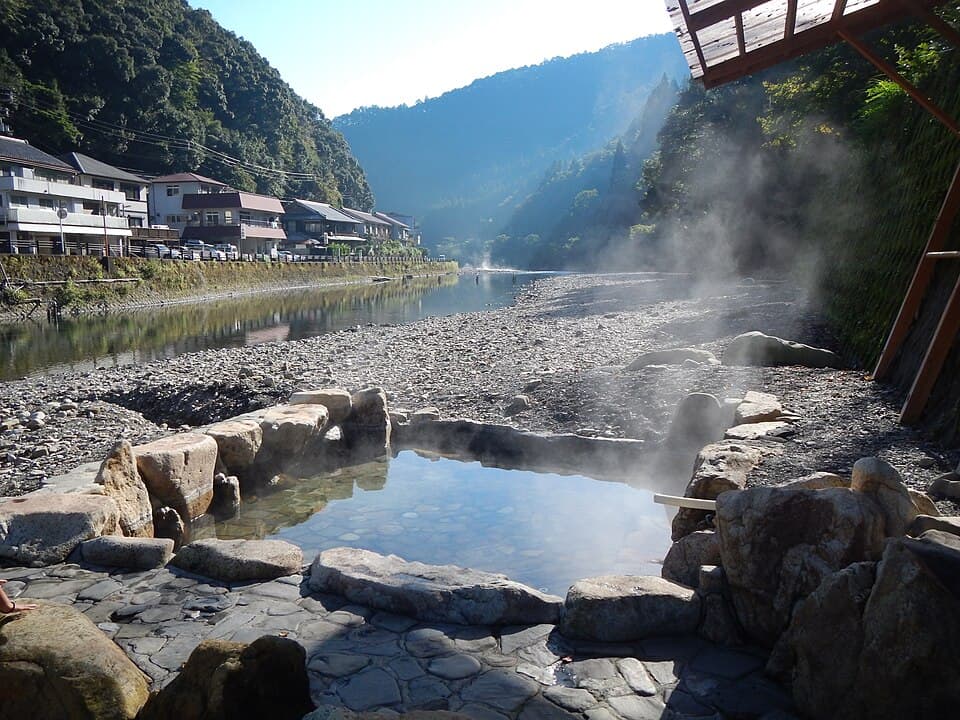
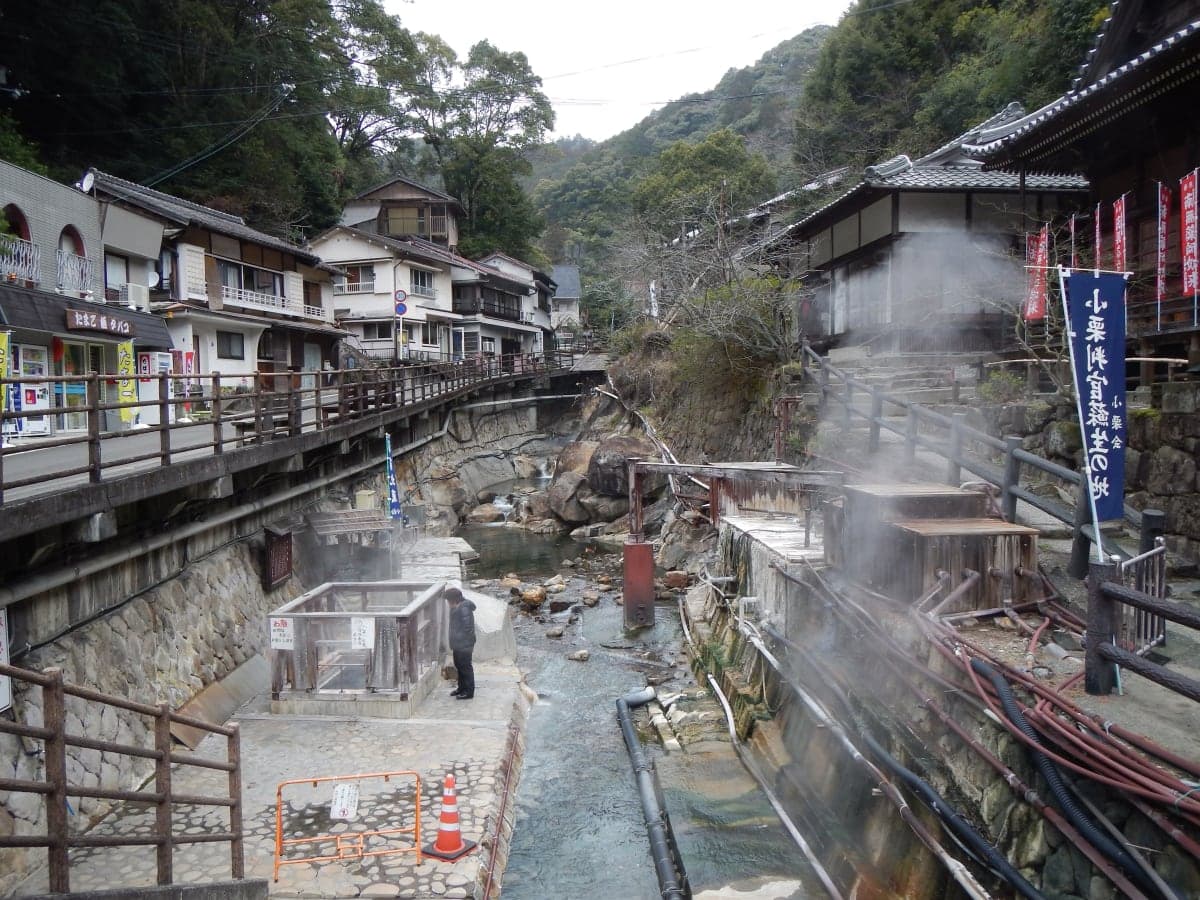
A small hot spring village in Shin'onsen, Hyogo Prefecture, with 63 spring sources producing water at 98 degrees Celsius. The water is so hot that locals use it for cooking: the Arayu spring near the river is used daily to boil eggs, vegetables, and ingredients for meals, a practice called yugaki culture that has continued for centuries. This is one of the rare places in Japan where you can watch hot spring water being used as a kitchen.
Data: Wikipedia (CC BY-SA 4.0) · OpenStreetMap (ODbL)
Highlights
- Cooking food in hot spring water
- 63 sources at 98 degrees
- Yugaki cultural tradition
- Edo-period streetscape
Suitability
Tattoo policy
Not permitted
Children policy
Family-friendly
Altitude
100m
Mineral chemistry
Sodium Chloride (Salt)
Benefits
Sodium chloride springs — essentially natural saltwater baths — are celebrated for their warming and moisturising effects. The salt forms a thin film on the skin after bathing that slows moisture evaporation, keeping skin hydrated longer than a freshwater bath. This "heat-retaining" property means bathers stay warm for significantly longer after leaving the water, making these springs especially popular in winter. Salt springs are among the most accessible for first-time onsen visitors.
Note
Those with high blood pressure or heart conditions should consult a doctor before bathing, as the warming effect increases circulation. Avoid immersing open wounds. The salt will sting slightly in eyes — take care when submerging.
History
The springs are said to have been discovered in 848 AD by the Buddhist priest Jikaku Daishi, though wooden tablets found at the site suggest use during the Nara period, even earlier.
The local temple was established shortly after the springs were found. During the Edo period Yumura became a waystation on the Sanin Kaido trade route linking Kyoto with western Japan. Merchants and pilgrims stopped here to rest and bathe, bringing prosperity that funded the traditional architecture still visible along the main street today.
Local guide
Getting to Yumura Onsen from Kyoto requires a train to Kinosakikaigan or Hamasaka on the San'in Coast Line, then a bus ride inland through the low Tajima hills. The road follows a narrow river valley, and by the time the bus deposits you in Yumura, the valley has narrowed to a crack between steep forested walls. The village is small enough to walk in five minutes, and the main source spring, called Arayu, sits right in the center of a small stone plaza surrounded by wooden lattice fencing. You will smell it before you see it. At 98 degrees Celsius, this is one of the hottest naturally flowing springs in Japan, and the steam above the source rises in a column that bends in the mountain wind and catches the afternoon light in winter.
The water at Yumura is sodium chloride in composition, weakly alkaline, and pumps out of the Arayu source at 470 liters per minute. Because it is so hot, it cannot be used for bathing without being blended down with cold water, but that is not why most people come to the source itself. The tradition here is to bring a net bag of eggs and corn and lower it into the boiling flow for a few minutes. The eggs come out perfectly cooked, their whites set firm but the yolks still slightly yielding, and the corn goes translucent and sweet from the mineral water. You eat them standing on the stone plaza while the steam curls around your hands. It is one of the most straightforward pleasures in Japanese onsen culture.
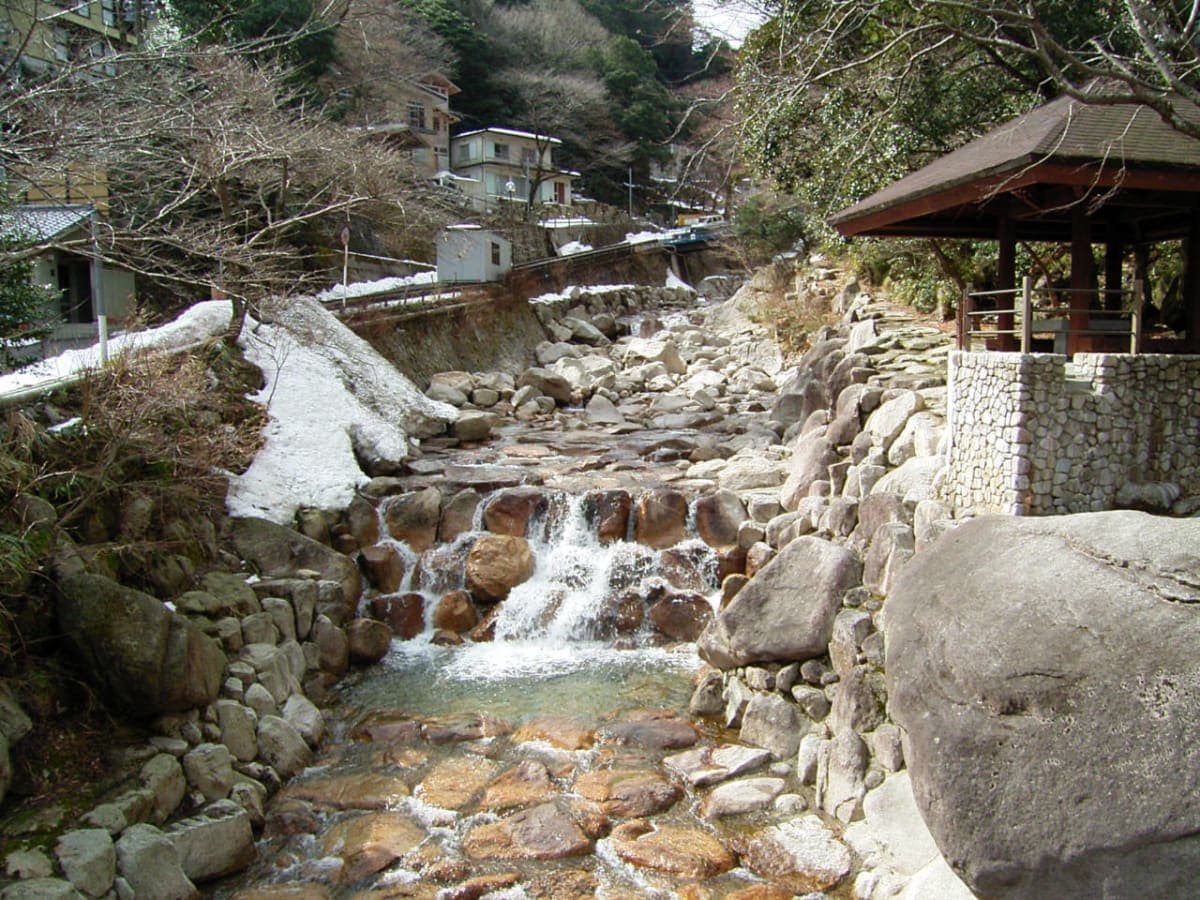
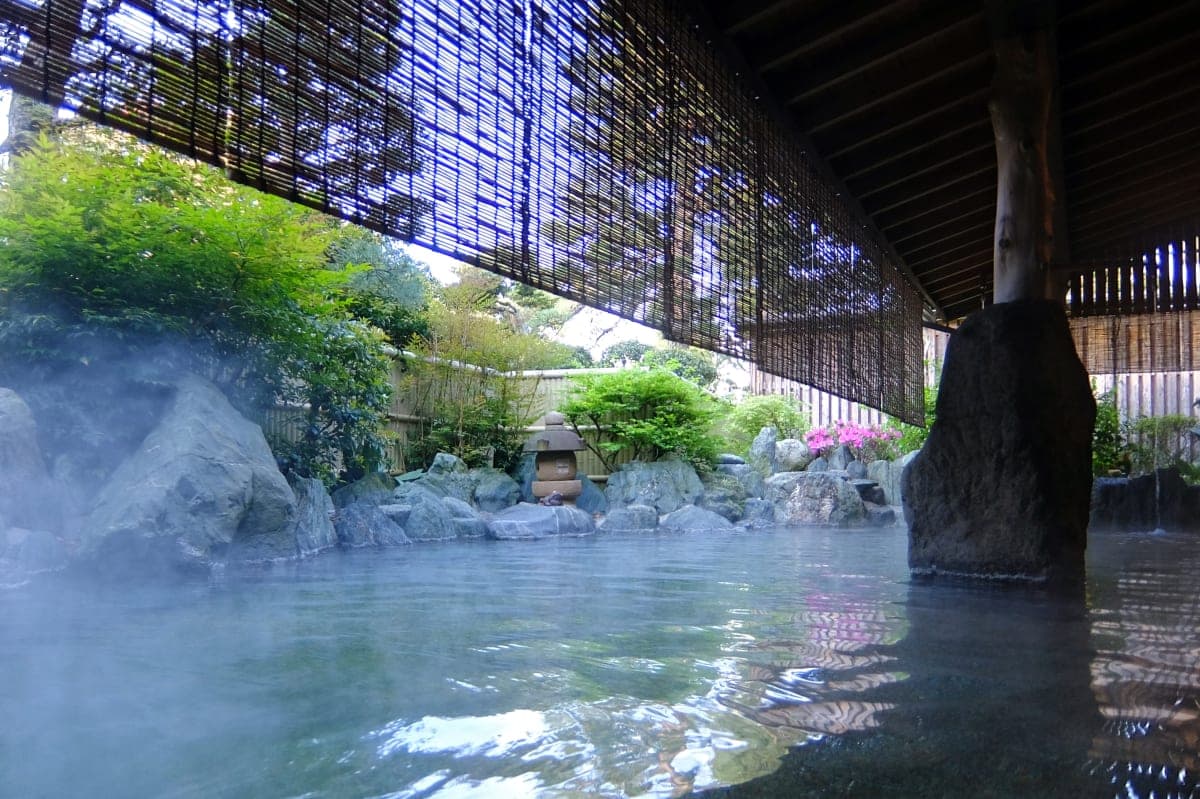
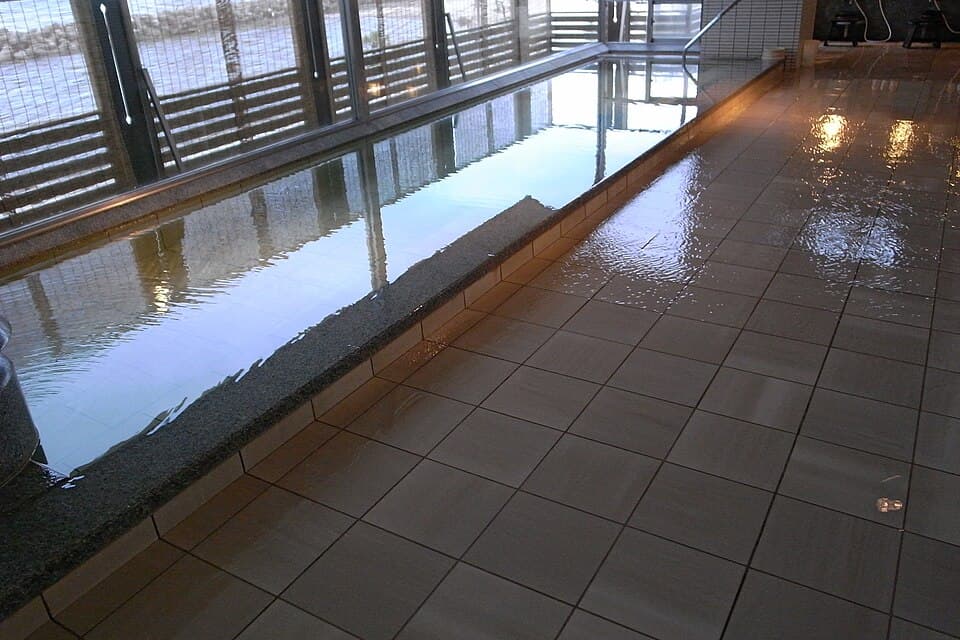
The baths themselves use the cooled and blended spring water, which still arrives to your skin at a proper soaking temperature. Because the source is pure sodium chloride, the water has a faint, clean saltiness on your lips and a substantial warmth that does not fade quickly once you are out. Your skin will feel slightly tight and smooth in the way that sea water leaves it after swimming. The town has a small covered walkway along the riverbank with an outdoor ashiyu footbath built into the stone beside the water, and on cold mornings the sight of twenty people sitting on wooden benches with their feet in the steaming channel, watching the river run past, is about as restful a scene as Japan produces.
The San'in Coast just to the north is a UNESCO Global Geopark, and the sea cliffs at Takeno or the sea stacks at Kasumi are within thirty minutes by car or bus. Yumura works well as a base for that coastline rather than just a destination unto itself. The small town has maybe a dozen inns and no big resort hotels. Most of the ryokan are built right against the river, their outdoor baths cantilevered over the water so that you can listen to the current below while you sit in the heat above it. The combination of that near-boiling source spring steaming in the open air and the cold river running fast below the bath decks gives this place a physical aliveness that larger, more polished resort towns tend to lose.
How this spring compares
pH level
7.3
More alkaline than50% of Japan springs
More acidic than50% of Japan springs
Japan median7.3
Japan range1.2–11.3
n=121 springs
Max temperature
98°C
Hotter than93% of Japan springs
Japan median60°C
Japan hottest105°C
n=122 springs
Getting there
Take the JR San'in Main Line to Hamasaka Station, about 30 minutes from Kinosaki Onsen or 50 minutes from Tottori. From Hamasaka Station, take a Zentan Bus to Yumura Onsen. The ride takes about 30 minutes. Buses run roughly every 30-60 minutes.
Amenities
Towel rental
Locker
Restaurant
Café
Parking
Wheelchair access
English spoken
Tattoo-friendly
Private bath
Soap provided
Hair dryer
Location & nearby
Yumura Onsen, Yu, Shinonsen, Mikata District, Hyogo 669-6821
Himeji Station · 83.1 kmShinkansen
Moroyose Station · 8.6 km
Kutani Station · 8.5 km
Hamasaka Station · 8 km
Tajima (Hyogo/Kinosaki area) Airport · 27.6 km
Tottori Airport · 29.2 km
Tajima Airport · 27.6 km
Kyu Yumura Yubinkyoku Mae · 0 km
Honmachi · 0.1 km
Yumura Onsen · 0.2 km
Book a stay nearby
Hotels near Yumura
9+ optionsSpringsAtlas may earn a commission from bookings made through these links.
More springs in Kansai
1 / 13



Last verified:
Data: OpenStreetMap (ODbL) · local tourism agencies
Verified listing