
Public · Outdoor · Free
Kawayu Onsen
川湯温泉
73°CPublic BathOutdoorsodium-bicarbonatesodium-chlorideNatural PoolFree entry
40–73°CWater temp
—pH
FreeEntry fee
PublicBathing type
—Opening hours
About this spring
A hot spring village in the Akan-Mashu National Park of eastern Hokkaido, where the Io River itself is geothermally heated by the active volcano Atosanupuri above it. The river runs steaming and acidic through the village. In midwinter, from late October to late February, sections of the riverbed are dug out to form the Sennin-buro: a massive seasonal outdoor communal bath that can hold dozens of people at once.
Data: Wikipedia (CC BY-SA 4.0) · OpenStreetMap (ODbL)
Highlights
- Sennin-buro seasonal riverbed bath
- Geothermally heated river
- Active volcano above
- pH 1.7 acidic water
Suitability
Tattoo policy
Welcome
Children policy
Family-friendly
Altitude
100m
Mineral chemistry
Bicarbonate
Benefits
Bicarbonate springs (sodium bicarbonate, calcium bicarbonate, or hydrogen carbonate) are particularly effective for skin conditions. The bicarbonate ions cleanse and soften the skin surface, removing excess sebum without stripping the skin's acid mantle. These springs are traditionally recommended for acne-prone skin and as a gentle option for sensitive skin types. The water has a characteristically clean, soft feel.
Note
Bicarbonate springs are generally among the most gentle and well-tolerated onsen types. Those with very dry skin may wish to apply moisturiser after bathing, as the cleansing effect can temporarily reduce surface oils.
Sodium Chloride (Salt)
Benefits
Sodium chloride springs — essentially natural saltwater baths — are celebrated for their warming and moisturising effects. The salt forms a thin film on the skin after bathing that slows moisture evaporation, keeping skin hydrated longer than a freshwater bath. This "heat-retaining" property means bathers stay warm for significantly longer after leaving the water, making these springs especially popular in winter. Salt springs are among the most accessible for first-time onsen visitors.
Note
Those with high blood pressure or heart conditions should consult a doctor before bathing, as the warming effect increases circulation. Avoid immersing open wounds. The salt will sting slightly in eyes — take care when submerging.
History
The Ainu people had long used the volcanic sulfur from Mount Iwo as tinder and kindling.
Modern development began in 1877 when rising demand for sulfur led to a commercial mining operation at the mountain. A narrow-gauge railway connection to Shibecha was completed in 1887, the second railway in all of Hokkaido. The Senmo Main Line reached the village in 1930, bringing the first recreational tourists. Akan National Park was designated in 1934. Sulfur mining continued until 1963, after which the economy shifted entirely to hot spring tourism.
Local guide
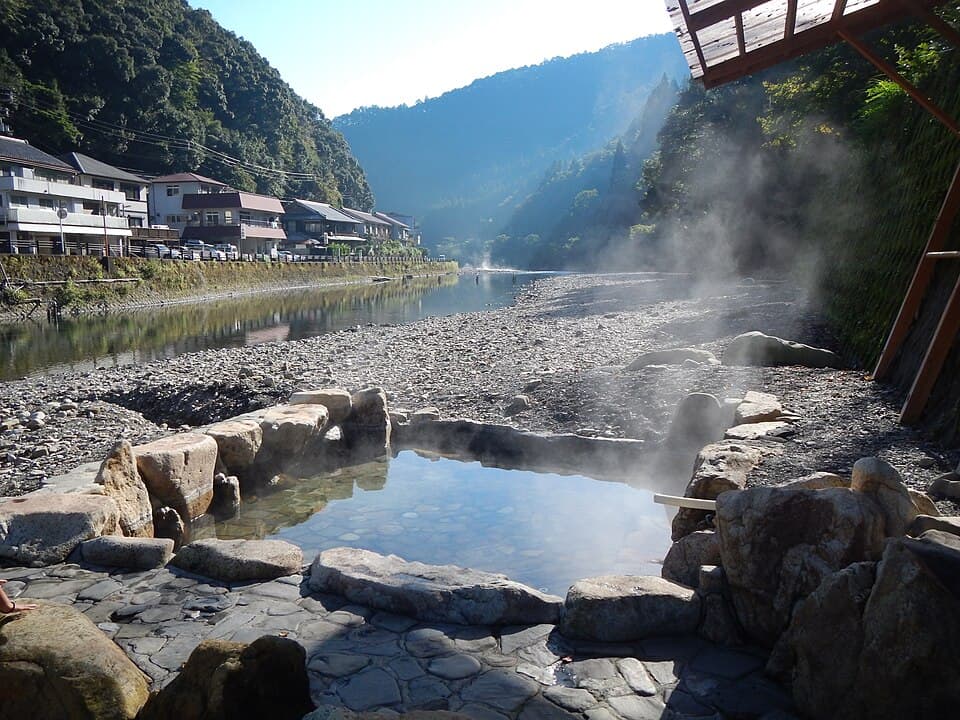
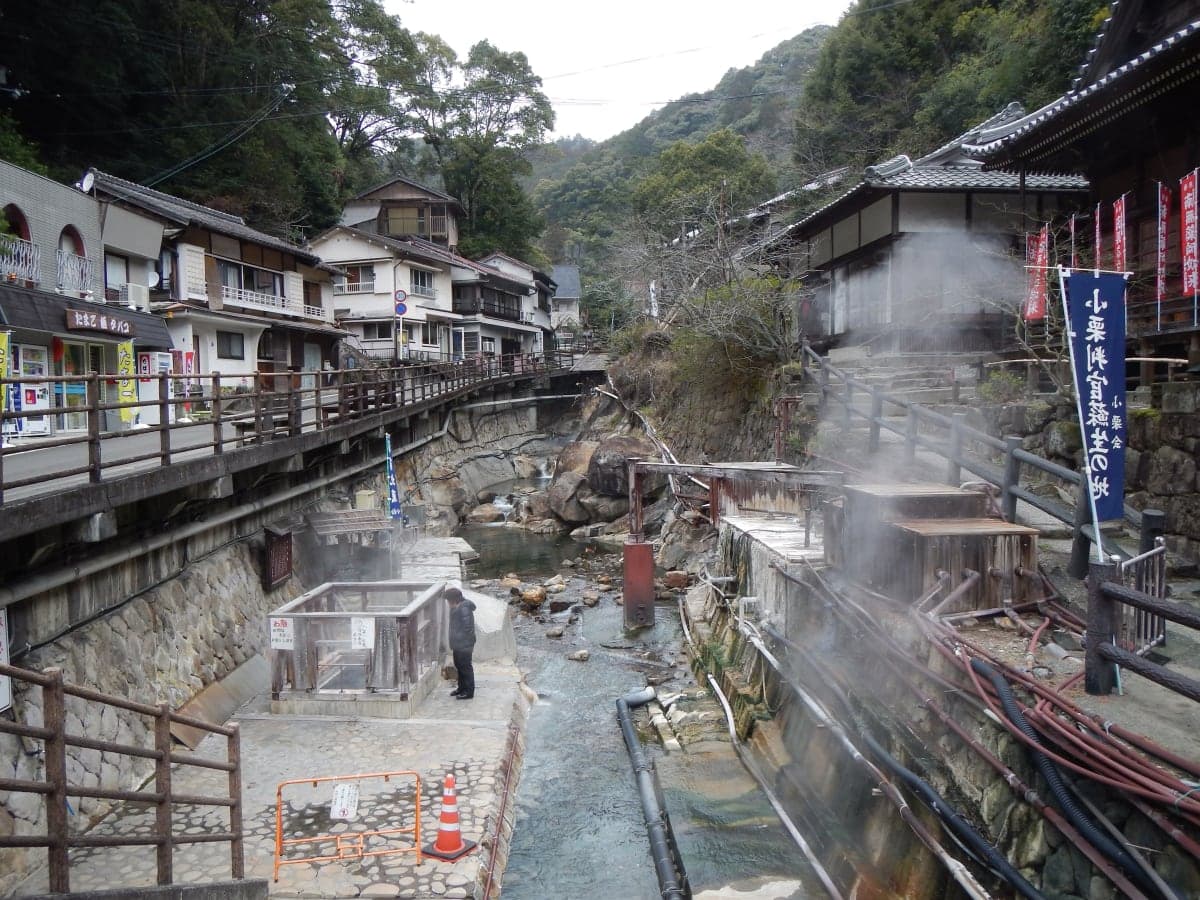
The Kumano Kodo pilgrimage trail has been drawing walkers through the Kii Peninsula for over a thousand years, and if you follow the Nakahechi route south from the Hongu Taisha grand shrine, the path eventually brings you down to the banks of the Oto River at Kawayu Onsen. The river itself is the bath here. Not a bath beside the river, not a bathhouse with river views, but the actual river, where hot spring water seeps up directly through the gravel riverbed and mixes with the cold current flowing down from the Yoshino mountains above.
In summer and early autumn you can dig your own pool in the river gravel with a small shovel. The moment you break the surface, warm water percolates in from below at around 73 degrees. You then divert a trickle of the cold river alongside it to bring the temperature down to something comfortable. The hot water carries sodium bicarbonate and sodium chloride pulled from deep volcanic rock, and the mix on your skin is soft and faintly alkaline, the kind of water that leaves you feeling cleaned from inside the pores rather than on top of them. Swimmers who have bathed in rivers all over Japan describe the combination of current and thermal upwelling as something genuinely hard to replicate.
In winter, from December through February, the municipality dams the Oto River with sandbags and creates the Sennin-buro, a communal outdoor pool roughly 40 meters by 15 meters and 60 centimeters deep. The name means the bath of a thousand people. The dam pushes the water level up so the hot spring seeps spread evenly across a huge shallow pool that is technically too large to heat entirely, meaning the temperature varies from patch to patch. You have to explore on your feet to find the warmest pockets. The sky above is wide and dark in the evenings, with no urban light pollution within dozens of kilometers.
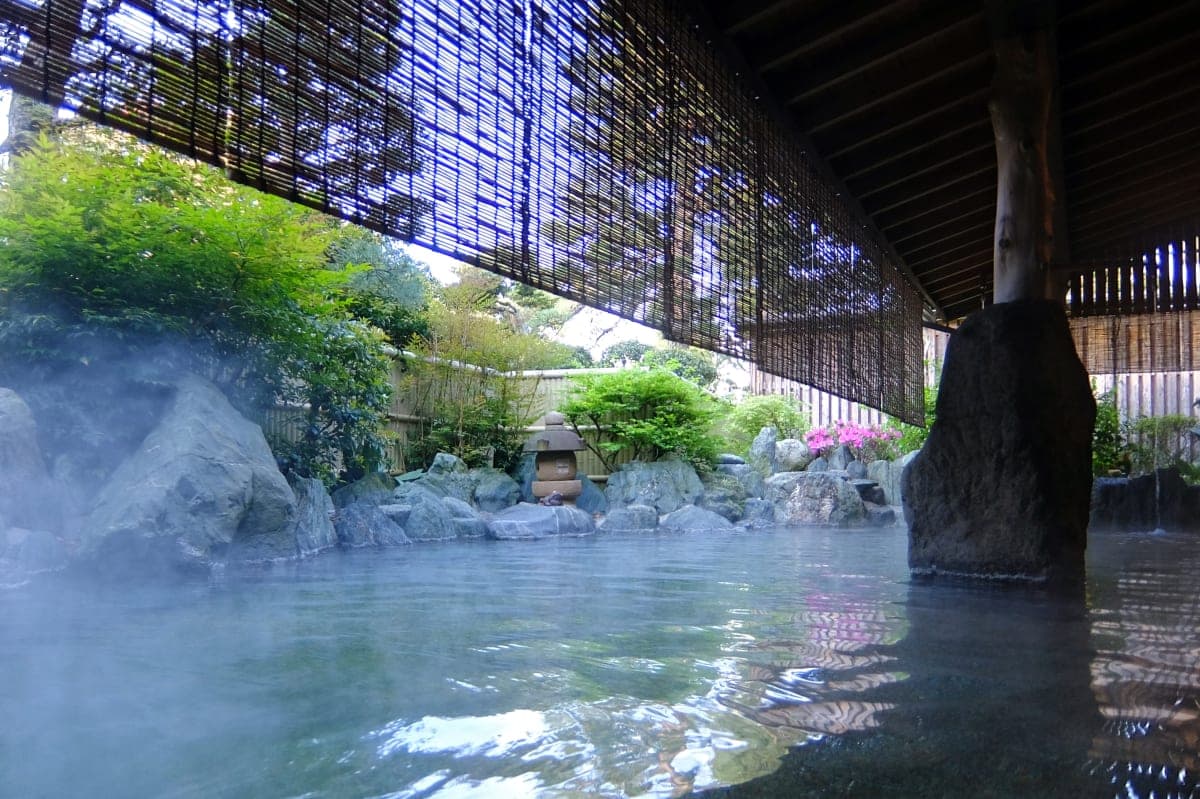
Kawayu Onsen village is small, eight or ten ryokan on the road above the riverbank, most of them old and unpretentious. The ryokan baths are good but the free river bathing is what people come for. The Kii Peninsula is not easy to reach from Tokyo or Osaka, but the combination of the ancient pilgrimage roads through cryptomeria forest, the Kumano Taisha shrines, and a river that turns into a hot spring in winter makes the journey feel entirely worth the effort.
How this spring compares
Max temperature
73°C
Hotter than68% of Japan springs
Japan median60°C
Japan hottest105°C
n=122 springs
Getting there
From Kushiro, take the JR Senmo Main Line to Kawayu-Onsen Station. The journey takes about 1 hour 20 minutes. From the station, take a local bus or taxi to the Kawayu Onsen village area. Driving from Kushiro takes about 1 hour 30 minutes via National Route 391.
Amenities
Towel rental
Locker
Restaurant
Café
Parking
Wheelchair access
English spoken
Tattoo-friendly
Private bath
Soap provided
Hair dryer
Location & nearby
Kawayu Onsen, Tanabe, Wakayama
Kameya-mae · 0.1 km
Nanki-Shirahama Airport · 41.3 km
Kansai International (Osaka) Airport · 84.3 km
Motomiyakyukyu Helipad · 2.6 km
Kameya-mae · 0.1 km
Kawayu Onsen · 0.2 km
Fujiya-mae · 0.2 km
Book a stay nearby
Hotels near Kawayu
9+ optionsSpringsAtlas may earn a commission from bookings made through these links.
More springs in Kansai
1 / 13




Last verified:
Data: OpenStreetMap (ODbL) · local tourism agencies
Verified listing