Public · Indoor & Outdoor · ¥320
Nachikatsuura Onsen
那智勝浦温泉
62°CPublic BathIndoor & Outdoorsodium-chloridesimple-thermal
4.1· 1,300 reviewsvia Google
38–62°CWater temp
7.6pH
¥320 (~$2)Entry fee
PublicBathing type
—Opening hours
About this spring
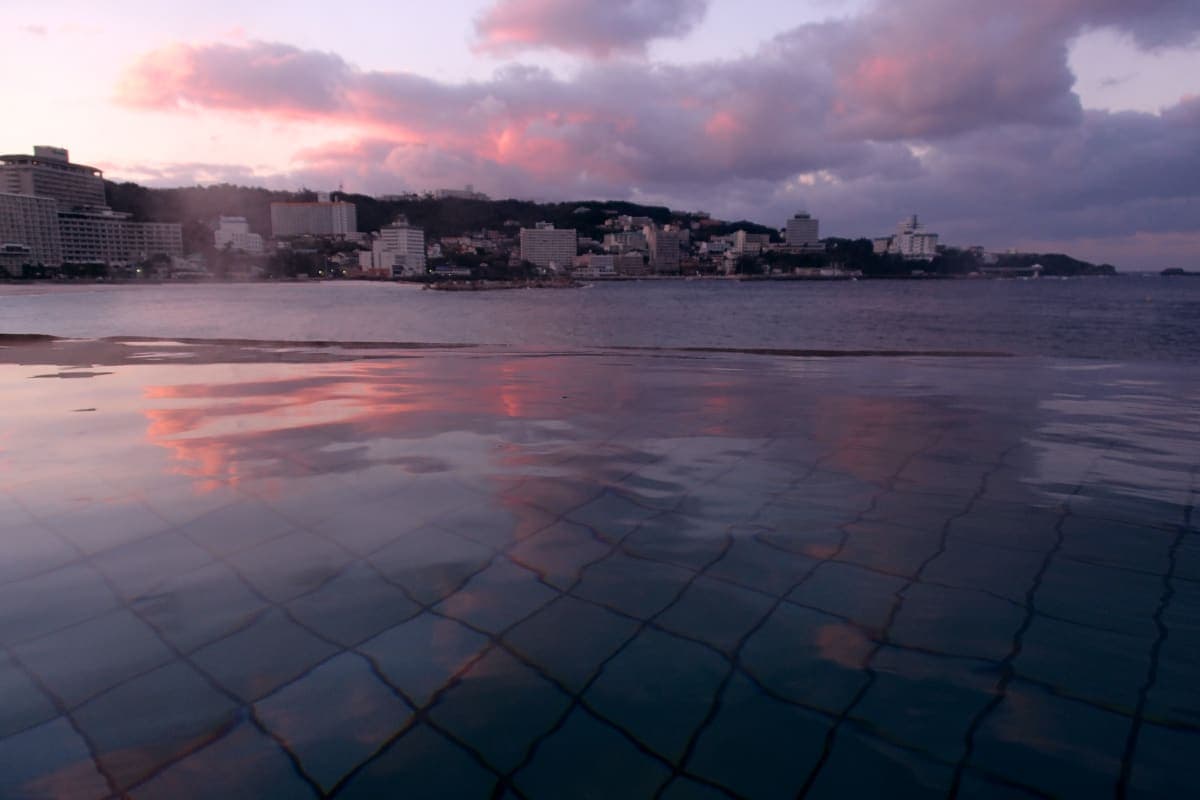
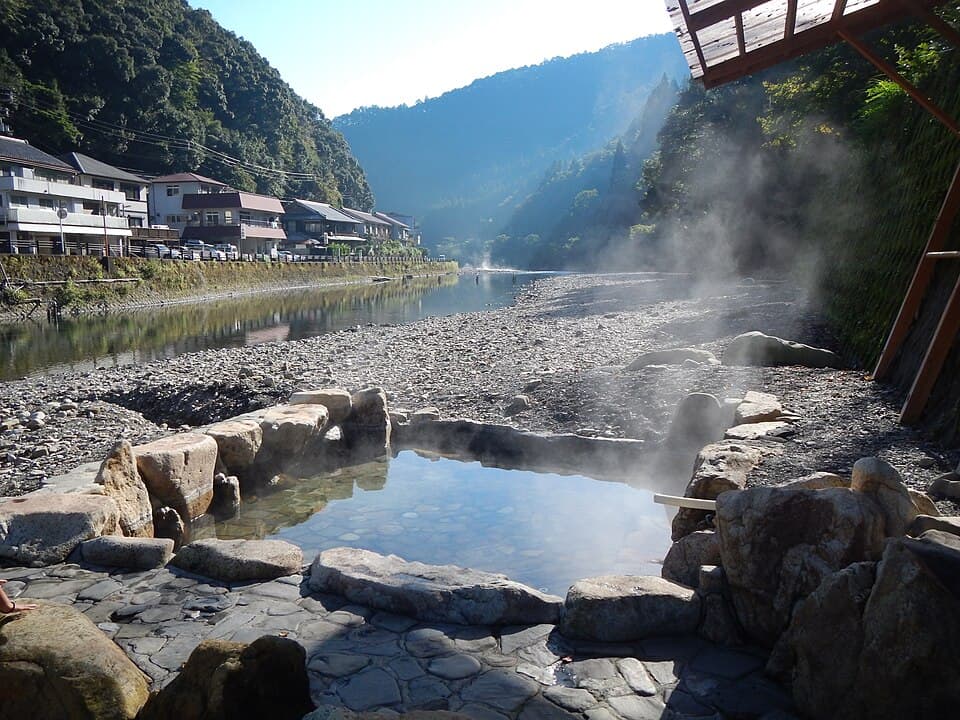
A resort onsen town on the Kii Peninsula, not far from Nachi Falls, Japan's tallest waterfall. The harbor town sits on the ancient Kumano Kodo pilgrimage trail. Some baths here give you views of the Pacific. Some give you views of the sacred waterfall. Very few places in Japan offer that combination.
Data: Wikipedia (CC BY-SA 4.0) · OpenStreetMap (ODbL)
Highlights
- Nachi Falls views
- Kumano Kodo pilgrimage trail
- Pacific ocean baths
- Fresh bluefin tuna harbor
Suitability
Tattoo policy
Not permitted
Children policy
Family-friendly
Altitude
5m
Mineral chemistry
Sodium Chloride (Salt)
Benefits
Sodium chloride springs — essentially natural saltwater baths — are celebrated for their warming and moisturising effects. The salt forms a thin film on the skin after bathing that slows moisture evaporation, keeping skin hydrated longer than a freshwater bath. This "heat-retaining" property means bathers stay warm for significantly longer after leaving the water, making these springs especially popular in winter. Salt springs are among the most accessible for first-time onsen visitors.
Note
Those with high blood pressure or heart conditions should consult a doctor before bathing, as the warming effect increases circulation. Avoid immersing open wounds. The salt will sting slightly in eyes — take care when submerging.
Simple Thermal
Benefits
Simple thermal springs (単純温泉) have a lower dissolved mineral content than other spring types but are valued for the pure therapeutic effect of heat immersion itself. The warmth increases core body temperature, promotes sweating, eases muscle tension, and improves peripheral circulation. Simple thermal springs are the most common onsen type in Japan and are recommended as the gentlest introduction to onsen bathing — suitable for a wide range of health conditions and ages.
Note
Simple thermal springs are the most broadly accessible onsen type. Standard precautions apply: avoid bathing within 30 minutes of eating, keep soaks to 10–15 minutes for first-timers, and hydrate before and after.
History
This coastline has been drawing pilgrims for over a thousand years.
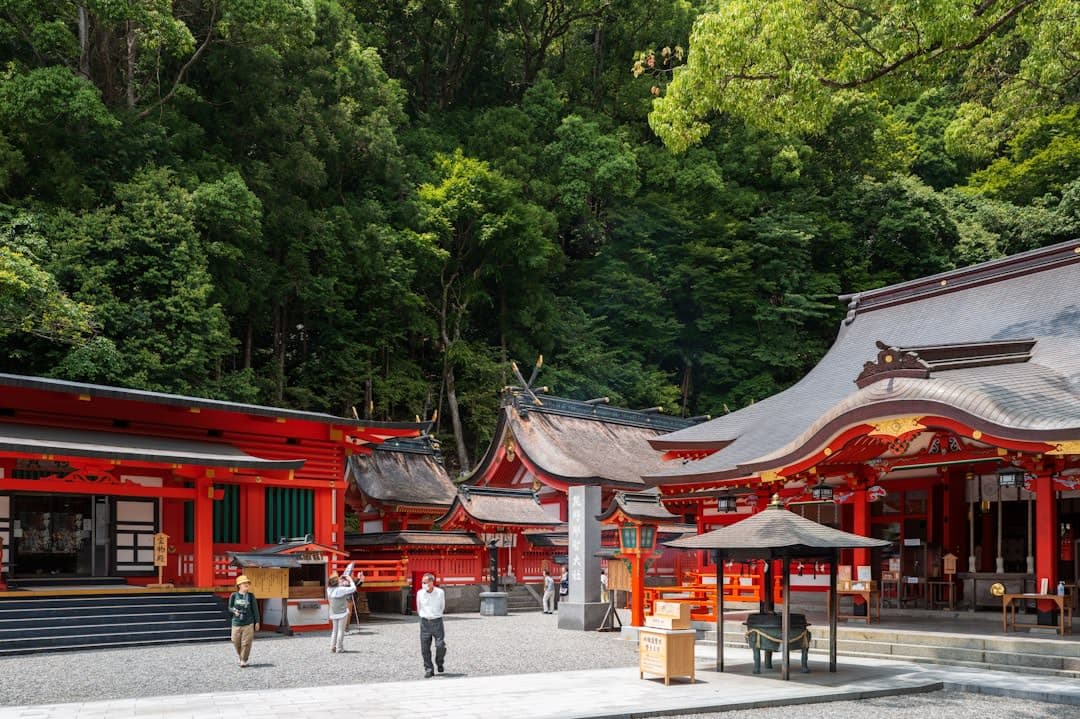
Kumano Nachi Taisha, one of the three Grand Shrines of Kumano, stands a few kilometers inland. The falls it oversees have been a place of nature worship since before Buddhism arrived in Japan. The shrine's founding is traditionally dated to 317 AD. Pilgrims arriving by sea at Katsuura Bay would bathe in the coastal springs to purify themselves before climbing to the shrine. The town itself was formed in 1955 from a merger of Nachi and Katsuura villages. In the postwar decades, large resort hotels rose along the clifftops above the bay. Today the combination of ocean-facing hot spring bathing and world-heritage mountain scenery makes this one of the more unusual destinations on the Kii coast.
Local guide
The JR Kuroshio limited express from Osaka takes just under four hours to reach Kii-Katsuura Station, and for most of that journey you are following the coast of the Kii Peninsula as it gets progressively wilder. The cliffs get taller, the bays get deeper, and the forest behind the shoreline thickens into the kind of dark, wet, cedar-and-camphor growth that has covered these mountains for a thousand years of pilgrimage. When you step off the train at Kii-Katsuura, the air is warm, heavy with salt, and faintly sweet with something you cannot quite name. The harbor is immediately below the station, and on a clear day you can see a few small rocky islands sitting low in the deep blue water just offshore.
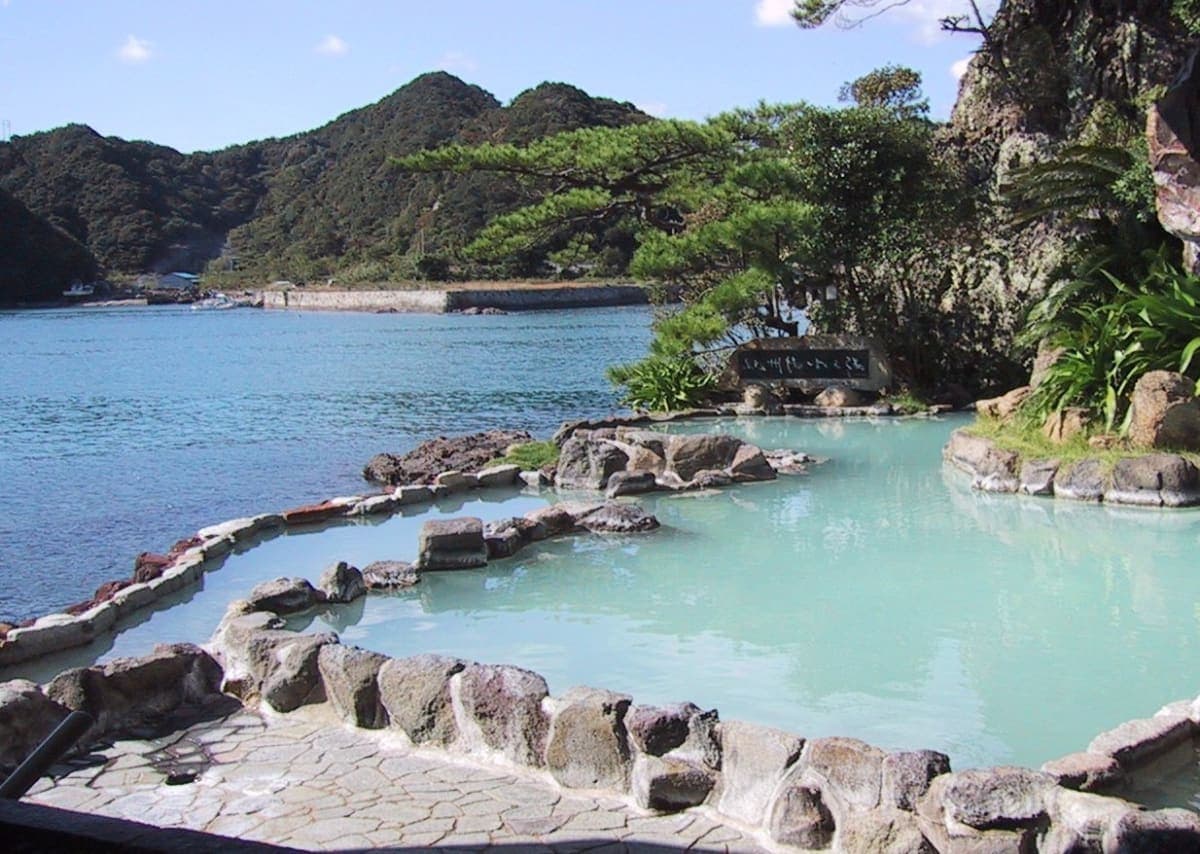
The hot spring water in the Nachikatsuura area runs sodium chloride, clear and neutral at pH 7.6, and it flows in several places along this small coastal town. The water is warm and fairly dense on the skin, with the kind of slight salinity that makes your body feel faintly supported in the bath rather than just submerged. Temperatures range widely across the different facilities, from a gentle 38 degrees to nearly 62 at the hottest source, so it is worth asking before you commit. The ocean is the real context for the bathing here. Some of the most sought-after baths are literally inside the rocky peninsula, carved into sea caves where waves push through gaps in the stone floor and the Pacific light filters in sideways in the morning.
Hotel Urashima's Bokido bath is the most famous of these cave baths, its name translating roughly as the cave where one forgets to return home. You approach it by crossing to the hotel's peninsula by boat from the harbor, a five-minute crossing that already puts you in a different frame of mind. The cave is naturally formed, high-ceilinged, and open at the ocean-facing side, so you are bathing while waves break below you and seabirds pass at eye level. It does not feel like a hotel amenity. It feels like something the sea hollowed out and the town was wise enough to leave mostly alone.
Above the town, forty minutes by bus, Nachi Falls drops 133 meters in a single unbroken plunge, the longest single-fall waterfall in Japan, and it has been drawing people here for purification and prayer for over 1,300 years. The Kumano Nachi Taisha shrine sits at its base, one of the three grand shrines of the Kumano Kodo pilgrimage route. Coming down from the falls and back to the harbor, then crossing to the cave bath as the afternoon light changes on the water, is a genuinely full day in a place that has been managing the business of cleansing people, spiritually and literally, for a very long time.
How this spring compares
pH level
7.6
More alkaline than64% of Japan springs
More acidic than33% of Japan springs
Japan median7.3
Japan range1.2–11.3
n=121 springs
Max temperature
62°C
Hotter than54% of Japan springs
Japan median60°C
Japan hottest105°C
n=122 springs
Getting there
JR Kuroshio limited express→ Kii-Katsuura3h 30m
Walk to bathhouse
Total: 3h 35m
Take the JR Kuroshio limited express from Osaka to Kii-Katsuura Station. The ride takes about 3.5 hours. The onsen district is within walking distance or a short taxi ride from the station.
Amenities
Towel rental
Locker
Restaurant
Café
Parking
Wheelchair access
English spoken
Tattoo-friendly
Private bath
Soap provided
Hair dryer
Location & nearby
Nachikatsuura-cho, Higashimuro-gun, Wakayama 649-5334
Kii-Katsuura Station · 0 km
Kii-Tenma Station · 1.1 km
Nachi Station · 1.8 km
Yukawa Station · 2.6 km
Kansai International (Osaka) Airport · 110.1 km
Nanki-Shirahama Airport · 53.5 km
Nachigyoko Helipad · 2 km
Kii-Katsuura Sta. · 0.1 km
Katsuurakyoku-mae · 0.1 km
Katsuura Sta. · 0 km
Book a stay nearby
Hotels near Nachikatsuura
27+ optionsSpringsAtlas may earn a commission from bookings made through these links.
More springs in Kansai
1 / 13



Last verified:
Data: OpenStreetMap (ODbL) · local tourism agencies
Verified listing