
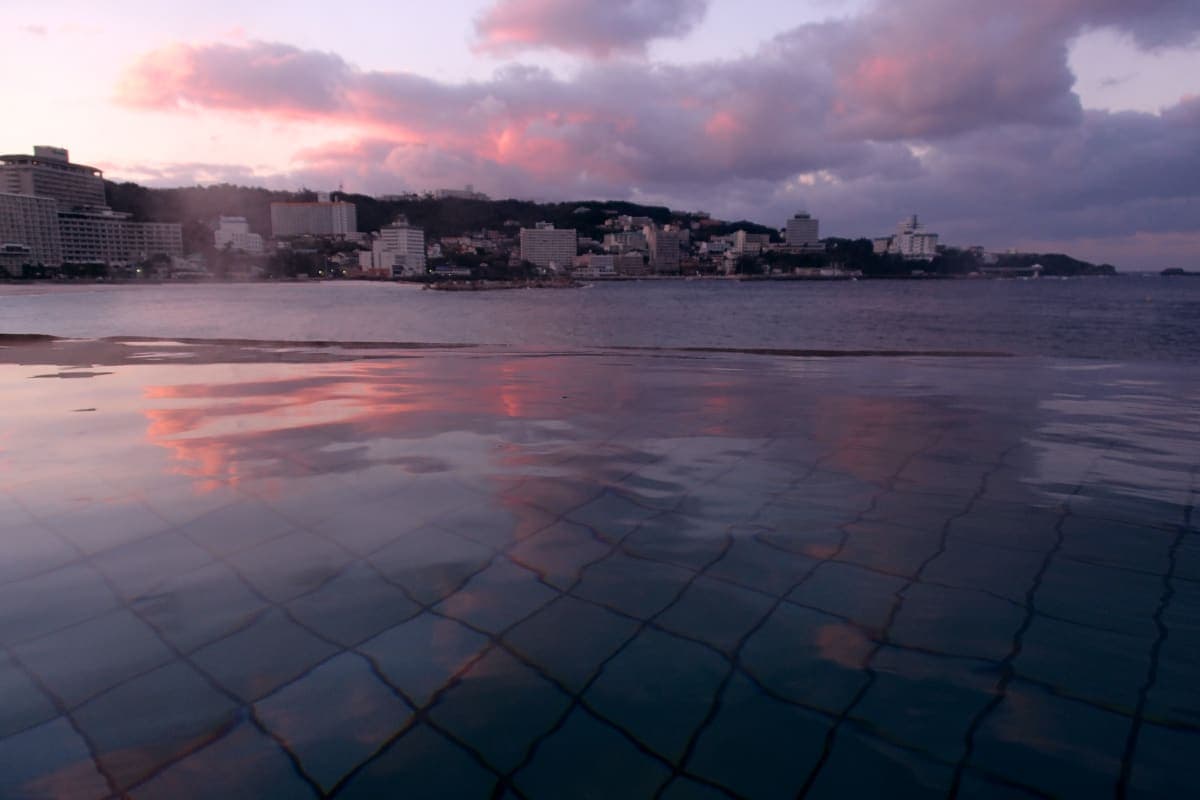

Public · Indoor & Outdoor · ¥200
85–94°CWater temp
7.2pH
¥200 (~$1)Entry fee
PublicBathing type
—Opening hours
About this spring
A lakeside hot spring resort on the shore of Lake Togo, a coastal lagoon in Yurihama on the San'in coast of Tottori Prefecture. The ryokan here are built so close to the lake that guests can fish from their room windows. The lake shifts color through the day as the light changes. The spring water rises from the lakebed itself.
Data: Wikipedia (CC BY-SA 4.0) · OpenStreetMap (ODbL)
Highlights
- Fish from room window
- Lake color shifts through day
- Spring from the lakebed
- Sea of Japan coastline
Suitability
Tattoo policy
Not permitted
Children policy
Family-friendly
Altitude
20m
Mineral chemistry
Sodium Chloride (Salt)
Benefits
Sodium chloride springs — essentially natural saltwater baths — are celebrated for their warming and moisturising effects. The salt forms a thin film on the skin after bathing that slows moisture evaporation, keeping skin hydrated longer than a freshwater bath. This "heat-retaining" property means bathers stay warm for significantly longer after leaving the water, making these springs especially popular in winter. Salt springs are among the most accessible for first-time onsen visitors.
Note
Those with high blood pressure or heart conditions should consult a doctor before bathing, as the warming effect increases circulation. Avoid immersing open wounds. The salt will sting slightly in eyes — take care when submerging.
Sulfate
Benefits
Sulfate springs (硫酸塩泉) contain dissolved calcium, sodium, or magnesium sulfate and are among the most therapeutically versatile spring types. Calcium sulfate springs are traditionally associated with wound healing and post-surgical recovery — the calcium ions support tissue repair and the sulfate has mild astringent properties. Sodium sulfate springs are linked to liver and digestive function; they are one of the few spring types used in Japan's national spa therapy clinics for chronic digestive complaints. The water typically has a clean, slightly bitter mineral taste.
Note
Sulfate springs are generally well-tolerated. Those with kidney stones of the calcium oxalate type should consult a doctor before bathing regularly. Sodium sulfate springs can have a mild laxative effect in sensitive individuals — stay hydrated.
History
A document from 1749 describes residents drawing hot spring water through bamboo tubes inserted into the lake bed.
In 1843 the Tottori Domain gave formal permission to harvest the waters for medicinal use, one of the earliest documented medical authorizations of a hot spring in the San'in region. Development as a resort began in 1868 at the start of the Meiji era. A communal bathtub was built on an island in the middle of the lake in 1872. The San'in Main Line reaching Matsuzaki Station at the close of the Meiji period transformed the resort into a destination that received 10,000 visitors a year.
Local guide
The San-in coast of Tottori is the part of Japan that travelers on the standard Kyoto-Hiroshima circuit mostly skip, and the towns along it benefit from that. From Kurayoshi, a small bus route follows the coast east to the edge of Lake Togo, a shallow brackish lagoon that sits between low hills on the landward side and a narrow sand bar separating it from the Japan Sea. The lake is four square kilometers of still water that changes color through the day, grey in the morning, green in the afternoon, orange at dusk, and the town of Yurihama wraps around its southern shore with its hotels and inns positioned to catch the lake view at every angle.
The water at Togo Onsen comes from an unusual origin. The spring sources are located under the lakebed itself, which makes Togo one of the only onsen towns in Japan where the hot water rises directly through lake sediment before being piped to the inns. The spring is classified as sodium-calcium chloride and sodium sulfate, emerging at temperatures between 85 and 94 degrees Celsius at the source, which requires substantial dilution before bathing. It is clear in the tub, with a faint mineral quality that you taste if any gets on your lips. The sodium and calcium content gives it the same body-warming characteristic you find in coastal salt springs, and the sulfate component adds a slight slipperiness that makes your skin feel finished after a soak.
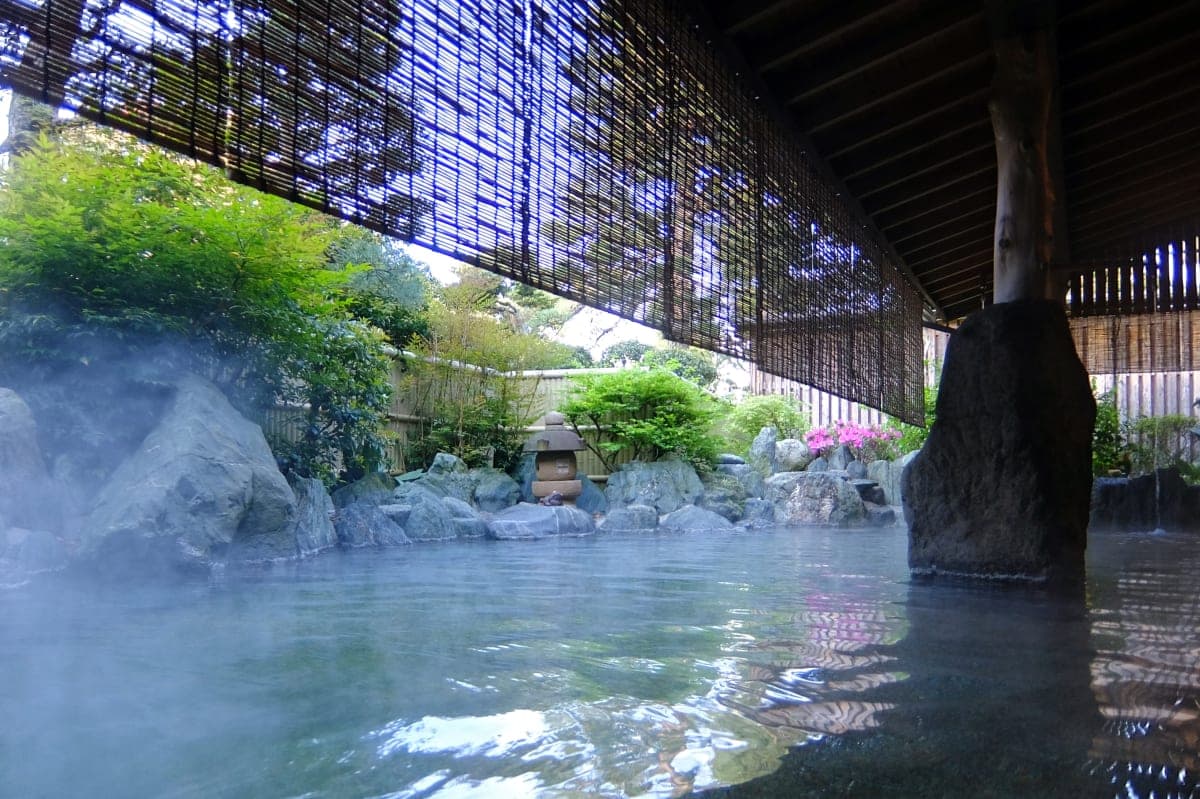
The cultural detail that distinguishes Togo Onsen from the other lake-edge onsen towns of western Japan is the Hanakairo plum orchard event held in the surrounding hills each February and March. The hillsides above the lake hold several thousand ume plum trees, and when they flower in late winter, the white and pink blossoms open while snow still sits on the higher ground, and the combination of cold air, blossom smell, and lake view from the outdoor baths is specific to this time and place. Sitting in an outdoor bath facing the lake while the plum smell comes through the steam is the experience that repeat visitors to Togo tend to describe first.
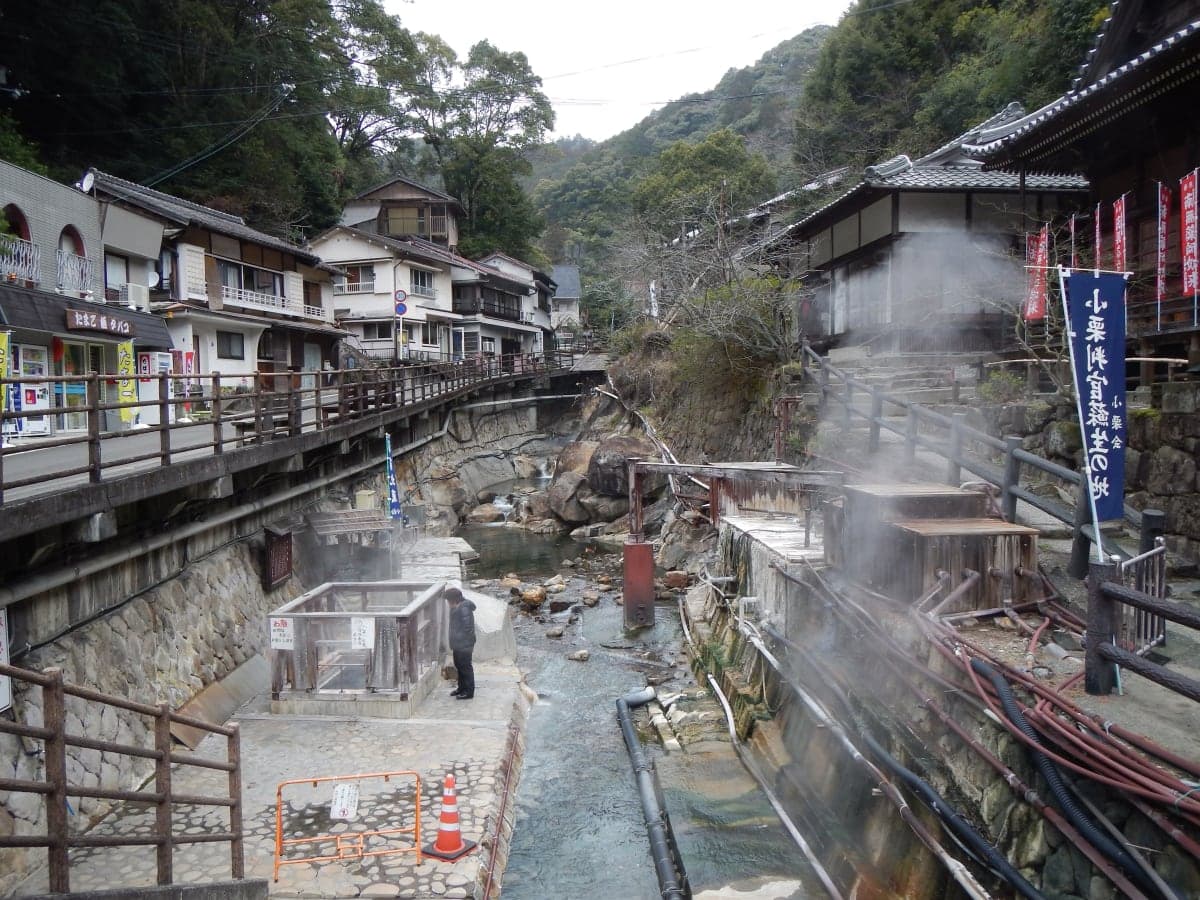
The town itself is small and unhurried. The lakefront promenade, the public footbath pavilion near the central bus stop, and the wooden walkways connecting the older inns all give Togo the feeling of a place that attracts people who already know what they want rather than visitors who need to be sold on something. The coastal road continues east to Misasa Onsen and the Tottori sand dunes if you want to keep moving, but Togo is a reasonable argument for staying put. The view from any lakeside outdoor bath at dusk, with the Japan Sea visible just beyond the sand bar and the hills settling into dark blue, is worth the detour from wherever you were going.
How this spring compares
pH level
7.2
More alkaline than41% of Japan springs
More acidic than50% of Japan springs
Japan median7.3
Japan range1.2–11.3
n=121 springs
Max temperature
94°C
Hotter than89% of Japan springs
Japan median60°C
Japan hottest105°C
n=122 springs
Getting there
Take the JR San'in Main Line to Matsuzaki Station. From Tottori City the journey takes about 1 hour. Togo Onsen ryokan are within walking distance of the station on the southern shore of Lake Togo.
Amenities
Towel rental
Locker
Restaurant
Café
Parking
Wheelchair access
English spoken
Tattoo-friendly
Private bath
Soap provided
Hair dryer
Location & nearby
Togo Onsen, Yurihama, Tōhaku District, Tottori
Kurayoshi station · 4.9 km
Matsuzaki-ekimae (Matsuzaki Sta.) · 0 km
Okayama Station · 89.4 kmShinkansen
Shimohōjō Station · 8.5 km
Tomari Station · 5.5 km
Aoya Station · 10 km
Tottori Airport · 24.8 km
Yonago Kitaro Airport · 60.3 km
すいか空港 · 18.2 km
Matsuzaki Eki mae · 0.1 km
Matsuzaki Station · 0.1 km
More springs in Kansai
1 / 13



Last verified:
Data: OpenStreetMap (ODbL) · local tourism agencies
Stale listing