
Public · Indoor & Outdoor · ¥200
4.3· 1,858 reviewsvia Google
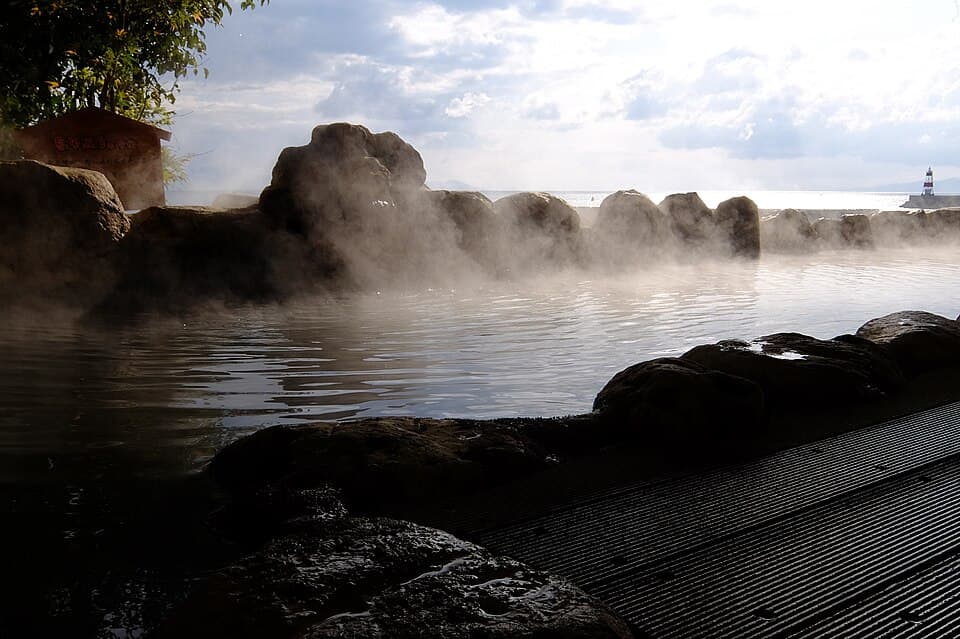
38–45°CWater temp
7.2pH
¥200 (~$1)Entry fee
PublicBathing type
—Opening hours
About this spring
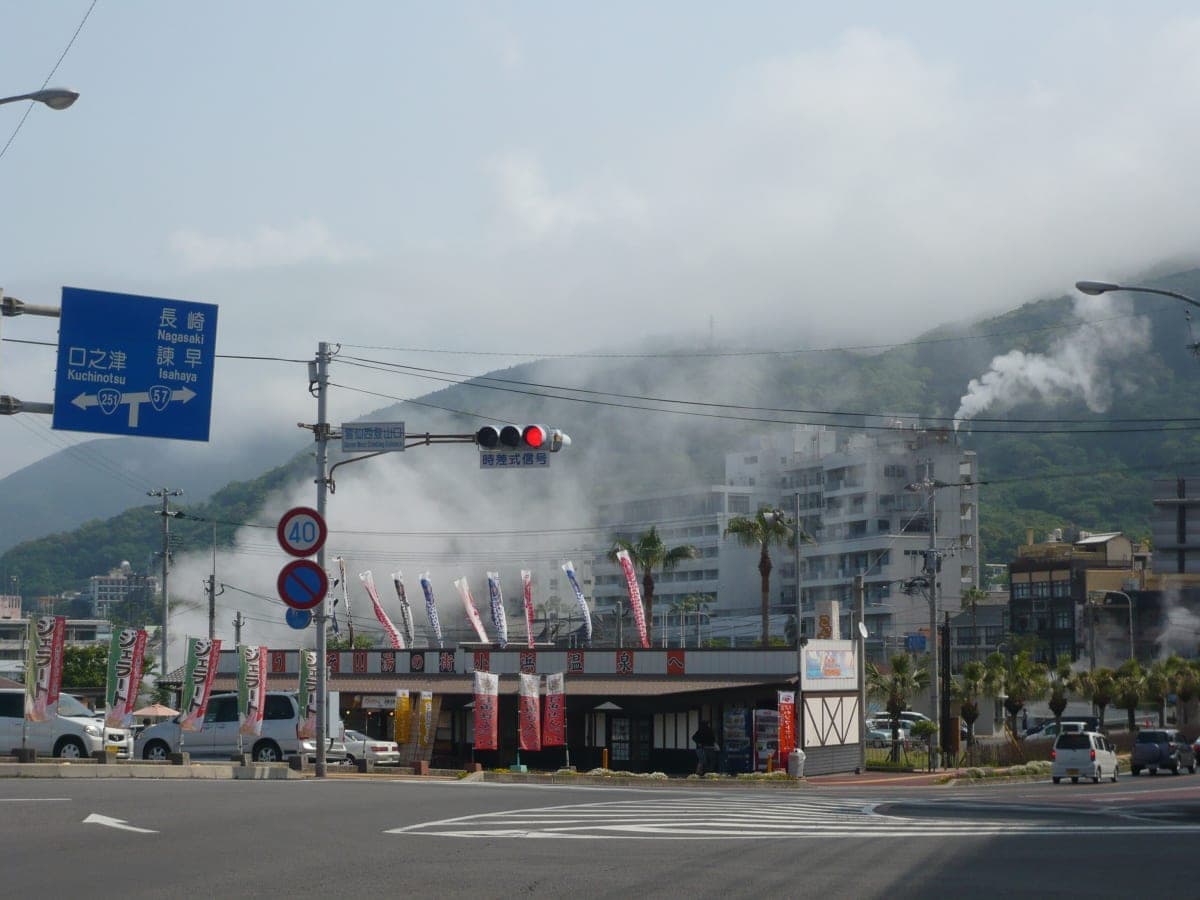
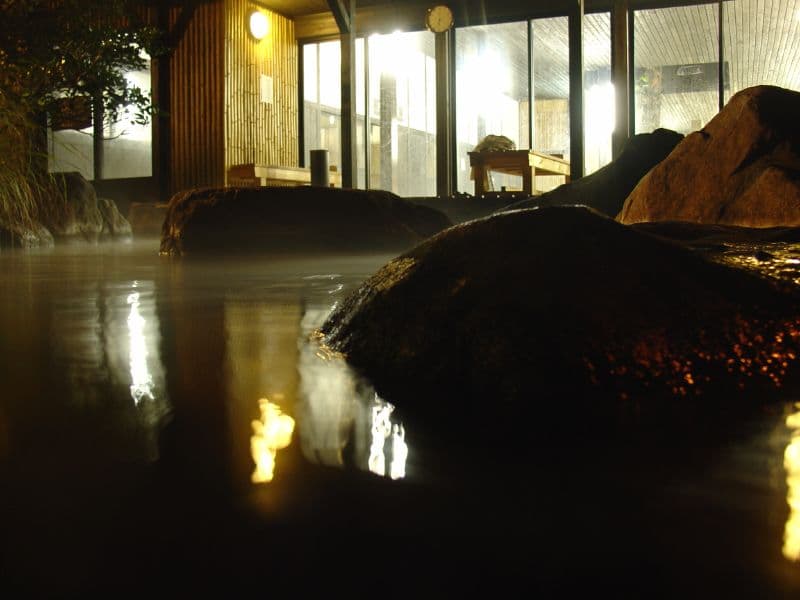
A historic spa town on the eastern coast of the Shimabara Peninsula in Nagasaki Prefecture, nicknamed the City of Water. Over 60 spring sites produce around 220,000 tonnes of spring water daily. The water flows openly through stone channels in the streets. The 1624 Shimabara Castle overlooks the town, and the surrounding landscape is shaped by the active volcano Mount Unzen.
Data: Wikipedia (CC BY-SA 4.0) · OpenStreetMap (ODbL)
Highlights
- Spring water through city streets
- Over 60 natural spring sites
- Shimabara Castle 1624
- Gateway to Mount Unzen
Suitability
Tattoo policy
Not permitted
Children policy
Family-friendly
Altitude
5m
Mineral chemistry
Sodium Chloride (Salt)
Benefits
Sodium chloride springs — essentially natural saltwater baths — are celebrated for their warming and moisturising effects. The salt forms a thin film on the skin after bathing that slows moisture evaporation, keeping skin hydrated longer than a freshwater bath. This "heat-retaining" property means bathers stay warm for significantly longer after leaving the water, making these springs especially popular in winter. Salt springs are among the most accessible for first-time onsen visitors.
Note
Those with high blood pressure or heart conditions should consult a doctor before bathing, as the warming effect increases circulation. Avoid immersing open wounds. The salt will sting slightly in eyes — take care when submerging.
History
Shimabara Castle was constructed between 1618 and 1625, establishing the city as a castle town.
The feudal lord Matsukura Shigemasa then persecuted the region's Christian community, and the resulting Shimabara Rebellion of 1637-1638 became one of the most consequential uprisings of the Edo period. In 1653, a later lord formally designated the area an onsen town and prohibited hunting near the springs. A catastrophic volcanic collapse in 1792 killed an estimated 15,000 people and permanently altered the city's hydrology, resulting in the extraordinary spring output the town has today. In 1967, a centralized hot spring management system was installed, piping water throughout the city.
Local guide
Getting to Shimabara requires a particular kind of patience. From Nagasaki, you take the JR line to Isahaya Station, then transfer to the private Shimabara Railway, which rattles east across the peninsula for about ninety minutes with Mount Unzen visible most of the way. The volcano is not dormant in the casual sense. It has erupted destructively within living memory, most recently in 1991, and the scorched hillside zones above the town are still visible from the train window. You arrive at Shimabara Station with that context already established.
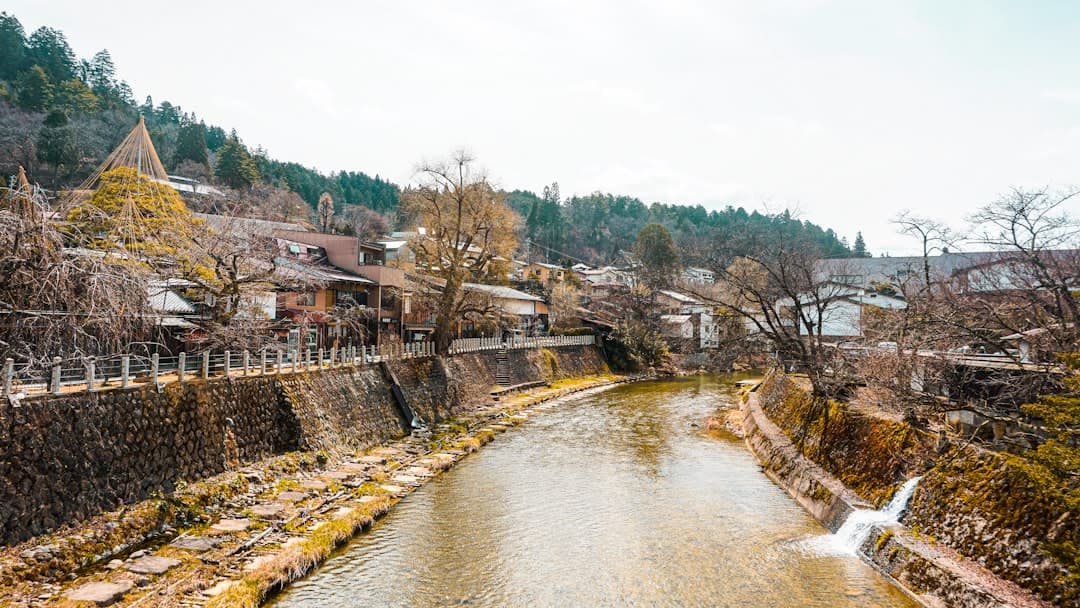
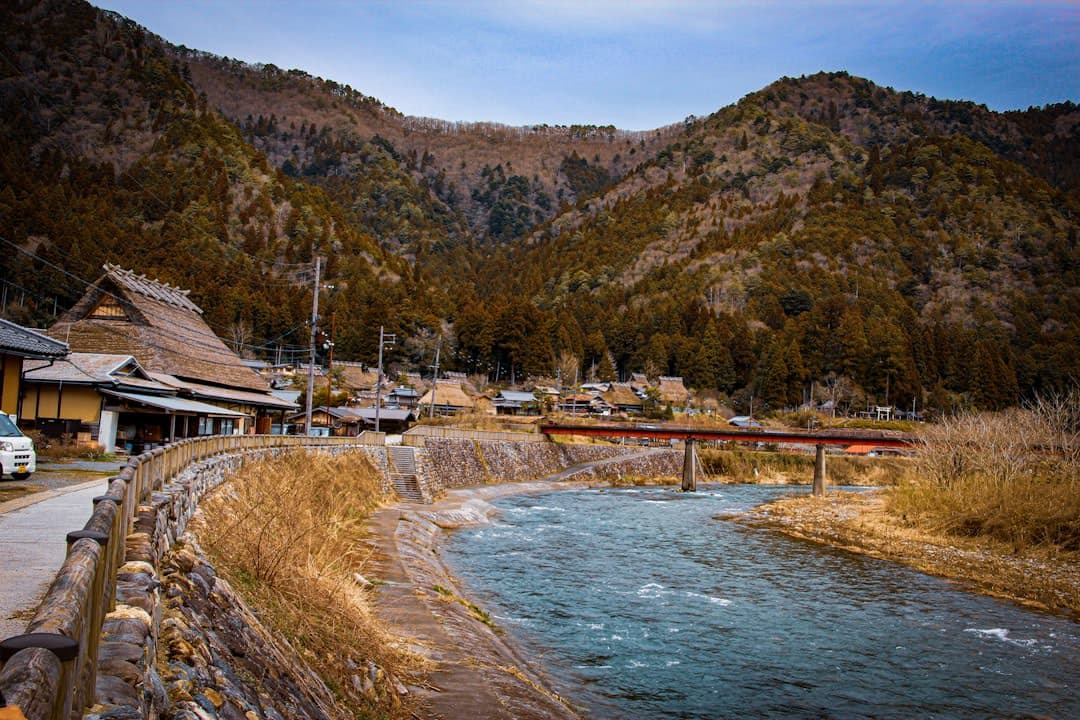
What the town looks like, though, comes as a surprise. Over sixty natural spring sites produce roughly 220,000 tonnes of fresh water every day, and much of that water runs openly through channels along the city streets. The Shinmachi district, a short walk from the castle, has narrow canals with colored carp swimming through them, fed by spring water filtered through the volcanic layers of Unzen. The water is soft and visually clear, rich in sodium bicarbonate, which gives it a faintly sweet character and a slickness against the skin. Locally it is called bijin-yu, beauty water. The bath temperature runs between 38 and 45 degrees, comfortable enough for long soaks.
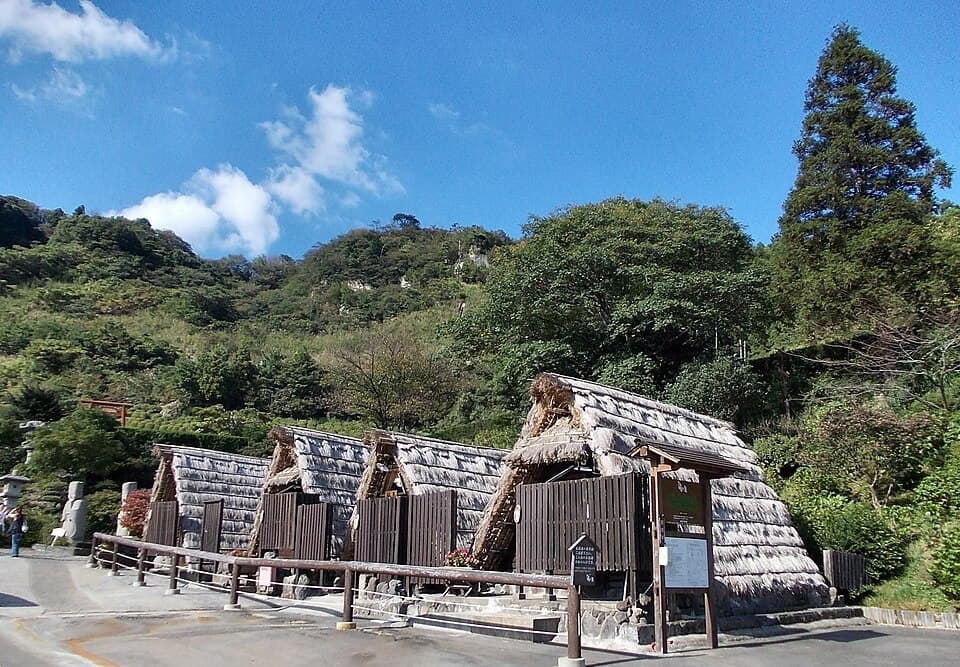
Shimabara Castle, the white-walled fortress built in 1624, rises above the town and connects it to one of the most violent episodes in Japanese history. The heavy taxation imposed to fund the castle's construction, combined with persecution of Christians in the region, set off the Shimabara Rebellion of 1637, a massive peasant uprising that ended in massacre at Hara Castle to the south. Three restored samurai houses stand in the Teppo-machi district along a small canal street near the castle walls, and they are open to the public without any theatrical presentation. Just three old houses by the water.
The most striking detail at Shimabara is also the simplest one. At Shimeiso Spring Garden, a preserved villa built directly over the spring sources, you can sit on the tatami floor with tea and look out at a pond where enormous koi move through water so clear you can see every scale. The spring water underneath the building keeps the pond at a constant temperature year-round. The carp have been here longer than most of the guests. It is the kind of place that takes about ten minutes to see and about a week to stop thinking about.
How this spring compares
pH level
7.2
More alkaline than41% of Japan springs
More acidic than50% of Japan springs
Japan median7.3
Japan range1.2–11.3
n=121 springs
Max temperature
45°C
Hotter than18% of Japan springs
Japan median60°C
Japan hottest105°C
n=122 springs
Getting there
Take the Nishi-Kyushu Shinkansen to Isahaya Station, then transfer to the Shimabara Railway for about 70 minutes to Shimabara Station. Visitors from Kumamoto can also take a passenger ferry from Kumamoto Port to Shimabara Port in about 30 minutes.
Amenities
Towel rental
Locker
Restaurant
Café
Parking
Wheelchair access
English spoken
Tattoo-friendly
Private bath
Soap provided
Hair dryer
Location & nearby
2-chōme-7331-1 Bentenmachi, Shimabara, Nagasaki 855-0802
REIKYŪKŌENTAIIKUKAN Station · 0.3 km
Shin-Tamana Station · 22.4 kmShinkansen
Shimabara-Funatsu Station · 0.6 km
Shimabara Station · 1.2 km
Shimabara-Kou Station · 1.5 km
Amakusa Airport · 39 km
Saga International Airport · 41.6 km
湯島ヘリポ−ト · 20.5 km
Shimabara-kō (Bus Stop) · 1.6 km
Momoyama · 0.4 km
Ion Shimabara-mae (Bus Stop) · 0.4 km
Book a stay nearby
Hotels near Shimabara
11+ optionsSpringsAtlas may earn a commission from bookings made through these links.
More springs in Kyushu
1 / 13


Last verified:
Data: OpenStreetMap (ODbL) · local tourism agencies
Verified listing