
Public · Indoor & Outdoor · ¥620
Hyotan Onsen
ひょうたん温泉
55°CPublic BathIndoor & Outdoorsodium-chloridecalcium-chloridesimple-thermal
4.4· 1,923 reviewsvia Google
42–55°CWater temp
7.8pH
¥620 (~$4)Entry fee
PublicBathing type
—Opening hours
About this spring
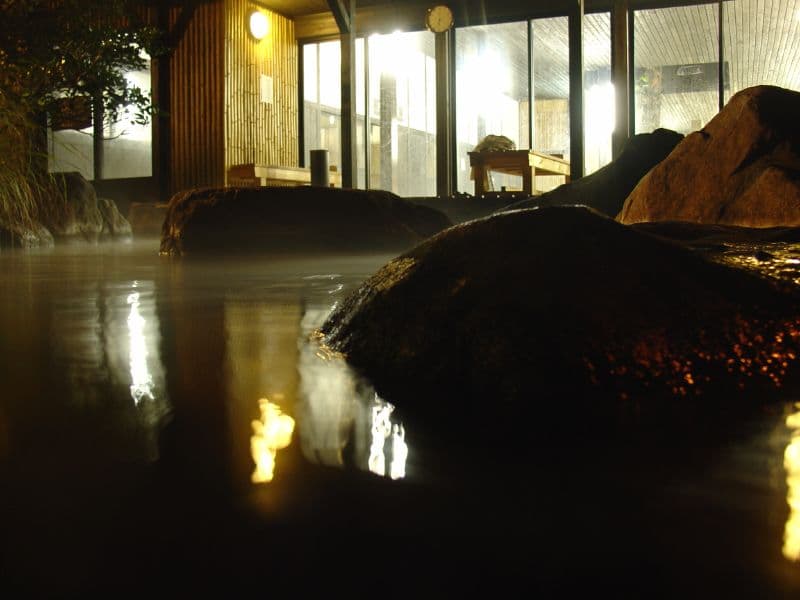
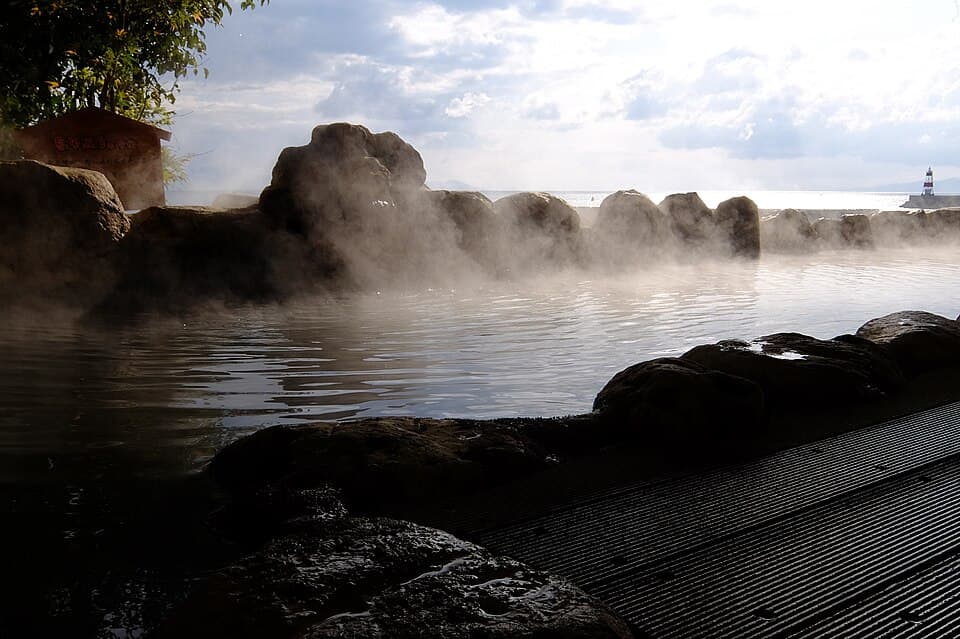
A much-loved public bathhouse in Beppu's Kannawa steam district offering seven distinct spring waters, a hot-sand bath, a waterfall pool, private family rooms, and an outdoor rotenburo. All in one complex wrapped in rising geothermal steam. It is the only onsen in Japan to have been awarded three Michelin Stars.
Data: Wikipedia (CC BY-SA 4.0) · OpenStreetMap (ODbL)
Highlights
- Seven spring varieties
- Hot-sand sunamushi bath
- Waterfall hydrotherapy bath
- Private family rooms
- Three Michelin Stars
Suitability
Tattoo policy
Welcome
Children policy
Family-friendly
Altitude
180m
Mineral chemistry
Sodium Chloride (Salt)
Benefits
Sodium chloride springs — essentially natural saltwater baths — are celebrated for their warming and moisturising effects. The salt forms a thin film on the skin after bathing that slows moisture evaporation, keeping skin hydrated longer than a freshwater bath. This "heat-retaining" property means bathers stay warm for significantly longer after leaving the water, making these springs especially popular in winter. Salt springs are among the most accessible for first-time onsen visitors.
Note
Those with high blood pressure or heart conditions should consult a doctor before bathing, as the warming effect increases circulation. Avoid immersing open wounds. The salt will sting slightly in eyes — take care when submerging.
Calcium Chloride
Benefits
Calcium chloride springs share the heat-retaining property of sodium chloride springs but with a stronger warming effect due to the divalent calcium ion. They are prized for muscle and joint relief — the combination of heat retention and calcium's role in muscle function makes them a popular choice for athletes and those with chronic musculoskeletal complaints. The water has a slightly bitter mineral taste.
Note
The strong warming effect means those with cardiovascular conditions, high blood pressure, or pregnancy should limit soak duration and consult a doctor if in doubt. Avoid entering immediately after vigorous exercise — let your heart rate normalise first.
Simple Thermal
Benefits
Simple thermal springs (単純温泉) have a lower dissolved mineral content than other spring types but are valued for the pure therapeutic effect of heat immersion itself. The warmth increases core body temperature, promotes sweating, eases muscle tension, and improves peripheral circulation. Simple thermal springs are the most common onsen type in Japan and are recommended as the gentlest introduction to onsen bathing — suitable for a wide range of health conditions and ages.
Note
Simple thermal springs are the most broadly accessible onsen type. Standard precautions apply: avoid bathing within 30 minutes of eating, keep soaks to 10–15 minutes for first-timers, and hydrate before and after.
History
In 1911, a man named Junsaku began digging a hot spring on his land with one purpose: to ease his wife's chronic arthritis.
The waters worked. Neighbors started arriving. By 1922, the family opened Hyotan Onsen as a commercial facility. The distinctive gourd shape of the original rock bath was a deliberate tribute to Toyotomi Hideyoshi, whose personal emblem was the gourd. Junsaku admired Hideyoshi and sculpted the first bath in his honor. In 1927 an eighteen-meter observation tower called the Hyotan Pavilion was built on the grounds. Junsaku sourced bent trees from across the country to build it in the shape of a gourd. Beppu was at that time establishing itself as Japan's pre-eminent hot spring city, and Hyotan grew alongside its fame.
Local guide
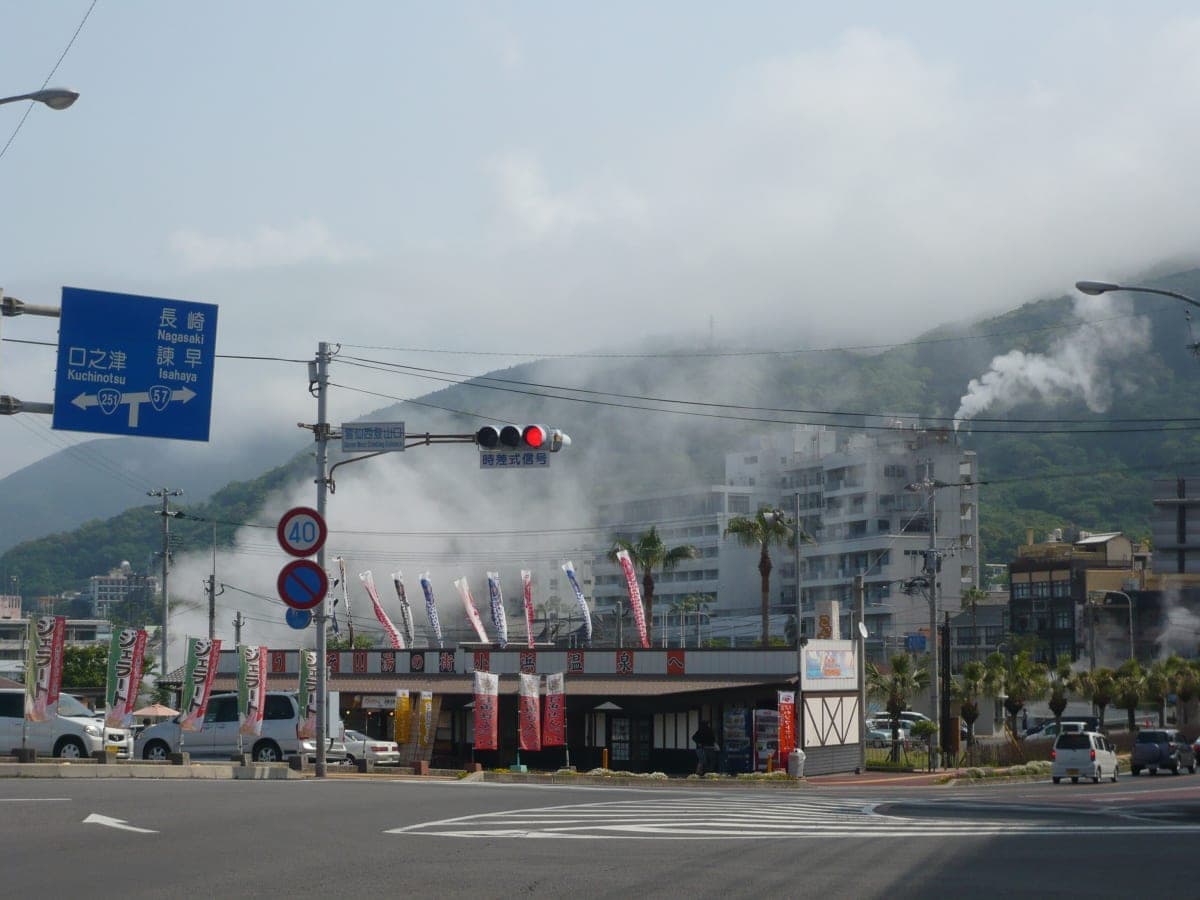
The bus ride from Beppu Station into the Kannawa district takes about twenty-five minutes, and you spend most of it watching white steam columns rise from vents in the road and sidewalks, sometimes right between parked cars. By the time you step off at the Kannawa stop and walk three minutes east, the air has a faint sulfurous edge and the whole neighborhood feels like it is sitting on top of something alive. That is the feeling Hyotan Onsen runs on.
The facility opened in 1950 and earned its name from the distinctive gourd-shaped outdoor pools at its entrance, hyotan being the Japanese word for gourd. What makes this place genuinely unusual, even by Beppu's crowded standards, is the range of water on offer in a single visit. Seven different spring types flow through the complex, each with its own mineral character and temperature. The main baths carry a mildly alkaline sodium-chloride water at around forty-two to fifty-five degrees, clear and almost silky against the skin. The bamboo cooling system the owners built drops the source temperature from one hundred degrees to a usable range without diluting the water with tap, so what you are soaking in is pure Kannawa spring from start to finish.
The sand bath, taki-no-yu waterfall pool, and steam bath are all separate experiences within the same grounds, and it is common to spend two hours working through them in sequence. The sunamushi here uses sand from Beppu Beach only, heated by geothermal steam rather than direct fire, which keeps temperatures moderate enough that first-timers can stay buried comfortably for fifteen minutes without feeling dizzy or overheated. You put on the provided cotton yukata, lie down on the dark sand, and a staff member shovels it over you up to the neck. The weight is surprising, close to a firm, warm pressing sensation over your whole body.
The most specific thing about Hyotan Onsen is the stone drinking fountain in the courtyard, shaped like a gourd, where the spring water flows directly from the source. The water is safe to drink, though it has a faint mineral edge. Locals call it lucky spring water and claim drinking it on days that fall on the number eight brings good fortune. Whether you believe that or not, standing in the steam-thick courtyard of a facility that has won three Michelin Green Guide stars seven consecutive times, cupping your hands under a gourd-shaped spout to taste the water that also heats the sand bath, is about as Beppu as Beppu gets.
How this spring compares
pH level
7.8
More alkaline than67% of Japan springs
More acidic than27% of Japan springs
Japan median7.3
Japan range1.2–11.3
n=121 springs
Max temperature
55°C
Hotter than43% of Japan springs
Japan median60°C
Japan hottest105°C
n=122 springs
Getting there
Sanyo Shinkansen→ Kokura4h 45m
Nippo Main Line to Beppu Station, then Kamenoi Bus to Kannawa
Total: 5h 40m
From Beppu Station West Exit, take Kamenoi Bus routes 5, 7, or 9 toward Kannawa and alight at the Kannawa bus stop. The journey takes about 25 minutes. Hyotan Onsen is a 3-minute walk east.
Amenities
Towel rental
Locker
Restaurant
Café
Parking
Wheelchair access
English spoken
Tattoo-friendly
Private bath
Soap provided
Hair dryer
Location & nearby
159-2 Kannawa, Beppu, Oita 874-0845
Kokura Station · 81.5 kmShinkansen
Bungo-Toyooka Station · 4.7 km
Kamegawa Station · 2.2 km
Beppu Daigaku Station · 3.3 km
Oita Airport · 29.8 km
Yamaguchi-Ube Airport · 69 km
ANA Inter Continental Beppu mae · 1.5 km
Shibaseki Onsen Iriguchi · 0.6 km
Beppu Rehabili Seimon Mae · 1.9 km
Jonouchi · 0.7 km
Chinoike Jigoku Mae · 0.9 km
Book a stay nearby
Hotels near Beppu
32+ optionsSpringsAtlas may earn a commission from bookings made through these links.
More springs in Kyushu
1 / 13


Last verified:
Data: OpenStreetMap (ODbL) · local tourism agencies
Verified listing