
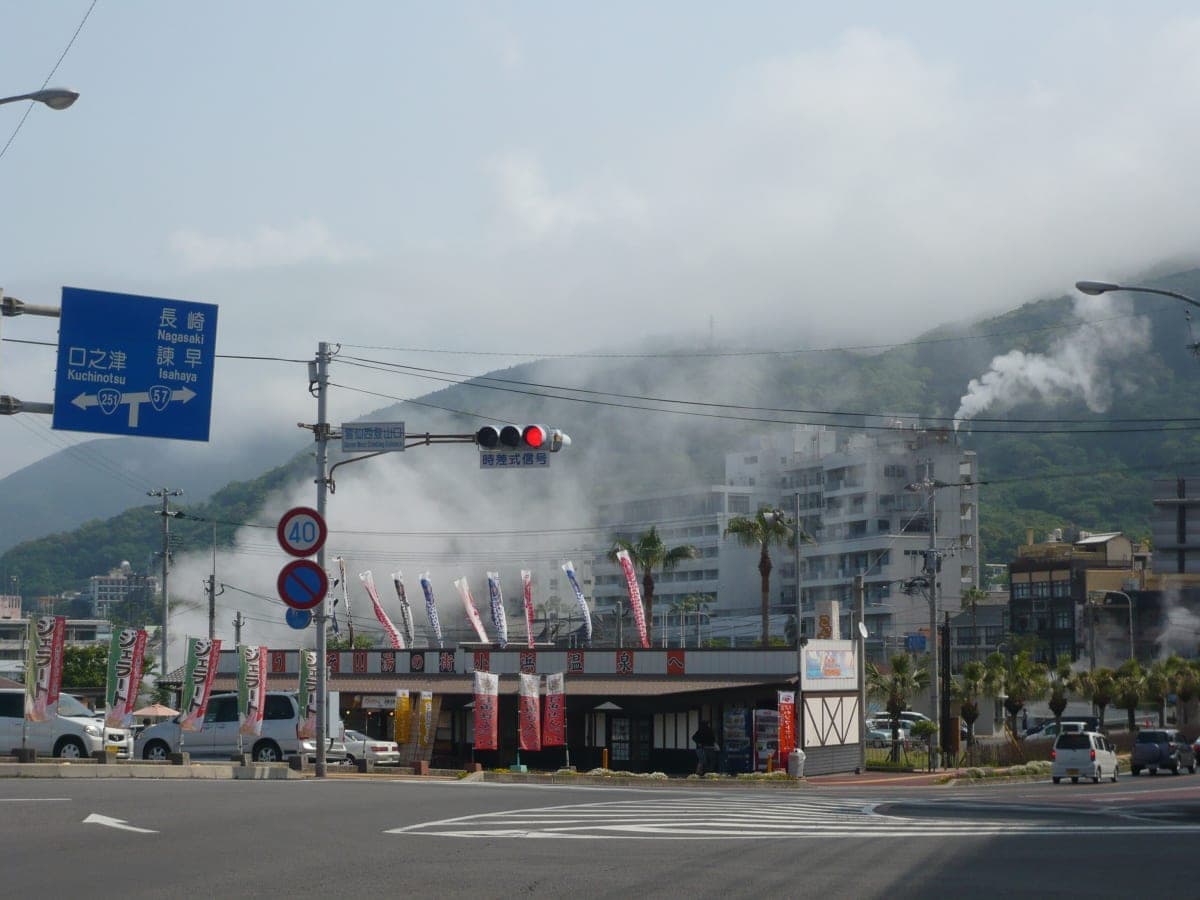

Public · Indoor & Outdoor · ¥300
40–50°CWater temp
7.4pH
¥300 (~$2)Entry fee
PublicBathing type
—Opening hours
About this spring
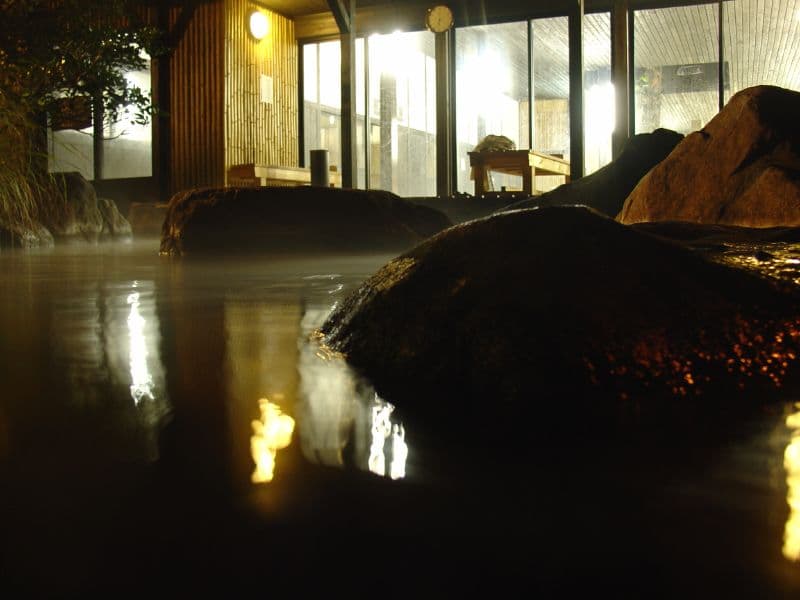
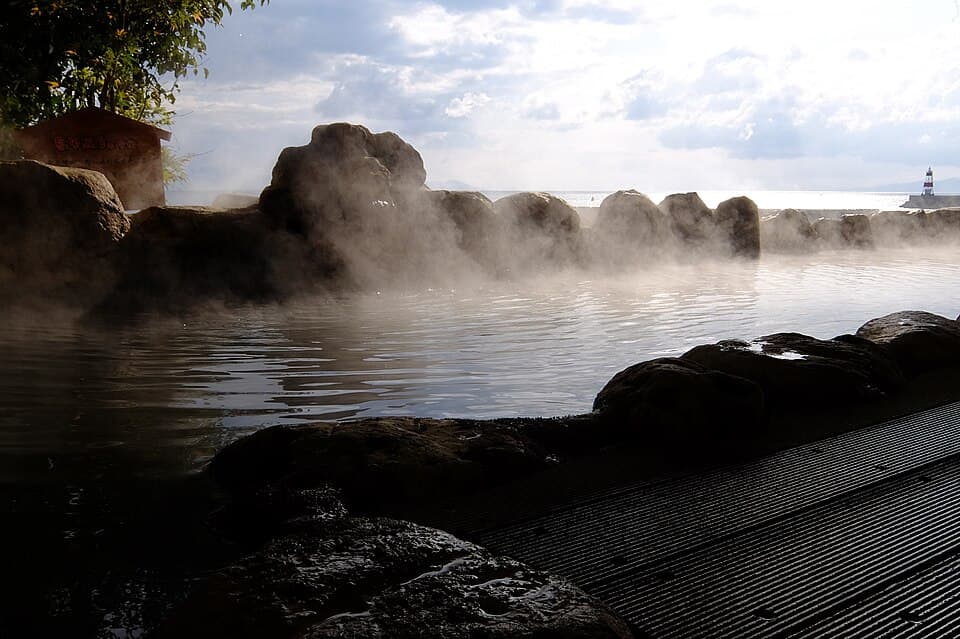
A hillside hot spring area on the forested slopes of Mount Tsurumi on the southern edge of Beppu, Oita Prefecture. The name comes from Kankaiji Temple, meaning the Temple Overlooking the Sea, which stands above the district with panoramic views across Beppu Bay. The springs here draw from the broader Beppu Hatto volcanic system and are part of one of Japan's most geothermally active landscapes.
Data: Wikipedia (CC BY-SA 4.0) · OpenStreetMap (ODbL)
Highlights
- Beppu Bay panoramic views
- Kankaiji Temple sea views
- Beppu Hatto volcanic system
- Landmark Suginoi Hotel
Suitability
Tattoo policy
Policy varies
Children policy
Family-friendly
Altitude
150m
Mineral chemistry
Sodium Chloride (Salt)
Benefits
Sodium chloride springs — essentially natural saltwater baths — are celebrated for their warming and moisturising effects. The salt forms a thin film on the skin after bathing that slows moisture evaporation, keeping skin hydrated longer than a freshwater bath. This "heat-retaining" property means bathers stay warm for significantly longer after leaving the water, making these springs especially popular in winter. Salt springs are among the most accessible for first-time onsen visitors.
Note
Those with high blood pressure or heart conditions should consult a doctor before bathing, as the warming effect increases circulation. Avoid immersing open wounds. The salt will sting slightly in eyes — take care when submerging.
Sulfate
Benefits
Sulfate springs (硫酸塩泉) contain dissolved calcium, sodium, or magnesium sulfate and are among the most therapeutically versatile spring types. Calcium sulfate springs are traditionally associated with wound healing and post-surgical recovery — the calcium ions support tissue repair and the sulfate has mild astringent properties. Sodium sulfate springs are linked to liver and digestive function; they are one of the few spring types used in Japan's national spa therapy clinics for chronic digestive complaints. The water typically has a clean, slightly bitter mineral taste.
Note
Sulfate springs are generally well-tolerated. Those with kidney stones of the calcium oxalate type should consult a doctor before bathing regularly. Sodium sulfate springs can have a mild laxative effect in sensitive individuals — stay hydrated.
History
Kankaiji Temple's founding is attributed to the eighth-century monk Ninmon, who identified the adjacent hot spring outflows as having sacred healing properties around 718 CE.
The temple's reputation spread through the Kamakura era as pilgrims documented its scenery and waters. The Meiji and Taisho eras brought rail access to the Beppu basin and transformed the elevated Kankaiji district into a destination for ryokan catering to the growing leisure class. The opening of Suginoi Hotel in 1944 gave the area its identity as a grand hilltop resort.
Local guide
Most visitors to Beppu spend their time down near the waterfront, watching steam curl up from the famous hot spring hell pools around Kannawa. Kankaiji Onsen sits above all of that, tucked into the forested slopes of Mount Tsurumi at around 150 meters elevation, and the view from up here changes everything. When you step out of a rooftop or hillside bath and look west, you are looking straight across Beppu Bay toward the Seto Inland Sea, and on a clear day the faint silhouette of Shikoku Island sits on the horizon like a watercolor sketch.
The name Kankaiji comes from the old Buddhist temple at the foot of the slope, Kankai-ji, which translates roughly as "Temple Overlooking the Sea." That name tells you everything you need to know about why people have been climbing this hill for centuries. Historical records from the Edo period describe the temple as extremely difficult to reach but worth the effort for the view alone, and the hot spring water that flows from the same volcanic ground made it worth coming back to again and again. The water is a sodium chloride and sulfate spring, clear and moderately salty, with a soft quality on the skin that leaves you feeling smooth rather than scrubbed.
What makes Kankaiji distinct from the seven other official hot spring zones in Beppu's sprawling Beppu Hatto system is the quiet. The hellscapes at Kannawa draw crowds and camera phones. Up here, the pace drops. The larger hotel bathhouses have outdoor pools cut into the hillside, and when you are in the water the forest is directly behind you and the bay is directly ahead, the kind of framing you cannot engineer. The steam from your bath mingles with the mist that regularly drifts down from Mount Tsurumi's upper slopes.
Getting here from Beppu Station is straightforward. The bus toward Kankaiji Iriguchi takes about fifteen minutes, and the stop is right at the entrance to the hotel zone. If you want to push a little further up the hill on foot, there are smaller public bath facilities tucked between the ryokan that charge a few hundred yen and feel genuinely local. Come in the late afternoon when the light over the bay turns orange and the distant islands go dark against the water. That hour, in a hillside pool above a city that produces more hot spring steam than anywhere else on earth, is worth every minute of the bus ride.
How this spring compares
pH level
7.4
More alkaline than53% of Japan springs
More acidic than44% of Japan springs
Japan median7.3
Japan range1.2–11.3
n=121 springs
Max temperature
50°C
Hotter than24% of Japan springs
Japan median60°C
Japan hottest105°C
n=122 springs
Getting there
Take the JR Nippo Main Line to Beppu Station. From the West Exit, take a local bus toward Kankaiji. The journey takes about 15-20 minutes.
Amenities
Towel rental
Locker
Restaurant
Café
Parking
Wheelchair access
English spoken
Tattoo-friendly
Private bath
Soap provided
Hair dryer
Location & nearby
Kankaiji, Minamitateishi, Beppu, Oita 874-0823
Kokura Station · 85.8 kmShinkansen
Beppu Daigaku Station · 3.8 km
Beppu Station · 2.2 km
Higashi-Beppu Station · 3.6 km
Oita Airport · 32.4 km
Yamaguchi-Ube Airport · 74.1 km
Meiho Campus Mae · 0.6 km
Kankaiji Iriguchi · 0.1 km
Kankaijibashi · 0.2 km
Nakatsuru · 0.2 km
Book a stay nearby
Hotels near Beppu
23+ optionsSpringsAtlas may earn a commission from bookings made through these links.
More springs in Kyushu
1 / 13


Last verified:
Data: OpenStreetMap (ODbL) · local tourism agencies
Verified listing