

Mixed · Indoor & Outdoor · ¥500
30–50°CWater temp
6.9pH
¥500 (~$3)Entry fee
MixedBathing type
—Opening hours
About this spring
A small mountain hot spring village in Taketa City, central Oita Prefecture, celebrated for the highest concentration of dissolved carbon dioxide of any thermal spring in Japan. When you lower yourself into the water here, fine bubbles immediately begin forming across your skin. This carbonation is the defining experience. The town has a sister-city relationship with Bad Krozingen in Germany, a spa town with a comparable therapeutic tradition.
Data: Wikipedia (CC BY-SA 4.0) · OpenStreetMap (ODbL)
Highlights
- Highest dissolved CO2 in Japan
- Bubbles form on skin
- Sister city Bad Krozingen
- Drinkable carbonated spring
Suitability
Tattoo policy
Welcome
Children policy
Family-friendly
Altitude
480m
Mineral chemistry
Carbonated (CO₂)
Benefits
Carbonated hot springs are genuinely rare — natural CO₂ concentration dissolves rapidly at high temperatures, so most are warm rather than hot (typically 30–37°C). The dissolved carbon dioxide creates micro-bubbles that cling to the skin, dilating capillaries and boosting local circulation to a degree comparable to mild exercise. This effect is used therapeutically in Japan for cardiovascular rehabilitation and is one reason carbonated springs are sometimes called "heart baths." The tingling sensation is mild and pleasant.
Note
Carbonated springs are typically cooler than conventional onsen. The circulation-boosting effect means those with cardiovascular conditions should soak for shorter periods (10–15 minutes maximum) and exit slowly to avoid lightheadedness. CO₂ is heavier than air — in enclosed bathhouses, ventilation is important.
Bicarbonate
Benefits
Bicarbonate springs (sodium bicarbonate, calcium bicarbonate, or hydrogen carbonate) are particularly effective for skin conditions. The bicarbonate ions cleanse and soften the skin surface, removing excess sebum without stripping the skin's acid mantle. These springs are traditionally recommended for acne-prone skin and as a gentle option for sensitive skin types. The water has a characteristically clean, soft feel.
Note
Bicarbonate springs are generally among the most gentle and well-tolerated onsen types. Those with very dry skin may wish to apply moisturiser after bathing, as the cleansing effect can temporarily reduce surface oils.
History
The springs have been in therapeutic use since at least the eighth century.
During the Edo period the Oka clan of Bungo patronized the springs and established a reserved bathing facility for the feudal lord, a mark of official recognition that elevated the village from a local curative spring to an institution of some standing. The town's extraordinary carbonation levels attracted German attention, eventually leading to the sister-city relationship with Bad Krozingen in Baden-Württemberg. Drinking the spring water has long been prescribed for gastrointestinal and circulatory conditions.
Local guide
Nagayu is not on the way to anything else, which is probably why it has stayed exactly itself. You reach it by local bus from Yufuin or Beppu, following small roads through Oita's southern highlands until the valley narrows and a cluster of low wooden buildings appears along a rushing river. There is no grand gateway, no themed entrance plaza, no neon. What there is, before you even find your inn, is a public tap beside the road with a small sign inviting you to drink from it. The water that comes out is cold, slightly fizzy on your tongue, and faintly earthy. This is the first clue that Nagayu's springs are doing something chemically unusual.
Nagayu holds the highest natural concentration of dissolved carbon dioxide of any hot spring in Japan, with some sources measuring over 1,300 parts per million. When you lower yourself into one of the baths here, the experience is immediately strange and then immediately pleasant. Tiny bubbles form all over your body within about thirty seconds. They cling to the fine hairs on your arms, cluster in the crooks of your elbows, and collect in a faint effervescent haze around your skin. It feels like the water is actively paying attention to you. The CO2 causes blood vessels near the surface to dilate, which creates a warm, flushed feeling that spreads from your skin inward, and your heart rate slows in a way that feels distinct from ordinary hot spring relaxation. The water is brownish and slightly cloudy in some baths, clearer in others, and the temperature runs between 30 and 50 degrees depending on the source.
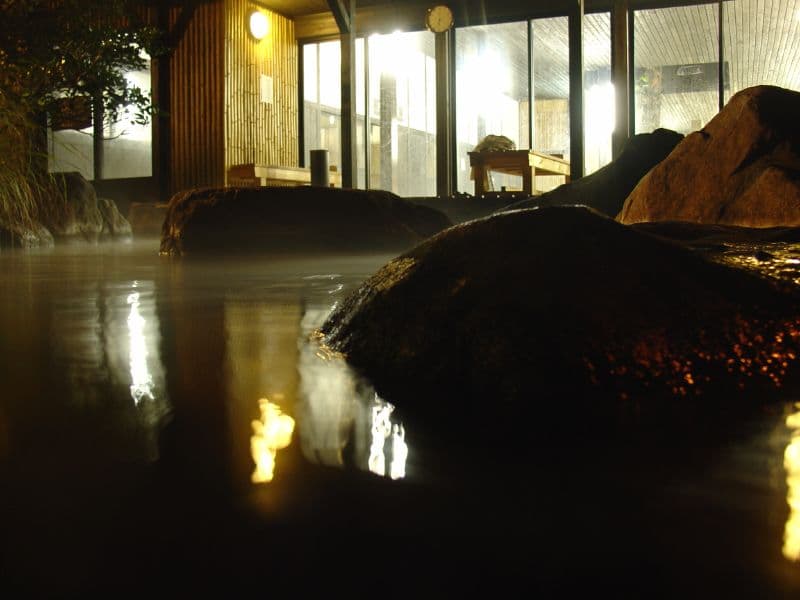
The public bath Ramunekan sits at the center of the village, its name borrowed from the Japanese word for sparkling lemonade, ramune, which is what the spring water was compared to when carbonated drinks were still exotic. The building is old and unassuming, with wooden floors and a small changing area. You pay a nominal fee, step into the bath, and within moments you have forgotten that carbonated water is something you usually drink rather than sit in. Outside the bathhouse, benches along the river path invite you to sit with a cup of the drinkable spring water and do nothing in particular.
The people who discovered the CO2 health benefits early on were German spa doctors in the nineteenth century, and there is a modest European connection to how Nagayu has been discussed in the medical literature since. But the village itself is entirely, unremarkably Japanese. A few small restaurants serve Oita's kabosu citrus in everything. The rice fields come right up to the edge of the bathhouse parking lot. The bus timetable is pinned to a post and has not changed in years. If you want a spring that actually does something physically distinct to your body and does not ask you to perform enjoyment in return, Nagayu is the correct answer.
How this spring compares
pH level
6.9
More alkaline than31% of Japan springs
More acidic than69% of Japan springs
Japan median7.3
Japan range1.2–11.3
n=121 springs
Max temperature
50°C
Hotter than24% of Japan springs
Japan median60°C
Japan hottest105°C
n=122 springs
Getting there
From Hakata, take the JR Shinkansen to Kumamoto, about 30 minutes. Then take the JR Hohi Main Line to Bungo-Taketa Station, about 1 hour 50 minutes. From Bungo-Taketa, take an Ono Taketa Bus to Michinoeki Nagayu Onsen, about 50 minutes. Weekend buses are reduced; a taxi from Bungo-Taketa covers the 14 km in about 20 minutes.
Amenities
Towel rental
Locker
Restaurant
Café
Parking
Wheelchair access
English spoken
Tattoo-friendly
Private bath
Soap provided
Hair dryer
Location & nearby
Nagayu Onsen, Naoirimachi Oaza Nagayu, Taketa, Oita 878-0402
Kumamoto Station · 67.5 kmShinkansen
Asaji Station · 8.8 km
Shōnai Station · 12.7 km
Bungo-Taketa Station · 11.2 km
道の駅長湯温泉 · 0 km
Oita Airport · 56 km
Kumamoto Airport · 55.7 km
大分県央空港管理棟 · 12.1 km
Michinoeki Nagayu Onsen Station · 0 km
Michi no Ekinaga Yuonsen · 0 km
Nagayu Onsen Bus Stop (Bus Stop) · 0 km
Book a stay nearby
Hotels near Nagayu
11+ optionsSpringsAtlas may earn a commission from bookings made through these links.
More springs in Kyushu
1 / 13


Last verified:
Data: OpenStreetMap (ODbL) · local tourism agencies
Verified listing