

Public · Indoor & Outdoor · ¥500
Kurokawa Onsen
黒川温泉
100°CPublic BathIndoor & Outdoorsulfursimple-alkalinesodium-bicarbonatesodium-chloride
40–100°CWater temp
7.5pH
¥500 (~$3)Entry fee
PublicBathing type
—Opening hours
About this spring
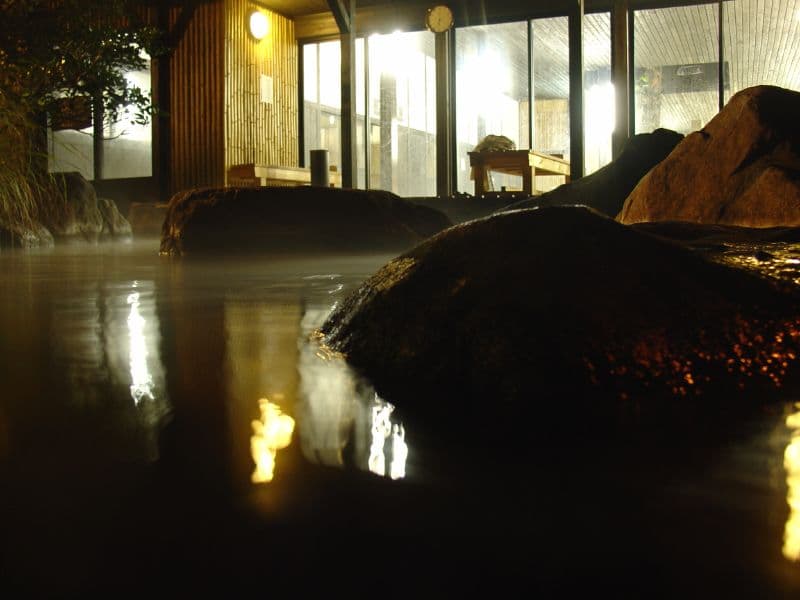
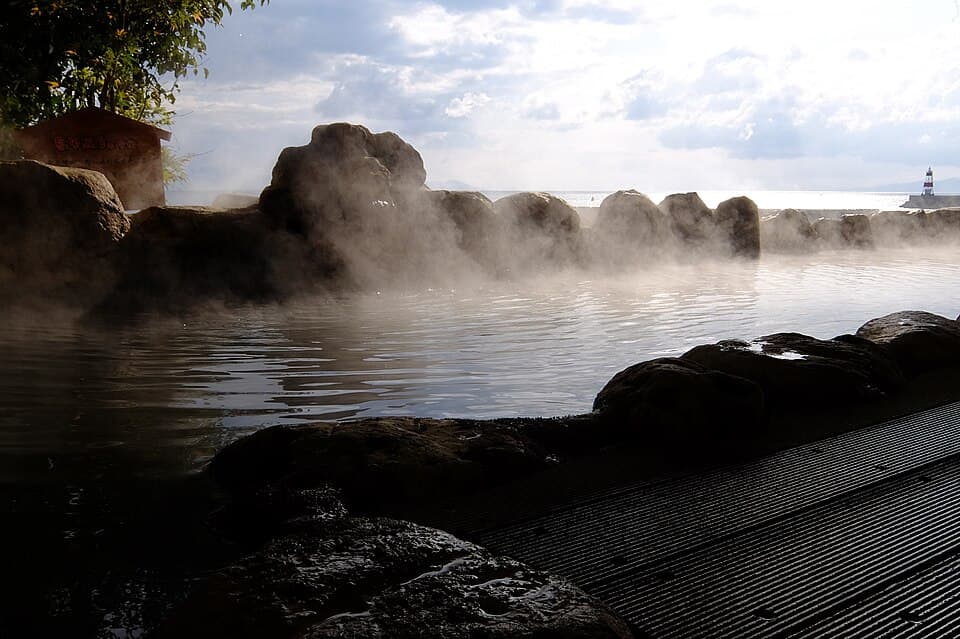
A forested hot spring village hidden in a deep gorge of the Chikugo River valley in northern Kumamoto Prefecture. Every ryokan here has its own outdoor rotenburo carved into the forest. The nyuto tegata, a cedar bathing pass carved on-site, allows visitors to enter three outdoor baths across different properties. There are no neon signs and no modern facades. The village agreed on that collectively in the 1980s, and it saved the town.
Data: Wikipedia (CC BY-SA 4.0) · OpenStreetMap (ODbL)
Highlights
- Every ryokan has forest rotenburo
- Nyuto tegata cedar bath pass
- No neon signs by agreement
- Deep forested gorge
Suitability
Tattoo policy
Policy varies
Children policy
Family-friendly
Altitude
700m
Mineral chemistry
Sulfur
Benefits
Sulfuric hot springs are among the most studied in Japanese balneology. The sulfur compounds — primarily hydrogen sulfide and thiosulfate — have documented antimicrobial and anti-inflammatory properties. Regular bathing is associated with relief from chronic skin conditions including eczema and psoriasis, as well as joint inflammation and muscle soreness. Sulfuric waters have been prescribed in Japanese medical practice since the Edo period.
Note
The distinctive rotten-egg smell dissipates quickly after leaving the bath. Avoid if you have a sulfur allergy, very sensitive skin, or respiratory conditions. Remove silver jewellery before entering — sulfur will blacken it permanently.
Bicarbonate
Benefits
Bicarbonate springs (sodium bicarbonate, calcium bicarbonate, or hydrogen carbonate) are particularly effective for skin conditions. The bicarbonate ions cleanse and soften the skin surface, removing excess sebum without stripping the skin's acid mantle. These springs are traditionally recommended for acne-prone skin and as a gentle option for sensitive skin types. The water has a characteristically clean, soft feel.
Note
Bicarbonate springs are generally among the most gentle and well-tolerated onsen types. Those with very dry skin may wish to apply moisturiser after bathing, as the cleansing effect can temporarily reduce surface oils.
Sodium Chloride (Salt)
Benefits
Sodium chloride springs — essentially natural saltwater baths — are celebrated for their warming and moisturising effects. The salt forms a thin film on the skin after bathing that slows moisture evaporation, keeping skin hydrated longer than a freshwater bath. This "heat-retaining" property means bathers stay warm for significantly longer after leaving the water, making these springs especially popular in winter. Salt springs are among the most accessible for first-time onsen visitors.
Note
Those with high blood pressure or heart conditions should consult a doctor before bathing, as the warming effect increases circulation. Avoid immersing open wounds. The salt will sting slightly in eyes — take care when submerging.
History
The springs were developed during the Edo period as a rest stop for travellers between the castle towns of Hita and Taketa.
The town's remoteness preserved its character through the high-growth decades when many resort towns were modernized with concrete. By the 1980s visitor numbers had collapsed and the future seemed uncertain. A coalition of ryokan owners responded by treating the entire village as a single inn, each establishment a room, each lane a corridor, each forest section a garden. The nyuto tegata bathing pass was introduced in the 1990s. By the early 2000s Kurokawa had become one of Japan's most acclaimed onsen towns.
Local guide
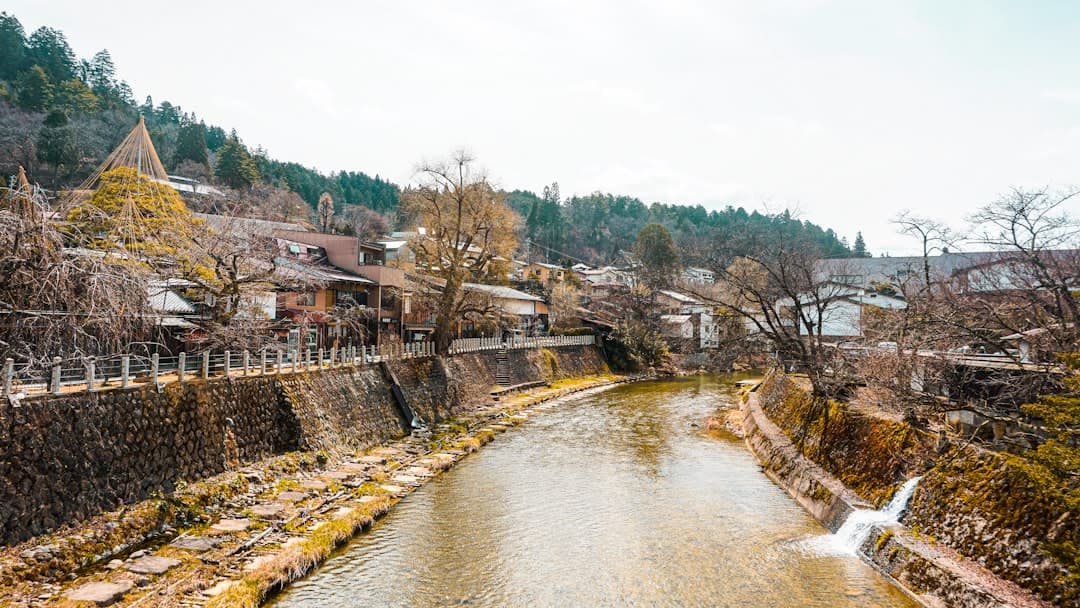
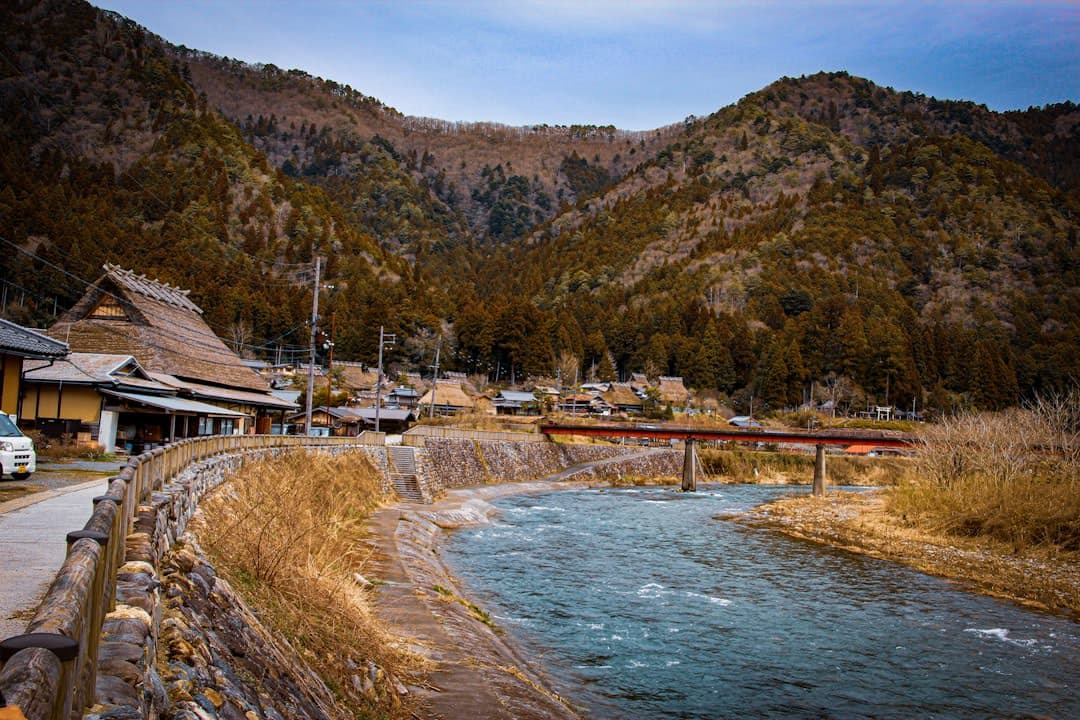
Getting to Kurokawa Onsen from Kumamoto requires a bus that winds north through the Aso caldera country, past bare volcanic fields and small farming villages, and then drops into a forested valley carved by the Tanoharu River. The valley comes as a surprise after the open volcanic plateau. The trees close in around the road, the light goes green and dim, and then the first thatched-roof ryokan appears on the riverbank and you understand that someone made a decision here to protect something. No neon signs. No chain hotels. No billboard advertising. The inns cooperate rather than compete, sharing a philosophy the town calls one village, one ryokan.
The water at Kurokawa is not one thing. Thirty inns are spread along four kilometers of river valley and each draws from the same volcanic geothermal system beneath Mount Aso, but the composition shifts from source to source. Some baths run milky with suspended sulfur and smell sharply of egg. Others are clear sodium bicarbonate that leaves your skin smooth and slightly alkaline. A few run acidic, temperatures climbing toward the upper range of what a body can comfortably handle. The water in all of them arrives naturally heated, somewhere between 40 and 100 degrees at source, and the outdoor baths are cooled to comfortable range by the valley air.
The ritual here is rotenburo hopping, and it runs on a wooden disc called the nyuto tegata, which you purchase for around 1,300 yen. The disc works as admission to three outdoor baths at participating inns across the village. The baths are not identical experiences. One inn has a pool built into a rock cave, the ceiling low and steaming above the water. Another sits on the riverbank so close to the Tanoharu current that you can reach over the pool edge and touch the cold moving water. A third is set in a bamboo grove where the tall green stems creak overhead in any wind.
The town has made a deliberate effort to look the way it does, and that effort shows in every thatch and stone path. It does not feel like a museum exhibit because the inns are working businesses and the baths are genuinely good. In November the maples in the valley turn orange-red against the dark cedar, and the outdoor pools produce more steam as the air temperature drops. Come for two nights, walk the stone lanes between baths in the evening, and eat the local black Aso beef at dinner. Kurokawa is one of the more complete versions of what an onsen town can be.
How this spring compares
pH level
7.5
More alkaline than56% of Japan springs
More acidic than36% of Japan springs
Japan median7.3
Japan range1.2–11.3
n=121 springs
Max temperature
100°C
Hotter than98% of Japan springs
Japan median60°C
Japan hottest105°C
n=122 springs
Getting there
Kurokawa Onsen has no rail access. From Fukuoka, take the Sanko Bus Fukuoka-Kurokawa Line from Nishitetsu Tenjin or Hakata Bus Terminal. The journey takes about 2 hours 30 minutes. From Kumamoto, the Kyushu Odan bus takes about 2 hours 45 minutes. Advance reservation is recommended.
Amenities
Towel rental
Locker
Restaurant
Café
Parking
Wheelchair access
English spoken
Tattoo-friendly
Private bath
Soap provided
Hair dryer
Location & nearby
Kurokawa Onsen, Manganji, Minamioguni, Aso District, Kumamoto 869-2402
Kumamoto Station · 49.1 kmShinkansen
Miyaji Station · 15.8 km
Namino Station · 16.3 km
Ikoi no mura Station · 16.3 km
Kumamoto Airport · 28.4 km
Oita Airport · 71.1 km
熊本空港 · 28.4 km
Kurokawa · 0.1 km
Kurokawa Onsen · 0.2 km
Higashi Kurokawa · 0.3 km
Book a stay nearby
Hotels near Kurokawa
37+ optionsSpringsAtlas may earn a commission from bookings made through these links.
More springs in Kyushu
1 / 13


Last verified:
Data: OpenStreetMap (ODbL) · local tourism agencies
Stale listing