

Public · Indoor & Outdoor · ¥1,200
42–55°CWater temp
9.0pH
¥1,200 (~$8)Entry fee
PublicBathing type
—Opening hours
About this spring
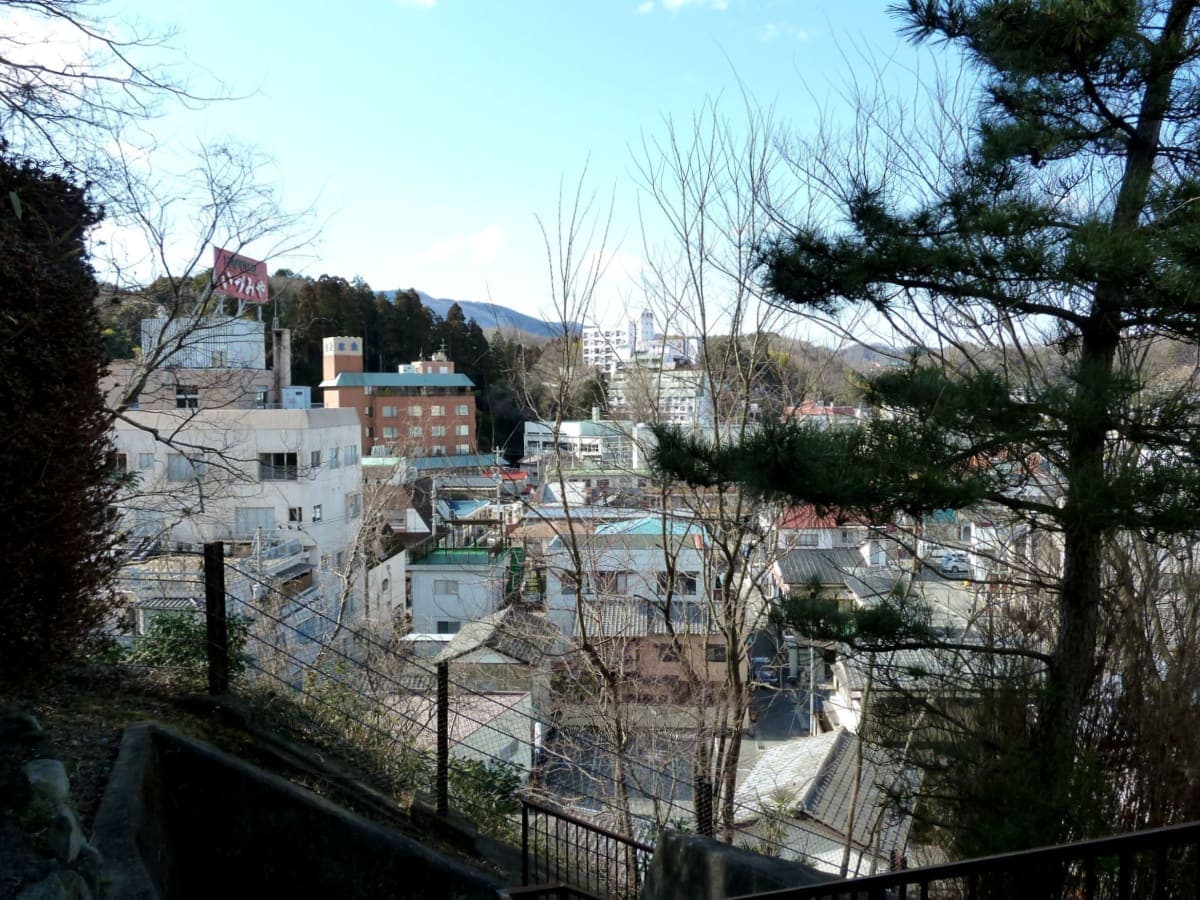
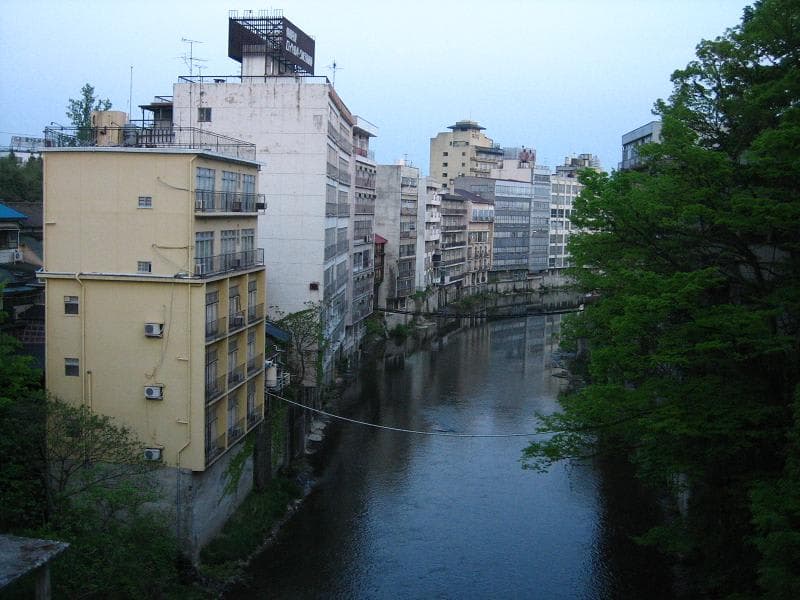
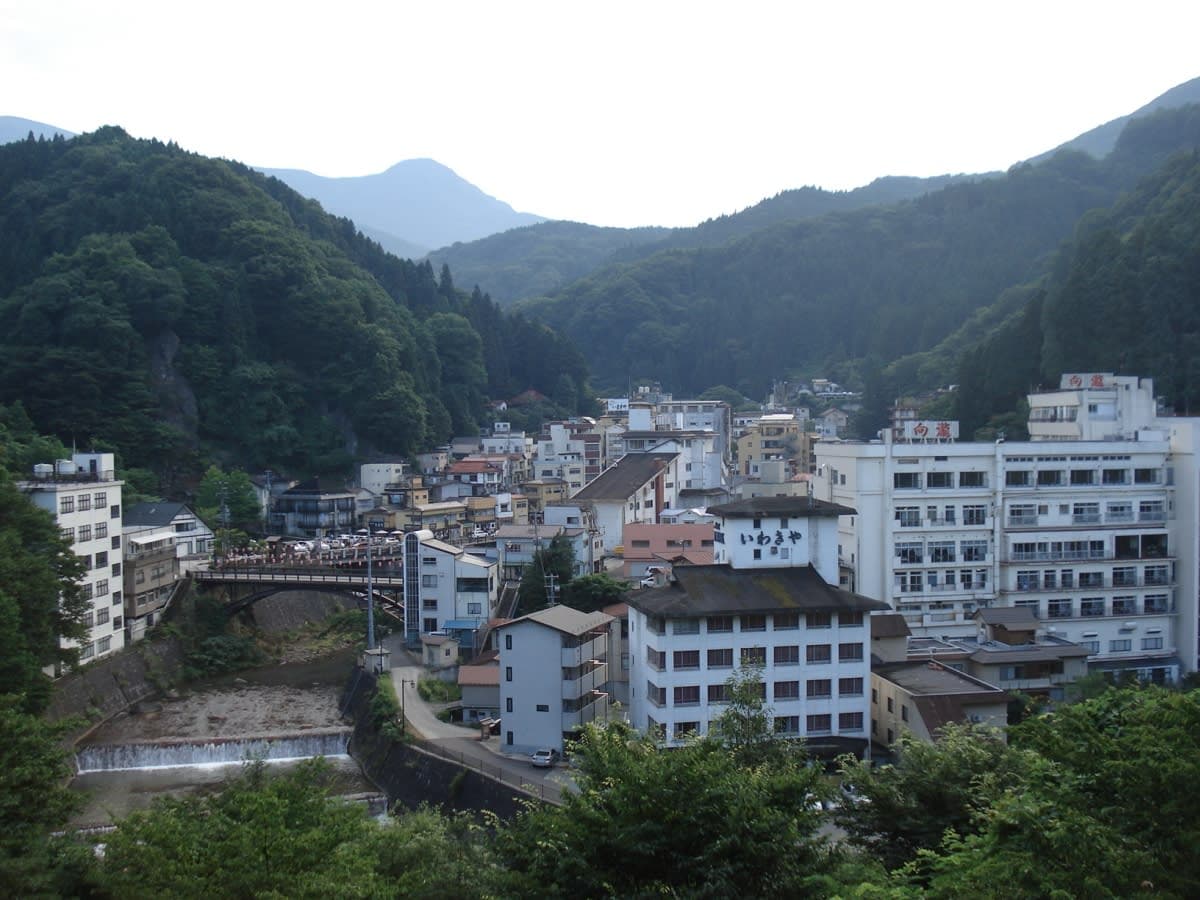
A hot spring area in Iwate Prefecture spread across eight distinct zones in the hills above the Kitakami River valley. The area is the birthplace of the beloved author and poet Kenji Miyazawa. The narrow-gauge Hanamaki Electric Railway that once connected the spring zones, affectionately called the matchbox train, is widely believed to have inspired the celestial train journey in Miyazawa's masterpiece Night on the Galactic Railroad.
Data: Wikipedia (CC BY-SA 4.0) · OpenStreetMap (ODbL)
Highlights
- Kenji Miyazawa birthplace
- Night on the Galactic Railroad
- Eight onsen zones
- Historic matchbox train
Suitability
Tattoo policy
Not permitted
Children policy
Family-friendly
Altitude
200m
History
The oldest spring in the district, Dai Onsen, is said to have been discovered in the ninth century by the general Sakanoue no Tamuramaro.
The modern resort began taking shape in 1890 when the Tohoku Line railway reached Hanamaki Station. In 1915 the Hanamaki Electric Railway opened, its tiny narrow-gauge cars winding into the mountain spring villages. Kenji Miyazawa was born in Hanamaki in 1896. Osawa Onsen, in particular, is celebrated as the spring he loved most, and his writing frequently invokes the healing waters around his hometown. The formal resort complex opened in 1923.
Local guide
Shin-Hanamaki Station sits on the Tohoku Shinkansen line about two and a half hours north of Tokyo, and from the platform you can already see the low, forested hills that signal you are at the edge of Hanamaki's hot spring country. The town of Hanamaki stretches across the southern Kitakami Basin in Iwate Prefecture, and its hot springs are not one concentrated district but a loose cluster of separate areas spread through the surrounding hills: Hanamaki Onsen proper, Osawa, Yamano, and Shin-Hanamaki among them. Each has a different character, and the alkaline pH-9 water that connects them all surfaces clear and soft from the ground.
The water at the main Hanamaki Onsen area flows from a simple alkaline source. In the bath it is odorless and transparent, but the pH reading tells the story. Highly alkaline spring water behaves differently from neutral water at the same temperature. It feels slippery in a way that is hard to describe accurately: not oily, not soapy, just smooth in a way that ordinary hot water does not manage. The skin stays warm and soft after you step out, and the effect is noticeable for hours. The water at Osawa Onsen, a short drive further into the hills, is classified as a sodium sulfate and chloride spring and runs slightly warmer.
The poet and scientist Miyazawa Kenji, who grew up in Hanamaki and is buried here, was a frequent visitor to Osawa Onsen. His writing about the Iwate landscape, its cold winters and short, sharp summers, is woven into how the region understands itself. The Miyazawa Kenji Memorial Museum sits on a hill above town, and many visitors pair the museum with an afternoon in one of the hill baths before heading back to the Shinkansen. Kenji designed a sundial flowerbed in the Hanamaki Onsen Rose Garden, which sits on a managed slope above the main hotel district with good views across the Kitakami plain.
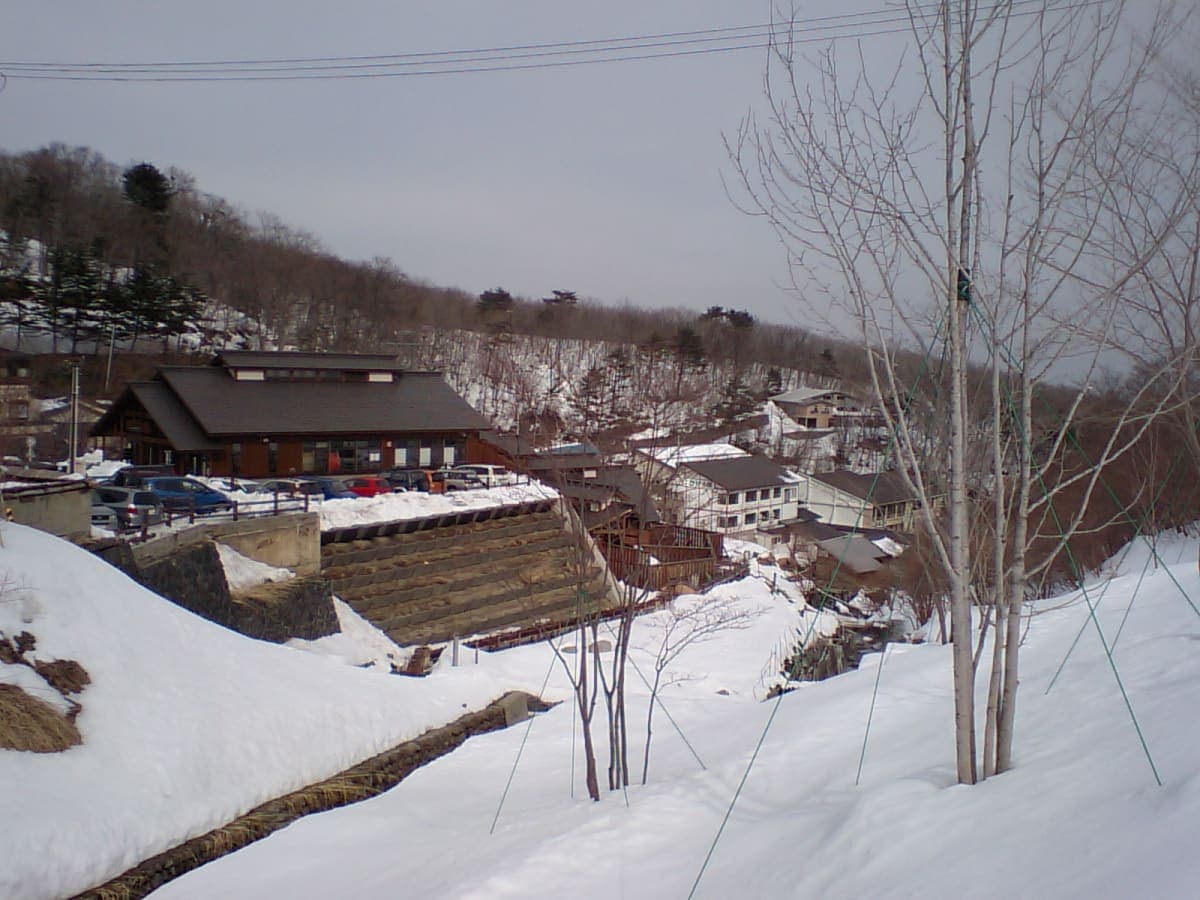
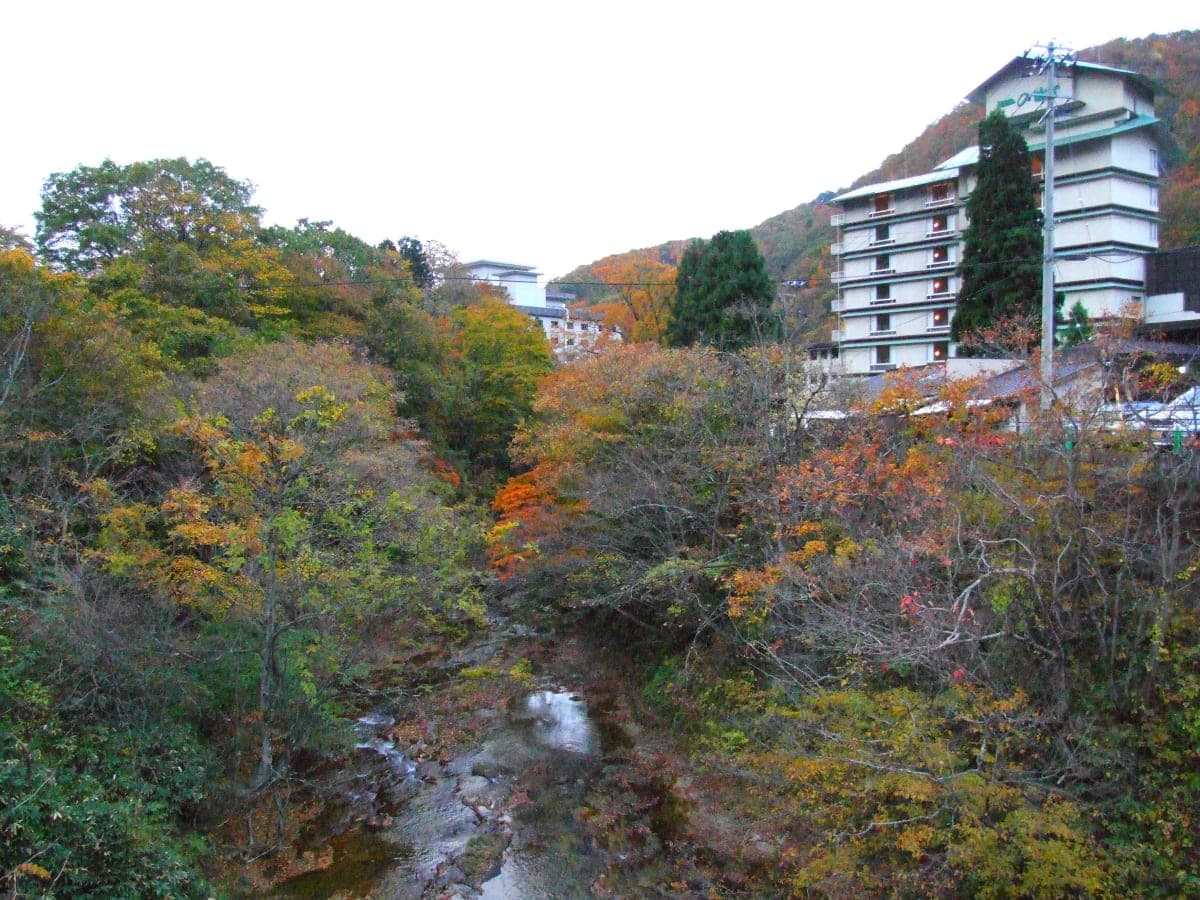
The Shinkansen stops at Shin-Hanamaki, but the various spring areas require either a taxi or a car to reach from the station. The Kamaishi Line connects Shin-Hanamaki and Hanamaki Station, but it runs infrequently and the transfers add time rather than save it. Most visitors either rent a car at the station or book accommodation that includes a shuttle. Outside of summer and autumn leaf season, the hills around Hanamaki are genuinely quiet, and the combination of alkaline baths, cedar forest, and the particular flat-light quality of Tohoku in late October makes the effort of getting here feel straightforward in hindsight.
How this spring compares
pH level
9.0
More alkaline than93% of Japan springs
More acidic than7% of Japan springs
Japan median7.3
Japan range1.2–11.3
n=121 springs
Max temperature
55°C
Hotter than43% of Japan springs
Japan median60°C
Japan hottest105°C
n=122 springs
Getting there
Take the Tohoku Shinkansen to Shin-Hanamaki Station, then a local taxi or shuttle bus to the onsen zone. The journey takes about 20 minutes. Iwate Hanamaki Airport also connects directly to Tokyo Haneda and is just 7.5 kilometers from the onsen area.
Amenities
Towel rental
Locker
Restaurant
Café
Parking
Wheelchair access
English spoken
Tattoo-friendly
Private bath
Soap provided
Hair dryer
Location & nearby
Hanamaki Onsen, Hanamaki, Iwate
Shin-Hanamaki Station · 9 kmShinkansen
Hanamaki Station · 10 km
Nitanai Station · 8.6 km
Oyamada Station · 12.4 km
Ishidoriya Station · 8.3 km
Iwate Hanamaki Airport · 7.5 km
Akita Airport · 74.6 km
Kamabuchi no Taki Iriguchi · 0.2 km
Dai Onsen · 0.6 km
Hanamaki Onsen · 0.8 km
Book a stay nearby
Hotels near Hanamaki
10+ optionsSpringsAtlas may earn a commission from bookings made through these links.
More springs in Tohoku
1 / 13


Last verified:
Data: OpenStreetMap (ODbL) · local tourism agencies
Verified listing