
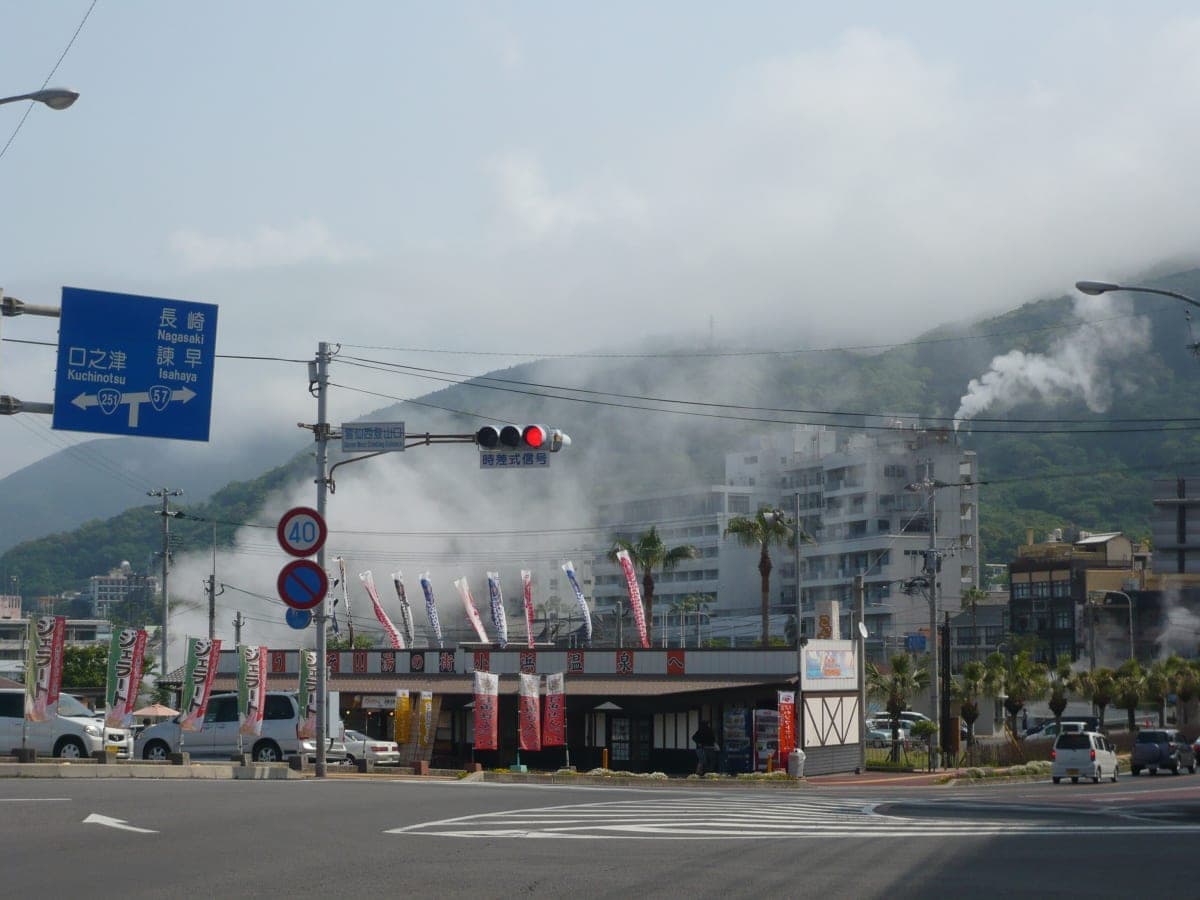

Private · Outdoor · ¥200
4.4· 140 reviewsvia Google
41–60°CWater temp
8.5pH
¥200 (~$1)Entry fee
PrivateBathing type
—Opening hours
About this spring
The oldest of the Kuroishi hot spring cluster in Aomori Prefecture, set along the Aseishi River near Nakano Momijiyama Mountain. The water is lightly green-tinted and rises at around 41.7 degrees Celsius, making it comfortably warm for long soaks. A kokeshi doll stands at the village entrance, honoring the Tsugaru region's folk-craft tradition. A kokeshi museum and craft center are nearby.
Data: Wikipedia (CC BY-SA 4.0) · OpenStreetMap (ODbL)
Highlights
- 400-year oldest Kuroishi spring
- Lightly green-tinted water
- Kokeshi doll folk heritage
- Peaceful river valley
Suitability
Tattoo policy
Not permitted
Children policy
Family-friendly
Altitude
500m
Mineral chemistry
Sodium Chloride (Salt)
Benefits
Sodium chloride springs — essentially natural saltwater baths — are celebrated for their warming and moisturising effects. The salt forms a thin film on the skin after bathing that slows moisture evaporation, keeping skin hydrated longer than a freshwater bath. This "heat-retaining" property means bathers stay warm for significantly longer after leaving the water, making these springs especially popular in winter. Salt springs are among the most accessible for first-time onsen visitors.
Note
Those with high blood pressure or heart conditions should consult a doctor before bathing, as the warming effect increases circulation. Avoid immersing open wounds. The salt will sting slightly in eyes — take care when submerging.
History
Nuruyu Onsen has a documented bathing history of over 400 years, making it the longest-established spring in the Kuroishi area.
The therapeutic waters have long been recommended for rheumatism, neuralgia, and fatigue. The town's character has remained largely unchanged through those four centuries, preserving the atmosphere of a traditional country bath.
Local guide
Somewhere in the forested interior of Kyushu, where the roads narrow down to single lanes and the volcanic activity of the Kirishima range makes itself felt through the ground rather than any obvious crater, you find the quieter springs. Nuruyu Onsen sits in this category entirely. The name says everything: nuruyu means lukewarm, and the water here is not trying to impress you with heat. It comes out of the earth gently, at a temperature that requires no cooling down and no bracing yourself before you get in. You simply step in and the water is already there, already right.
The sodium chloride water here is crystal clear. It carries almost no scent, which is itself unusual in a region where sulfur and iron springs dominate the volcanic landscape around Kirishima. What you notice instead is its texture. It is soft on the skin in a way that is hard to describe precisely, slightly slippery without feeling oily, and it warms your body from the outside in rather than shocking it into circulation. Because it comes out at such a gentle temperature, 41 degrees or slightly below, you can stay in considerably longer than you can at most Japanese springs without feeling overheated or light-headed when you stand.
The appeal of a lukewarm spring is lost on many visitors who arrive in Japan with the expectation of punishingly hot baths and dramatic sulfur fumes. Nuruyu does not offer those things. What it offers instead is the rare experience of actually relaxing in the water rather than enduring it. Long soaks become genuinely comfortable. You can read, or think, or watch the forest canopy outside the window, and an hour passes without the water ever demanding your attention.
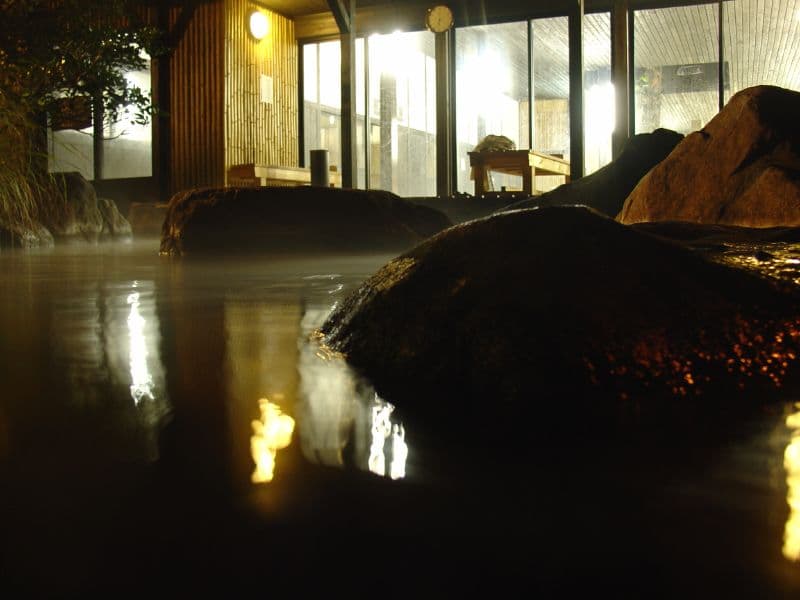
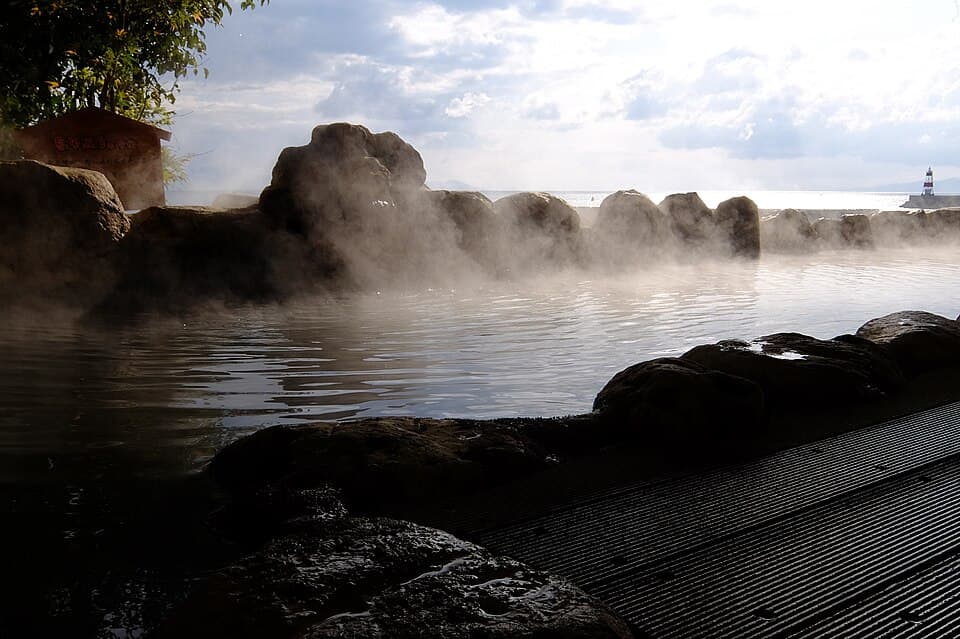
The outdoor bath here is where the experience comes together. The surrounding mountains hold the humidity and the soft smell of the forest, and the light through the trees is different in each season: sharp and green in summer, gold in autumn, and in winter a flat white that makes the steam visible from a distance. There are no crowds, no souvenir stalls near the baths, and no ambient noise beyond what the forest provides. The spring has been used since workers of a feudal lord stopped here to rest on a journey, and the arithmetic of that fact is simple: it has not changed much since then.
How this spring compares
pH level
8.5
More alkaline than82% of Japan springs
More acidic than10% of Japan springs
Japan median7.3
Japan range1.2–11.3
n=121 springs
Max temperature
60°C
Hotter than49% of Japan springs
Japan median60°C
Japan hottest105°C
n=122 springs
Getting there
From Hirosaki Station, take the private Konan Railway Konan Line to Kuroishi Station. The ride takes about 35 minutes. From Kuroishi Station, take a Konan Bus on the Kuroishi-Nuruyu line to the Shimonuruyu stop, within a minute's walk of the baths.
Amenities
Towel rental
Locker
Restaurant
Café
Parking
Wheelchair access
English spoken
Tattoo-friendly
Private bath
Soap provided
Hair dryer
Location & nearby
311-1 Uekimachi Ichibō, Kita Ward, Kumamoto, 861-0113
Shin-Tamana Station · 16.6 kmShinkansen
Ueki Onsen · 0.4 km
Kumamotokosen-mae Station · 8.5 km
Miyoshi Station · 8 km
SaishunIryoCenter-mae Station · 8.3 km
Kumamoto Airport · 18 km
Saga International Airport · 45.2 km
Ichibo · 0.2 km
Hirashima · 0.2 km
Book a stay nearby
Hotels near Nuruyu
6+ optionsSpringsAtlas may earn a commission from bookings made through these links.
More springs in Kyushu
1 / 13


Last verified:
Data: OpenStreetMap (ODbL) · local tourism agencies
Verified listing