

Public · Indoor · ¥400
4.0· 1,126 reviewsvia Google
42–44°CWater temp
8.6pH
¥400 (~$3)Entry fee
PublicBathing type
—Opening hours
About this spring
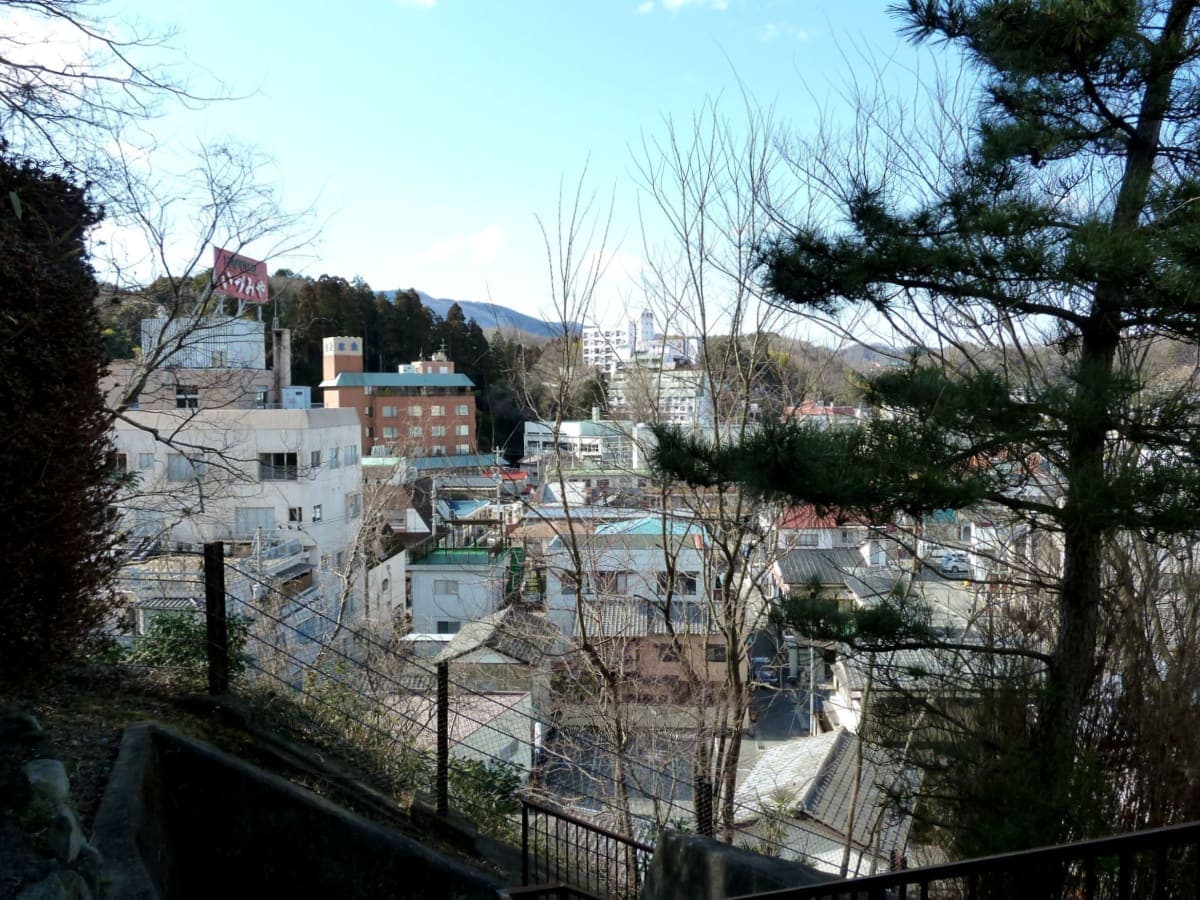
One of Japan's oldest community bathhouses, located in the Iizaka district of Fukushima. The building itself dates to the seventeenth century. The Edo-period poet Matsuo Basho visited in 1689 and mentioned the bath in his travel diary. The water is a sodium bicarbonate spring, clear and colorless, known for leaving skin noticeably soft.
Data: Wikipedia (CC BY-SA 4.0) · OpenStreetMap (ODbL)
Highlights
- 17th-century community bathhouse
- Matsuo Basho visited 1689
- Sodium bicarbonate soft-skin water
- Iizaka district public baths
Suitability
Tattoo policy
Welcome
Children policy
Family-friendly
Altitude
70m
Mineral chemistry
Alkaline
Benefits
Alkaline springs (pH above 8) are known in Japan as "bijin-no-yu" — beauty water — for their skin-softening effect. The high pH saponifies skin oils, producing a characteristic silky feel on the skin surface. Regular soaking is associated with improved skin moisture retention and a reduction in roughness. Strongly alkaline springs (pH above 10) are among the most effective for this effect.
Note
The slippery feeling underfoot in highly alkaline springs is normal — take care when standing and walking in the bath. Avoid prolonged soaking if you have dry or sensitive skin, as the same mechanism that softens skin can over-strip natural oils with excessive exposure.
History
Sabakoyu is the oldest of the nine public baths in the Iizaka onsen district.
Its founding legend connects it to Yamato Takeru, the ancient prince-hero of Japanese mythology, who is said to have recovered from illness after bathing here. Matsuo Basho's visit in 1689, documented in Oku no Hosomichi, gave the bathhouse a permanent place in Japan's literary heritage.
Local guide
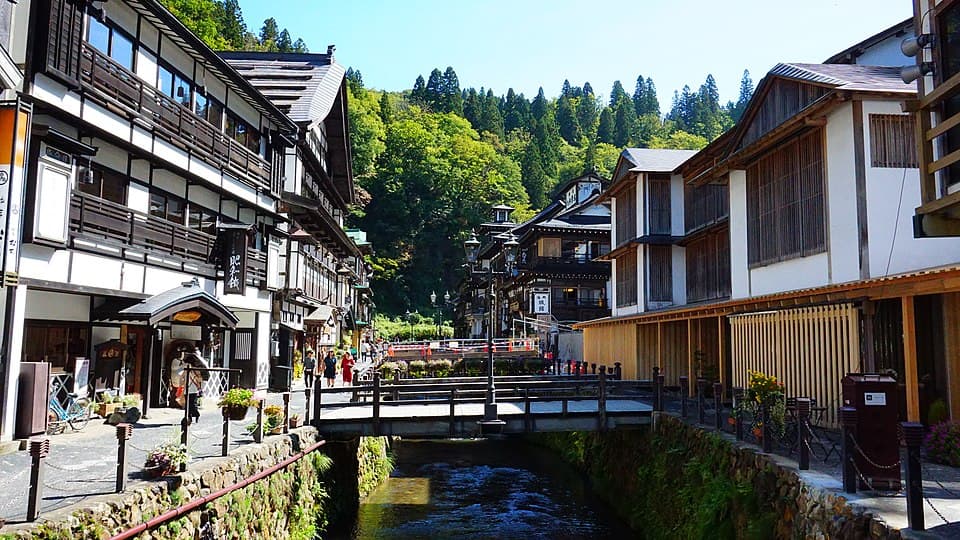
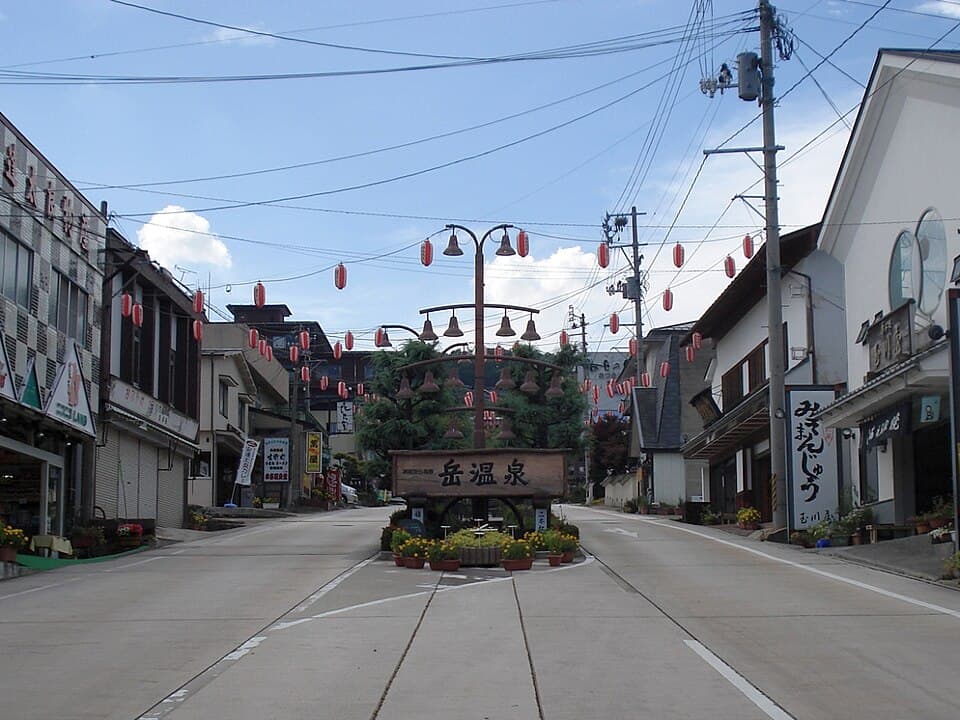
From Fukushima Station, the Fukushima Kotsu Iizaka Line tram runs northeast for about thirty minutes, rattling through the city's outer neighborhoods before settling into the rhythm of a proper rural line. Iizaka-Yumachi Station deposits you directly into the onsen town, and the first thing you notice is how the streets still feel like the Taisho era, old wooden facade buildings and stone lanterns along the main path, even though everything around it has been through decades of ordinary Japanese development. The town did not give up on its bones.
Sabakoyu is Japan's oldest remaining community bathhouse by wooden structure, and it sits at the center of the town in a compact building that has been rebuilt and renovated over the centuries but retains the general form and function of a neighborhood bath that has been used continuously since before anyone still living can remember. The name translates literally as Mackerel Lake Baths, which is a strange name for an inland spring. The characters for mackerel and lake were assigned to the name in a later era, replacing an older phonetic spelling, and the mackerel connection is largely ornamental at this point rather than historical.
The water at Sabakoyu is a simple alkaline spring, pH neutral and soft, running at about 42 to 44 degrees. It is clear and odorless, the kind of water that does not announce itself through chemistry but instead through comfort. The bath room is plain and warm, and the public nature of it means you enter as a stranger and sit a few feet from people who have been coming here their whole lives. Matsuo Basho stopped at Iizaka Onsen in 1689 during the journey he later wrote about in Oku no Hosomichi. He wrote that the village was somewhat rough and the bath house was basic. The bath house is no longer basic, but the village's lack of pretension is still intact.
The town's connection to history sits lightly on it. The inns along the main street number over forty, and on weekend evenings the izakayas fill up with people who drove from Fukushima City for the bath and the meal rather than the cultural significance. The tram back runs until late and the platform is small enough that you will recognize faces from the bathhouse waiting beside you. That easy scale, the kind where a town has not outgrown its own community, is the actual reason people keep returning.
How this spring compares
pH level
8.6
More alkaline than90% of Japan springs
More acidic than9% of Japan springs
Japan median7.3
Japan range1.2–11.3
n=121 springs
Max temperature
44°C
Hotter than16% of Japan springs
Japan median60°C
Japan hottest105°C
n=122 springs
Getting there
Take the Tohoku Shinkansen to Fukushima Station, then transfer to the Fukushima Electric Railway Iizaka Line to Iizaka-Yumachi Station. The journey takes about 25 minutes. Sabakoyu bathhouse is a short walk from the station.
Amenities
Towel rental
Locker
Restaurant
Café
Parking
Wheelchair access
English spoken
Tattoo-friendly
Private bath
Soap provided
Hair dryer
Location & nearby
Yuzawa-32のイ Iizakamachi, Fukushima, 960-0201
Fukushima Station · 8.8 kmShinkansen
Iizaka-Onsen Station · 0.4 km
Iohji-mae Station · 1.9 km
Hanamizuzaka Station · 0.6 km
Sendai Airport · 53.2 km
Yamagata Airport · 64.8 km
Iizakashobosho Helipad · 0.8 km
Iizaka-Yumachi · 0.1 km
Wakabacho · 0.1 km
Takinomachi · 0.1 km
Book a stay nearby
Hotels near Iizaka
31+ optionsSpringsAtlas may earn a commission from bookings made through these links.
More springs in Tohoku
1 / 13


Last verified:
Data: OpenStreetMap (ODbL) · local tourism agencies
Verified listing